The era of saying “you got yourself here, now get yourself out” is over—the true future of data-driven addiction recovery is paved with objective science. Tim Westbrook, MS welcomes Dr. Evelyn Higgins, a certified addictionologist, former Olympic team doctor, and founder of Wired BioHealth™, who is moving the entire field past its stigmatized, trial-and-error past. Dr. Higgins dives into how understanding an individual’s unique biological blueprint, including 85 biomarkers and genetic snips, provides clinical proof that addiction is a healthcare problem. Discover how this scientific validation takes the shame out of the equation and empowers individuals with personalized protocols for optimizing their physiology, making different decisions, and sustaining long-term sobriety.
—
Watch the episode here
Listen to the podcast here
Validating Your Struggle: The Objective Science That Destroys Stigma In Data-Driven Addiction Recovery With Dr. Evelyn Higgins
I’m excited to introduce a true leader in the future of addiction recovery and behavioral wellness, Dr. Evelyn Higgins. She’s the founder of Wired BioHealth™, a globally recognized expert with over 35 years in clinical practice, a certified addictionologist, advisor to the US Surgeon General, former Olympic team doctor, and one of modern healthcare’s top 25 innovators. Dr. Higgins is pioneering a data-driven approach to addiction recovery, integrating biology, genetics, neuroscience, and epigenetics to help people heal on a deeper level. We’re diving into the science of addiction, personalized recovery, and how understanding the body changes everything. Dr. Higgins, welcome to the show.
Tim, it’s my pleasure to be here with you.
We got connected through Mary Tilson, who was also on my show. I’m glad we finally got around to getting together.
I was a guest on Mary’s podcast. That’s how we connected. The universe makes it work.
The Biological Approach To Addiction Recovery
Everything happens when it’s supposed to happen, how it’s supposed to happen, and here we are. You’ve been in the field for over 35 years. What originally led you into addiction science and behavioral wellness?
It was both personal as well as professional. Professionally, it was about practicing in the area of pain management. I was originally in a rural area. I thought, “Everybody is getting the same meds and the same drill on it. It’s because they don’t have the sophisticated tools here. That’s how everything works.” Fast forward twenty years after that, and I am in an urban area. I was thinking everything was going to be different, and it was the same. “Here. Take this, try this, double this, half this. No, it’s on you. This works,” all the same stuff that people hear.
Personally, I married a man who was an alcoholic and had several addictions. We had a daughter together. A year after our daughter was born, we found out that my husband was adopted. I’m seeing all these behaviors in him. I know nothing about family history, genetic history, or anything. I’m like, “I’m now responsible for a child. What do I need to know as a parent for my child? How do I protect my kid?” That led me down the continuing to bring science and technology into what we do because the sad part about the behavioral health space, mental health space, and addiction is we’re not employing the science.
We’re not employing the technology that is available today. We still have that stigmatized approach, although we want to act like we don’t, of saying, “You got yourself here. You get yourself out.” It doesn’t make sense if we were getting results. I would say, “I’m all in. I don’t have anything to do here. My work is done.” That wasn’t the case. We were not using anything that we use in other areas of healthcare. To me, that was shameful on us as a culture.
Let’s talk about data-driven health optimization and epigenetics. First off, before we dive into this, let’s go back to what gives you the right to claim that you’re an expert in data-driven health optimization, epigenetics, and the things that we’re going to talk about, the biology of addiction.
I’ve been studying in the field of neuroscience for over twenty years and have the highest-end terminal degree as a diplomate in addictionology and compulsive disorders. Beyond that, I have actually patented different lab profiles and things like that. I have been in the field before people talked about words like serotonin at a dinner table. I was talking about those things. People were like, “What are you talking about? Why does that even matter?” The ability to look at what we call SNP, a single nucleotide polymorphism, meaning an error in someone’s code, became available. That was like, “We’ve now elevated our game.”
Not only can we look at where the person is, symptomatology. This is exactly what their physiology looks like. We can say with precision, “Here’s what we have to do instead of throwing a dart. Hope we land close. If we’re not, we’ll blame it on you.” It is being able to then look with specificity at someone’s unique blueprint. There are over eight billion people in the world with eight billion different sets of DNA. We treat everyone the same and then wonder why we don’t get the results. We’re not all wired the same.
We have over 8 billion people in the world, with 8 billion different sets of DNA. Yet, we treat everyone exactly the same and then wonder why we don't get the results—when we're not all wired the same. Share on XWe started doing genetic testing at our treatment center as well, which, to your point, we’re not all wired the same.
The first test that was used in physicians’ offices and treatment centers was the pharmacogenomic test. That’s the test that looks at someone’s unique DNA and says, “Is this pharmaceutical going to be safe, cautionary, or not to be used at all?” That was the start of it all. We’re going way past that and saying, “What are you made up of?” For example, your state of anxiety that we can never calm down, and not working because of all the medications we’ve tried on you, what’s the underpinning there? What’s going on within your unique physiology? We can pinpoint that. We look at those biochemical pathways and say, “What do we need to do to optimize it?”
Traditionally, it’s trial and error.
You would think that we should be so much past that point. It sounds like and looks like we should be able to say, “This is your blueprint.” We got it narrowed down to this instead of “Let’s try it. Let’s double it. Let’s half it. Let’s give this one a trial.” You talk to people who are on an SSRI or an antidepressant for decades, which is the easiest example of that. They’re still not where they need to be. It’s not because of a lack of trying.
One of the genes that we look at tells us if an SSRI would even be effective with your unique DNA. You talk about gaslighting somebody for decades on, “No, this stuff works. This is you. You need to work on yourself.” We all need to work on ourselves every day. That physiology piece is so important because it’s the foundation. Who are you physiologically? Then let’s work on those other nuances as we move through it.
I can’t tell you the number of patients that we’ve had come to us who have been on SSRIs for decades. Their labs are in the tank. Whatever they’re taking isn’t working. Beyond that, your liver, your kidneys, and your bladder had to continue processing this for decades, to no positive result. If it worked, they would say, “It works, so it’s worth what we have to deal with.” If it’s not working, it doesn’t make sense to stay in that arena.
It’s amazing to me when people say, “I have been on everything. I have done everything.” Beyond that, an SSRI was never designed for someone to live on it in perpetuity. It was a short-term, acute situation. Life is difficult right now. Let’s do this for a couple of weeks, not ten years or twenty years, to no avail. If it worked, great. Terrific. Keep on doing what you’re doing. It is not the case for a lot of people.
What do you see that needs to change in traditional models?
First off is the openness for physicians, treatment centers, and facilities to say, “What other tools can we use?” I am not bashing any of those people because it’s rough. Going into those situations and continuing to work in healthcare is probably the hardest it has ever been. I was talking to a CEO of a nonprofit who does self-care for healthcare teams. She said it’s like an abusive marriage that you keep going back to, saying, “Maybe today’s the day that it changes.”
None of this is meant to bash the people who are out there on the front lines trying to help people. Everybody’s got their, “This is how I practice. This is what I do. This is what our facility does.” That’s great, but be open to saying, “There is more science out there now that we can use to help people. That’s what we’re here to do.”
We’re all in the business of helping people. Anybody who works in behavioral health, my experience is that we all get into it for the same reason. We want to help people. The system is so broken. It’s so hard because not only are we trying to help people. We also have to make sure we get compensated for the work that we do because that’s the only way that we keep our doors open. You have to work within the confines of the insurance companies. They have things that they reimburse for and things that they don’t reimburse for. Things need to be done a certain way for us to get paid. We have to get paid, or else you can’t help anybody.
That’s the reality of it. You’ve got to be able to make the money to keep the doors open. Otherwise, everyone loses.
Addiction Is Biological: The Scientific Evidence For A Disease Model
You’ve often said that addiction isn’t just a behavioral issue, but a biological one. Can you explain what that means and how understanding the body’s chemistry changes how we approach recovery?
When we were able to start looking at the science that I talked about earlier, of looking at where these errors in the genetic coding are, we understood what leads to the result of where that individual is. It’s not one gene. It’s not two genes. It is the big picture of everything that’s going on in all these different areas of the individual’s body. I did a TED Talk called Understanding the Biomarkers of Addiction. In that, I said that if someone had diabetes, we wouldn’t say, “Why are you so weak? Don’t eat that cake.”
We would treat it like it’s a disease, give that person grace, and say, “It’s not easy. I get it. How can we help you?” It’s looking at all of those pieces, like we would with any other healthcare situation going on. We’d say, “What is the complete picture that’s going on with this individual?” and then be able to, with guidance and precision, help that person.
What biomarkers or patterns do you commonly see in people struggling with addiction?
It’s never just one “here’s all the way.” We see inflammatory markers. Why? It is because those were going to affect neuropsych genes. We see a methylation issue. Why? You look at the big umbrella of methylation. It’s responsible for optimizing your own unique DNA. Right there. We need to be methylated on that piece. It is also responsible for helping your body detoxify. It’s responsible for absorbing nutrients. You could be eating the greatest diet in the world, but if you’re not absorbing it, you’re not getting anything that you need to make those pathways work.
We look at something called autophagy. Autophagy, we’ve known about for over 100 years, but it was only in 2017 that the Japanese physician won the Nobel Prize for understanding intracellularly what happens with it. It’s like the garbage man of yourselves. If your everyday cells die off, that’s normal. They’re supposed to, but we have to have a way to remove them. If we’re not removing them, that garbage literally builds up in your body. It’s going to affect all the other cells around it. That’s going to be a negative situation for all of those processes that are trying to get to the end correctly.
We look at mitochondria. How does your body create energy? You could look at the people being diagnosed based on the vocabulary of “Dr. Tim, I feel crummy. I don’t have energy left anymore. I can’t get off the couch. I don’t want to go watch my kid’s soccer game. I used to feel so alive.” “You’re depressed. Here, take this SSRI.” Is it that? Is it dopamine? Is it serotonin? Is it epinephrine? Is it norepinephrine? Are the mitochondria not working? I’m going to have a lousy mood if I can’t make energy. We have to look at all these pieces.
There are the neuropsych genes. Let me use an example of one of those genes, the GAD1 gene, glutamic acid decarboxylase. Its job is to convert glutamic acid, which is a stimulant neurotransmitter in your body, to GABA, which is a calming neurotransmitter in your body. If you have an error in that coding, you never get to the calm. You don’t experience what other people talk about of “Just let it go. Life is good. Be in the moment and enjoy it.” You’re like, “I wish I could. I don’t experience what you’re talking about.”
We look at all of these different pieces. The one I said earlier, for example. Is an SSRI going to be effective for you, or do we have to figure out another way to do this? It’s 85 different biomarkers collectively that are all going to give us a picture of what’s going on with your unique physiology. Most importantly, what are we going to do to optimize it by looking at those biochemical pathways?

Data-Driven Addiction Recovery: It’s 85 different biomarkers, collectively, that will all give us a picture of what’s going on with your unique physiology.
Before & After: How Rewiring Physiology Changed A 9-Year Prison Sentence
Can you give me an example of someone who was struggling for many years, 10 to 20 years, and then came to you? You did your testing and your assessment, and then you discovered whatever you discovered. What changed, and how were you able to help them?
First one I can think of, addiction-wise, a great case, the gentleman’s substance of choice was alcohol. He had six DUIs, DWIs in the state of Texas. He had already done jail time. This time, he was going away for nine years. His wife reached out to us. We started the process. He was at first in a county jail before he was going to be transferred. They let us do the samples there. We’ve done samples in a lot of very unique places.
When he went back to see the judge for the first time, the judge said, “I don’t know what you’re doing, but you are a completely different person.” At that point, the attorney had used the evaluation that we did in the case because oftentimes, the attorneys get attaboys for what they did. The judge is like, “Give me something,” because it becomes this subjective he said, she said name-calling and all that goes into it.
You give a judge something objective, and you could say, “Allow this person the opportunity to do these things. This is science. These are objective data points that you get to work with.” They’re like, “Thank you.” That man’s life is completely different. He’s killing it in his business, which, before, was horrible because by noon, he was done. He was wrapping it up, and that was the end of the day. That cycle continues and continues. His life is completely different. His relationship with his wife and everything is completely different as a result. There’s somebody who, not for lack of trying, couldn’t keep it on.
How did his treatment change from what he was doing before versus what he was doing after the assessment?
He was doing very typically, like, “Here’s an SSRI for you to be in this place.” There’s always a co-occurring disorder. No one is reaching outside of themselves to bring something in to change how all this feels. If there’s not something going on, you can’t articulate it, but you’re self-medicating. You don’t even realize that. He was doing the typical SSRI. It wasn’t doing it for him. We also found out that, in his results, it was never going to do it for him anyway.
Would you say that you rewired his physiology? How does rewiring physiology improve long-term sobriety and reduce relapse?
I would say that we rewired his physiology. We optimized everything that he has to work with. When we look at these biochemical pathways, we’re saying, “What is lacking or what is there too much of in this pathway that we’re not getting that result that we’re after?” That’s where everybody is unique. Everybody is different. We have to dive in and look at these things. Once you start giving the body what it needs, it’s like, “Thank you.” That’s in the beginning. Usually, two weeks is a long time for somebody to feel better.
Usually, after a couple of days, they’re like, “I feel different.” It is because your body is getting what it needs. Your body starts saying, “I’m using this. I’m recognizing this.” The goal is for your body to start making it, but we’ve got to give it what it needs to do that, and then maintain that. I used the example of methylation before because that’s such a buzz on the internet, which also becomes a problem because they talk about one gene, the MTHFR gene. We talk about fourteen different methylation genes because they all matter.
It is not just, “Here, sell something.” In some of those cases, once we get someone to a place where their life is going great, everything is manageable, they know that they are now physiologically very different as well as emotionally, and all the other things in their life, sometimes, I’ll say, “Because you had so many heterozygous, homozygous SNPs, I want to keep you and maintain you on whatever methylation you particularly need,” as an example. It’s all driven by what that person’s made up of. I’m not anti-pharmaceutical. What I am is anti the abuse of pharmaceuticals.

Data-Driven Addiction Recovery: I’m not anti-pharmaceutical; what I am is anti the abuse of pharmaceuticals.
When we don’t first look at how a biochemical pathway is made, there’s not a single cell in our body made up of a pharmaceutical. We’re like, “We need more, pick a name.” There’s not a single cell made up of that. Why do we think that’s what we need more of? It doesn’t make sense at all. We’re not using a logical approach to get there. We’re doing the “Here, do this.” It’s individual to everybody, but once you get that body functioning again, you can pretty much get out of the way. It’s beautiful.
You mentioned mitochondria, serotonin, and dopamine. When I hear those things, I think of the biohacking modalities. Those are the things that I do today. I’ve been sober for fourteen years. I do breath work. I pray. I meditate. I exercise. I eat good food. There are a couple of supplements that I take to boost my mitochondrial health. I do cold plunging and sauna. Those are all the things that I do, which are noninvasive and have been helpful for me. Do you have an opinion on some of those things?
Most of those biohacking tools are great. It’s finding out the ones that work for you. Still, what is your foundation? What do we need to do to support you individually? As I said, you can look up MTHFR and everybody and their brothers. It is like, “That’s what I need to be doing.” You can also over-methylate. You can under-methylate. It is a hack on his own. Your buddy said it’s great for him. It doesn’t mean it’s going to be great for you. An example is intermittent fasting.
Most of those biohacking tools are great. It's finding out the ones that work for you. Share on XTo your point earlier, it’s like throwing a dart with the biohacking modalities and peptides. Those are all things that could be helpful. They might be helpful for one person, but they might not be helpful for another person. The thing I know is that most of those prayers, meditation, breath work, sauna, and cold plunging have no side effects essentially. You can try all of them. Some of them are going to work, and some of them are not going to work.
Once you start putting things in your body, that’s a different ball game, even if something like, “It’s over the counter. It doesn’t matter.” It’s still going to change your physiology. Because your friend picked a whatever supplement doesn’t mean you do. You can do damage as well, even though it’s only over the counter. You need to know what your makeup is, and then life gets so much easier. To your point, the prayer, meditation, all the same stuff for me, I need to be in nature at some point every single day, or else I am like a caged animal that is ready to go. I know the things that work for me. Those are never going to be bad for me. I can’t be out in nature too much.
It’s not going to be bad regardless.
Can I be in the sun too much? Yes.
Shame To Science: Moving Addiction Treatment From Stigma To Validation
You’ve talked about moving away from the stigma of addiction toward a more scientific understanding. What does that shift look like in practice?
In practice, when one of our staff or I go over results with an individual, oftentimes, they’re tears of joy. When I talk about what a clinical correlation is to a finding, it’s like, “You’ve got to be kidding me. You told me exactly how I have felt for my entire life. For the first time, I feel validated in saying this has a cause. This has a root. This has a place where it came from. This is what I’ve been feeling my whole life. All of a sudden, it makes sense.” This is a clinical correlation to whatever being too high, being too low, or not being in the sweet spot. Clinically, this is what we see. You are the picture of all of that. People are in tears of joy, “This is unbelievable.” Bringing that science into application for everyday use is validated.
What test is it that you give people? When is it appropriate to give them that test, that assessment, or whatever it is?
People come to us when they’ve learned about what we do. I was talking to a gentleman. He’s like, “I’ve tried everything in the treatment world from A to Z. I still always come back to this place.” We need to look at your physiology. We need to take a dive into what makes you, you. When those slip-ups happen, what’s been going on in your physiology that drives you back to that as your resting point? It depends on the individual. To me, the perfect world would be what those people ask me often. They’re like, “What would you want to see happen with this?” I’m like, “I would like to see it used like a CBC, but it’s one time. You don’t need to do it over and over again.” You know, “This is my blueprint.”
When I talk to kids, I’m like a mom saying, “My daughter has been this way for her whole life. Now, she went and got her apartment with her friends. She is doing all these things. I see her now. I don’t even know who this kid is.” Let’s take a look. These things were always there in your DNA. Here are your cards. Play it out. Epigenetics is what changes how those genes show up. Those things were always there. She just never had those same stressors in her life to make it now play out that way.
You really need to know what your makeup is, and then life gets so much easier. Share on XI talked to the kid and said, “Your buddies are going to say, ‘I’ve got a great idea. After school, let’s go do this.’ The next day, you are going to say, ‘Let’s do it again.’ They’re going to be like, ‘No, we’re done with that. We’re moving on because you are wired differently.’” To me, that’s the equalizer. Everybody gets to know, “Here’s me. We still all have free will. We still all get to make our choices.” Knowing what the impact of those things can be, to me, is so impactful. It makes so much sense. Wouldn’t that be the best thing for everybody to know, “Here’s where you start. Here’s what you should know.”?
Can someone’s results change? If they take the test today, and they take the test in another five years, could their makeup change?
Those DNA markers are still going to show the same. What changes is the epigenetic expression of them. We see that symptomatically. We see that person showing up in the world differently.
That’s the goal.
The markers of serotonin, dopamine, and epinephrine, yes, we see those change. We also know that before they change, everyone in their world says, “What are you doing? You are like a different person.” It is because all those things are getting to the place where they should be. Like a CBC, there’s a sweet spot of where we want you to be, not here. People say, “Wouldn’t it be good if I had extra serotonin, if I had more than I need?” No, it’s that sweet spot. Interestingly enough, with the serotonin example, anxiety and agitation are seen with lower height. It shows a very similar play out. Is it too much, or is it too little?
The Physiology Of Stagnation: Why Some Sober People Still ‘White-Knuckle’ It
Being in recovery, the Twelve Steps are part of my path, part of my foundation. I see a lot of people, and some of them have been in recovery for many years. They’re still batshit crazy. You see others, and they’re still acting out in other ways. They still have the things that they do. I’m like, “I’m not.” You have other people who have changed. They are different people. How do you explain that? What’s going on there?
That one individual’s physiology has changed. The other is not. One guy is white knuckling. You don’t want to be anywhere near that dude. He may actively not be drinking, or whatever his drug of choice was, sex addictions, shopping, porn, or whatever you want. He’s not doing that anymore, but you don’t want to be anywhere near that guy or woman because their physiology is still the same, whereas the other person, you want to hang with them.
I want to spend my time with this person. There are other people who I’m like, “Stay away.”
You want to be around people who lift you and make you feel good. That’s, to me, the most empowering part of understanding how epigenetics works to him. It gives the power back to the individual. You’re not a victim. You’re not, “This was my mother. This was my father. This is my grandfather. I’ve come from four generations of this.” It can change. To me, that gives the power back.

Data-Driven Addiction Recovery: You want to be around people that lift you up and make you feel good. That’s the most empowering part of understanding how epigenetics works.
Do you know a guy named Dr. Don Wood? He runs the Inspired Performance Program, the TIPP Program. Essentially, he unwires the traumas from your past. It’s how his program works. It’s different, but people change. I believe their physiology changes as a result of unraveling those traumas from the past.
When you look at traumas, I agree 100%. Little T’s, big T’s, we’ve all got them in life. It’s how it affects us. Trauma is more than just a word to quantify a negative experience. It actually changes our physiology. When you have someone like Dr. Wood, who is now reverse-engineering those traumas, yes, you can get a completely different person. Again, the one you want your posse, the one you want to be hanging out with.
How does measurable data take shame out of the equation for someone who has been struggling?
Probably, the largest group of people that come to us and say, “Can my spouse come to the appointment?” is, for example, porn and sex addictions. They want the spouse to hear these results and be able to look at them clinically. Any of the other addictions, same point. I do want that to be a part of it with anybody. I do want those in your world, your loved ones, to understand from a clinical basis what’s happening because then you truly can see it for a healthcare problem that we need to work on and not just throw under the rug and make believe it’s not here, but truly look at it like, “What are we going to do?”
Oftentimes, people who are there with their loved ones are like, “It’s probably pretty good for me, too.” We’ve worked on a couple of recovery high school programs that we’ve done for an entire school. We want to be a part of it. They’re still underage. The parents sit there. They’ll be like, either “I wish this were around when I was a kid. I would have had so many fewer issues,” or “I think I should do this, too.”
We all come into the game of life with the cards that were dealt. We have to play them out. There’s no right. There’s no wrong. Everybody’s got some weakness within their genetics. There are people who would be like, “Not me. My genome is absolutely perfect.” It doesn’t. Power lies in knowing where those strengths are and where those weaknesses are, because once we know where those weaknesses are, we can then do something about them, rather than just admire them and say, “You’ve got a problem.”
Awareness is 90% of transformation. Once you know, you can do something about it.
Right, and just knowing that there are action steps that I can take from the physiological standpoint, I’m doing the emotional work. We have to do all of it. It’s not like one’s better than the other, and pick and choose. It’s all of it. Being able to say, “I have action steps that I can take,” makes you say, “I’m in. There are things that I can do,” instead of, “This is never going to change.”
Talk about the ability to keep someone more motivated and positive about their recovery.
The hope that starts with, “This doesn’t always have to be,” no, we’re going to slice this. We’re going to get through it.
Epigenetics & Environment: How Stress And Trauma Change Your Genetic Expression
Let’s talk about epigenetics, recovery, and how the environment shapes healing. How do lifestyle, stress, trauma, and environment influence genetic expression?
Using that example that I did with traumas, it changes your physiology. Your physiology is going to be changed by the environment that you’re in, for better or worse. It works both ways. When you think about people who go to treatment and what you’re doing, Camelback Recovery, beautiful situation. They’re like, “This is perfect. I can feel the healing. I can feel the positivity. I can feel my body changing as a result of that. I can feel myself making different decisions based on who I am now.”
Your physiology is literally going to be changed by the environment that you're in, for better or worse. Share on XThe hard part is going to be, “Once I’m back home, what does this look like? How do I stay on?” That’s what you guys continue to do when you’re working with your patients and your clients, like “Let’s keep you there.” It’s evident to an individual. “I’m in a good place that is making me my best me.” It is because epigenetically, you have the support. You have the environment. You have the hacks. You have all the things that you’re being given to make that happen for you.
Our full program is 120 days. I like the longer program. People could go for 30 days and then go back home. The issue is that they go back home to their old environment. In my opinion, in my experience, that’s not enough time for people to change because everything has to change, like new eating habits and new sleeping habits. They pray and meditate. They do a gratitude list. They exercise. They eat healthily. There are all these things that have to be different. New friends, new hobbies, everything has to change. If they go back to the old environment, the next thing you know, the path of least resistance is to go back to doing the things that you know how to do.
I love that 120-day reason for exactly that. You’re going to leave a stronger individual ready to say, “The difference that I feel within myself is non-negotiable out there. If I have casualties of friends, I have casualties of friends. If I have casualties of family, I have casualties of family,” whatever it is, because you know the difference. You’ve experienced the difference. You now know what life can be, and it can be better.
You’ve got to be willing to let the toxic parts of your life go.
That in itself is epigenetics, the toxins. It could be from physical toxins. It could be from whatever poison you’re putting in your body. It can be from the toxins of people. All of it matters.
Your program is Wired BioHealth. We may have already talked about this. What are the specific epigenetic markers that you evaluate?
As I said, there are 85 different biomarkers. The first piece is the neurotransmitters and the hormones. Some from serotonin, dopamine, epinephrine, norepinephrine, gamma-aminobutyric acid, glutamate, phenylethylamine, the list goes on and on. There is cortisol, our stress hormone, and our androgens, our sex hormones, and how all of those interact together. The second piece is that genetic piece where we look at those SNPs to see how those are going to impact everything.
For example, we could look at someone’s dopamine levels and say, “We’ve got to work on those, their norepinephrine, and their epinephrine.” When I look at the genetic SNP, I see the COMT gene, the catecholamine methyltransferase gene. Its job is to break down dopamine, epinephrine, and norepinephrine. I’m like, “No wonder we saw what we did in that clinical picture.” Now we know the underpinning of why that’s happening with that.

Data-Driven Addiction Recovery: Trauma is more than a word just to quantify a negative experience; it actually changes our physiology.
If two people have similar genetics, how can they have different addiction trajectories?
Bringing it back to that piece of environment, you look at a lot of people’s addiction. It was not even understanding if it began early in their life, not even understanding their self-medicating because of an underlying anxiety, depression, ADD, ADHD, OCD, whatever the underlying of why you find yourself reaching out to change the resting state of you. You do it, and you’re like, ”That felt good. I felt calm for the first time in my life.” It works until it doesn’t work, and then it becomes an addiction. What did you come across at what point in your life that made you like, “This is it?”
How can recovery environments heal or harm?
Recovery environments give you the opportunity, like we were talking about, be it 30 days or 120 days, to have everything you need in a program to say, “This is emotionally what I need, physiologically, intellectually, spiritually, everything that I need. Have the opportunity to play that out, feel the difference, understand the difference, and understand that your life is becoming exponentially better as a result of it.
How could that same environment hurt somebody? It could be many different reasons. One, meeting up with the wrong people. Two, not being honest with why you’re there. When you’re trying to do the emotional work, that’s the heavy lifting. That’s the hard stuff. If you want to sit there and make up stories that you think sound good, that don’t make you hurt more inside, I get it, but it’s not going to work.
Let’s talk about personalized recovery and moving beyond the one-size-fits-all treatment. You spent years working at the intersection of genetics, neuroscience, and wellness. How can that data help personalize recovery plans for individuals?
Everything that we’ve talked about is personalized. It’s knowing what makes you, you. Once you have that information, then we’re looking at the weaknesses, where they are, and what we need to do to make those biochemical pathways that are within your body optimally. We get there. In the beginning, I said, once you’re giving your body what it needs, it starts to recognize, “This makes me work easier. This makes me work more efficiently. I’m going to start making this.” You’ve changed yourself forever.
Once you're giving your body what it needs, it starts to recognize: “Wow, this makes me work easier, more efficiently.” Share on XMost people relapse, 90%. I have two questions. First question is, do people typically end up going back to doing the same thing that they were doing prior to getting clean and sober, prior to going to treatment, and prior to getting well? Once they have this information, are they more likely to make different decisions?
The answer is yes, because you’re thinking differently. Let’s say a driver for someone is impulse control. Pathways are working more optimally. You’re going to start making different decisions because impulse isn’t driving your decision-making process. Makes sense?
Yes. Even though someone knows the right decision, the need to feel better is why they make a decision to drink or use. Is it because they don’t have the pain or the restless, irritable, discontent feeling? That was why they drank and used or acted out in the past. Now, they have those feelings dissipated as a result of their actions, as a result of these tests.
You actually answered it. You’re now experiencing life differently. You’re thinking differently. Your response to life is going to be different. Life’s response to you is going to be different as a result of those changes.
Your Blueprint For Healing: What A Personalized Recovery Roadmap Looks Like
What does a personalized recovery road map look like?
As I said, we have a couple of offices, Florida, Georgia, Atlanta area, suburban and Midtown, and South Florida. We work with a lot of people from all over the world, with whom we dropship lab kits. We’ve dropshipped lab kits into jails. We’ve dropped kits all over the place. The person who we’ve had come furthest away, because they wanted to see us in person, was from Australia, making a trip here. We can dropship lab kits to you anywhere in the world.
That process starts by having a conversation. What have you done so far? What has worked? What hasn’t worked? Has anyone ever looked at these things? If it feels like, “This is a missing piece for me,” let’s do that. Let’s get the samples going. We get your date of birth. We get your physical mailing address. We send the kits to you. You do your lab samples. You get instructions from the office, like any other lab collection. Don’t eat this, don’t eat that, this many hours prior to taking a test, no strenuous exercise, and all that good stuff.
About ten days later, we got the results from the lab. We’ll let you know that we got it. We create what we call a biomarker evaluation report. We go over each one of those biomarkers, what it means, and if we have a finding with you, what that finding then means clinically. The last piece is, what are we going to do with all this information? We’ve created a protocol for you based on these labs, so no two people’s protocols are the same, just like no two people’s labs are the same.
We do that in phases. The first phase is to calm those excitatory. There are two different types of neurotransmitters, excitatory and inhibitory. If the bad guy is coming after us, those excitatory neurotransmitters need to kick in, and we need to get out, but we can’t go through all day as if the bad guy’s coming after us. We have to have those neurotransmitters that put the brakes on. In those first two phases, we’re dealing with those and then how that stress response impacts cortisol and sex hormones.
Phase one, calm things down a bit. Phase two, let’s elevate, but not with a crazy spike. Phase three, we bring in the unique genetics for you. That helps everything work as well as it can. We either say, “This is all yours, Tim. Here’s phase one. Here’s phase two. Here’s phase three. This is when I want you to start each one. You feel like I can do this. Give us a call if you want to come back. We’ll have another appointment.” Some people say, “This is good, but I want to make sure that I’m with you through this whole process.” Typically, we’re working with someone for about a four-month period of time. For some people, it’s more than that. It depends on the severity of the individual’s problem.
Do you just work with individuals? Do you work with any treatment centers?
Yes, we work with treatment centers as well.
I bring up that question. If we wanted to work with you at Camelback Recovery, what does that look like? We bring someone into our 30-day program, or even our PHP program. We start phase one, phase two, phase three, and we collaborate. How does that look?
We either go on-site to the facility, which we could do at Camelback. We come out there. Here’s what we’re going to do. Here’s how we’re going to collect the samples. We’ll collect the samples. We’ll get them to the lab. We get them back. We can meet virtually. Usually, that first appointment is an hour and a half, because I’m going over each one of those biomarkers, and I want you to get it. As much as I understand it, I want you to get it. Through that process would be, “Let’s check in.” We can do that virtually. We’ll check in like we are here. Here’s what’s happening and the symptom trackers. We go through the process. That would be very easy to incorporate into Camelback and would be a great thing.
Can you help people in any part of the country? You’re in Florida. I don’t know where you have offices.
We have offices in New York, Florida, and Georgia, but we do help people all over the country.
What would that look like if you were to, for example, come to Camelback Recovery or help someone in Arizona? Would that be virtual, or would you have to send somebody out to Arizona physically?
We can do it either way. How you wanted to set it up, we could come out and say, “We’ll collect the samples. We’ll bring them back, or we could have everything shipped there. You guys collect the samples, and they get back to the lab. It’s however you want to make it work most conveniently for you, your patients, and clients.”
We have people coming in and out on a regular basis. That would be why it doesn’t seem like it would be efficient to have someone come out and collect samples. That makes sense.
We could definitely send the lab kits out there and then work like we are with this show.
Is this covered by insurance?
As of now, for HSAs and FSAs, we’ll reimburse for it. Nothing else yet. I say yet, because we had one of the largest insurance carriers in the country come to us, which is unheard of, to say, “We know the efficacy of what you’re talking about. We would like to start doing a pilot with our insurance and get this moving.” Full disclosure, that’s not going to be tomorrow. We’re not even going to see that in 2026.
I can imagine.
I keep on doing this. Let’s do this because this is what needs to be done. If the insurance guys are only thinking about their bottom line, your bottom line in the end is going to be a heck of a lot better.
The Hope Of Tomorrow: The Future & Innovation In Recovery
You’ve been in this field for over three decades. What gives you hope about where addiction recovery is headed and how innovation is shaping the future?
To me, this is so exciting. Maybe you can tell in our conversation. Guys, we can even the playing field here. It’s going to be like any other part of healthcare. Think about somebody with a heart issue, endocrine issue, diabetes, or cardiovascular disease. If they didn’t have diagnostics, they would all be dying off. We’re bringing diagnostics into something that we talked about. There’ll come a time when we’re saying, “How barbaric. This is actually how you practiced? You thought you were doing something? How did you not know what was going to at least have the better chance of working for this individual?”
That is so exciting to me. Knowing how someone is wired, what their blueprint is, eliminates so much guessing that it’s beyond empowering to me. What it does to the individual and their psyche is like, “This is how I feel. I have felt like this since the beginning of time, as far back as I can remember. There’s actually a reason for it. It’s not me just trying to ruin Thanksgiving or Christmas.” The family’s like, “It’s all you.”
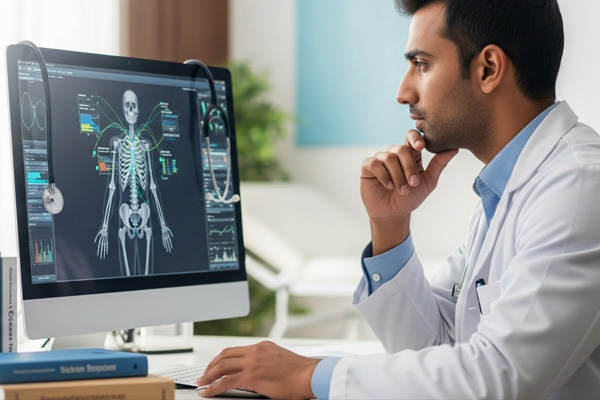
Data-Driven Addiction Recovery: Knowing how someone’s wired, what their blueprint is, eliminates so much guessing. It’s beyond empowering.
We are in the holidays.
This is how you tick. We can make some little changes. You can show up differently. That’s beautiful.
Are you seeing a growing shift toward biological and data-driven treatment?
Yes.
How significantly are you seeing it?
In places where there’s greater education and understanding of it, it’s moving a lot faster. You talk about some of the concepts that we’re talking about. It’s like, “This is a no-brainer. Why wouldn’t I do this instead of making my life harder every day?” That’s where I see it moving faster in places of lower socioeconomic status, where it’s like, “This sounds good, but how do I do this if my XYZ insurance won’t pay for it?” That becomes a barrier for some people. That’s why we also work with some of the different programs, like a firm and programs like that, that make it doable for people, instead of, “There’s no way I can do this.” You can.
Measuring Victory: The Success Rate Of Data-Driven Treatment
You might not have an answer to this question. This is a hard question to answer. What success rate are you seeing from people who are getting results from you who are going through your program?
Almost 73% of people do what their protocol tells them to do and stick with it. We’re seeing good responses.
What is success?
Success is not using anymore. Success is feeling like you are even-keeled throughout your day. You can make different decisions. Success for some people has been, “I slipped, but immediately, I was right back on the saddle. I was good to go. I know why I slipped. This was everything that led up to it. Let’s keep going.” In every way, it’s a positive thing.
What’s your vision for where behavioral wellness optimization is going?
My vision is that this becomes normal. You’re going to get this test done. We’re going to be able to work with you better from the beginning of time. I see that in people wanting that and people requesting that. Even the saying that the insurance company came to us, and that’s not going to happen in 2026. For them to come to us is unheard of. They did because they’re like, “We’re not getting anywhere here.” Why aren’t we using science? We use every other aspect of healthcare, instead of name-calling, shaming, stigmatizing, and all the stuff that we act like we don’t do.
What are one or two things that anyone can do today to start optimizing their biological health?
First, do the lab test. Beyond that, if you wanted to say, “I want to do a hack,” there are. Look at the power of gratitude.
That was one of the first things I learned.
It’s a game-changer. I’ll tell people, 3 to 5 minutes or not even, ten things or five things. Get in the habit. Sometimes, I’m human. I’m like, “I’m too busy. I didn’t do the gratitude journal for two weeks. What is going on?” I’m like, “What’s going on is you stop doing your gratitude journal.” The way we show up in life is the way life shows up to us and responds in that same way. Gratitude is huge. It’s free. Just do it. I guarantee that it’ll change your life because you’re saying, “I’m seeing things that are good,” instead of “I’m seeing all the things that are bad.” You’re rewiring your brain to look for the good things, want to connect with the good things, and want to act with the good things. That’s an easy one. Get out in nature.
The way we show up to life is the way life shows up to us. Share on XI have to be grateful for every single thing that happens. I’ve learned to be grateful more quickly. Things that I think might be bad are part of my journey. Hindsight being 20/20, maybe at one time, I thought it was the worst thing on earth. Hindsight being 20/20 is like, “If that didn’t happen, then I wouldn’t be where I’m at now. Things are happening for me, not to me.”
You’d look at life. Would I do this again, knowing all those things? Probably not, but am I so grateful for being on the side of it? Absolutely, because that’s what makes me who I am now. Otherwise, you’d be doing the same things on the hamster wheel.
Family Healing: Advice For Supporting A Loved One In Recovery
Do you have any advice for families supporting a loved one?
Yes. Understand that there is science behind this. There is health behind this. It makes it more understandable for families to see the science in it and say, “I get it.” If we’re being honest with ourselves, we can look at ourselves and say, “It came from somewhere. Maybe I played it out differently.” You’re allowing yourself to see we’re all human. We all have strengths and weaknesses. If we can bring science into this that’s available today, and we can, we can have better outcomes.

Data-Driven Addiction Recovery: We’re all human. We all have strengths and weaknesses. If we can bring science into this—science that’s available today—we can have better outcomes.
What are the most common blind spots people have about their own health?
That’s not me. I know that. It’s the other guy and not taking action, getting in your own way. When we find ourselves in the same place over and over again, at some point, we’ve got to say, “What part of this is me?” If the part of it that’s me is, “What are you made up of?”, let’s look at it because you had no choice in that. It’s the gift of life. We’ve been given it. Let’s play it out to the best we can.
Where can the audience connect with you or learn more about you or Wired BioHealth?
Our websites are WiredBioHealth.com and WiredForAddiction.com. We actually started with the brand of Wired For Addiction first. We had people start coming to us like, “I’m not quite there yet, but I’m headed in that direction.” What can we do? What does that look like? That’s when we started Wired BioHealth. To me, health is more than the absence of disease. You’re not healthy one day and sick the next.
It’s all the living that we’re doing in between that’s bringing us to either end of that spectrum. When you start saying, “I’m not doing this to my best,” that’s how those brands came about. We even offer a complimentary consultation there, fifteen minutes, to have a conversation. What have you done so far? Where are you at? What does your treatment look like? See if this is something for you.
YouTube, Instagram, social media?
Take a look at the TED Talk that I did, Understanding the Biomarkers of Addiction, which, in under seven minutes, takes some heavy-duty science and makes it understandable for “That makes sense.” That was a feat in itself to get it to be where it was understandable in seven minutes, or else you’re going to lose somebody. Take a look at that, I suggest, because it’s so relatable. As we started in this show, Tim, when you asked me how I got here, and I said there was personal and professional, that drive that I have is because it was what I chose to do professionally, but then it personally affected me. I wanted the end of the story to change differently. Once science started evolving the way it did, I was like, “We need to be doing this. “
We’re coming to the end of the episode. Is there anything I missed?
I don’t think so. Great questions you threw at me.
Dr. Higgins, thank you so much. I appreciate you. I got a lot out of our conversation. Thank you for your contributions to the field. To anybody out there, thanks for tuning in. Stay tuned for the next episode.
Likewise. Thank you. I appreciate you. I appreciate what you’re doing first, the Camelback Recovery, and then your show, because this is a way for people to slip into. No one has to know that I’m starting to question what’s going on with me. Your work is so important. Thank you.
Thank you.
Important Links
- Wired BioHealth™
- #76: Wired for Addiction – Dr. Evelyn Higgins Explains the Biological Component of Addiction – Sun and Moon Sober Living
- EVELYN HIGGINS | Understanding Genetic Markers of Addiction – TEDxJacksonville
- Camelback Recovery
- Wired For Addiction
- Dr. Evelyn Higgins on LinkedIn
- Wired BioHealth on YouTube
About Dr. Evelyn Higgins
 Dr. Evelyn Higgins is a globally recognized authority in health and wellness and the founder of Wired BioHealth, a company dedicated to advancing personalized solutions in behavioral wellness optimization and recovery. She holds distinguished credentials as a Diplomate of the American College of Addictionology and Compulsive Disorders, a Diplomate of the American Board of Disability Analysts specializing in pain management, is a Doctor of Chiropractic, and is a Certified Addictionologist.
Throughout her distinguished career, Dr. Higgins has advised the U.S. Surgeon General, served as a Team Doctor for the 1996 Olympic Games, and had the honor of being an Olympic torchbearer. In 2021, she was nominated as one of Modern Healthcare’s Top 25 Innovators in Healthcare. With over 35 years of clinical practice and consulting, she has spent more than 17 years advancing the science of health optimization, wellness, and recovery—particularly in the realm of behavioral wellness.
Dr. Higgins is the author of The Dr. Higgins Guide to Health & Wellness and The Mystery of Happiness. A sought-after speaker, she has presented at major events including the 2024 Addiction Studies Institute Conference at Ohio State Medical Center, TEDx, and the International Society of Substance Use Professionals Annual Conference in Abu Dhabi. Her work sits at the intersection of epigenetics, neuroscience, and holistic health, bringing an innovative, data-driven approach to addiction recovery and overall well-being.