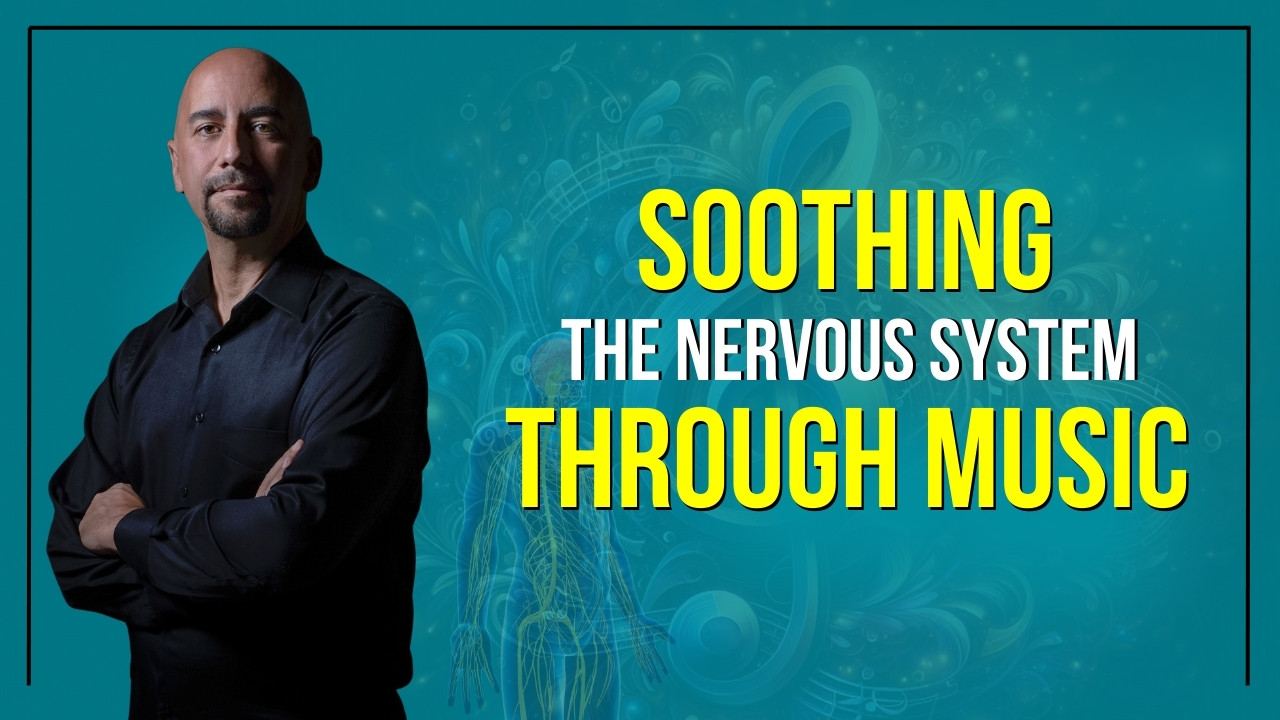
In this episode of I Love Being Sober, Tim Westbrook sits down with Grammy Award–winning composer and sound healing pioneer Barry Goldstein to explore how music can be used as medicine for mental health, nervous system regulation, sleep, and addiction recovery.
Barry is the creator of Acousticeuticals™—therapeutic music designed to support emotional regulation, reduce stress, and guide the brain into more coherent and regulated states. His work has been used in hospitals, treatment centers, medical practices, and research settings, and he has collaborated with leaders such as Dr. Daniel Amen, Dr. Joe Dispenza, and Dave Asprey.
Tim shares his personal experience using the sleep playlist Barry created with Dr. Daniel Amen, which he listens to every night as part of his recovery and mental health routine. Together, they break down why certain music works, how sound impacts the brain and nervous system, and how people in recovery can use music intentionally to calm anxiety, quiet negative self-talk, and improve sleep.
This conversation blends neuroscience, frequency, energy, and practical tools, making it especially relevant for anyone navigating anxiety, trauma, burnout, or addiction recovery.
In this episode, you’ll learn:
- How music regulates the nervous system
- The science behind sound, frequency, and brain states
- Why music can reduce anxiety and emotional overwhelm
- How to biohack your brain with intentional music
- The role of music in trauma healing and recovery
- Why sleep-focused music improves sleep quality, not just sleep duration
- How to build a simple music practice for mental health and recovery
Whether you’re in recovery, a mental health professional, or someone looking for natural tools to support emotional regulation and sleep, this episode offers a powerful new way to think about music as medicine.
—
Watch the episode here
Listen to the podcast here
Soothing The Nervous System Through Music
How Sound, Frequency, And Intentional Music Support Emotional Regulation, Sleep, And Sustainable Recovery
One of my biggest a-ha moments is that music is not just something that’s happening to you, it’s also something that’s happening in you. Just bringing in gratitude every day for me when I start my day and knowing that my heart’s beating, and I have my breath no matter what’s going on in my world, that I connect to what I call the inner symphony. That’s your heartbeat, that’s your breath.
In many cultures, when you place your hands on your heart, you might have heard that before and think, “Everyone just says place your hands on your heart.” Ultimately, when you’re doing that, it’s something very sacred. If the person next to you said, “Can I place my hand on your heart?” They’d probably be like, “I don’t really know you that well.” That’s something that is sacred to the people that you love.
This brings in the essence of self-love to yourself when you’re placing your hands on your heart. What I do is I close my eyes, I place my hands on my heart, and I take myself through a three-breath process which I call the heart song breathing process. Each one of us, we all have a heartbeat, we all have our breath, but no two heartbeats are the same. This becomes a home base when things happen in your day. Maybe someone comes into your space you didn’t expect an interaction, or you feel like you have to spend a lot of energy with that person, or you gave your energy away, or they took some of your energy, whatever that is.
This is a way to come back home to you, and I think of it as what I call a vibrational shower. This is your home base, and we always say in our language home is in the heart. I’ll ask you if it feels comfortable for you, just place your hands on your heart, and close our eyes. When you close your eyes, as you’ll probably learn a little bit more throughout our discussion, you’re actually slowing your brain waves down as soon as you close your eyes.
You’re moving into a different brain wave state. You’re moving out of the analytical mind. The first breath we’re going to take in is just bringing that breath in through the bottom of our feet, and it’s bringing the intention that today you’re going to be grounded, you’re going to be nurtured in whatever you do, that you’re not walking alone.
You’re going to bring that breath all the way in through the bottom of your feet up to your heart. When we get up to the heart, you’re going to release it with a big sigh out. When we sigh, it’s a way that we tell ourselves that everything’s going to be okay no matter what’s going on in our lives. Do that with me. Bring a big breath in through the bottom of your feet all the way up to your heart and release it out with a big sigh.
As you release that breath, each breath we release, we become a little lighter, little less thoughts going in, a little bit just more connected to our own energy. The second breath we are going to take in is going to be bringing that in through the top of our heads, or if you think of it as connecting to something beyond ourselves, whatever your beliefs are. That you don’t have to control every aspect of your life, that you are guided, that you have assistance, and you’re just going to bring that breath in through the top of your head all the way to your heart and then release that with a powerful sigh.
The third breath, is bringing it in through the heart and bringing it out through the heart. That integrates the other two breaths. Just bring a breath in through the heart and a breath out. We’re just going to do one more round together. Each time we release a breath, we’re getting a little bit lighter, a little less stress, a little less anxious, and just a great way to start the day.
Big breath in through the bottom of the feet to the heart and releasing it through the breath. Now bringing that breath in through the top of our heads to our hearts and releasing that breath. A big breath in through our heart, big breath out. Just with your hands still on your heart, allow yourself to just feel that appreciation that your heart is beating.
You might even feel your heart beating with your hands, your breath is moving through your physical body. If you have an intention for your day, something that you’d like to set as a benefit for your day like, “By the end of this day, I would like to be blank,” or, “The end of the day, I’d like to be less blank,” whatever that is for you.
Music isn’t entertainment — it’s a regulatory tool for the nervous system. Share on XJust think about that for a moment as your hands are still on your heart, and what’s your intention for today. We’re going to take a last breath into our hearts together and on the count of three, we’re just going to let that intention go with that big sigh out. Big breath into the heart and just let that intention go. You can just move your feet around a little bit, move your hands around, move your shoulders, and just gently come back into the room.
That process is only literally 1 or 2 minutes. It’s great to just plug into your day whenever you’re feeling challenged, and not only does it feel good and it’s great emotionally, but as we’ll get into, I’m sure there is some science behind this as well. This is what we call moving into heart coherence. When we move to an elevated emotion, which is like gratitude, kindness, compassion for ourselves, our heart starts to beat at more smooth and orderly rhythms in our physical body.
That actually can assist a lot of things everything from immune health, better sleep at night, less anxiety, and it just works if you think of your heart as being the conductor of what’s going on in your physical body. It’s setting a tempo and moving you into sync in your day so that you’re in rhythm. If you feel like, “I’m out of sync today,” or something just happened and you’re out of sync, that’s a great tool to just be able to plug in.
Most of us walk into rooms carrying stress, noise, thoughts, and emotional weight. The music you just experienced as you walked into the room along with the little breathwork session was created by someone who has spent over three decades exploring how sound can be used not just artistically but therapeutically.
Barry Goldstein is a Grammy Award-winning Composer and Producer and the Creator of Acousticeuticals™, a term he coined to describe his music intentionally designed to support mental, emotional, and physical well-being. Barry’s work lives at the intersection of music, neuroscience, and healing. He has collaborated with leaders such as Dr. Daniel Amen, Dr. Joe Dispenza, and Dave Asprey, and his music is used in hospitals, treatment centers, medical practices, and research settings focused on stress reduction, sleep, nervous system regulation, and emotional health.
His approach goes far beyond entertainment. Barry uses specific proprietary musical protocols to help guide the brain and body into more regulated coherent states, states that are especially important for people dealing with anxiety, trauma, sleep issues, and recovery. In this episode, we’re going to explore how music can become a practical, accessible tool for mental health and recovery and how sound can support the nervous system in ways that words sometimes can’t. Barry, I’m grateful to have you here.
Tim, thanks for having me. Awesome. Great being here with all of you.
Looking Back To Barry’s Origin Story
Before we go deeper into how this works, I’d love for you to share how this journey started for you. How did you move from being a traditional musician and producer into the world of healing and therapeutic sound?
I’ll start off by saying that many years ago, if you would have told me that my music would have been putting people to sleep, I would have considered that an insult because at the time, I was a producer in New York City doing everything but this type of music, so hip hop, club music. Literally working as a major label record producer, a lot of pressure in creating a 4-minute song which would take me 50 to 100 hours of studio time to do. At the time, that anxiety and that stress made me reexamine and rewind a bit of how can I get back into my love of music which started as a kid.
My dad bought me my first guitar when I was fourteen years old. He bought me a Gibson Les Paul. Thirty years later, I ended up working with Les Paul and producing him, so it was an amazing synchronicity. Again, how could I rewind and just be that fourteen-year-old kid who loved writing songs instead of the pressures of it becoming a job. Some of you might relate to that, something that you thought was going to work out a certain way and then you got to that point in your life and it wasn’t exactly what you thought it was going to be and pressure, stress, anxiety came into my life.
I decided to do some research online and say, I know I want to reconnect with my heart, what kind of research is out there on music and the heart? What I found was that our heart at a relaxed state beats at about 60 beats per minute, so because I was working with a lot of DJs who are constantly using that terminology, this BPM is for club music, this BPM is for reggae, I understood that language. I said, “Okay, I’m just going to do an experiment, I’m going to set my metronome in my sequencer, which is how I recorded my music, at 60 beats per minute.”
Instead of being really analytical and precise with creating the music which is what I was doing when doing pop songs, it has to be catchy, it has to be memorable for people to sing along to, it has to have a certain structure, what would happen if I did the opposite of that? Instead of composing to music, I began to decompose to the music, how would that work?
I just set my metronome for 60 beats per minute and just started to allow the music to come through me as opposed to my analytical mind dictating it. What would happen if I connected to something outside of myself? I didn’t know what that was at the time. I didn’t know what I was doing. As I said, it was an experiment. I didn’t know how the experiment was going to work out.
What happened was I found myself moving into these very meditative states similar to the music that you listened to and I started to create layers of sound, so then I would go back over that and because it wasn’t structured, I really didn’t know what I was playing. I had to go intuitively to and react to the music as opposed to moving into composing the music per se.
It created a very unique sound. People called it the music of the spheres or New Age music. At the time, I was a rock musician, I was doing hip hop. I had no idea what ambient or New Age music was, but I was composing it. I was seeing a massage therapist at the time who heard what I was doing and she said, “Do you mind if I use this in some of my sessions?” I said, “Really?” I didn’t think anyone wanted to listen to like hour-long pieces of music with no melody, nothing catchy in it. The opposite of pop music.
She started using them, her clients loved them. She loved them because it wasn’t repetitive, there were no bird sounds or wind sounds that were annoying her within it. It started off with family and friends. Other friends who going to the dentist office, “Can I use your music? I have a root canal. Literally, I didn’t experience any pain during the process, a lot less anxiety.” Friends’ mothers who had dementia who lived in Harlem which is very busy neighborhood in New York, very noisy, “Can I use this with my mom?” Their moms initially were like, “I don’t want to listen to music.” It became, “Phil, can you put on my music? I can’t go to sleep without it.”
I knew we were onto something, and it was starting to work in a lot of different ways and that led a curiosity like, “Now I know it’s working, why is it working?” That led to the research behind it. The more I researched the more I found that we can actually target specific states and we can utilize music to literally not just in health crisis but any crisis, to navigate our energy more effectively. That’s really where it started.
Before we move on, did you guys notice how you felt when you walked into the room just because of the calm state of the music?
I didn’t get to hear it.
Okay, we’ll get into that later, but I know for me personally, just listening to that music, which by the way, that’s one of the songs from the sleep playlist that I listen to every single night, it just brings you to a calm, grounded state. I’m grateful that you’re here. At what point did you realize that music could actually change brain states, not just moods?
I think it started for me in that process of composing it first because I knew that I was not thinking about what I was doing. A lot of us are caught up in our analytical mind, a lot of mind chatter going on. Anything we can do to get out of the mind is beneficial. I noticed a quieting coming into my mind where I wasn’t thinking as much about things, and that actually is the sweet spot that you want to be in. It’s a spot of curiosity when you go like, “Did I just like meditate? I didn’t even know what meditation was. Was that meditation?”
Whenever we can quiet the analytical mind even a little bit, tone it down, that affects our brainwave states. Our different brainwaves that we have, our fastest ones are called beta brainwaves, then we go down to what are called alpha brainwaves, then theta, and then delta. As soon as you’re closing your eyes and probably you might have felt this when you were placing your hands on your heart, your mind starts to stop the chatter a little bit so you’re going into what’s called alpha brainwaves. That’s a relaxed but attentive state.
When you slow it down even more, it goes to theta which is a state of when you’re drifting into imagination. Have you ever had that moment where you’re like, “I don’t know where I just was, but I definitely was daydreaming.” That’s the state of daydreaming. Delta is when you’re going to sleep at night, you’re moving into your delta waves. When we can learn to how can we target and manipulate those brainwaves to be more conducive to whatever state we want to be in.
That was my first noticing of it, but as you said even with that music playing in the background, you can start to slow your brainwaves down. It doesn’t have to be active listening. It could just be it’s on in the room like similar to a candle being like in a spa. Something’s conducive to a more peaceful state although there’s nothing you really have to do. You don’t have to stare at the candle to get the benefit from it.
Does someone have to get into theta before they get into delta or theta before they go to sleep? Has that always happened?
We bridge down. You’re going to bridge down. It’s just a matter of how much time you’re spending in each.
Can you skip theta and go straight to delta?
No. It’s just a matter of how much time you’re spending in each. You’re going to bridge down but it’s all how you want to do it. Do you want to do that more eloquently where you’re taking time, like you said, listening to a sleep playlist. An hour before bedtime is going to take you from your day state to your night state. Most of us are not doing that. Most of us are still on our phones, we’re still on Instagram.
In ancient culture sleep was considered a a time of it being very sacred and actually, the first healing temples were based on sleep, so that time, your body has to rejuvenate and restore is really important. In the process of any type of recovery as well, that sleep is very important to the mental state but also the physical state as well.
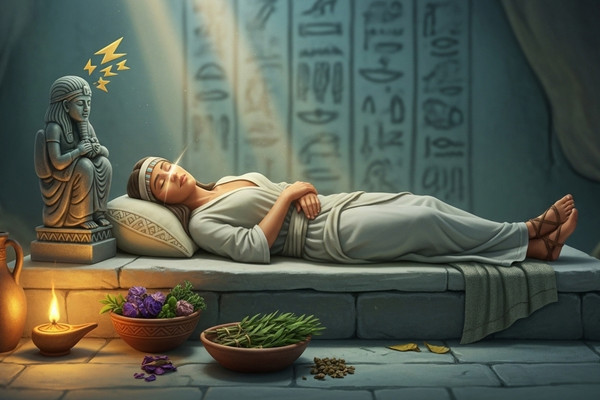
Music: Ancient cultures considered sleep a sacred activity. It is a type of recovery for the mental and physical state.
What does the term Acousticeuticals really mean for people dealing with anxiety, depression, or addiction?
I created the term Acousticeuticals because many of you are probably familiar with pharmaceuticals and also with nutraceuticals. They have a purpose, of course. All of these have a purpose, but Acousticeuticals, which is the use of sound, the use of music, is low-cost, non-invasive, no side effects. It can support any pharmaceuticals or nutraceuticals that people are taking for whatever that you have. This is not geared toward not taking medication. It’s geared toward being in supportive of it.
What you’ll find is when you start using music in this way not just as art and entertainment but using music as medicine can really assist and support all of those. You can do that very simply and a lot of you probably already have playlists that you’re using for different things. You probably have music that you love that helps you through whatever your challenges are in your day. What would happen if you start to target them or created specific playlists to be more prepared for your challenges?
In the middle of your day, if you’re having a tough time or something happens in your day, it’s tough to just immediately go from that experience to say, “I’m just going to be thankful, I’m just going to be grateful.” If you have a go-to playlist that has some songs that puts you in that state, you don’t have to think about it and you can just go to that playlist, go to those Acousticeuticals.
You start to program yourself just like you program yourself in other ways. This works with your triggers. As you know, we all have triggers that set us off. What happens if you can take away some of the charge? All of our triggers have charges to them like a battery. The more work you do, the less charge those have because what they are and you can be prepared for them. If they still have a high-intensity charge, then you’re spending a lot of energy on them. These Acousticeuticals help you take away some of that charge and transition into a deeper or more aware state.
Music, Frequency & The Nervous System
What’s actually happening in the brain and nervous system when we listen to certain types of music?
Depending on what music we’re listening to. I’ll start with the type of music you were listening to, that that relaxing state of music. What’s going on with that? It’s at 60 beats per minute, so your heart has the capacity to actually synchronize or it’s called entrainment. It has the ability to adapt to specific tempos in music. You might utilize this in other ways like you might listen to really high-up-tempo club music, dance music when you’re working out or when you’re studying or when you want to be more focused.
What happens? Your respiratory rate starts to adapt to that and your heart moves quicker which supports that workout. There are actually studies that show that when you’re listening to your favorite music, or this is called preferred music, that you’re actually going to get a better workout than listening to just ordinary music at the gym that they have on. Your music that you love is really important for you. Even people who have traumatic brain injuries or even schizophrenia or ADHD, relaxing music might not be best for them because their brainwaves are moving faster.
Starting with your preferred music, music that you love can be transitional to getting into then those slower states. I would say a no-brainer, excuse the pun, is first starting off with one piece of music I call this your happy song. One piece of music that you love that when you listen to it makes you happy. If I asked you like, “Tim, do you have one song that when you listen to it makes you happy?”
I don’t, but of course I think about the Happy song, “Cause I’m happy.” That’s a great song. It’s like you can’t help but smile when you hear that song because it’s up-beat. I like reggae music. There’s a bike ride that I do on Sunday and at the end of the bike ride, we do this thing called the reggae loop which actually sounds like it’s going to be fun but it’s really straight up a hill. We did that for the first time with my girlfriend.
She joined there’s a group of us that do it and I said, “Do you want to do the reggae loop?” She’s like, “Yeah, that sounds great.” It’s actually a hill that goes straight up and it’s really hard. She’s like, “Why is this called the reggae loop? This is not even a loop. It’s an up and back and it’s really hard,” but the reggae gets you in that in that happy state and we’re just like cruising up this hill.
That’s like a perfect example because reggae music is actually between 60 and 70 beats per minute, believe it or not. Did you notice Tim’s energy shift right even when he started talking about his favorite music? Some people might just have a favorite genre, that’s great. That’s the thing that you moved in from doing, like what’s our next question here right into being, you were already hearing it in your head.
Science shows us and studies show us that even thinking about your favorite song can put you in the state where you’re experiencing the benefits of it. Why is this important? It’s because when we’re going through challenges, especially with any type of addiction or recovery, most of us are looking for dopamine responses. Dopamine is what actually is our triggers are, either not enough dopamine in many cases.
Music has actually been shown to actually assist us in producing dopamine naturally in your body. Music can help you induce this internal pharmacy to produce beneficial hormones to you in whatever your process is going to be. Dopamine, melatonin, serotonin which is great for sleep, oxytocin which is considered like the cuddle hormone or the hugging hormones that we feel we’re safer as well.
It can all create these responses that we normally get from outside of ourselves can be assisted through the use of music. I would invite you, if you haven’t already thought like of your song, like one happy song to write down one song that puts you in a better state and utilize it, sometime in your day to start your day or when you’re having a challenge. That’s the beginning of literally creating a program. It starts with that one song.
Why does music work so well for stress, anxiety, trauma, OCD, especially when talk therapy alone falls short?
The reason why I love that question is when you’re going into talk therapy a lot of us are preparing already for the questions. A lot of times, on a subconscious level there’s something that comes in. There’s a gravity to our shit, excuse my French. All the stuff that triggers us, there’s a gravity to that. We want to hold on to that for some reason. It’s how we have defined ourselves up into this point and there’s a story behind us.
Letting go of that story sometimes on a subconscious level can be scary because we’re defining ourselves in the cultures or subcultures that have created whatever it is that we’re dealing with. We can tend to prepare even on a conscious level, “If they ask me this, I’ll know what to say for that or if I’m not going to answer this one or that’s too personal.”
Music doesn’t do any of that. Music cuts to the chase. Music goes straight to the heart. You cannot be prepared for the type of healing that comes in with music because it’s moving past the subconscious. It’s moving past those brainwaves that allow you to defend yourself. How many of you have had a situation where you’ve heard a piece of music and all of a sudden, you felt yourself crying or you felt yourself emotional?
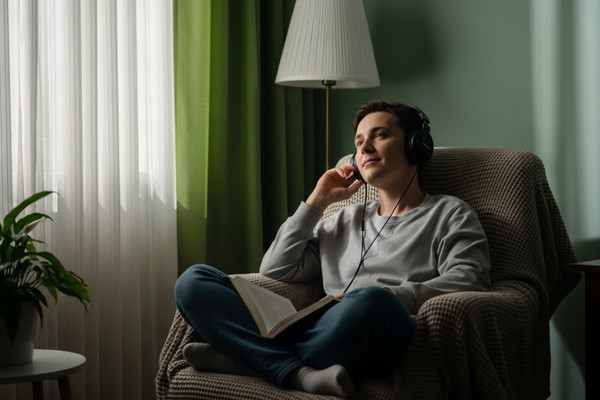
Music: Music cuts to the chase and goes straight to the heart.
Most of us have had experiences where music has affected us in a profound way. I’ve had many experiences of that. That’s why I do this because I know that music can have a profound and emotional effect with it. That’s randomly. Most of us have these experiences randomly. A song comes on and all of a sudden, it reminded me of happened with me, my mom who’s passed away. I’ll hear Chopin’s nocturne in E flat minor and a and immediately, I go to my mom’s passing.
Now I can go to that with gratitude but initially, it brought up a lot of grief that it helped me move through in this process. That is untargeted, I call it, or unintentional. What happens knowing that, that music can create that, what happens when we begin to target it intentionally in our process to assist us as opposed to letting it happen to us? It’s what I call becoming the DJ of your own life.
Again, just like DJs know how to program a group. DJs, whether it’s at a wedding or it’s at a club, what do they do? They play a track they go, “They really responded to that. Maybe I should play a couple more of tracks like that,” or the other way around. “They weren’t loving that one. Okay, now I know my audience.” You’re your own audience. You know what’s going to move you and what’s not.
It’s not just what I’m going to recommend for you. You know. If I had to ask you a song that makes you happy, a song that makes you sad, a song you want to dance to. If you took inventory of music that’s already in your playlists you can really sculpt that a lot more intentionally to specific playlists. Playlists for gratitude, a playlist for sleep, a gratitude for journaling, whatever it is. I think of music as a bridge. This is really important, where are you now, where do you want to go by the end of that, and what piece of music or playlist is going to take you there?
Speaking of mentioned DJs, a DJ’s job really is to read the room and create the energy and create the frequency that’s going to get people where they want to be. If they’re at a wedding, if they’re at a party, it’s a different environment or atmosphere than like a yoga retreat or a yoga event or a spin class or a funeral. They’re all different. You do all the music for Dr. Joe Dispenza.
I do a lot of it.
You used to do all of it and now you do a lot of it. I’m a huge Dr. Joe Dispenza fan. I’ve been to several of his retreats. He talks a lot about energy and frequency. How does your music support those state changes?
For me, it’s not just like a magic recipe of, “We’re going to use this frequency or we’re going to use that frequency.” It’s much more than that. With music that has this type of effect, it’s my belief that music is a carrier of information. When you listen to a piece of music and that singer, you heard like a crack in their voice and something about the way they sang that rendition, there could be ten different versions of the same song. Why do you like that one version?
Music is a carrier of information. Share on XThat’s because within that one version, you’re hearing information that is being given to you or received by that specific person. I think part of the reason why my music has worked so well is my intention when I’m going into there is not random. It’s that it serves the highest capacity of healing for people who are going to listen to it. When we’re talking about like raising our frequency or raising our vibration, what we’re really talking about is shifting our mood. You want to get to a higher place than you’re starting off with.
If you’re in a depressed state or you’re in an anxious state, by the time you’re done listening you want an upgrade of some kind. That’s really what we’re talking about. That’s a great translation of frequency. We’re really looking to upgrade our emotions in that state. We’re not going to be measuring Tim’s frequency. “You went from a 4.2 to a 4.6.” We’re not always measuring our brainwaves, so how do we tell that someone’s frequency has shifted?
It’s usually by an emotional upgrade of some kind. That’s really where it comes in. That’s how my music supports it because I’m creating it for myself first. I’m not creating it for you, although per se, that’s great. If I start to target and say, “I’m going to re-create this for people who need this or that,” ultimately, I’m always an artist. I’m creating for my own healing process first. As I said, it’s an ongoing experiment.
That’s how I start creating it was for me, and then because it helped me, it resonates with other people. Again, that’s where music is happening not just to you, it’s happening in you. When you hear a piece of music that hits you in that way and you’ve had a powerful experience, there’s something going on with you, either an issue that it’s helping you with or helping you release that resonated with you because you needed it in that moment.
This is a great example. If I’m tuning a piano in the room, I have a tuning fork that is tuning that specific string on the piano at E. If I hit that from across the room, it makes the piano string at that same frequency vibrate without me having to touch it or do anything. That string starts vibrating in the piano and you hear it from across the room.
Resonance is something that’s going to magnify a frequency and if that frequency is in you, that song’s going to magnify whatever it is that you’re feeling. If it’s happy, it’s going to magnify that happiness that’s in there. Now all of our feelings and emotions are in there somewhere. Happy, sad, grief. They’re all inside of us based upon the memories that we’ve experienced.
This is what’s called autobiographical memories. Music has the ability to connect us with autobiographical memories. It’s actually being used beneficially in Alzheimer’s patients now to help Alzheimer’s patients access their memories. They play them songs that are based on their autobiographical memory. They might ask a person or a patient, “Do you remember Christmas in 1975?” That patient, they won’t get any reaction.
They find out from their relatives what songs they listened to in Christmas of 1975. They play White Christmas and all of a sudden, it’s an awakening that happens where they’re suddenly communicating. They remember the song. Music’s a language that speaks without words, and that’s why it’s so powerful. The question becomes how are you using it? Are you using it to maximize whatever challenges you have or do you just want to continue to use it randomly in your life?
For me, I use it very intentionally. I schedule actually, just like we schedule everything else in our lives, you have a schedule you we’re constantly looking at our schedule. You know what things you’re doing today. You might have known you had a therapy session today or you might have known, “I have to talk with someone today and this is going to be a challenging situation.”
You know already looking at your day what some of the potentials for anxiety or stress might be in your day. What would happen if looked at that the night before and said, “I’m going to put one song in here before I go into this situation or one song after to help me with that.” Imagine how much easier it is to manage your stress and anxiety.
How does someone figure out what song they should play before a stressful conversation, a hard conversation, a fun conversation? How does someone figure out what song they should play?
How many people reading already have iTunes or Spotify? How many of you listen to music or stream music in some way? Just like you take inventory in programs of your feelings, “What am I feeling today,” take inventory of things going on. What would happen if you took inventory and just looked through your playlist on Spotify. Go through one playlist at a time and say, “I love this song.”
Just by doing that inventory, you might start saying, “I forgot all about this song. I love this song.” I did that a lot during COVID when we were shut down and we weren’t moving out of our house. I felt very limited. I was like, “I need to go through some of my playlists and songs to shift my environment,” because I wasn’t leaving my house. What can I do to actually refresh the environment here?
I started looking at all the stuff I used to listen to in the ‘70s and the ‘80s. The Jackson Five and James Taylor and Motown songs and all that. I started to put them into playlists. I even started to do something what I call a musical vacation. I would listen to a piece of music from a different part of the world that I never heard before. Since I couldn’t leave, I started taking these mental vacations.
I would take a vacation to Jamaica. I’d close my eyes, listen to some Bob Marley. What am I smelling? I’m smelling the beach air, I’m smelling the sand. What am I tasting? Jamaican food, curry goat. Wherever it was that I was experiencing, I would literally take these five-minute vacations and when I’d open my eyes, I felt refreshed.
Music can literally shift our environment as well. If you don’t feel like you want to be in this environment, take a five-minute vacation someplace else. In answer to your question, it’s taking inventory. Knowing what you already love. What’s awesome is you’re in a group setting here, like what would happen if I said to everyone in this group, “What’s your one favorite song? What’s your happy song?”
This could be a great discussion for you guys. I want to know what your happy song was. Now you have twenty different happy songs, “I’m going to try that one. That’s really cool.” You move from just making it a one-song thing. Now you have a twenty playlists of people’s happy songs. “I think I want to try those I’ve never heard those songs before.” The same with playlists like if I asked you to create a three-song playlist for gratitude.
Mine is Sly & the Family Stone “Thank You (Falettinme Be Mice Elf Agin)”. Dido “Thank You”. Louis Armstrong “What a Wonderful Life”. Your songs that make you feel gratitude are going to be different. Again, you take 3 songs from this person, 3 songs from this person, put them in a pool together or a list for everyone, and now you might have 30 songs to do. That’s a lot of fun to do in group settings.
Sleep, Recovery & The Amen Playlist
Let’s go back to the sleep playlist. You created a sleep playlist with Dr. Daniel Amen and I listen to it every single night. It’s become part of my recovery protocol, my mental health protocol. By the way, side note, I heard Barry say a long time ago that I should listen to music at 60 beats per minute, so I just searched Spotify for “sleep 60 beats per minute” and that’s what I listened to and then I told him and he said, “You’re not even listening to my music.” I was like, “I didn’t know you had a playlist.” That playlist is not that old. What was the intention behind the sleep playlist with Dr. Daniel Amen?
It’s an Acousticeuticals, not just music, so we wanted to create a protocol with that specific album. If you don’t know Dr. Daniel Amen, he’s doing some amazing things. I would suggest looking into that because he has a lot of great tools for brain health. Just a little history on Daniel Amen, which I think is really interesting. The brain is one of the only organs that when it’s injured, we don’t look at. You break your arm, you’re going to take an X-ray.
If you fall, you’re going to you’re going to look at that specific part of your body to make sure. If you have a terminal illness, again, you’re going to take PET scans and CAT scans, you’re going to look at the physical body. The brain is one of the only ones that that are not looked at per se for treatment when it’s injured, and that’s what Daniel Amen’s goal was. We need to change that.
He started working with something that are called SPECT scans, and he can actually look at the brain and tell what parts of the brain are not working as well due to whatever we’ve done to it. Whether it’s a concussion or you’ve gotten in a car accident, a traumatic brain injury, whether it is through drinking or any drug addiction or whatever, he can actually look at it and then recommend things to help it repair.
Part of repair is also working with stress and anxiety is over and over again, the more stress that we put on, the more we’re putting stress on the brain as well. We want to look at non-invasive tools to assist the brain. Daniel Amen is a big proponent of utilizing music, has done a lot of research behind it. Everything from my type of music to even chanting to drum circles to things that have been used for thousands of years. Using music as a therapeutic tool is not something that I created. It’s been around, it’s been used in Chinese medicine, it’s been used in ancient cultures and civilizations for healing purposes.
Our protocol was let’s create something that’s non-invasive that people can wind down to at night, so they can shift those brainwaves in a smooth way of doing that, not just going from high beta, let me check my emails, and then you get to sleep but you don’t stay asleep because you were so tired from your day. You didn’t give yourself a chance to transition into that peaceful state.
As you said, you could just be crashing from those high-functioning brainwaves, beta, into delta and you get to sleep but then you wake up because you haven’t processed any of the things that wake you up. Have you thought about what was beneficial in my day like what were the successes of my day? What were the challenges of my day? What were my wins today? If you do that about an hour before sleep, you start putting on music at about 60 beats per minute and I won’t make the same mistake twice. I’ll suggest my music which is on Spotify. You can find that playlist, Tim has it as well. He can probably give you the link to it.
If you start to listen to that about an hour before bedtime, and I would even suggest with this community that you journal and go through your day so that you don’t have to think about it and wake up to it. What am I grateful for that happened in my day? What was challenging in my day? If you can release those challenges before you go to sleep, you don’t have to take them to bed with you like you feel that relief your body feels lighter and you don’t have to wake up with the same challenges either.
It’s a cycle. We call it a sleep cycle because it’s not just about bedtime. It’s about how you’re waking up. If you’re waking up in the same cycle you’re just going around in circles again. How you manage your stresses and your anxiety during your day affects your sleep cycle. If you’re managing your stress more effectively, you’re also producing less stress hormones which are like cortisol or adrenaline like all of the things that keep you up at night.
If you’re managing your stress more effectively through music, then even studies show this that listening to relaxing music can produce less cortisol in your body. These aren’t just like woo things we’re talking about or things that affect us emotionally. This has an effect on your physical body the same way that pharmaceuticals and nutraceuticals do, Acousticeuticals does.

Music: Manage your stress more effectively with relaxing music to reduce cortisol levels.
Why does the sleep playlist work for people who struggle with racing thoughts, anxiety, or sleep issues?
When your heart is moving into these more smooth and orderly rhythms, which again, targeting the heart at 60 beats per minute, the brain and heart have a communication that happens that goes on. It’s not just like okay, you’re going to have a relaxed heart or move into these orderly rhythms, this coherence but it’s not going to affect your brain. There’s a communication that’s going on which is called heart-brain coherence. Eighty percent of those communications go from heart to brain, not the other way around through the vagus nerve.
When you’re listening to this music at 60 beats per minute and then if you connect that like in journaling, “I’m grateful today,” it’s like a one-two punch because the music’s working with synchronizing your heart to that relaxed state, but that elevated emotion also has an effect on the physical body, moving into kindness, compassion, and gratitude. That starts with you, so if you can give that to yourself, it actually ripples out.
Your heart moves into these more coherent states that affect your physical body, but the research shows that when your heart is moving into these states, your brain starts to produce more alpha brainwaves, so you start scaling down, you start slowing down. We hear this in indigenous cultures, the longest journey you will ever take is from your mind to your heart, that twelve inches from your mind to your heart. It’s not that easily achievable. It’s challenging. Throughout history, cultures say, “If I can just stop my mind.”
This is nothing that’s new to you. Some of the brightest minds in our world, the Einsteins of the world, the Mozarts of the world, the Teslas of the world, like how can I get out of the analytical mind because when you do, that’s when the magic happens. You start moving into more creative states and you start getting information in different ways. Intuitively, but also, Einstein said he didn’t always know where that answer came from. When you get an idea that pops in, like where is that coming from?
You might have your own thoughts around where it’s coming from. Some of his greatest ideas also happened when he had these emotional blocks. Einstein himself was a musician. He played violin and he also played piano and his relatives, his wife and I think it was his daughter, wrote about hearing him from another room saying, “I got it,” after he would play violin or piano. Music helped him get out of that analytical mind. That’s the key. When we can empty our mind out, that’s when we start getting new ideas, new ways of reasoning. We’re so caught up in our worlds.
When we can empty our minds, we start getting new ideas and new ways of reasoning. Share on XDr. Joe talks about this as well. You get up, you shower, you use the same shampoo. You do whatever you need to do, you have your coffee at a certain time. If we don’t bring a cognition about recreating our day and changing it up in some way to break the patterns, then we’re just going to have the same day, it’s like Groundhog Day over and over again. Music’s a great way to break that up.
What I’m hearing you say is getting into a flow state. Einstein gets into a flow state. He plays music to get him into a flow state. You can exercise to get into a flow state. There are different ways to get into a flow state, but if you want to do something different, getting into the flow state is going to help you get there.
The less analytical mind, the better. I can dive deep into this with music, not just like songs, but literally a lot of studies around chanting. Again, it sounds very woo, but the chanting “ohm” has been shown to literally activate the areas of the brain that are geared toward peacefulness. Why do these cultures use this for thousands of years? It’s not like for no reason, it’s not just like a New Age concept it’s because they work. The Kirtan Kriya which is the “sa ta na ma,” like you can look up all these things if you have more interest in it.
For twelve minutes in your day, I guarantee you, and no one’s going to be listening to you, do it on your own, it’s going to take you out of that mental chatter because when you’re chanting something else, different words, different language, it’s hard to think about your daily stuff that’s going on because your focus is on the repetitive chanting. Again, lots of research behind this, lots of research behind drumming and drum circles, moving us to these alpha or theta brainwave states. That’s where these flow states happen.
You might get an idea of something that you’ve wanted to do, you’re in here, and you have time, like “I really wanted to write a poem today, or I really want to write a book about this,” or whatever it is. Those ideas are not always going to happen from the analytical process. It happens when you move to flow states.
One more question on sleep. Is there a difference between music that helps you fall asleep and music that helps improve sleep quality?
This is an area of where we need to go with it. This is really where research needs to go because it’s not that much around that. We know relaxing music, music at 60 beats per minute, but we haven’t delved deep into it. You might find a few studies but not a ton of music that helps you stay asleep longer or for when you wake up per se. Again, this is a pretty new area of research in general compared to a lot of other areas of research just because most research that is done initially, we are changing this and there is a lot more research out there, but is done by pharmaceutical companies who are looking for return on investment.
There’s not a lot of return on investment for sleep music. I get a fraction of a penny. Every time Tim listens to my playlist I get I think $0.0003 for every time someone listens to music. There’s not a ton of incentive for people to do studies outside of it being beneficial and low-cost, non-invasive, no side effects. People are getting more interested. We’re living in an exciting time.
I want to open it up to you, guys. Questions?
Musical Nutrition & Emotional Regulation
How’s it going? You talk about brain waves, you talk about beats per minute and frequency. How does a layman measure that? They talk about certain crystals, certain rocks, stones have a type of frequency that you can tap into if you bring your body to the right frequency. How can a layman measure that? We can identify songs in our playlist, identify the specifics of the frequency, beats per minute, and then continue that and understand that more?
I’m going to give you two tools to use. Ultimately, you are the best way. You know. Your body is having a conversation with you all the time. If you place your hand on a burning stove, what’s your body saying? If you taste a food that you don’t love, that someone says, “Broccoli’s good for you,” and you break out in hives. Your body knows what is good for you. That exercise that I did with you, the first exercise that I did, why I do that exercise because it gives you a more subtle way to understand when something feels expansive to you or something feels contractive to you.
When you listen to a piece of music that you love, it makes you feel expansive. That’s something I ask myself all the time not just with music. It could be with someone with a person too, that someone says, “You should work with this person,” or, “Read this person’s book.” I ask myself, when I listen to them, when I hear what they’re saying, does it make me feel expansive or does it make me feel contractive? The criteria is expansive, makes you feel like you’re underneath a night sky. How does that feel for you when you’re when you’re doing that?
Contractive is more like when you’re cold like on a winter’s day and you feel like you want to go like this. You’re protecting your heart, you’re bringing protection in. When you listen to a piece of music, that’s what I always suggest first. “Does it feel expansive to you?” It might feel dissonant to you. Someone, a friend, might recommend a piece of music and you go, “God, when I listen to that person’s voice, it feels like nails on a on a board.”
That’s a perfect way to under understand it or you listen to it go, “I love Happy.” You listen to “Happy,” you feel expansive. That’s the first criteria. Second, we have wearables, as well a lot of people are wearing like Oura rings and we’re going there really quickly. Pretty soon, already the next version of iPhone has a way that has an app that probably costs $1.99 to download where you can actually measure your heart rate.
Those are two different ways. You can do it physically through wearables and if you’re improving, your heart rate’s going down when you’re listening to a slower piece of music, you’re moving into a relaxed state. Also, your heart rate variability, so you said you have an Oura ring. It’s going to tell you your heart rate variability. If you’re listening to my piece of music for 30 days and you notice that you’re waking up or when you’re going to sleep, you’re measuring, your heart rate variability increases, that’s a prime marker that measures your overall health and your heart health.
We’re in a state where a lot of things can be measured, so it can be measured emotionally, mentally, how does it make you feel? Physically, and then the last one, this is all part of healing, physical, mental, emotional, and also spiritual your connection whether it is through traditional religion or something different or it’s just connecting to nature for you. How does this make you feel?
Ultimately, music from a spiritual and religious history was used to amplify that connection to something beyond ourselves. If you’re looking to put something into your spiritual practice, you’re going to also know spiritually, “That really felt helped me feel connected,” or, “When I heard that, I journaled a lot more.” Just track your energy and see how you’re feeling after listening to a piece of music.
Just a question, how do you repeat that? If you find a song that you like that hit it right, what instruments can you use or what tools can you use to actually measure the right frequency, beats per minute, so that you can find other songs and other frequencies that match that?
You can go into Google give it an example of that song. You can go into any free AI that you’re using, ChatGPT, “Here’s a song that I used that’s 60 beats per minute that I really love. Can you make other recommendations based on this?” everything is at your fingertips. Many years ago, when I started that, this would be a much harder question, but all of the technology that’s available to us makes it a lot easier.
Go to YouTube and type in, “Songs at 60 beats per minute.” there’s also a company I use and I work with, I collaborate with them called Hemi-Sync, that works with something called binaural beats that helps us to target those brainwave states more effectively by listening with headphones. Look into that as well. Yeah, and listen to that song. Keep plugging it in until you find something else. Great question.
Other questions?
I suppose you could go into this and not even measure your heartbeat. However, something makes you feel, just go with it type of thing.
Yeah, absolutely. Ultimately, we know. When our mood shifts, I call that like a vibrational upgrade. You know when your mood shifted, when you started out this way and you ended up that way, if you could do that with a song, why aren’t we using this more so? What else can get you there that effectively? What I’m suggesting isn’t necessarily rocket science, but it’s awareness.
Knowing this now, how do you plan on moving forward with it, whether it’s just one simple song in your day or whether it’s a full program of what I call incorporating musical nutrition? If you think of your three meals during your day, breakfast is geared toward breaking the fast of not eating in eight hours, what are you utilizing to break the fast of the first song that you hear? You haven’t really heard anything for eight hours. That’s really important, just like breakfast. What do you want to nourish yourself, what song is going to start the tone of your day?
By lunchtime, same as lunch, we eat lunch to re-energize ourselves, to reset ourselves, to regenerate our energy. The same thing happens emotionally. If you started your day off great and you had this great song that you started your day, and as things come into your day, you’re feeling like your energy is more drained, what song can shift that and re-energize you? Do you need to listen to a relaxing song or do you need to get up and dance and move?
Dance has been shown to increase cognition, to increase our focus, and to reset us. Movement can be great. At night, I think of like dessert. To end your day, sometimes we have a sweet tooth that we have something that’s going to feel like it’s cheating or nurturing ourselves. What can be sweet to yourself, like a piece of very gentle music to nurture your soul at the end of your day before you sleep?
Being gentle with yourself is really important because those same demons come in and that gravity to those situations, that same thought process sometimes that gets us here is the what I call an attunement that wants to keep you there. I think of a piano that when you tune it and it hasn’t been tuned for a while, that piano immediately has a pressure that those strings pull a certain way.
It’s not used to that being in tune. This is what I’m talking about. You can feel really great and great might not be what you’re used to. That attunement, that gravity of your own stuff and those own situations want to pull you back into that attunement for it. Plugging music in when you feel like you’re being pulled back is just an amazing tool to keep you in tune. Your instrument’s tuned. Right now, we’re doing breathing exercises, we’re slowing down. You’re in tune. What’s taking you out of tune is just as important so you can learn how you want to spend your energy around those situations.
Just a comment, actually. First off, thank you very much for coming, this has been fascinating. Music is one of the biggest tools that I like to use to help calm my nerves or get me ready for something. I know what song to listen to but understanding the science behind it just helped me recognize how it’s working and how it’s being applied. Walking in, I had my own preconceived notions about what this show was going to be, but when you had that music playing, as soon as you started speaking, I was mesmerized. I was just focused and very fascinating. I appreciate your time.
Thank you. I appreciate you appreciating it. I receive that, thank you.
I had a question. Obviously, the emphasis, the focus here is music, but I know some people use the Calm app or listen to a book to fall asleep. Are there any similarities with the studies found? I know we can’t necessarily do like a heartbeat per minute maybe with a book, so I was just wondering if that’s anything you’ve looked into.
Yeah, so I love that question because for me it’s not just music. I wrote a book on all this it’s called The Secret Language of the Heart because it is for me about the heart and a conversation with the heart. Ultimately, my belief is that the heart is the container for our mission, our purpose, whatever it is. Working with the heart is really important. I use also sound and vibration because they’re not the same. Music has sound and vibration in it but not all sound and vibration has music in it.

The Secret Language of the Heart: How to Use Music, Sound, and Vibration as Tools for Healing and Personal Transformation
Sound might be like a crystal bowl that you’re using or just the tone that’s in Calm. There are studies around that specific like singing bowls work with moving us into a parasympathetic state which is the state that where our body is relaxed and we can rest and digest, it puts us into a more healing state. Also, if you think of just the term vibration and I love that you talked about audiobooks because there’s new studies that are showing that people are sleeping with audiobooks and it’s helping people get to sleep.
Why is that? There’s something in a voice as well that can be conducive to moving us out of our thinking mind. Also, the tone of someone’s voice or the conversation that we have. I’m sure you’ve experienced this where someone might have said to you in a moment of despair, “It’s going to it’s going to be okay.” have you ever felt that that something that someone said you really felt that there, you felt their authenticity? That also made you feel safe and could move you into that same state.
Also, the other way around. Has someone ever said something to you and you’re like, “Yeah, I heard them saying the words, but that didn’t feel authentic to me. Something’s not right.” that’s where our intuitive self and our heart starts to speak to us in different ways and you feel that contractive state. “I don’t know, that person’s saying all the right things but I feel like I need to protect myself.”
The more aware you can become that your physical body is constantly sending you messages about music, sound, and vibration, you start to bring that awareness in beforehand to a conversation and say, “I’m really going to listen in a different way and see what it feels like for me, not just the words that they’re saying.”
To use the Calm app, as I said, this is an experiment. I don’t have all the answers. Anyone who tells you they have all the answers, for me, they’re just making prescriptions that are for you like, “You need to listen to this frequency because it does this,” or “This frequency to do that.” I don’t feel it’s a one size fits all and I really feel like we need to upgrade the conversation to what is going to be right for me today because we’re changing every day.
A song that you listened to yesterday might not be the right song for you to listen to today. You’ve changed. If you had a release, you had something a healing and you were using a song that felt good to you then but now that message doesn’t feel right for me. You have to keep checking in, keep experimenting, keep feeding your soul and keep listening. Keep listening to you because ultimately, you are the best judge of what music, what sound, what vibration’s going to be right for you.
Thank you.
You’re welcome.
Integration Into Mental Health & Recovery
Any other any other questions? Okay, we’ve been going for a minute here and I got lots of other questions I can ask you but is there anything else that you want to talk about? We talked about music as nutrition, which I was going to go into that but you talked about it anyway. We’ve got integration into mental health and recovery. For clinicians, therapists, how can music be integrated safely and intentionally?
For clinicians and caretakers, it’s the same process. Very often, caretakers and clinicians are people who are overgiving sometimes. They would be seen more as givers. Even some of you might consider yourself it’s harder to receive than it is to give, and sometimes so caretakers are becoming caretakers because they’re using that in a positive way. A lot of times, I’m sure caretakers within what you do as well are people that have had challenges.
Right, because I’m in recovery.
Right, because you’re in recovery, so you’re using it in a positive way because you’re probably a giver and you have a harder time receiving. There’s no judgment. A lot of us have a hard time receiving. With caretakers and clinicians, how do we use these tools to recharge our energy? We need them to give fully to ourselves. It’s similar to what we hear about what they say to a mom. If you’re with your kid on an airplane and the plane’s going down, the first thing you do is you take the mask and make sure that you’re getting enough air because the child doesn’t know how to do that. You have to be there to take care of them.
How are you recharging yourself? It’s the same thing, use it in the environments like the way we were using music when it came in. Maybe have soft music or a room that’s dedicated to playing music with a small system where your caretakers can go in and just recharge themselves for the day, or give them some of these tools to utilize on their off times as well. Same things that we’re using for patients are the same even more so sometimes needed in in areas like that.
Everyone just wants to feel safe in this noisy world. Share on XI just had like someone that I know who used music in their recovery in their room, they were utilizing my music. The caretakers and nurses that came in were constantly commenting and saying, “We should have this in here all the time. It makes it feel so different in here.” a simple tool for stress management, playing the right music in the in the right situations can really help in ways that caretakers don’t realize the magnification of tools like this.
This is an outpatient treatment center and we run groups. What type of music would you recommend playing like at the beginning of group for when you people before group actually gets started?
I suggest meeting people where they’re at. I played very relaxing music because we wanted to show people that it doesn’t take long to come into that space. Sometimes I’ll bridge that as well and go more into music with a little bit of rhythm like similar to music that you play for yoga where it has softer music but it also has some rhythm. If you have Spotify and you look me up, Barry Goldstein, you’ll see an album called Yoga Journeys. That’s really nice for that as well that has music with rhythm to it but it’s also relaxing and then bridge into it so that people can move into the space.
Music is setting the tone for a lot of groups. What’s the most important thing is we want to feel safe. We want to feel safe and not just in this type of care, everyone wants to feel safe. It’s like a noisy world out there now. I did an event for people, a 90-minute event that we did online and just because people there just want to come into a space where it feels more sacred, more of a sanctuary. Music can just do that, playing that music before moving into the group.
Discussion Wrap-Up And Major Takeaway
If everyone here or reading was to use music as a healing tool starting today, what’s one simple practice you’d recommend?
The simplest practice that I recommend is that one happy song. Most people can identify one song, and that’s always a starting point because, again, when we’re moving into a place where we’re bringing a new tool in, you can get a lot of pushback from your emotions that are going on. The biggest pushback is time. Most people will say, “I don’t have time for that. I don’t have fifteen minutes a day. I don’t have ten minutes a day,” when I tell people it’s a ten-minute meditation. Most people will not say that they don’t have three minutes a day. That’s you can’t get much pushback that way. That’s why I always say use the tool that most people cannot their subconscious can’t come in and say no to.
You just want to make it easy.
Yeah, make it easy and then you hear one song, “Why don’t I listen to two songs? Why don’t I create a playlist? Why don’t I start using this in different ways?” you have to get a yes first. You have to realize that it’s more powerful for people to say no. Chris Voss, who we both know who is a like an FBI negotiator, says, “Most people want to tell you no, so figure out no-ended questions.” If I said to you in this group, “Would it be unreasonable for me to ask you to listen to one song a day that might shift your mood,” what would you say?
No.
See? It’s much cooler saying no.
You were talking about Dido earlier and I’m thinking I want to listen to some Dido cause I remember that brings me back to a different time in my life, but I love Dido.
Yeah, and that one song is called “Thank You,” so what better song. As I said, I use Louis Armstrong “What a Wonderful Life” which has been used in many different decades for people to bring in that in that gratitude.
Where can people learn more about you? How can people connect with you? Anything you want to promote? Anything you want to talk about?
BarryGoldsteinMusic.com is like a hub to get to a lot of my music, but I also have courses for people who are more curious about how they could work with music and want to dive into a longer type program with me. That’s the best way you’ll find it. A lot of free information as well like on my YouTube channel a lot of you already have subscriptions into Spotify. I’ll be taking on some mentees, I’ll be mentoring people a little bit more and I’ll also be doing private sessions with people using sound. If people are interested in that they can email me directly at MedicalAndMusical@Gmail.com.
Recovery isn’t just about removing substances. It’s about learning how to regulate ourselves, soothe our nervous system, and reconnect with something bigger than our thoughts. This episode was a reminder that healing can be felt not just understood. Barry, thank you so much for your time. I appreciate you. I got a lot out of it. Did you guys get a lot out of it? Awesome.
Thanks for having me and thanks for the amazing work you’re doing here and for the show.
Important Links
- Barry Goldstein
- The Secret Language of the Heart
- Barry Goldstein on YouTube
- Barry Goldstein on Spotify
- MedicalAndMusical@Gmail.com
About Barry Goldstein
 Barry Goldstein is a Grammy Award–winning composer, producer, and pioneer in the field of therapeutic sound and music for healing. With over three decades of experience, Barry works at the intersection of music, neuroscience, and emotional wellness, creating intentional compositions designed to support nervous system regulation, stress reduction, improved sleep, and mental health recovery.
He is the creator of Acousticeuticals™, a term he coined to describe music engineered to deliver measurable health benefits through sound and frequency. His work has been used in hospitals, treatment centers, medical practices, and research settings focused on anxiety reduction, trauma recovery, brain optimization, and overall emotional well-being.
Barry has collaborated with leading experts in neuroscience and human performance, including Dr. Daniel Amen, Dr. Joe Dispenza, and Dave Asprey. His therapeutic music projects include a widely used sleep playlist created with Dr. Amen to support brain health and restorative sleep. His compositions are frequently incorporated into meditation practices, brain training programs, and recovery-focused environments.
In addition to his work in healing and wellness, Barry is a Grammy-winning producer of the “69 Freedom Special” with Les Paul, and his music has charted on Billboard’s Top Ten New Age Albums. He has created soundscapes for New York Times bestselling authors such as Shirley MacLaine, Neale Donald Walsch, Gregg Braden, and Anita Moorjani, as well as soundtracks for major films, television programs, and PBS specials.
Barry continues to push the boundaries of sound, technology, and frequency-based innovation, developing music, apps, and tools designed to support mental clarity, emotional regulation, peak performance, and sustainable well-being.