What if everything you’ve been told about addiction treatment is wrong?
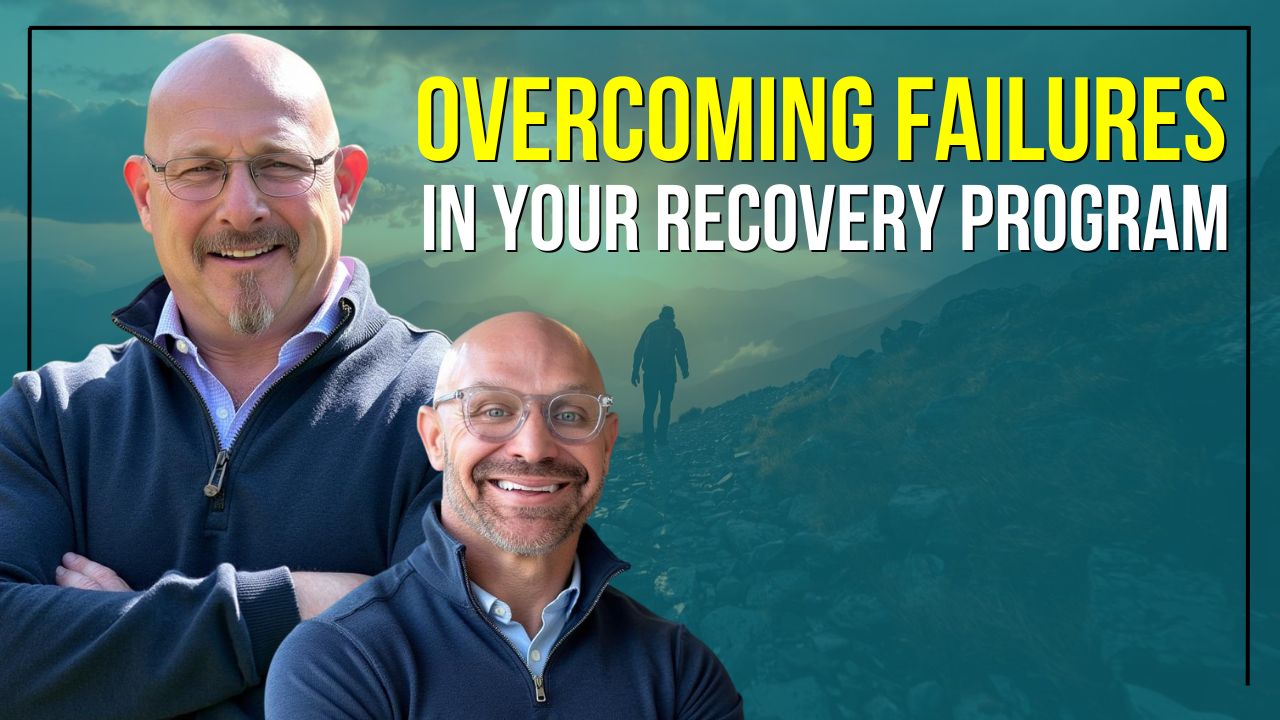
In this powerful episode of I Love Being Sober, recorded live at Camelback Recovery, host Tim Westbrook sits down with Jimmie Applegate — transformational consultant, treatment center owner, U.S. Air Force veteran, and author of Addicted to Failure: Why the Rehab System Doesn’t Work and What Must Change — for a conversation that challenges everything the addiction treatment industry doesn’t want you to hear.
Jimmie pulls back the curtain on a $16 billion industry with a 60–90% failure rate, exposing why so many people relapse after completing rehab — even when they do everything right — and why the system keeps blaming the patient instead of fixing the model. Drawing on neuroscience, personal lived experience, and years of frontline treatment work, Jimmie makes the case that the 30-day treatment model is not just ineffective — it’s incompatible with how the brain actually heals from addiction.
In this episode, you’ll hear:
- Why rehab keeps failing people — and who’s really responsible
- The biggest myths about addiction still being taught in treatment today
- What neuroscience actually says about how long recovery takes
- What genuinely personalized, individualized care looks like
- How to reframe repeated relapse as a system failure — not a personal one
- The 10forAddiction movement making treatment accessible for everyone
Whether you’re in recovery, supporting a loved one, or working in behavioral health, this episode will challenge your assumptions, validate your experience, and leave you with a completely new lens on what healing really requires.
🎙️ Listen now. Share with someone who needs to hear it.
📖 Addicted to Failure is available on Amazon and Barnes & Noble.
🔗 jimmieapplegate.com | beaconcharities.com | 10foraddiction.com
—
Watch the episode here
Listen to the podcast here
Overcoming Failures In Your Recovery Program
Jimmie Applegate On Why The $16 Billion Rehab Industry Keeps Blaming Patients Instead Of Fixing The Model
Welcome to the show, recorded live here at Camelback Recovery with our amazing community. If you have ever sat in a treatment center wondering why nothing seems to stick, why you or someone you love has done the work, checked every box, and still found yourself back at square one, this conversation might be one of the most important you have ever heard.
My guest spent years navigating addiction himself before becoming one of the most outspoken voices calling out the system that was supposed to help him. He is a US Air Force veteran, a certified neuro change solutions consultant, a heart math practitioner, a peer and recovery support specialist, and the owner of Beacon Treatment Center in Arizona.
He is also the author of a book that pulls no punches, Addicted to Failure: Why the Rehab System Does Not Work and What Must Change, a raw research-backed indictment of the $16 billion addiction treatment industry and a roadmap for what real recovery actually looks like. He brings humor, honesty, and heart to everything he does. When he is not challenging the treatment industry, you might find him cooking Dutch oven meals around a campfire or playing the Native American flute. Please give a warm welcome to Jimmie Applegate.
Thanks, Tim.
Jimmie is also a friend. We have known each other for over a year, maybe a year or two. Five years?
I do not know.
Looking Back To Jimmie’s Personal Story
Before we get into your book, take us back. You lived on both sides of the system as a patient and now as a treatment center owner. Tell me a little bit about your story.
My story as an addict?
Yes, and why you ended up getting sober. What was it like? What happened? You can give us a shorter version if you like.
I am happy not to go back into childhood history, but I am happy to answer if someone has a question about it. Suffice it to say, it started way back at age five with a babysitter, and that started a baseline in Jimmie’s life that made a mix-up between what is intimacy, what is love, what is passion, what is physicality, what is sex, and all those things. My addiction was pornography for 30 years. I was the kid who was stealing my dad’s Playboy magazine.
The neighborhood kids knew where the books were, and we would exchange them. This lasted all the way up until the ‘90s, when the internet was born. That is when pornography addiction really took hold for 30 years. It did a lot of things that ended my life in the sense that a process addiction is still a chemical addiction. It had a very good way of making my brain go backwards, making me become dumber, slower, and not a productive member of society or work efficiently.
Those were the parts of my life that were messed up. It was not like I was in jeopardy of going to jail because I was using or driving while I was using. It was a different type of addiction than the process of addiction is. The near miss that really caught me and turned me around was in the middle of it. I was planning an adulterous moment with my wife. Believe it or not, it is my anniversary. We have been married 31 years. We made it 31 years. Now she has made it 31 years. Clap for Tamara, not for Jimmie.
Did you get married when you were 15?
Yes.
When you shave your head, it makes you look young.
Anyway, I was planning an adulterous moment with my wife. In the middle of that planning, I thought, “What the hell are you doing? I am not a person who cheats on my wife. I am not going to do that. What am I doing?” I recognized how far this addiction had brought me and how far backwards it had actually taken me.
At that point, that was the event that said, “Son, you need to get help.” The help started with one-on-one counseling with a psychiatrist for a year or a year and a half. It went into a twelve-step program. I can elaborate on that more, but that is the background of how I got into my addiction and where it was. Again, I am happy to elaborate on addiction if you want.
We are going to open it up to questions towards the end. If there is anything that he said or anything that happens during this conversation that makes you think of a question, just remember that question. We will open it up. I can promise you that if you have a question, somebody else probably has that same question. I have seen people come up here after the show is over and say, “I have a question.” I was like, “Ask the question in front of the group.”
Someone has the same question. As you, I wear my addiction on my sweatshirt sleeves. I am an open book. I have sat in more than a couple of meetings that started with, “My name is Jimmie, I am a recovering addict.”
How would you say getting clean and sober looks for someone who is addicted to substances or just struggling with mental health? A lot of times, they go into a treatment center or a twelve-step program. What did the recovery process look like for you?
The recovery process for me looked like counseling with a psychiatrist and being encouraged to go to a twelve-step meeting or an SA meeting, such as Sex Anonymous or Pornography Anonymous. The genetic ones that I had selected were an addiction recovery program where all addictions are encompassed into one. That is really where it started, with me learning about the twelve steps. The frustrating part was that it worked for a minute until it did not work.
I would wonder, “What was I doing wrong? Maybe I could find some answers.” I would go talk to the next person and find a counselor, a psychiatrist, or an advisor. They would say, “Jimmie, I have the solution for you. Go through this door. It is this twelve-step program.” I thought I must have messed it up the first time. I will have to go back through again. I will do it again. No problem.
You get into year three and year four, and you realize “This is not working. I have tried this over and over, and I need someone to tell me what the solution is. I need to figure out more of that.” Someone would say, “Jimmie, I have this answer for you. Go through this door over here. This is a twelve-step program.” I had done it a couple of times, but I thought I had been screwing it all up. I thought I needed to do it again and do more of that. I wound up finding a guy who knew more about the twelve steps than anybody.
He had been a professional sponsor for a long time, and we spent an entire twelve months detailing every single step. I was not going to miss anything this time. I was going to do it in detail. I’m going to make sure I do not screw it up. I went through all those paces, and it worked again until it did not work. That twelve-step back and forth brought me down this path of trying to figure out that this is not enough. This part of the program for Jimmie was not enough.
There were more things, and I needed to go out into the universe and Google to start figuring out what else is out there for addiction recovery that could help me. I started learning about “What is this trauma stuff? That might be interesting. I need to see if that applied to Jimmie. What is this attachment disorder? That really sounded like Jimmie. I had better talk to somebody about that. What are these mood disorders?”
I realized, “I was always pissed off about something.” I had to custom-build my own treatment plan and put all the pieces together before health and sobriety for a period of time worked for me. I had to figure it out myself. That is what brings me, Tim, to my entire story and where I am at. Because of that path, it has led me down the path of figuring out that the system is broken. Just because somebody said, “Jimmie, go through this door over here, this is where salvation lies,” I kept being steered down this road over and over again.
I thought, “By round four or five, I must be really messed up.” It was helping others, but it was not helping me. I thought, “God loves you guys, but does not love me. That’s messed up. What is going on? What am I doing wrong?” It must be my fault. I had to figure out that it was not only things in the twelve-step program door, but also other things that I had to include to make my treatment package more well-rounded. That is when health really came. I had to customize it myself.
Take us back. You have lived on both sides of the system as a patient and now as a treatment center owner. What was the moment you realized the system itself was broken, not you? You have already kind of answered that question.
Part of that was my journey. I did not know it was like that for everybody, but I started around that time volunteering in recovery centers. I would go in and teach. I would take the guys out to the wilderness, and we would do outdoor recreational therapy, get the kayaks, and hit the ponds or the lakes. I enjoyed it for a couple of years. Somewhere in there, our youngest son graduated, and we became empty nesters. There were no more wrestling track meets to go to. I have all this free time.
Maybe it was time to start another company. Let us go start a business. It just made sense at that point to get into behavioral health. I have done construction and a variety of different things in the past. Behavioral health is not even a little like construction. Let us start a recovery center. As I started hiring people from within the industry, they would say, “Let us do it this way.” I’m like, “No. Let me do it that way.” That’s a typical answer that said, “We’ve always done what we’re always doing because that’s the way we always did it.” I’m like, “No. You have to lay out here in our brand-new program. It’s what F-ed me up for years. Let’s not do that crap anymore.”
I started putting it together. Jimmie’s plan was not solo to Jimmie. The pathway that I went down was not just my pathway. Other people have been doing this. Now I am hiring people from within the industry, and they are trying to make the same program. I’m like, “No. There’s got to be more pieces.” I had to start digging and figuring out more stuff. That was really where the eye opener came. The industry is totally broken.
You guys are just doing what you have always done because that is all you know. You are not helping anybody. The statistics in the United States of America twelve months post-treatment. What’s the stat? Show that only 30% to 40% of us stay sober. United States of America National statistics, what does that really mean? 70% is the failure rate. Count off the next nine people next to you, and statistically, seven of you will not be sober, while three of you will still be sober. That is messed up. It is 2026, and we are in a landscape where we have not put it together yet.

Recovery Program: Only 30% to 40% of people 12 months after a recovery program stay sober. It shows a 70% failure rate.
I am glad that you are at a place like Camelback, where at least you have someone who is saying, “If you fucked up, come on back. We are going to help you out some more.” “You just slip? I understand, slip, I got it. Come back, let’s try again. I love you. Let’s do it one more time.” Not every place does this. Most of them do not do this. You should recognize that for sure.
In your experience, what is the difference between a process addiction? Process addiction was your thing, and now you work in behavioral health, and most of the people, I assume, have a substance disorder.
They are going to come in for a substance use disorder, alcoholism, or meth, or whatever it is, right? Their favorite plan is cocaine, or what? A substance. To have a co-occurring or a secondary addiction is very common. Can we be honest for a minute? If I ask you guys a question. Substance use disorder, alcoholism, yes, no, most of the room, right? Keep your hand up if, in addition to that, that is a process. That is pornography, that is gambling, that is gaming, that is social media.
See, there is overlap. There is just as much overlap there as there is in my center as well. There is overlap. Why? It’s because you and I have a proclivity to become addicted to stuff. I stopped using meth, and now I go to the gym, and I became addicted to that. I stopped doing that, and then I started buying shoes every week. I have a proneness, a proclivity to be addicted to things. Compulsive overuse. It does not matter if it is meth, pornography, or buying shoes.
The solution. It is the way we numb out.
It is the way we numb out, right? I love the way Joe says it. Joe Polish would say that it is the solution to the problem. It is a messed-up solution to the problem. I drank so that I could numb my problem. It fixed it. Now I have created another problem.
The Core Argument Of Jimmie’s Book
It is a drinking solution, not a drinking problem. The book says that the rehab industry fails 60% to 90% of patients and then has the nerve to blame the patient for it. Why do so many people relapse after completing rehab, even when they have done everything right? Why does the system keep pointing the finger at the person instead of the model?
Honest question again. How many guys have been through recovery one time? Two times. I’ve been in a recovery program three times. I’ve been in a recovery program four times. There are still guys with their hands up five times. I could keep going. I had a guy one time who came in, and he was like, “You are the 75th place I have been to.” He was bragging. Holy crap, dude. You are just checking them off here.
The reason why we have this repeat go back in is just really the way that the system is engineered to help us understand or think, believe for a minute that a 30-day program actually works. Why would we think that? I know I finally got a problem. I finally decided I had to do something about it. I’d better go over and find the treatment professionals. Now, I interviewed 4 or 5, or 8 of these places, and they all say they have got this 30-day program, and that must be the gold standard, then.
“They all say they can fix me in 30 days. That is what the industry says. They are the professionals.” Somehow, not only does the industry have it, but just normal, regular people have it. If we could use the word normies for just a second. I do not like that word, but you know what I mean when I say normies. We could use addicts who now all of us have this collective belief that 30 days is the gold standard.
That is when you can wave your magic wand at me, and I can get fixed. We have this idea that we will do this. Guess what? There is absolutely no neurological background. There is no behavioral science that says, “In any way that I can fix an addictive brain in 30 days.” I cannot wave my magic wand at you in 30 days and fix you. Somehow, we got this F-ed up idea in our brain that says that is what exists in society in behavioral health.
Therefore, we do that. The repetitiveness of that is built into this broken system that somehow still has the idea that 30 days is the gold standard. The reason it is the gold standard is because of insurance. It is not because Tim and Jimmie believe we can fix you in 30 days. We know we cannot. That is why you got a program longer than 30 days. That is why I got a program longer than 30 days, because I know I cannot wave my magic wand at you in 30 days.
That is why we say, “If it did not work in two months or three months, come back.” Ours is six months. That means you could be there for four months or ten. It depends on how you are doing. You might be here for ten months, and then you might come back two months later because you slipped. “Cool, come on back.” That should have the door open to be able to do that. That repeatness is just because we have set it up for failure. There are reasons why insurance did that and talks about it. That is really the biggest reason why there is this relapse and repeat, revolving door program that is going on.
A recovery program is repetitive because we have set it up for failure. Share on XYes, it is like the 28 days are not enough time to rewire our brains.
It is not. We should not think that, guys. We should not show up thinking, “I see that the program said 30 days, and so that means I can get fixed in 30 days.” That is the other treatment professionals. That guy has got three letters behind his name. He must know what path he is talking about. All that means is what? He can get paid for 30 days, but he cannot get paid for 31 days.
You are at least 30 days. Again, I am talking about a broad scope across the United States of America. Generally speaking, that is what the majority of them are. You happen to be sitting in a program that will keep you for longer than 30 days and help you move that needle a little bit further. Great. You should find that. Do not believe just for a second that “We fixed you in 30 days. Good for us. Bye. Have a nice day.”
Which goes back to the second part of that question, which is blaming the other person. Blaming them. When you leave in 31 days, 37 days, 42 days, 9 months in a week, and you relapse, whose fault is it? Treatment center’s fault or your fault? Both? Good answer. Who said that? Good answer. The treatment center, because they did not do their job. Your fault, you relapse. You are the one who picked it up. So it must be your fault.
Generally speaking, who do we blame? I blame myself. When I relapsed, it was my effing fault. I am the one who did it. I became the loser. I became the one who sucked. I became the one who hated me because I said, “I was never going to do it again.” Here I am one more time picking up. I blamed myself. The industry is happy just to be like, “He did not stay sober because you did not try hard enough. You did not put in enough effort. You were not ready for it.” They wipe their hands of that and let the addict be the one who is culpable for that because it is easy to do.
The 30 days of rehab, for example, are when people start to feel better. You guys feel better after a little bit? The reality is that just because you feel better does not mean you are ready. The path of least resistance is always to go back to what you were doing before. You start feeling better, like, “You know what, I am good. I think I am done. I know it was recommended that I stay here through the entire program of PHP and IOP, but I think I am good. I think I am ready to move on.” You go out there, and you do not have any support, and you are no longer in a group, and then you are triggered. Again, the path of least resistance.
It’s because the environment is going to happen. The environment would not mess me up. Everything would be good. Guess what? You live on Earth. It is not going to happen. When I got here, I signed a contract that said everything would be smooth. No, bullshit. I did not. You did not do that. I think it is a disservice personally. I have said repeatedly in our clinics, one of the biggest challenges that we have and one of the biggest lies, I think that a center has is that we give you this false sense of hope that day 28, 29, that you got it.
Guess what? You do not get it at 28. You feel good about yourself. You feel comfortable. I have had all these many days that I have never, I have not put 30 days back-to-back sobriety since I was 16, and I am 32. I must be, I got it now. That is a false sense of security. You do not have it. You just do not. Stay for longer. Figure out the rest of the tools.
Stay as long as you can.
Part of it is like, look, this is a time set aside in your life to focus on you, to get as many tools as you can to figure out everything you can about you to overcome this one thing. Do not do 30 days and then go back out, and then three more months. “I am relapsed. What is my cycle now? I am doing relapse for two weeks, two months, two years.” Anyway, get back to it in another 30 days and then relapse in 60 days, 120 days. Do that for two weeks, two months, two years, then come back. Just do it all now. Figure it all out right now. You are already here, you already started it, go.
The success rates increase exponentially the longer someone stays. We offer a treatment guarantee. I do not know if you knew that. 120 days of structured programming. That is 30 days of residential, PHP, and IOP. As of the last day of treatment, we guarantee our services for a year. If you relapse within a year after your last day of IOP, we will send you back to treatment free of charge. That is how much we believe in that much time.
It is not for 30 days. It is if you do this. I already know the industry is going to only pay me for this part. That is what the industry does. That is not enough time. I need this much time. How many places in America guarantee? Do you guys have a clue? Have you done the research?
I have not. I do not know of any others in Arizona.
I do not know of one in the state. Other than you, I do not know of another one, which is what I mean in the state. That is a phenomenal thing. We have considered that as an option.
I want people to stick around longer, and I know that their success rates go up exponentially if they stick around for the whole thing. If you think you are good, just stay a little bit longer. Just in case.
Just get one more tool. Just in case. Figure out one more piece of it.
Outdated Myths Still Being Taught About Recovery
What are the biggest myths about addiction and recovery that are still being taught today? Why are they so hard to dislodge even when the evidence says otherwise?
The biggest one is the 30-day myth. That 30-day fallacy that I talked about a minute ago, the idea that says we can fix addiction in 30 days. Certainly, there is a handful of them. Another big one has got to be the idea of what I have always called a one-size-fits-all program. 70% to 80% of recovery centers in the United States of America are predominantly one modality-centric place. Do you have any idea what that one mode or modality might be if I were to say 70% to 80% of all recovery centers in the US? Predominantly self-proclaimed twelve-step centric.
I am not anti-twelve-step. I got sober at a twelve-step program. Understand this. I am not going to be the guy who is going to stand up here and bash it, but just do the numbers. 70% failure rate 12 months post-treatment. 70% to 80% of the programs are twelve-step centric. 70% failure rate, 70% to 80%, this is a super majority teaching only one way, 70% failure rate. Do we see the problem? Do you guys get it?
The challenge with that is that, look, addiction is very customized. It is very individualized to the person. I could throw three alcoholics up in front of me. There are probably three alcoholics in front of me right this minute. I would venture to guess that all three of you are different. I can illustrate that if you want. What I am trying to say is just because you have now been identified as an addict, and I see that your addiction is alcohol, so we are going to go ahead and stamp you as an alcoholic.
Please go through this door right here. That is where your fix is. It does not mean that everybody who walks through this door is an alcoholic who got that way for the same reasons, which means their recovery of that, their health of that, and their treatment of that is not going to be accomplished for the same reasons as well. You have to add more things to that other than just a twelve-step program. Does that make sense?
The Brain And Behavior Change
You are a certified neuro change solutions consultant and a heart math practitioner. Can you break down in plain terms what neuroscience tells us about why willpower alone is never enough, and what actually has to change in the brain for recovery to last?
There is no short answer to that. I guess what I would try to help you understand is that neuroscientifically, you have built pathways in your brain that have identified the pleasure of whatever your DOC is, your drug of choice is, whether it is meth, coke, or alcohol, or whatever it is. I am going to use the term unwire and rewire. We in America love to say, “We got to rewire your brain.”
People, it has become one of these trite sentences. People say this rewiring of the brain regularly, but they forget the first part of the rewiring, or they do not know enough about it. They are naive about it to understand that in order to rewire, we have to unwire. We have to undo to redo. We have to deconstruct to reconstruct. We have to do those things in a specific order. Neuroscientifically, there are pathways in your brain that have linked themselves to your DOC that you think is great for you, or your brain thinks is great for you.
To rewire the brain, we have to unwire. We have to undo to redo. We have to deconstruct to reconstruct. We have to do those things in a specific order. Share on XIt is part of your survival mode. It is going to keep going back to that. Until you reverse that, until you unwire and rewire, you deconstruct and reconstruct, it is still going to be there, which goes back to the conversation that Tim and I were just talking about a minute ago. In 30 days, can you put that on hold and be sober for 30 days and walk out and be healthy? Yes, no problem. You can do that.
Why? It is easy. We have locked the door, you are locked inside, and we let no alcohol come in. You fucking made it. You are amazing. No bull crap. Now you have attained sobriety for 30 days, but that means that wiring that is in your brain that has been there for how long have you been an addict? Five years, 10 years, 15 years, 25 years. That wiring that is in your brain did not reverse itself in 30 days. Neurobiologically, that wiring still has to be repaired.
It will take care of itself by itself after years of sobriety. You can go to work on doing that rewiring, unwiring, rewiring yourself intentionally. We do it through meditation in our facility, and we focus heavily on how to rewire that. The easiest way to understand that is a pathway. I will just make one more example of this. There is a break room outside, and there is a place where we walk down the street at the park, where we go and sit and look at the ducks.
It is winter time, there is snow here. We walk outside, and you walk down the snow, and you go over and watch the ducks sitting in the park. The next person walks out the door to go to the same place. What is he going to do? Follow in your footsteps and be in the same place. It’s because you have made a pathway. The next three people walk out the door to go to the park to see the ducks, and they follow the same pathway.
By the time spring comes, we will have made a pathway between here and the park, and we know exactly where that is. We walk on that pathway for the next six months, all through summertime into the fall, all through next winter, and that pathway is there. How much grass is growing on that pathway compared to over here and over here? No grass, right?
Dirt pathway, grass, grass. If I stop walking on that pathway tomorrow, grass grow there? No. If I stop walking on that pathway for 30 days, grass grow there? No. If I stop walking on that pathway for two months, three months, or five months, will grass grow there? Maybe it is starting to. If I stop walking on that pathway for a year, the grass grows there. Cool. The pathway will start going away. In 30 days, did the pathway go away? No. Can you fix it all by yourself in 30 days? No. There is still a neurological pathway in your brain that is attached to your DOC that says, “I like meth, coke, alcohol.” Yes? Yes, Jimmie. Did that help?

Recovery Program: The wiring in your brain did not reverse itself in 30 days. Neurobiologically, that wiring still has to be repaired. It will take care of itself by itself after years of sobriety.
Understanding Accountability – System Vs. Patient
Yes. There is a phrase in recovery circles, “Not ready for treatment” or “Not willing to do the work.” How does the industry use that language to avoid accountability? What would it look like if treatment programs were held to the same standard we hold patients to?
That makes me think of the idea of a treatment center. I will go back to the sentence that I said earlier, 70% to 80% of centers across the US are predominantly one modality or one method centric, twelve-step centric. Many of these places, when you walk in, and this is the red flag for you when you call them. When your loved one, your friend, calls and investigates, and you try to find out all of the things that they can help you with, and they just talk about being in there for 30 days. “We will get you fixed, and you have a question about trauma.”
“No, let us not worry about your trauma right now. Let us just focus on getting you sober. We will get you in front of a trauma counselor later on down the road.” That is a red flag that says. We have got a place that is only going to focus on just getting you sober, so they can bill for 30 days and worry about other stuff, or let you worry about other stuff later on down the road and not pay attention to that at all. What I am trying to describe is not a well-rounded facility, a facility that is probably only there so that they can bill for 30 days.
If they are not going to look at the full problem, they are not taking responsibility for it, the only thing that they care about, and I am really going to be bold about this, is billing for 30 days. They are not really a place that is there to help get you sober, that cares about sobriety. They care about a business model that says, “If you can come in for 30 days and I can get paid for 30 days, and then we can let you go, and somebody else can sit in the chair you were sitting in for 30 days, and I can get paid.”
That exists in this industry too much still, where it is just a freaking rotating door, a meat locker of money coming in and going back out. They are not taking responsibility for it because they do not have to. Why? Insurance paid me for 30 days. No one is raising the question. It does not seem to be a problem. Let us just keep on billing the same way. Let you leave in 30 days. “You are fixed. Have a nice day. Good luck.” That is what the industry seems to be doing. I am done with it. I am absolutely done with that crap.
How long does the average person stay in your treatment center?
Average six months. That is our fault. We have a six-month program that we rotate through so that there is no repeat in that six-month period of time. It has started this idea that “It is a six-month treatment,” even the same as I was picking on a minute ago, the idea of a 30-day program. We do not want that. We do not want to go, “Just run our program for six months and you will be fixed.”
We are not trying to say that. We have a six-month program that we rotate through. Twice a year, we do the entire program twice. We do the whole program twice a year. That is the average number of days people stay there. Some guys are staying there for four months. Some guys are there for ten months, twelve months. At the end of the day, we are going to evaluate you on what is best for you.
We are going to assess with the treatment professional and you. Are you ready to go back out into the world? “I am not ready yet. I got to get this stuff figured out. I do not have an exit plan. I do not have a strategy. I am not strong enough.” “Cool. Let us put another 30 days behind you and get some more tools, learn some more things. Let us talk about it again. Let us get a plan in place. Let us be ready for month 5, month 7, month 12, month whatever. Now, a twelve-step program. You asked me that for a reason. Where were you going?
I was thinking of something different as you were talking. For you, twelve steps is where you started?
It was.
You talk a lot about all these other ways, other options, other modalities, other things that people should be potentially doing. I know for you, meditation, you are big into Joe Dispenza, and there are other things that you do. How did you start incorporating these other things into your recovery and into your life, and how have they helped you stay on the path to recovery?
I did it because I was hungry for sobriety and health. I was starving. I was the one who was out there like, “I am never going to use it again. I am freaking done. This is it.” I am writing them two months ago, and here I am using them again, and my life is upside down and upturned one more time. I was that guy. I was starving for it. I was looking for different things. I still look for different things on a regular basis. Let me do an example really quickly, if I could, because it will help you understand. Give me someone’s hand up really quickly. You were first. What is your name?
I’m Charlie.
Charlie is an alcoholic. I do not know if you guys knew this. I do not know, Charlie, but I am going to pick on you. It is too damn bad. Charlie is an alcoholic. Here is what happened when Charlie was a teenager. Charlie wanted to avoid the pain and trauma of her young childhood. She noticed that when she drank, she would numb it, she would forget it, she would not do it. She kept doing that until it became a problem.
In her adulthood, that problem got worse, and she had a real big problem. She went into a treatment center, and they said, “Let us look at Charlie. I see that you, in fact, are having an addiction, and I see it is alcoholism. We are going to stamp you as an alcoholic. Please go through this door.” That is Charlie, who had trauma. Give me another hand, name?
Sarah.
I am not sure if you guys knew that Sarah is an alcoholic. Here is what happened to Sarah. Sarah walked into a party when she was in college, and they laid out five shots in front of her, and they said, “Sarah, we dare you to drink all five shots.” She said, “I am not too sure.” They did what? “We double dog dare you to drink all those five shots.”
Now, that is a rule. If you are double-dog dared, you obviously have to do it, Sarah. What did you do? She drank all five shots. What happened? She liked it. In true addict style, if five was good, six must be way better. If six is good, next week she did eight. She just really enjoyed what it did to her. She kept doing it until it became a problem. One day, somebody said, “Sarah, you’ve got a problem.” She said, “Yeah, I know I’ve got a problem. Let me go into a treatment center.”
They said, “Let me evaluate you. Let us see, Sarah. Based on the answers to your question, yes, in fact, you have an addiction, and I see it is alcoholism. We are going to go ahead and stamp you as an addict. Please go through this door right here.” That is good. Give me one more hand. Go.
Kevin.
Kevin, guess what? Guy knows you guys did not know. Kevin is an alcoholic. Here is what happened to Kevin. Kevin noticed when he was in high school that he would go to the party, have a drink, and tell a joke. They laughed. There was a cute girl in the corner, and Kevin had 2 or 3 drinks, and he could talk to her. He liked that about himself, that he could socialize, and he was the life of the party. Kevin enjoyed doing that. He kept doing that to the point that it became a problem.
Until he came into adulthood, he was like, “I am really messed up. I got a problem.” He went into the treatment center. They said, “Kevin, looks like, based on this assessment, yes, in fact, you are an addict. I can see it is alcohol use. In fact, you are an alcoholic. Please go through this door on your right.” What you see is that we have taken three people, and we have put them through the same door on the right called alcoholism.
Except that you have trauma, you have a mood disorder, and you have an attachment disorder. You have different problems, but we put you through one door. What I mean by that is your solution outside of that problem is a different solution. If you have trauma, you need to do trauma counseling. Trauma counseling does not do shit for you. You have a mood disorder. That is clearly different than trauma, but you are going to go through this door on the right.
He has got an attachment disorder. It has nothing to do with trauma, but please go through this door on the right. Do you understand how all three of these problems are different, but we have crammed them through this door on the right and said, “Here is where salvation lies. If you just go through here, Sarah, Charlie, and Kevin, you will be healed. This will be your place.” I am not sure if I answered your question, but the point I was trying to get to is that we are still doing that in this world of recovery.
We know better because we know neurobiologically there are other things that we can do to apply to Sarah, to Kevin, and to Charlie. There are other things that they need in their life, and they need a customized treatment plan that will help them discover exactly what is effed up about them so they can go through that program and figure out how they can get help.

Recovery Program: Recovering individuals need a customized treatment plan that will help them discover exactly what is wrong with them so they can go through that program and figure out how they can get help.
These other modalities and methods are out there. I have uncovered 13 to 14 of them, and you start having overlap. This one describes number two, and number two describes number five. There are about thirteen different disorders or ailments of why we are the way that we are. If we do not evaluate you and assess you well enough, and we just shove you through this door on the right, then we are going to get a 70% failure rate, are we not? Welcome to America. That is my problem with this program.
You gave me an answer. It was not a yes or no question, so it was the perfect answer.
The answer is 12, Tim.
Starting The 10ForAddiction Movement
That was perfect. You founded 10 for Addiction, a grassroots movement to find treatment for people who cannot afford it. Tell us about that because we know in this room that money is one of the biggest barriers between people and real help.
Let me tell you what 10 for Addiction is. I did not know this. When you create a mobile app, after your tech has created it. You have to send it to Apple, and they approve it. If they do not approve it, then you are SOL. They kick it back, and you’ve got to redo whatever they say. We are on round two with the app called 10 for Addiction. It is back in Apple’s hands as of Sunday morning, and they are approving it. Hopefully, everything is taken care of, and the app will be launched and active soon. 10 for Addiction is the fundraising component for Beacon Charities, which is our nonprofit that heads up all of our treatment centers and all the work that we do.
The reason that it exists is that in the past five years that we have been around, Jimmie and Tamara have contributed about $2.2 million of their own money to fund treatment programs. We talked a minute ago about this length-of-stay problem. It is not 30 days where you do at least a six-month program or maybe 10 or maybe 12 or maybe four or whatever it is that you need. What is covered? Let us just ask Tim. Tim, how many days of treatment are covered for an inpatient residential program? 30 days for inpatient.
If you are going to stay inpatient for a month, 2, 3, 4, 5, 6, who paid? Jimmie paid. That is how that works. We paid. What we devised to do from the beginning was instead of having a license as advanced or sophisticated as an inpatient license, we have a license that is a residential license. I do high-end residential care. They meant to say outpatient license. I apologize. We have an outpatient license so that I can bill for a six-month period of time.
Let me do it this way. There is our billing window for months 1, 2, 3, 4, 5, and 6. That whole window right there can get paid for only 30 days of residential inpatient treatment. Outpatient only pays this much, but it will pay for the entire six months. There is a gap all the way across that board. That gap is covered by Jimmie and Tamara. We have decided to take our own money and fund that gap. Just to prove that the model works, to see if we could actually move the needle on addiction recovery and do something different with that.
As we continue to expand and grow, we are in our second office, and we are looking to expand out of state. Jimmie is going to run out of money someday. We know that we need to get additional funding, and we know that there are people out there who want to help addiction recovery and have a heart for it. We have a program that we know works, we have a proven model, and we are moving the needle on that 70% failure rate. It makes sense at that point to say, “Let us get an app out there that says maybe we can help out, we can get some help with that.” That is what 10 for Addiction is. Thank you for asking that.
What Real Change Requires
Great, love it. If incremental reform is not enough, what does the boldest, most honest version of a transformed addiction treatment system actually look like?
The boldest, I am not sure, the boldest will work. I would love to see the boldest. Here is what the boldest would be. The boldest would be a treatment center that gets paid based on success, by outcomes. It means, “You are six months sober. We did not pay you for months 1, 2, 3, 4, 5, 6, and you had your guys or your gals for 30 days, 60 days, 90 days.” In six months, they are still sober, we will pay you.”
Now, I am going to pay you more than what I would have paid you for those first three months, but the guy who was not sober in six months, I am not paying you at all. We are not only paying you this little teeny tiny bit. We are paying for outcomes. That means how much money insurance would save. There needs to be a system of honesty that shows actual ways to track the addict after they have left, so that we can see where they are. They are going to have to be engaged in that part of it so that it can be sustained, and believe that they are still sober.
That would be the biggest dramatic change, right there, is paying for outcomes. Imagine 12 months down the road. “You are still sober in twelve months.” The insurance company pays you a check because you did treatment for six months or three months and nine months later, or at the twelve-month mark, you are still sober. Cool, get a check. You should get paid for the work that we did. That is radical change. I do not know how we get there.
I had RFK on my podcast last week. This is one of the things we talked about was that currently, providers get paid to keep people sick.
You can stop right there, and we could just sit and dwell in that just for 30 seconds. They get paid to keep you sick. That is what is going on. Stay there.
You get paid every time you come back. In value-based care or looking at outcomes, it gives the treatment center and its providers an incentive to get people well. That is really what we want to do is get people well. What does that mean? That means we need to give them enough support and the right modalities.
In my opinion, in my experience, it is much more than just evidence-based therapies. It is evidence-based therapies, and it is also food, nutrition, sleep, exercise, meditation, and breathwork. All the different things have worked for me, and those are the things that I like to incorporate as much as possible.
Are you guys incorporating breathwork here in your center?
We are.
You guys do breathwork? Did anybody breathe?
Now, Coulter leads breathwork. We have Seth, who leads breathwork at RTC. Who here has done Seth’s breathwork? Do you guys like that? We have got Coulter, who leads it here. Coulter is having surgery. Coulter is not doing well. Does Donnie do a little bit of breathwork when he works with you guys? Cool. I am a huge fan of breathwork. I do breathwork pretty much every day.
Amen. Let us not leave that hanging. We are agreed, and you guys would be agreed. Outcome-based treatment is really where it is at.
Message To People Who Feel Like They’ve Failed
If we can get there, and again, that was one of the questions I asked RFK. Zooming out three years, what does treatment look like in America if we are successful and we are value-based, we are based upon outcomes?
Is it on their mind?
100%.
Cool, America. Tell them to get it done.
There are people in this room right now who have been through treatment more than once, as we have already seen their hands, and they feel like they have failed. What does your book say to them? How can reframing addiction as a system failure change someone’s path forward?
The answer is in the question. Yes, we have failed multiple times. I probably can compete with anybody in this room for repeat offenses. I was really good at repeat offenses on a regular basis. That is one of the main things that drove me down. Whether it was society telling me that I was the one who was messed up, broken, or that it was my fault. Whether it was the industry telling me that, or even whether it was me telling myself that, it still happens one way or another.
Do you guys feel the idea that I have messed up one more time, or that I have relapsed one more time? I suck, yeah? Whether we want to blame the industry for telling us that or we do not tell ourselves that, at the end of the day, we still walk out the door with “I suck. It is my fault. I am the one who is the loser because Sarah can put it together, and Kevin has got it, Charlie, but Jimmie sucks.”
I hope part of the conversation today helps you recognize and understand that all of this part where you suck is not all on you. A great majority of it is in an industry that is still behind the times. The great majority of it, I feel, is in an industry that, even though we have got other methods, modalities, and treatments out there, they are not being explored or used enough, and we are still 70% to 80% of all treatment centers in the United States of America, twelve-step centric.
If we are still using one method of modality and still having the same fucked up results, why are we doing that? Recognize that this might not all be your fault. Now, here is what I would tell you from that: take control. I want you to take control of your recovery plan. I want you to work with your treatment counselor. I want you to work with your psych with your BHP. I want you to work with the people in the center that you are working with, work with them.
Can you imagine what it would be like if you walked into the center and said, “Man, I am really into this recovery thing. I really want to figure out everything that is messed up. Help me discover all of the things that ail me so I can go to work with them.” You have now engaged yourself, and you have engaged them. You have got your own buy-in, and every time you learn one more thing about mood disorders. What is this mood disorder thing? Let us figure out what this is.
Maybe that could be Jimmie. Maybe Jimmie has a mood disorder. Let me go back to my counselor and say, “Can you teach me more about this? Maybe that is something that I need some counseling, some training, I need to overcome. I have a problem in that area as well. I just thought it was alcohol, but that was just a mood disorder thing.” Take responsibility for your own treatment. Work with your treatment professionals on that and come up with plans and ideas that you are engaged in, that motivate you, on top of the things that they are already teaching you. Do that, and that is where success is, by the way.
Now is the time we open it up to questions.
What do you have, Sarah?
You are talking about process addiction.
Do you know what process addiction is?
No, I wanted you to explain that.
Chemical addiction, process addiction. Chemical addiction, alcohol, meth, cocaine, and heroin. Process addiction: non-chemical addiction, process addiction. Pornography, gambling, sex, buying shoes, gaming, and social media. Those are process addictions. The first thing that you should know about this is that one is a chemical addiction, and one is a nonchemical addiction. However, I want you to understand that the nonchemical addiction is also a chemical addiction. Just not an exogenous chemical. It is not a chemical that you are bringing into your body like meth, cocaine, or alcohol.
It is not that kind of chemical. It is a chemical that your brain is producing. Your addiction is not only addicted to the substance, pornography, or gambling, but you are also addicted to the chemical that is produced when you engage in the process of that addiction. It is producing the chemical, and every time that happens, your body goes like this. “Let us look at that picture one more time.” “Let us click on that one more time.” “Let us pull that lever down one more time and see if we can get all three cherries.” There is a chemical transplant that takes place every single time you engage in that process. A non-chemical addiction is still a chemical addiction. It is just not the same as alcohol addiction. Good question. Thank you.
I have another question.
Go for it.
I feel as though I am addicted to a person. I have a borderline personality disorder. It goes with that. How would you go about attacking that through process addiction treatment?
You are fucked up. I want you to spend some one-on-one time with your therapist and be honest. Have you done that part? Be straightforward, like, “I think this is what it is.” Work through the very specific details because there are a couple of things that are going to rise up. One, when did that start? Going all the way back. I am not a fan of replaying the trauma loop over and over and over again.
I am not a fan because I know neurobiologically, neuroscientifically, when we replay that trauma loop over and over again, what we are doing is reinforcing that trauma loop. I talked to you guys earlier about a pathway that we walk on, and there is no grass growing on it. That is reinforcing the pathway. When I continue to replay that trauma loop, I am reinforcing that trauma loop on a regular basis. I do not want you to continue to go through the process of having that honest conversation with the therapist just for the purpose of replaying it.
I want you to go through it so you can study it and figure out where it is and what it is, so you can finally be okay with it. You can finally put it in its own box and go, “That happened to me, and son of a gun, that sucks, and okay. I understand it was not my fault, and I am not broken because of it. Let us put it in its little box and put it on the shelf and be done with it.” That is what I want. That has got to be one of the first things.
I said there are going to be a couple of things that are going to take place. The other thing that is going to take place is that your eyes are going to be open. Will you engage in the process of looking for the answer? Your eyes are going to be open because of the rule of intention. You are intending to find what you are seeking. Your eyes are going to be open to things that you did not know that you did not know. Your eyes are going to be open to the idea of a new thing that is going to be stomping down that road of going, “I did not know that was part of this whole thing that was broke. I just thought it was this.”
As soon as your eyes get open to that one thing, and I do not know what that is for you, that is the one thing you can grab on to 2 or 3 or 6 things. At least there is something. You can go, “There is something here that I can work on as well.” If you do not intentionally go after the solution, it will still be buried. Go find it. Be engaged in the recovery process with your treatment professional. There is only so much they can do because they are not psychic. They are not like, “I can read your mind and tell you exactly what is wrong with it.”
Be engaged in the recovery process with your treatment professional. There is only so much they can do because they are not psychics. Share on XThey are just digging as best they can. “Please tell me what ails you today.” Hoping that you will divulge it and get an eye-opening experience. That is what they are hoping for. They are just trying to be the vessel to let that happen. I am telling you, go after it intentionally. Seek it. Look for the problem. Figure out what it is.
Thank you. One more question.
That is three. I think we got it.
What is the statistic for your treatment center for the customized treatment plan?
Let me answer two of those questions. First of all, our recidivism rate, it is still hard to track a twelve-month rate. We got a solid six-month rate, which is 49% post-treatment, still sober, which is better than the national average. We want a twelve-month number so we can go up against that 30%, 40%. It is so hard to keep track of guys and gals after they leave the center.
Some of the ones that we know we cannot get ahold of, we know because they are doing well, they do not care to talk to us, or they do not want to talk to us, because why? They relapse. They feel the shame of it. It is normal. We all know what that is. We were kind of still struggling just to be honest with what that is. Customized care, however, I engage my staff in what customized care is literally every day now. They are finding one more thing that says, “Jimmie, we are going to add this to it. We are going to add one more thing.”
They are looking at how they can customize a treatment plan for the individual. It is like the thing I mentioned to you. Once we have opened up their brain to the idea of making a customized treatment plan, they are finding one more solution. They are finding one more thing that they can help that individual with. One more assessment to do. We currently do what is normal in the industry for assessments. Remember I said a minute ago, you are an alcoholic, and we looked at it and we said, you are an addict. I would do this other assessment.
Once we have opened up their brain to the idea of making a customized treatment plan, they are finding one more solution. Share on XIs it normal for the industry to do how many assessments when they go into a treatment center? You guys know? What do you guys do, Tim? A couple? 12? 900? How many assessments do you guys do? You guys might not know when you went from one assessment to another. Say two residents, an ASAM and a biopsychosocial. Generally speaking, there are a couple. If the biopsychosocial pulls out something more, then I will do another treatment assessment. We will do thirteen automatically just to try to figure out if we can.
There is an assessment called a TSAPS that even helps you understand that, based on your religion, your culture, your beliefs, your background, and your environment, maybe a twelve-step modality is what is really good for you. Maybe a twelve-step modality is something that does not fit you at all. Yet we are going to shove you through this door on the right. That is fucked up. I do not know how I got to that answer, but.
Thank you so much. Question.
You bet. Thanks for asking. Thanks for having me, guys really appreciate it.
What does your long-term recovery look like for you today, and is twelve steps a part of it?
My long-term recovery program has to do with waking up every single day. When I went to one of the programs, I had a mantra that I came up with when we were encouraged to come up with our own mantras. I trust a program has more than a few mantras that people tend to embrace or utilize. My mantra is “Every day in every way.”
I wake up every morning and recognize that in every day, in every way, I am still prone to being an addict, and I need to be on guard in every way that I can against it. This morning, looked like at 5:30, I woke up, I was in the gym, I was getting food first, then I was in the gym at 6:00, then I was back to getting some protein in me, then I was in the sauna, then I did breathwork for about 25 minutes, then I did a meditation for 45 minutes before I had to leave and come here and see Tim.
There is not one set routine. There is a multiplicity of things, and it depends on the day how much time I have. I will pick from it 2, 3, or 4 things, and that is my morning routine that keeps me healthy and safe. It involves exercise, it involves meditation, it involves breathwork, it involves heart math or heart-mind coherence, and it involves reading. There are at least those things. Thanks for asking.
Thank you.
Kevin, you have been here a minute, I am guessing.
I did two stays at residential because you pinpointed that one. I did 30 days and relapsed immediately. Thank you. I came back with the backwards bookmarks. I am here. I am doing the PHP. I will be doing an IOP after this to do the whole thing.
Good man. How many days do you have? I actually hate this question, by the way. I asked it on purpose. I do not really track it. I love you.
Forty-ish or something like that. I am not a person.
Amen to the person who wants to track it and wants to say every morning, “Man, I am an alcoholic.” Cool. If that is the thing that keeps you sober, I will fight tooth and nail for you to say that every single day. I am not that guy. I do not track a day or a time. At the end of the day, I am still addicted to pornography. No, I am not. Do I have a proclivity to be addicted to stuff? Yes, I do. That is part of my character. Can it be pornography? Yes. Can it be the gym? Yes. Can it be meth? Yes. I am not going to try meth because I know better. I will probably be like, “Son of a bitch, that was cool. I got to do that more.” Anyway, what was your question?
That being said, Kevin, recovering meth addict. My question to you is, you said you are an Air Force veteran, correct?
Yes, sir.
Thank you for your service, first of all. Last time I checked with the VA, their mental health and rehab facilities have an eight-month waiting list. Do you think it would be a possibility for you to work with the VA and get some struggling veterans off the street who are having problems, whose insurance is only covered by the VA?
On the 28th of this month, we will go through our JCO certification finally and finally become JCO certified. What that means is it opens up the door for TriStar and a couple of other insurances that are taken by the United States military, and that is our focus at that point. We just received a grant at the beginning of the year to bring in a couple of, I think we can only do six this year, that are funded by the grant, that help us be able to get them off the street and through a six-month program that are covered.
As a veteran myself, that is one of our biggest things. One of the challenges with that is not only money, but it is generally speaking, military personnel come with a dual diagnosis almost 50% of the time. These guys are going to show up not only with alcoholism, but also with PTSD. There is going to be co-mobility on a regular basis with these guys. To say that we use the term trash can, you guys know what that means in the industry, right? To say that they are a trash can, that they have used multiple substances so that they can get the fix that they need, is an understatement. Thanks for asking. That is important to me as well. Military?
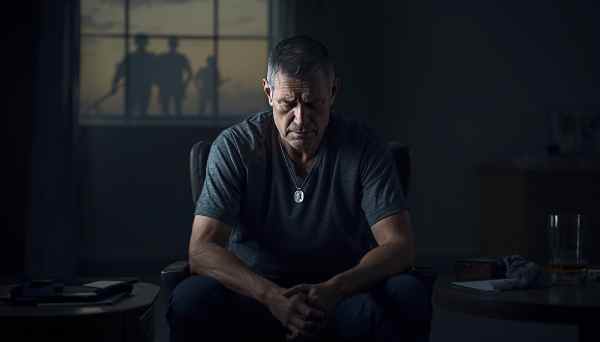
Recovery Program: Military personnel come with a dual diagnosis almost 50% of the time. These guys will show up not only with alcoholism, but also with PTSD.
Yes, US Army.
Thank you for your service, young man.
We do have VA benefits, so we accept.
You guys have a TriStar, sir?
Yes. We do. Great. There are a few policies that we are in the process of getting more of that we can accept as well.
It is a process, guys.
It is my problem.
Any other questions, guys? You can ask me anything, really. It does not matter.
I have got one. You have been married to Tamara for a long time.
Thirty-one years.
There is Al-Anon. Did anything like that help her with your addiction?
Her religion helped her a lot, and her patience helped her a lot. She did go to more than a few ARP meetings with me, and that was very helpful for her to understand. Mostly because there were other spouses there. It was a set time. It was not just a regular Addiction Recovery Program. It was a broad or all-encompassing twelve-step program that is intended for any addiction. ARP is the Addiction Recovery Program. It was a time when other spouses were there as well. She was not the only spouse in the room.
Men and women with problems and their spouses, along with them. That was really helpful to be associated with the other spouses who like “Jimmie is not the only fucked up person in the room.” I understand. This is actually a challenge. I see now why. For her to understand my trauma as a kid and see where those benchmarks started, it made the connection for like, “It is not that Jimmie is a pervert,” whatever word you want to attach to somebody who is a pornography or sex addict.
It is that something happened when he was five years old that F up his connection to understand what intimacy was. “There is an intimacy disorder problem.” “Really? Jimmie is.” When she started learning about that, it really helped her understand what ails Jimmie and the normality of him as a person, not that he is effed up in a special way. Thanks for asking that. Did that answer it?
It did. Thank you. I have one more question. You touched on how chemical addictions and process addictions, one creates chemicals within your brain, and the other, you are adding the chemicals from outside. Do they light up different neural pathways in the brain?
Do they light up different neural pathways in the brain? Yes. Are there different chemical exchanges is really the question. Yes. Recognize that there are like 1,400 chemicals running around from your brain to your body on a regular basis. It is a chemical cocktail of things. We like to say, “You had an adrenaline rush.” “That was dopamine.” “There was cortisol.” We just lean on this one chemical and say, “That is what it was. It is cortisol that is the problem. It is adrenaline that is the problem,” whatever it is.
It is a chemical cocktail. Not to say that those are wrong; I am not saying that they are. I am saying that it is the lead chemical in a cocktail of other chemicals that is going on in your brain and body at the same time. Is that specific combination of chemistry happening when the individual is engaged in the activity of their DOC, the pornography, the gambling, the whatever it is? Whatever that chemical combination is, whenever they do that activity, that is what fires, again, different than the chemistry that happens when you drink.
That is more of tricking your system into believing that you like it, that you are attracted to it. That is part of your survival mode. It also amps up your dopamine. As you guys know, the stats on dopamine percentage. Cigarettes are 50 times the normal dopamine level. A regular dopamine level would be like when you eat a donut, when you eat food, when you do something that you are supposed to be doing, sex. Sex dopamine level is 100 times which is normal. Cigarettes, 50 times. Cocaine, 250 times the normal dopamine level. Methamphetamines, 1,000 times. Different chemistry, yes. Which means what? Methamphetamines are ten times greater than sex. Holy shit, I did not know that. Anyways, joke.
Thank you.
She is like, “Wait a minute, what did he just say?”
Is there anything else I should have asked you that I did not ask you?
The pathway for recovery is the next step for us. I would just love to spend a second and just talk about what that is, so that you understand that we are working on solutions. We are working on solving this equation. AI has come a long way. Many of you know that. We are engaged in working with AI professionals at this time and have taken those thirteen assessments that I said earlier, uploaded them into a system, and are training it to be able to assess better, deeper, and more thoroughly.
Hopefully, the endgame is to develop an app called Pathway for Recovery. In version one, we will launch it in our treatment center and then work through the kinks with our treatment center so that an individual can come on board and go through the app and figure out through a series of 4 to 5 sessions of questions. It is a long questioning process.
You guys went through intake, and you understand that it was two hours. What if it is an hour for four days or two hours today and two hours tomorrow? It is a longer process. That is going to be one of the challenges we have to overcome. Through a series of a lot of questions, spit out a customized treatment profile that helps you better understand exactly what is effed up about you.
Customized profile that says, “Here are the things that really matter to me as I go through now a treatment plan, a program that says, when I go through this, I’ve got to spend this much time in trauma.” It will spit out and say, “Looks like trauma is really important to me. It looks like intimacy disorder is really important to me. It looks like a mood disorder problem is really important to me.”
These other things that we have, no, they are not. These are the things that I have to focus on for myself as someone who is addicted to pornography. “You are addicted to pornography, and you have got to work on this and this and this.” Look, we are both addicted to pornography, but you have got to work on things that are for you, and I have got to work on things that are for me.
That is what pathways will disseminate and evaluate, and then stamp and help you understand. Here is where you’re F-ed up, and this really is, and your particular brand of it, so you know what to focus on in life. That is the next step. That is where we are going. We will have that produced by the end of the year, and we will green-light that sucker.
Great. Love it. Where can people learn more about you, more about your treatment center? How can they connect if they want to connect?
JimmieApplegate.com. JimmieApplegate.com has got all the links to it, to Beacon Treatment Center, Beacon Charities, and AddictedToFailure.com if you want to get the book. Leave me a five-star rating. Thank you. That is where you can find me. Love to connect if you have questions, or you want to have me on, or you want to bring me to your recovery center and put a mic in front of us and sit in front of a group of addicts. This is where I feel most comfortable, by the way, sitting in front of a group of fellow addicts and having a chat about what addiction is, because this is my life, and this is our life. I am happy to try to disseminate it with all of you guys and figure out how we can overcome our challenges. Thanks for having me, Tim.
Love it. I appreciate you. I appreciate all the work that you are doing over at Beacon Recovery Centers and with 10 for Addiction. Thanks for being here, and let us give it up for Jimmie Applegate.
Thanks, guys. Appreciate it.
Important Links
- Jimmie Applegate
- Addicted to Failure: Why the Rehab System Does Not Work and What Must Change
- 10 for Addiction
- Beacon Charities
- Addicted To Failure
About Jimmie Applegate
 Jimmie Applegate is a transformational consultant, addiction recovery advocate, and author challenging the foundations of a broken $16 billion treatment industry. As a certified NeuroChangeSolutions Consultant, HeartMath Practitioner, Behavioral Health Technician (BHT), and Peer and Recovery Support Specialist (PRSS) in Arizona, Jimmie brings over 30 years of experience in personal transformation, behavioral health, and sustainable recovery — informed by both professional expertise and lived experience.
Jimmie is the owner and Administrative Director of Beacon Treatment Center, where he leads a compassionate, science-informed approach to addiction recovery that prioritizes individualized care over one-size-fits-all treatment models. His work is grounded in neuroscience, emotional regulation, and practical strategies for lasting behavioral change.
He is the author of Addicted to Failure: Why the Rehab System Doesn’t Work and What Must Change — a research-backed, unflinching examination of why traditional rehab fails 60 to 90 percent of patients, and a bold roadmap for what the future of addiction treatment must look like. The book challenges outdated 30-day models, exposes systemic accountability gaps, and reframes relapse as a failure of the system — not the individual.
A U.S. Air Force veteran, Jimmie is also the founder of 10forAddiction, a grassroots movement making addiction treatment financially accessible for those who need it most.
As a speaker, facilitator, and podcast guest, Jimmie translates complex neuroscience into honest, human conversations that meet people in recovery exactly where they are.