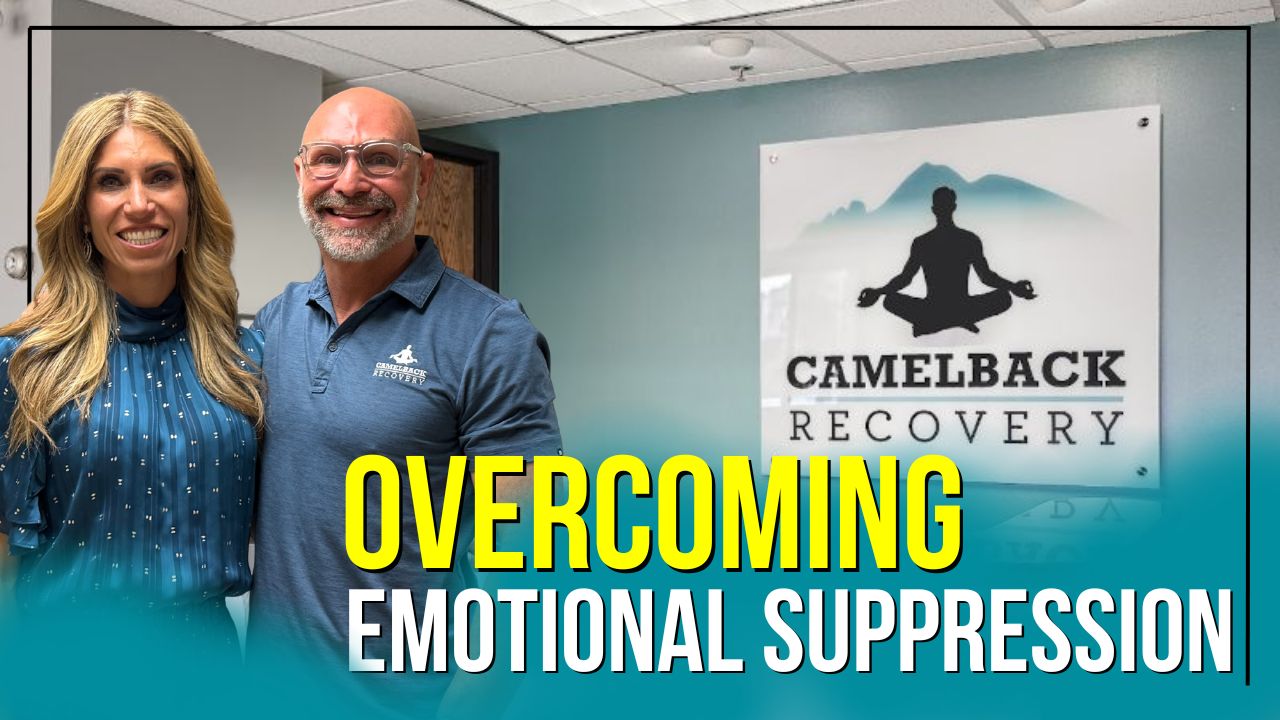
What if addiction is not a failure, but a signal? What if the cravings, anxiety, and emotional spirals you’ve been fighting are actually your body trying to tell you something? Tim Westbrook sits down with faith-led wellness guide, registered dental hygienist, and author Melissa-Sue Methven for a conversation on addiction recovery, emotional suppression, nervous system regulation, and the hidden language of the body.
After losing her husband to suicide following a long struggle with mental health and addiction, Melissa-Sue began asking the deeper question — why. That single word led her into the work she now shares around the world: helping people reconnect to their bodies, regulate their nervous systems, and move out of shame and into awareness.
In this episode, you’ll learn:
- Why addiction is best understood as a signal from the nervous system, not a moral failure
- How emotional suppression silently drives cravings, anxiety, and chronic illness
- Practical nervous system regulation tools you can use the moment a craving or panic wave hits
- How to create real internal safety — the precondition for any lasting recovery
- A live breathwork practice you can return to anytime
- How faith, surrender, and self-trust support healing without dogma
- What families of loved ones lost to addiction or suicide most need to hear
Whether you’re in early recovery, long-term sobriety, supporting someone you love, or simply curious about the mind-body connection in healing, this conversation offers a compassionate reframe and tools you can use today.
—
Watch the episode here
Listen to the podcast here
Overcoming Emotional Suppression
A Live Conversation With Melissa-Sue Methven On Emotional Suppression, Nervous System Healing, And Why Your Cravings Are Messages, Not Failures
Welcome back to the show. We are coming to you live from the outpatient clinic at Camelback Recovery. Our guest is someone who has turned one of the hardest chapters of her life into a calling. Melissa-Sue Methven is a faith-led wellness guide, a registered dental hygienist, author of two powerful books, The Gut God Connection and The Truth Behind the Smiles: Suppression, the Silent Killer How to Find Hope, Never Give Up, and Cultivate Resiliency, and the host of the podcast, Not Alone with Melissa-Sue Methven. Melissa’s work has been shaped in the most painful way a person’s work can be shaped.
After losing her husband to suicide, a loss that came at the end of a long and complicated fight with mental health and addiction, she did not run from the question we all secretly ask in those moments. She sat down with it. She asked, why? That one word became the doorway into everything she teaches now. She will tell you that “The body is not broken. The body is speaking. That addiction is not a failure. It is a signal. Shame is loud, but awareness is louder once you learn how to listen.”
Her work blends nervous system science, faith, breath, and lived experience as she has a way of making all of it feel doable, not overwhelming. We are going to talk about emotional suppression, what the body is actually asking for when we feel a craving, how to create real safety inside yourself, and what it looks like to reconnect to who you are underneath the story of your struggle. Yes, for those of you in the room, you will get a chance to ask her your own questions in the second half, as we always do. Please help me welcome Melissa-Sue Methven to the I Love Being Sober stage.
Thank you.
We’ve got a lot to talk about.
Yes, we do. I am listening to them. I am “Yeah, that is a lot.”
Melissa-Sue’s Story And The Question That Changed Everything
This is her book, The Truth Behind the Smiles, and she has brought a bunch of copies. You all are going to get a copy of her book to take with you as well. Before we get into the teaching, I want to start with the woman behind the work. Who was Melissa-Sue before loss cracked everything open, and who is she now?
I was a dental hygienist. I still am. I was a mother of two children. I was a wife. We lived in Wasilla, Alaska, a very small town in Alaska. I felt we had a picture-perfect life. We portrayed that through our smiles. We had a beautiful home, we traveled, and we had a family. Behind those smiles, we really hid the truth. The truth of suppressing our emotions, the truth of my husband’s addiction. My husband was a dentist, and we owned a practice in Alaska.
I think very often we have this identity that we need to portray that we all look very perfect, always. If we remove that veil and show our truth, people will not love us. It is almost that safety net. I truly felt for my husband that was that safety net, and being able to see his truth was very hard. It would have created a lot of shame and guilt. For me, at that point in Alaska, I felt very lonely, even though we had all these things. Also, I felt I did not know what else I could do. I did the only thing I could do is keep doing our daily motions, go to work, take care of my kids, feed the family, and do the daily check-ins with my husband.
We just kept through those motions. That alone was not sustainable. That woman, then, I was in my late ‘30s. I felt lonely. I felt depressed, not wanting to do the things that I used to love. I used to love to host, love to have people over, but that stopped. I felt that if I could control the environment for my kids, I could pretend that everything is okay. When I am coming home from work and cooking dinner, and my husband is not joining us very often, I try to just avoid it, make jokes, and let us go outside and play with my kids. I learned that avoidance over time did not heal me, did not heal my husband. When I lost my husband to suicide, it was a shock to the entire community. That was in March 2022.
It was a ripple effect to our friends, to everyone, to our kids. I am the one who found him, and I do not know how many times I asked him, “Are you okay? Do you need help?” I had found some rehab facilities that I said, “It is only going to be a small group. You are going to have the help.” Removing that veil, he always said, “I am okay.” I do feel that you get so used to feeling like you are okay, but inside you are slowly spiraling, and things just keep spiraling, and your body does not become prepared for all the challenges that keep coming at you.
When my husband passed, I knew that I had to do everything possible for me to stay alive for my kids because I did see the pain that they went through, and I went through, and I realized something when my heart was palpating like I thought I was having a heart attack, where I could not sleep, where I could not eat. I said, “I cannot sustain that and be around for my kids.”
I have got to learn the tools, and I had this fantastic angel at the hospital who said, “I was frantic to look for a counselor for my kids.” This all happened in Maui. We were actually in Maui. We lived in Alaska. I said, “How can I go back home? I walked through our home without my husband, without their father. I will need help for my kids.” He said, “No, you will need the help first because your kids will look at you to see how you grieve. Your kids will co-regulate with you.”
They sent me a number for a counselor. It was through Zoom. I am sharing my story, and my nervous system is completely on fight or flight. He says, “I will guide you through a breath work session and a meditation.” He did. I had closed my eyes, and after those simple ten minutes, I reopened my eyes. I felt this calm, I felt this peace, and I told myself, I will continue to do this and incorporate this in my life to survive. I realized that my husband’s addiction was constantly him trying to find safety in his own body. I realized that addiction was more about the nervous system.
When I would fly back up to Alaska, to the little town where I lived, and we were very isolated, I was like, “Why did I not fall as well? I could have very easily fallen into the same footsteps of the heavy drinking of the opiates because of the chronic pain that could have done that too.” I started asking myself why? What is it that I was doing differently at the time, and my husband was constantly at work, never looking at his nervous system, being so overwhelmed?
It’s because we are never given those tools from a young age to find safety in our bodies. Think of your nervous system as so it is your home, is your body and your nervous system is the security system. If the alarms are all going off in your home, you are not going to start doing renovations in your home while the alarms are going off.
You need to have a peaceful, calm home, and that is where the nervous system needs to feel safe for healing. Often, through childhood traumas, when we are very little, we are programmed to live in the go-go-go, in the fight or flight. We are constantly just being driven to live in that fight or flight. We never find safety. Oftentimes seeking to numb our nervous system because it is always on high alert. All these things will suppress your nervous system. It is more of a nervous system regulation.
That is the way I see it now. I cannot help but see it in a nervous system way because my husband is a dentist, and now I have seen why. Why is dentistry one of the top professions for suicide rates? Mental health burnout. I am pretty sure if you have asked anybody what they thought of dentists, they would say, “They have it well, they do great income, they have a great profession, they are smart, they are driven.” There is something in their environment that is affecting their nervous system.
Going back, was there a point when you noticed that your husband, like, there was a problem? You said that at one point, you were living a happy life, and you were hosting parties, and there was probably more laughter and joy in your household. Was there a certain point when that shifted?
Now, to be honest, when I look back from the very beginning, I met him when I was 23. From the very beginning, that was where he would work 5 or 6 days a week. There was heavy drinking on the weekends as a relief. I feel that introduction was there, that programming, those signs were there from the very beginning to find a balance.
We have to go back, release, and see the inner child running the show. We also have to give forgiveness and release the shame. Share on XHe would drink heavily on the weekends and then go back to work. As more and more challenges occurred, he could not face them. For example, one of them was a diagnosis. He was really close to his father, and he learned his dad had stage four cancer, and that was so overwhelming for him. That was a tipping point for him. Now, drinking has become an everyday thing.
It was the solution.
Yes, it was the solution to numbing that pain.
What about your kids? When do you think your kids noticed? Kids are a lot smarter.
As much as I was, “I am going to make sure they do not notice, and everything is perfect.” Plan all the play dates, and the kids will notice. They see that Dad is not okay. Dad is not joining us for dinner. At this point, he has had a separate room, and there is garbage everywhere, there are bottles everywhere, and your five-year-old daughter is helping clean up dad’s room. They are seeing that. They are noticing that. They know Dad sleeps through the day.
Actually, one that would break my heart is that we had this lovely family that lived close, and the dad was very much involved with his daughters, my daughter’s best friend. My daughter would come home feeling very sad that her dad was not playful with her, not with her. There were definitely signs. When it got worse was probably two years prior to his passing, when he learned his dad was passing.
There was a litigation against him. It seems like things keep spiraling. It is like the more he would not see his truth and work on himself, the more things spiraled. It just became so much to take on. That is where I definitely would ask him to seek help, or we need to stop taking these opiates. I had a call at one point. He had two doctors, and I had called one, saying he was getting prescriptions from both, and this is not working. This is not good. I get it.
I do not know what it feels like with chronic pain, that immense amount of pain. He would say, like, nerve damage. Sometimes he would get mad at me because I would want to throw some of these medications in a toilet. He is just so sad at what it is doing because I can see the ripple effect in our family, and I just want to help them and show him that all I wanted was him as a husband and a father, and we can sell everything. I could not care less. I wanted his health.
Oftentimes, I think we have, I cannot speak for him, and what I know, I think it is just a lot of shame. That plays a big role. I talk about shame in my book because, as a suicide survivor, I went through shame and what else I could have done. People were asking me nonstop, like, “What was this?” Of course, I felt like I was holding everyone’s grief and having to have an answer for everything. I did not. I was not given the tools to help him the most. I needed a team. I needed lots of people. I think shame played a big role.
After your husband’s suicide and after a long struggle with his mental health and addiction, you could have stayed in grief or anger, but instead, you started asking why. What was the first real answer that started to come through to you?
It was very strong for me right after he passed. Many people ask, “What do you want me to say? How did he pass?” I said, “Died by suicide.” I was very vocal about that. I said, “We can no longer not talk about suicide because that is not going to solve the problem.” In his family, he had lost both grandparents to suicide, and it was never talked about. Mental health is a lot of mental health on both sides of the family. It was never talked about. It is almost like it was shameful. I think that is just generational.
I said, “That is not going to work. That is not going to work for my kids.” Now this could be generational. That means my children. I did ask myself why. I worked with a psychologist myself. We did a lot of inner child work. The parts of me that made me not use my voice as much as I should have when I was seeing all these signs. Why did I not feel safe to use my voice? When I was a little girl, it was not safe to use my voice.
You ask anybody, I am from Quebec City, a little small town in Canada, I go back, I went back home in March. They cannot believe what I am doing now and using my voice. I was extremely shy, extremely quiet. I am doing quite the opposite now because I know it did not serve me. It released the shame that I had for not doing better in helping my husband. We have to kind of go back and release, see the inner child who is running the show. We also have to give forgiveness. Forgive and release the shame.
I had to shift a lot of my thought patterns so that I would not sit in the shame and the guilt, and learn because I saw it also with my children. Children who go through divorce or the death of a parent often feel it is their fault. My son would often say, “I did not love Dad enough. That is why he killed himself.” “I did not do enough. It is my fault.” My daughter was always there for Dad. They had such a close bond. She even said, “What if I am the one who found dad? What if I did this?” It was always something they did not do enough. We had to release that, and I had to dig deeper for it.
The Body Is Not Broken, It Is Speaking
Your whole message rests on one line. The body is not broken. It is speaking. Unpack that for someone hearing it for the first time. What is the body actually saying?
Yes, I always say, “We are not broken. Nobody in here is broken. I am not broken because of my story.” We just had to learn to listen to our bodies constantly speaking to us. I have learned that through my own healing. For example, when I was in that situation of living on edge all the time and stress, I had severe gut issues. I have always worked out. I have always eaten well, and it did not make sense. I had acid reflux, where ENTs are saying I have GERD, and I was like, “What?”
That does not make any sense, and my hormones were all out of whack. My body was speaking. My body was saying stop suppressing your voice. Stop suppressing these emotions, and so those are the signs, but I did not know what they were saying. I could not understand. I did not sit still enough to understand what that was until one day, this is before my husband passed, my voice started getting really raspy. I am sounding like I have been smoking for a really long time, really raspy.
I see a couple of ENTs, finally they find a cyst on my vocal cord, and they said, “The only people who get this, that they see this are singers or motivational speakers that speak all the time.” I was doing neither, and when they did the surgery to remove that cyst, I could not speak for three weeks, and use a whiteboard with my children or a voice activator on my phone. I sat enough with myself going “God was asking me to start using my voice. I was suppressing so much, so your body.”
Your body will start speaking, and I am here advocating. Do not wait till the whispers are so loud because they are going to be quiet at first. They are going to be quiet. Maybe I am getting for my son, suppressing a lot of his emotions after his father died, started getting psoriasis. He was holding in all that stress and all that guilt. The more that we worked with him to release that we do breath work.
It is a big one, cold plunge, red light therapy, and just shaking out the body, finding tools for the nervous system to reset and for energy to move through more than it healed. That is what I am saying. Your body is speaking, and when your body is craving these things, there is an imbalance. It is science. There is nothing wrong with you. There is a science.

Emotional Suppression: Find more pauses amid your programming to feel productive. If you sit in silence, you will be able to process the “why” behind your work.
Our environment right now is not conducive to our bodies. There is so much affecting our nervous system on a daily basis, so incorporating these tools daily, such as breath, spending time in nature, meditation, and most of all, breath, and changing your thoughts, not spiraling in the what-ifs. Spiraling in the now and today, do not bring your past with you. Work through it, but do not bring it with you.
If I brought my past with me and kept going day by day, I cannot show up the best version of me for my children right now. I certainly do not want my kids to carry the spirals like “I did not love dad enough.” It is still affecting them. I know that. I am still working. Life is not perfect right now, but I have definitely learned a lot of tools.
That is why I got into breath work. I want to learn everything about breath work because during my healing, I would go to a center here called Reconnect Mind-Body and do an hour session of breath work. That is where I release so many suppressed emotions. I would cry and cry. Sometimes during these sessions, you connect so much with your body that you will have messages. A big one for me was boundaries. Boundaries are love. Creating more boundaries, but a lot of it was releasing emotions because they were making me sick to stay. The body keeps the score.
Breath work is so powerful. We do breath work on a weekly basis here. You guys do it weekly. Do you guys like it? Do you guys do breath work on your own without the practitioner here?
Yeah.
Good. I love that. You reframe a craving, a panic spike, a wave of anxiety, not as the enemy, but as the message. How do you coach someone to hear the message instead of just trying to make the feeling stop?
Yeah, to pause more. I do say find more pauses. We are programmed to feel very productive. The more we do, the better. It is actually in stillness. Pause more in that stillness to do that work to be able to listen to it. When you are doing breath work, if you are sitting in silence, you will be able to process that message as to the why. Also, I do believe working with functional medicine, a naturopath, seeing where you are off, balance-wise, with labs, your hormones, are you deficient in minerals, your brain health.
Always be mindful of what you watch and listen to. Words hold so much power that allow us to create shifts. Share on XThere are so many deficiencies that can be the root cause of why you are having these cravings. I am very much about blending science, faith, and mind and body, but they could be an imbalance. I have dove into that with my kids. We did big gut tests, we did heavy metals. What I found is that their gut health was just all in red, and because they were constantly living in fear, that fear creates these unbalanced parasites and heavy metals.
We had to go through this detox and find a way for their brain health. I actually brought my son to Dr. Amen’s clinic here in Scottsdale. I had done a brain scan, and what we found was inflammation in the amygdala, and that is the fight or flight center. My son, probably from birth, because when he was born, it was quite chaotic at home then. His body was in flight since birth. Finding safety, you have got to be patient with your body as well to find safety again.
A lot of folks in recovery have been told their body is the problem. Their liver, their brain, their chemistry, their cravings. What shifts when they start to hear their body as an ally instead of a saboteur?
Yes, to love your body first. It is not working against you. It can work with you. It is so important the way you even speak to your body. It is not broken, and you can work with it instead, and when we do breath work, and when you say these “I am beautiful, I am smart.” You just speak to it gently at first; it might feel uncomfortable. I always tell people to look in the mirror and say, “I am strong, I am powerful, I am beautiful, I am loved, I am worthy.” All these are so powerful because they will speak to every cell of your body, and it will create that shift over time and create that safety in your home. You just want to love it. You want to be involved in working.
It is like you are speaking to your subconscious mind as well. I say we have 50 to 60,000 thoughts every single day, and 90% of them are subconscious. Whatever I am speaking and even when I talk to my dogs, “You guys are so smart. You guys are so funny. You guys are so lovable.” When I am talking to them, so when you are speaking to somebody, this is what I have been told anyway, and I believe this as well. When I am talking to somebody else, or when I am talking to my dogs, or when I am talking to myself, I am talking to my subconscious mind. Those are the subconscious thoughts that go through my mind every single day subconsciously.
Yes, and words hold power. Every word, everything you watch, everything you listen to, that is why I say always be so mindful of what you watch and what you listen to, because the words hold so much power, and we create these shifts. When you have those loud, I call for my son, the bully inside, “I am not good enough. I am stupid. I should.” All the things, I call it the little bully. To quiet it sometimes, I will just go into breath.
When I do breathe, I ask, I breathe in light, and I ask it to quiet it. I will just sometimes, if it is quick, I will say Cancel, cancel.” Just because they are so loud, I know. I still get those loud voices sometimes, where they try to sway you a different way. Practicing, noticing that it is there, say, “I see you, but I do not want you here anymore.”
Emotional Suppression, Shame, And The Roots Of Addiction
I love it. You call emotional suppression the silent driver. Walk us through what happens inside a person when emotions get pushed down over and over.
I came to that realization through my husband, and I myself am that the more he suppressed, the more he dove into addiction and his health as well. He had so much inflammation and pain. The more he was not willing to go back to his childhood, which I know he had some childhood things that he needed to address, the more he pushed it away, the more the suppression of the emotions caused more inflammation in the body. The more he suppressed his fears, and maybe losing the dental practice, maybe lose me, maybe lose everything.
The more he dove into that fear and suppressed these emotions, the worse that he got. Same with me. The more I suppressed, the more I got sick. Luckily, I was able to become aware of these symptoms. Even now, if I hold in a little bit of resentment, because resentment can also hurt you, and I notice it, I will get sick. I do not get sick very often, but when I do, I am like, “Why? What is it now? What was I doing? What was I holding in?”
It is like this in my own science project. I see it now so clearly that when we are out of balance, and I am holding in these thoughts and emotions that are not serving me in the right way, then it is affecting me as a whole. Of course, I have been mindful. It is not just your thoughts. It is what you put into your body, your food, that will help you make decisions.
As you are talking, I am just thinking about how we have all these emotions, and being in recovery, we get to feel all of our emotions, not just the bad, not just the good ones. When we have emotions that are uncomfortable, shame, guilt, anger, pain, loneliness, it is okay, but the awareness and being able to breathe through and try to figure out what is going on and why we are feeling those emotions is important.
Getting to the root cause as to why. Is it because when you were little, somebody told you you were not worthy of love, or you were stupid, or you were this, who knows? Yes, getting to the root cause, but then allowing yourself to completely surrender and letting it go. In one of the most powerful breath work sessions that I was in, I had PTSD of finding my husband, and that vision would come to me so often. I would be at the grocery store, I would be at the gym or wherever, and I cannot let it go. It was haunting me all the time.

Emotional Suppression: The more you suppress emotions, the more inflammation you will get in your body.
In a breath work session, it was like that vision came right in my face, and I was like, “Why are you doing this?” It was saying, “Let it go.” I had to completely surrender and let it go. That is why I feel like breath was the biggest gift in my healing. The more I dove into it and allowed myself to surrender, the more I was able to let that go.
Many people use substances, food, work, their phone, TikTok, and Instagram to avoid feelings they were never taught to be with. How do you help someone start to sit with a feeling without getting swallowed by it?
This is something I still practice. I am not perfect at it because I think we all have addictions. It is so hard now, like you said, with social media, to find that balance. Coming back into harmony. For example, now I am more prevalent on social media because I feel like that is how I can share wisdom and hope and the light. There has got to be a balance, not me always checking.
I am always coming back to myself and self-reflection. Self-reflection is one of the best tools. Where am I off balance in my life? Am I too much at work and not as present at home? Am I drinking too much? Am I this and that? Whatever that is. I think just becoming self-aware that you are off balance somewhere, and how to find that balance again.
We are going to get into the tools that you use. We are going to get into breath work. First, if addiction is a signal rather than a failure, as you often say, what is it signaling? What is the person actually reaching for underneath the substance or the behavior?
Reaching for safety. As I said, the nervous system is your safety system in your body. It is reaching for safety. At one point, it created a place in themselves where they did not feel safe. That is truly what I feel is looking, your body is looking to be safe again. Instead of finding healthy tools to regain that safety, is what I am teaching and that is breath.
Different Tools In Real Time
Let us get practical. Someone in this room is going to leave here, and they are going to feel a craving or a wave of anxiety or a thought spiral in 60 seconds or less. What is the first thing you want them to do?
I want them to breathe, and actually, I could just tell you this is the breath that I think relaxes the nervous system within a minute. I would like to close my eyes. I like to put one hand on my heart, one hand on my belly. We are going to inhale through the nose for four. We are going to hold for six.
Do you want to lead us through that little exercise?
Yes.
You guys want to do it?
Let us do it. Place one hand on your heart and one hand on your belly. We are going to inhale through the nose for four. I want you to hold at the peak for six. A slow, long exhale for eight. We are going to do that one more time, and in and out of the nose. Inhale through the nose. Hold for six. A long, soft exhale through the nose. Next time, we are just going to do it slowly through the nose. Inhale and a soft, long exhale. I want you to say, just gently in your mind, in your own thoughts, “I am safe.” Breathe again in through the nose and out through the nose. “I am safe.”
Just in those gentle breaths, you change your physiology. The I am’s speak to yourselves. I do feel your body is constantly looking to come back to safety. To quiet these cravings, you can ask yourself in a journal. I think journaling, writing, is a way to let go. I always tell everybody to write now. I truly feel every time I write a book, it is a way to release the truth, my truth, and to be seen. It is scary. It was scary to write this book.
I just did not know what Scott’s friends would think, family, people that I meet. You will know a lot about me and my story. There was a relief about that. Writing and answering why in the beginning, why did I need that safety? I love that here you guys do the work as well and dig deeper as to the why and the root cause because self-realization is the biggest gift you can give to yourself, and everybody here, I feel, has an immense amount of courage. I really do have to say that.
That is what I see. I do not know your past. All I see is courage because I so wish my husband had dared to do this. I still wish he could have removed that veil and said it is okay. You are leaving a legacy of courage and strength, and I want you to know that. I do not want you to carry that shame. You can realize why you have it, but let it go because I truly feel addiction hits some of the most powerful lights and people in the world, and it is trying to dim their light, but they are here to shine their gifts. I truly believe that for each one of you here. I am sorry, I really do. I wish he had.
You talk a lot about safety. What is the first thing, or what are some things that someone can do to start getting to that place of feeling safe?
For example, I love mornings.
Before going into your day, every morning, starting with a few minutes, 2 or 3 minutes, either in prayer, in meditation, or breath, journaling, anything you are grateful for, and even being grateful for this process right now. I know it is hard. I know it is probably the hardest time of your life, but find joy in it, find community in it.
Really focus on what you are grateful for, your breath, the I am’s, giving back to yourself as much as you have given to so many people around you. Now it is time to give back and allow yourself to receive. I think just those first five minutes of your day can change how the rest of your day happens. I play with this now. I play the game of life is what I call it. When my nervous system is so regulated, and I am calm, and I am doing what I am being asked to do, I am speaking on stages, I am sharing my story, I am writing books, things just align.

Emotional Suppression: The first five minutes of your day can change how the rest of your day happens.
I align with like-minded people. I align with good things happening to me. I urge you to practice that because it is exciting when it does happen. When you see it happen in your life, you are like, “I want to keep doing this.” Sometimes, when I pivot because we go off balance all the time, there are ebbs and flows, I am not perfect, and when I go more into a dip and then there is a lull, I am like, “What was I doing before when things were going really well?” A lot of it was taking care of my nervous system.
How important is your morning routine?
It is so important. I show up like the best version of me.
Tell me about your morning routine.
I like to wake up at 5:00 AM, and I go right away. I’ll go right away. I have created a little sacred corner in my room. Somebody blessed me with this once my husband passed in our home in Alaska. They had created a little corner for my kids and me to gather and share our feelings. I recreated that in my home. I light a candle, and I go into breath. I go into some breathwork techniques, even humming, because humming will help move energy through. I go into the I am’s. I do a lot of I am affirmations, and I will just write a little bit of what comes through, not scripted, in my journal.
I have it already there. In my little corner, it is all set. Sometimes I do my red light panel, but that is ultimately what I do. Oftentimes, I will even just go outside. I sit outside in my backyard, and I love seeing the sunrise because of that first sunrise. I become so observant of the noise. The noises. I love the birds, the birds singing, and I just sit in presence and just say thank you and gratitude. That is my morning, and then I can start making lunches, get the kids going, but that sets the tone.
As opposed to hitting the alarm clock five times and running out the door, which is what I used to do.
I used to do that too.
I do not do that anymore. My morning routine, like you, my morning routine means everything to me.
I do work out as well. I do have movement, but feel what your body needs. If it is a walk outside, if it is, I found cold plunging helping tremendously in finding stress resilience in my body. I was so overwhelmed when I moved here. Moved here four months after my husband passed, because I knew I could not do one more dark, long winter in Alaska by myself in our home. I just knew. I had so many therapists saying, “Do anything for your kids. Do not be drastic, do not move, do not do anything.” I did the complete opposite because I knew mom had to be okay, and spending time in that dark, it is hard, hard in Alaska.
I can imagine.
Eight months of winter. I went for the complete opposite and came to the sunshine here.
Reconnection, Faith, And Purpose
You talk about the gifts we suppress and how disconnection from these gifts leaves us feeling stuck or lost. How does someone start to remember who they are when they have spent years trying to be who they thought they should be?
That is another one where I think we are just programmed from a young age of who we should be, but we all have these gifts. Like so many people sharing, “I used to sing when I was a young girl, but I stopped doing that.” She never used her voice. All of a sudden, she is dealing with suicide ideation and depression, but the minute she started singing again, she found vitality. She found her gifts, and now she is singing all over the national anthem, and you feel it emotionally, and that resets your nervous system. Everybody has their gift, and it could just be to love. You are so good at loving others, loving yourself. That love can help people heal.
Faith runs through your work, but you hold it gently. For someone who is burned out on religion but still craves something bigger than themselves, how do you invite them into trust without feeling like a push?
I believe that you are not alone. I am not saying to believe in structured religion or anything, but just believe that you are truly not alone. Some things have happened to me along the way that there is no doubt that we are not alone. There is a source, a light, a divine that is guiding you and is always there, accessible within reach. It is within you, and it is guiding you.
There is a source, a light, a divine that is guiding you. It is always accessible and within reach. Share on XJust moments before I found my husband, I was sitting on the beach watching my children swim in the ocean in Maui and going, “It’s a beautiful day,” but I could feel this heaviness. It is almost like I could feel my husband where he was. There was this, it is like I explained, this wave came over me. It is so hard to describe, but I still feel it so vividly.
It told me to pick up your phone and text your husband. I did. I text him, “I love you. Thank you for the beautiful day.” The day prior, we had gone snorkeling. He seemed so happy. We went snorkeling, and we had a barbecue with friends. I am telling you, it was just one day, everything is okay. The next day, he is gone. That is when he texts me back, “Do not come up, send security.”
I was just, and I knew then that he was not joking and knew then that something was about to happen. I am, and there are so many other stories along the way that I know we are not alone, and to seek that isn’t within yourself. Do not let maybe past religious hurts or fears block you from loving God, or whatever you feel comfortable calling it, because I know so many people are not comfortable. You want to call it the divine, you call it the source, you will call it earth, whatever it is, always know that it is accessible, and it is guiding you. It is so beautiful when you start to feel it and hear it.
My second book is all about what I have come to realize, how to let that be the guide, the gut-god connection, what I realized through blending faith, science, body, incorporating fasting, or even in prayer, to incorporating balancing your gut health and reducing inflammation. When you have too much inflammation in your body, it is hard to access your guidance, your compass.

Emotional Suppression: When you have too much inflammation in your body, it is harder to access your compass.
You say your work is not about fixing people, it is about helping them remember who they truly are. What does remembering look like for the people you walk with?
I am always saying, “I am not a doctor. I am just speaking through experience.” What I am trying to guide people back to is listening to their body. Our bodies are meant to heal. They are built to heal themselves. I am more of coaching of how to listen. I cannot tell you, “This will work for you, this protocol,” no. The more we dive deep into listening to why these symptoms are, you will be drawn to maybe, “I need to go see this specialist, this doctor,” or “I am deficient in a mineral.” You will start to understand the root cause, which oftentimes are suppressed emotions, the root cause of some of these inflammations, aches, and pains.
Questions From The Audience
We are going to open it up. Before I get to my last question, I want to open it up. The floor is open. Anything that we talked about that resonated with you guys? You got a question? The floor is open.
Any question. I am an open book.
I am Kevin. Struggle with addiction, depression, and PTSD. I am asking this question because of this. My wife was always asking me, “Am I okay? What do you need? Are you mentally here? What’s going on? Are you okay?” I for the longest time kept saying, “I am fine. Do not worry about it.” Until one day, I finally broke down. Said, “I am not okay.” She had no idea how to answer that. She did not know what to say, what to do, or what the next step was. If your husband had said, “I am not okay,” what is the first thing you would have done?
I had already researched some rehab centers, and because I did not have the tools, I could just have the resources. He did not want to go to counseling, so I started going to counseling and asking, “How can I help?” There is better help. I had said, “You do not want to go anywhere. There’s better help. You can just call. You can be in the safety of your own home.” I had found a couple of rehab centers in California. I said, “I’ve heard really great things there.”
That is what my reply would have been. If he was willing, “This is the next step.” You’re right. Also, just like your wife did not have all the tools to bring it, now that I know. I have done parts work, inner child work, and more breath work. I did not have those tools then to send them to. What I did know is, “There is better help, there are rehab centers that I did find.” Of course, I would gather up some friends to help him, guide him there, and it is okay. I mean, the family knew and wanted to help him as well.
He always seemed to remain so stoic and strong, like “I have got it.” I am sure, like you said, I think maybe that is the wrong question to ask because even when I was grieving, people would ask, “How can I help you?” I do not know. I had no clue. I did not have the words either. I can empathize now with that. I can understand you replying that way because you did not know what you needed.
No, I did not. I needed to choose, so we figured it out together. I was just asking that in case somebody else could answer that right away, if somebody tells them they are not okay. What is the first thing they should do?
That is why I reached out to Tim, because now the more that I share my story, I am like a resource person, right? I wanted to know where I can comfortably send people. I know not all rehab centers are created the same. I wanted one like Tim’s, where they do inner child work, they incorporate breath work, they incorporate cold plunge, all these things. Now I have that resource. I do have people tell me, “I am struggling with addiction.”
After writing my book, it allowed people to see the truth without shame, and they messaged me. I did not know them. I said, “Let me help you find a center and let me be there,” because they were nervous about walking into the center. I said I will hop on a call with you. This is how I can help now. Unfortunately, I did not help my husband, and what I can do moving forward is not live in the past. What can I do now? Carry his legacy through his story.
With his story, he can help others. I truly do feel you have a gift. You have a calling, and it is trying to quiet that down from happening. The more mindfulness to watch what you are carrying over from the past, over what you have done, because that will keep you stuck. I really had to shift that mindset. I am speaking for myself because I could have stayed very stuck as a suicide survivor.
You really take it to heart that you did not do enough. You hold that weight and that grief of everybody else. They look at you like, “What else could we have done? How come you did not say this? How come you did not do that?” I had to not live in that past and move forward. “I am here now. You are here now doing an immense amount of work.”
You are doing great work.
Thank you. I appreciate that question and the honesty.
Thank you.
Quick question, suicide, unfortunately, but maybe you have the answer to it. Your husband and his grandparents had both committed suicide. I had a buddy in high school who committed suicide. His father had committed suicide. We had a girlfriend in our family whose father committed suicide, and whose brother had committed suicide. Have they figured out if suicide is a genetic blip that happens possibly, or is it just more like a validated emotion that comes from past experiences?
I do not see it as genetics, but I do see it as past traumas being passed down until it is actually looked at as the root cause. That weight was carried on for my husband. That generational weight, but it was never looked at as the root cause. Why is that there? Also, there are genetic factors, as far as what I have learned, that heavy metals can be passed down from father to child. I am saying that because, for example, mercury is one that we have found in my son’s lab tests.
I do feel high mercury levels played a role in my husband’s mental health. He was a dentist and played around with amalgam fillings, which have mercury in them. When you remove them, you breathe in these gases. Those can be passed down as well. The toxic load, and it could be a brain imbalance, but I do not think it is genetic, and it is like predisposed, because that was definitely a fear for my children.
That is why I dove into all the whys. What I am finding out is that they did not even want to talk about it. I did not even learn about this till my husband passed. About the history of mental health on both sides of the family. Why was there so much fear? I found out, too, there was so much fear of seeing therapists because one of the grandmothers had gone to therapy and had done the shock therapy and done all this stuff, and they had seen that and they were like, “That was awful.” They almost did not trust going to therapy. I do not think it is genetic. I do truly feel it is something passed down generationally, that is a suppressed emotion that needs to be looked at. Thank you.
Thank you so much for coming. It is kind of a two-part question. How do you connect with your spirituality and interact with it in your daily life? When you pray, how do you talk to your higher power?
I love that question. Yes, it is in my morning routine where I do pray, and I connect with my breath. What I do is I envision a golden light, and in fact, when I host breath work, that is what I say. I believe that is from the divine, the source, that light that our cells are so depleted. I visually imagine every inhale for that golden light to go inside and then for anything that does not serve me anymore to be released on the exhale. I always envision exhaling it into the ocean like washing it away. I connect through prayer and breath and in nature.
I love nature. I grew up in British Columbia and in Alaska, so being in it, I just want to switch things up for my kids and me. I will say, “Let us go have a picnic. Let us find this tree.” I put a blanket. We have to be under a tree. For me, that is like a prayer as well and connecting so much more with the earth and with the divine by sitting in prayer, my own practice of asking questions like “What is my next step? Show me the truth,” and just being grateful for the guidance I have had so far. That is truly with breath and my own personal prayers. That is how I connect.
Thank you.
You got a question, ask it now. Someone else has that question. I promise you, I have seen so many times where people come up here after, and they say, “I do have a question.” There we go.
These are good questions, by the way.
I have a couple of young teenagers at home, and I am just curious what your approach was with just being as honest as you could be with the kids? Did you contemplate not sharing certain things, or do you believe full disclosure is the best approach?
See, I am so glad you asked that. For my kids, I was full disclosure. They saw the progression, and my kids were only six and eight, but they were there that day. Luckily, they did not see Dad. At the hospital, they said to call it a brain illness, and I did use the word suicide. They are very familiar with that. For my kids, yeah, full disclosure. In fact, one of the hardest things I contemplated for a long time, my daughter kept on asking me how he did it, because I did not allow them into the condo.
That was really tough because I would ask all their therapists, “I do not know what to say to this question,” but she would get so angry at me if I did not tell the truth. I said, “Maybe when you are a bit older. I just do not want you to have that visual.” Guess what I learned? She was creating her own visuals, her own stories in her mind. The minute I told her, it relieved this anger towards me.
It almost gave me peace, as much as I was worried, I was really scared. She was already creating this murder scene in her mind. I realized that for my kids, truth created safety for them, and they can trust me along the way. Kids are so resilient. You should see my kids where they are now. People are just so happy to see them thriving and doing well.
They understand dad’s story, but they understand now our work of sharing that, even for them, sharing their loss at such a young age, how they can give back in inspiring other kids who have lost a parent, and how they can be a light for them. Your kids are more resilient, and they are going to see dad as somebody strong and loving, and it all has to start with you, right? Ultimately, that is what my kids would wish. Dad would have been willing to do the work as well, love himself, and still be present today. I honor you for being here. Thank you.
Closing And Call To Action
Is there anything I should have asked you that I did not ask you?
They were all really good questions. I guess for me too, I just do not want everyone to sometimes see there is no rule book of how we grieve, how we go through addiction, and your story is your story, one small step at a time. When we start looking at all the things you have to do to get better, it gets really overwhelming. I just want you to look at it one day at a time and be grateful. Be like, “I did this today.” I showed up and sat here and listened, and I want to say thank you. You took your time to listen to me today, and I am honored. I am grateful, and that gives back to me. You are giving back to me. Thank you.
There is no rule book on how to grieve or go through addiction. Your story is your story, one small step at a time. Share on XI just want you to see these small wins every day. These small wins one day at a time, because it does get overwhelming. Trust me, I was so overwhelmed after my husband passed away. All the things I would just write on a whiteboard and say, “Today, “I am just going to focus on today.” If I focus on what is going to happen to my kids, see what we are going to do with this house and everything, the business, it was so overwhelming. One day at a time.
Where can people find you, learn more about you? Talk about your books. We have got The Truth Behind the Smiles, your podcast, on how people connect with you.
I do have a podcast called Not Alone with Melissa-Sue Methven. It is on YouTube, Spotify, and Apple. God put it on my heart to start a podcast about a year ago because once I shared my personal story, so many people started sharing theirs with me, and I was like, “Your story needs to be heard.” I need to have a platform where we can share our stories so that people do not feel alone, first of all, or start learning these tools.
As for me, I read a lot of books after my husband passed and listened to podcasts as well, and started seeing a common thread of what people were doing. That is why I started that, and I will have doctors and specialists and therapists and all of that. On social media, I am on Instagram @Melissa_Gratitude and Amazon, and I do have an Audible as well. I also have The Gut God Connection, but that is where you can find me.
Thank you so much for being here, Melissa. I appreciate you. We got a lot out of it. You guys like that? Let us give it up for Melissa-Sue Methven.
Thank you. That was pretty good.
There we go. Thanks, everyone.
Thank you.
Important Links
- Melissa-Sue Methven
- Melissa-Sue Methven on LinkedIn
- Melissa-Sue Methven on Instagram
- The Gut God Connection
- The Truth Behind the Smiles: Suppression, the Silent Killer How to Find Hope, Never Give Up, and Cultivate Resiliency
- Not Alone with Melissa-Sue Methven
- Not Alone with Melissa-Sue Methven on YouTube
- Not Alone with Melissa-Sue Methven on Spotify
- Not Alone with Melissa-Sue Methven on Apple
About Melissa-Sue Methven
 Melissa-Sue Methven is a faith-led wellness guide, registered dental hygienist, author, and podcast host helping people heal addiction, anxiety, and emotional suppression by reconnecting to the body. She is the author of Gut God Connection and The Truth Behind the Smiles, and the host of the podcast Not Alone with Melissa-Sue Methven.
After losing her husband to suicide following his struggle with mental health and addiction, Melissa-Sue began asking the deeper question — why. That question led her into the work she now shares: a compassionate, body-first approach to recovery that blends nervous system regulation, somatic awareness, breathwork, and faith.
Her core teaching is simple and disarming: the body is not broken, it is speaking. She reframes addiction not as a moral failure, but as a signal — an invitation to listen to what the nervous system has been trying to communicate all along.
Through her speaking, podcast, and one-on-one work, Melissa-Sue helps people move out of shame and into awareness, out of fear and into trust, and back into connection with who they truly are.