
Recorded live in front of clients at Camelback Recovery’s outpatient addiction treatment center in Scottsdale, Arizona, this episode of I Love Being Sober brings host Tim Westbrook together with Michael Roviello, U.S. Navy veteran, certified Wim Hof Method instructor, and co-founder of Optimyze, a natural wellness company with four locations across the Phoenix Valley.
Michael grew up in a rough part of Queens, New York, where blackout drinking and drugs were normal by his early teens. At 20, a Navy recruiter found him day-drinking in a Long Island bar and offered him a way out: helicopter search and rescue. Michael went on to fly combat search and rescue missions in Afghanistan and Iraq, deploying on the first aircraft carrier in the war zone after 9/11. But he came home carrying more than he realized: PTSD, severe insomnia, crippling anxiety, chronic pain from a cervical spine injury, and a drinking habit the military culture had only reinforced.
After emergency spinal fusion surgery, a growing dependence on pain pills, and a surgeon telling him a second surgery was the only option, Michael drew a line: nothing from a pharmacy. In this conversation, he shares what happened next, from the Landmark Forum and Dr. John Sarno’s mind-body work to plant medicine ceremonies in Brazil and Peru, the Wim Hof Method, and the daily cold plunge and breathwork practice that has kept him off pain medication, out of pain clinics, and away from a second surgery since 2012.
Tim and Michael dig into the science of cold water therapy: nervous system regulation, the norepinephrine and dopamine response, why the ice bath is a trust exercise, and how to use the suggestible theta brainwave state for mantras and affirmations. They also cover the single most underrated recovery tool Michael ever used: learning to say no, changing his environment, and letting the wrong people leave his life. The episode closes with live audience Q&A from Camelback Recovery outpatient clients on insomnia, restless leg syndrome, cold plunge timing, sauna for sleep, and nasal breathing.
Whether you are navigating recovery from drugs and alcohol in Phoenix, Scottsdale, or anywhere in Arizona, or you are looking for natural tools to manage anxiety, chronic pain, trauma, or sleep issues in sobriety, this conversation is a masterclass in healing from the inside out.
Connect with Michael Roviello: Instagram @michael_roviello | Optimyze on Instagram @optimyze.me | OPTIMYZE.me | Optimyze locations in Arcadia, North Phoenix, Scottsdale, and Tempe | Jungle Rhythms wellness festival, August 1 at Mountain Shadows Resort
Learn more about Camelback Recovery: CamelbackRecovery.com | Sober living and outpatient addiction treatment in Phoenix and Scottsdale, Arizona
—
Watch the episode here
Listen to the podcast here
Nervous System Regulation: How Cold Plunges And Breathwork Accelerate Natural Healing
A Navy rescue swimmer left the military with PTSD, insomnia, chronic pain, and a drinking problem. When surgery and pain pills failed, he found healing through cold water, breathwork, and the courage to say no.
Welcome to the show, recorded live here at Camelback Recovery in front of our outpatient clients. Our guest is Michael Roviello. Michael is a US Navy veteran who spent years flying helicopter search and rescue missions around the world, including deployments to Afghanistan and Iraq. After the military, he built a successful corporate career while privately battling chronic pain, anxiety, depression, and insomnia.
When surgery, pain management, and pharmaceuticals stopped working, he went a different direction, and he has not needed a pain clinic, a prescription, or a second surgery since 2012. Michael is the co-founder of Optimyze, a wellness company with four locations across the Phoenix Valley offering cold plunge, infrared sauna, breath work, and other recovery therapies. He’s a certified Wim Hof instructor and an XBT coach. His mission is helping veterans, first responders, and everyday people heal naturally. Michael, welcome to the show.
Thanks for having me, Tim.
You’re a friend. I’ve known you for over seven years now. It’s been that long.
That’s Arcadia.
Welcome.
Thank you.
It’s good to see you. It’s been a minute.
It’s cool to have a live crowd too.
We have our live crowd, and we are ready. We’re ready for you. Your life looks very different today than it did while you were in the military. What experiences shaped the path you’re on now?
Growing Up In Queens
A little bit of background. I grew up in Queens, New York. Born and raised out there. I was a very typical Italian-American family living in a rough part of Queens. There’s a lot there that we can dive into. Ultimately, I needed to get out. I needed to change my environment. I knew that internally that if I stayed, I was going to continue down the wrong track. At the time, I was really into the nightclub scene in New York City. A lot of drugs, a lot of ecstasy, a lot of partying, a lot of drinking, a lot of blackout drinking, and that was just normal and acceptable, but I realized that it was really hindering me.
It was causing problems in my personal life, my family life, and so I had this opportunity for the US Navy. Now, at the time, I was in good shape. I thought I was in good shape. I was muscular, but I was not necessarily in great shape. I thought I was going to be a great candidate for the US Navy. They thought so too. When I was inquiring with the US Navy and working with the recruiter, matter of fact, the recruiter found me in a bar day-drinking in the afternoon on a Wednesday.
A buddy worked at a bar in Long Island, New York, and I was just hanging out drinking and did not have much to do. He walked in for lunch and saw me sitting there having a drink and started the conversation. At the time, I was exploring what kind of career I was going to do. What do I want to do? If I was going to get into construction, that was the norm. At the time, I was twenty years old. That was the norm. Just go find a good job, good benefits, work construction, work for the city. I was applying for fire department jobs and different things like that. Just getting put on waiting lists and did not quite know what was going to come of that. I was going to community college.
I was a bad student in high school, but I turned it around in community college because I was actually interested in the topics. I was making some progress there, but I still did not know what I wanted to do. I figured, why not? I’ll just talk with a recruiter and see what jobs are available. They sold me on this idea that because I was in good shape, or I thought I was in good shape, I could get into the search and rescue program. They painted a picture of what that job looked like and what my experiences might be in that role and traveling. I have not traveled much.
My mom was a single mom. She raised four kids on her own. We were broke. We did not have money for vacations. We did not get to go to cool places. We just stayed in our little area of Queens. As big a city as Queens is, it’s small, and you know everybody. Everything’s very segregated. There’s like, this is an Italian neighborhood. This is a Hispanic neighborhood. This is an African-American neighborhood. This is a Greek neighborhood. This is a Polish neighborhood. That’s just the way it is growing up there. It’s one of the most diverse places in the world, Queens. A lot of people. I grew up fast. In Queens, you have no choice but to grow up fast. The apartments are really small. It’s not like you have a big house and a backyard and a pool and all those things.
You’re out of the house most of the time. You really just go home to eat and sleep, and that’s about it. It was crammed living in our tiny apartment. I was always out and about. I was hanging out with the older kids in the neighborhood, and I looked up to them. They had nice cars and pretty girlfriends, and they were known around town. Everyone was always telling stories about them. I was hanging out with them, and then they were taking me out in their cars and going out to buy drugs and get involved in what they were getting involved in. I thought that was cool and didn’t realize that I was going down a bad path.
Stop numbing your pain. Learn how natural modalities can help you heal and break the cycle of addiction for good. Share on XI had the opportunity to join the Navy when I was twenty, and the search and rescue program sounded really interesting, and a month after I met with that recruiter, I was gone and completely changed my life. What I was missing really was good mentorship so when I could look up to, I did not have good discipline, and so those are all the things that were really lacking in my life that I did not have. My mom did her best, but raising a son.
I have three older sisters, was difficult because that was new for her. I was basically being mentored by men who were just guys in the neighborhood who were not necessarily up to good stuff. I just needed to completely change my environment, get into something new, push myself, see what I am capable of. I had all these limited beliefs about my capabilities. I set the bar really low for myself, and throughout my Navy career, that bar just kept getting higher and higher and higher.
I think about The Four Agreements. Don Miguel Ruiz talks about being domesticated, and I’m listening to you talk about how you were domesticated by these older boys, men in your neighborhood that were not up to good things. That’s what you learned. That’s what you learned, and so that’s who you became. There was an intervention, and you ended up going to the Navy, which happened after most of your, a lot of your growth, anyway. Changing the trajectory of your life at that point, was that difficult? Was it easy? Was it because you were around a whole new environment? Tell me about that.
Joining The Navy And Tribal Training
The military is very tribal in many ways, especially when you get into a special program like search and rescue, and they do not just give you the program. You have to test out for it. You’re going to get through basic training. Everybody goes to basic training regardless of what job you have. It does not matter if you’re cutting hair or if you’re a Navy SEAL. You are going to be in the same basic training. When I realized that my program was different, they would start pulling us out of boot camp.
We would do all of the things that everyone else was doing during basic training, and then they would pull us out for additional training to get us prepared because they knew that these schools were difficult and they obviously wanted a high success rate. I had to improve my swimming, I had to improve my running, I had to improve my physical fitness. Having all of that extra muscle just from bodybuilding was not helping me, especially in the pool.
I can relate to that.
It was not helping me.
A lot of times, being like looking. That’s funny when you say, I looked, people thought I was fit. When you start swimming, or for me, it was running, biking, swimming. Even today, it’s cycling. If I’m hitting the weights too hard and I bulk up too much, it makes it harder.
The body needs more oxygen. Those muscles need oxygen and nutrients. I had to lose weight in the military, which I did during basic training and all the cardiovascular work that we were doing and swimming and all that was new for me. It was intimidating because I got to basic training and then they would pull us out, and they would put us in the groups where the SEALs and the rescue swimmers were because they were doing extra training. As you get to know everybody, these guys were like, “I was on the top all-national swim team for Atlanta.”
This other guy was a lifeguard in California. This other guy made it as close as he could to the Olympics. My experience in swimming was in New York. They do not have really in-ground pools. It’s all above-ground pools. We had tiny little above-ground pools and went to the beach on occasion. That was my swimming. I did not even have a good swim stroke. I did not have a good cadence. I had to learn from scratch. What I realized is that the Navy liked that because all of these guys would come in with all of this conditioning.
When you put a wetsuit on, harnesses, masks, snorkel, fins, all the stuff that you use in helicopter search and rescue, it changes your dynamic. I was able to start from scratch and just learn and practice, and that actually was an advantage for me because all the other guys were using their upper body a lot to swim. Heavy upper body. In rescue swimming and swimming in the open ocean, it’s a lot of legs. I had to adjust to all of that and really just learn from scratch, and it was great. It was tribal. I got an opportunity. When you’re in the Navy, let’s just say we’re all in the same unit together.
We’re all in school, and we’re all trying to be rescue swimmers together, and we’re all making friends, and we live together, and we eat breakfast, lunch, and dinner together, and we hang out together. The last thing you want to do is fail, and everyone else moves on to the next phase, and then you’re stuck behind. That was my initial motivation, was just stay with my group, stay with my group, do not fail. I can continue to move forward with them for the friendship, but also for my ego.
You do not want to be the guy that gets left behind. I did get left behind. I wound up getting left behind. One of the swims they had us do was in aircrew school, which was in Pensacola, Florida, and was a one-mile swim with boots, wetsuit, and helmet. You’re not allowed to kick off the wall or anything like that. You just basically have to swim, and it’s timed, and I did not make it.
My whole group got to move forward, and then I had to go back for remedial training every single day and do that one-mile swim every single day. It was terrible until I caught up, and then I got paired up with a new group, all new faces, and then got to move forward with them. That was my moment where I was like, “I am never failing again. I’m going to do whatever it takes to move forward.” That was my first major obstacle and hurdle that I overcame.
I went on a bike ride over the weekend, and I was with the A group, B group, and C group, and I went on with the A group. We were at Mormon Lake and Lake Marion. There’s a ride, and there’s like three steps, so three climbs. Climb one, climb two, climb three. I made climb one, I made climb two, and then, like halfway up climb three, I bombed. I was out of oxygen. I actually did a therapeutic phlebotomy.
I donated 500 cc of blood a week before. I did not realize how bad of an idea that was because my body needed more oxygen. I got dropped. The group went without me, and it’s the worst thing. It’s the worst thing when you get dropped because then you’re by yourself, all by your lonesome, and with cycling anyway. When you’re with a group, you’re riding in the peloton so you get to ride with the draft, and it’s 30% easier. I’m with you now.
You want to stay with the group.
You do whatever you need to do to stay with the group.
That’s right.
You do not want to get dropped. What kind of a lesson was that for you mentally?
It was good for me because I had never been challenged like that. I was around all new people. Growing up in Queens, it’s a super diverse place, with people from countries all around the world. I did not realize how diverse it was until I left Queens, and then I started hanging out with people who were from rural parts of the United States, which was perfect for me because I got paired with a guy who was from the most rural part of Alabama, and he was my roommate.

Nervous System Regulation: Anxious energy? It might be your nervous system stuck in fight-or-flight mode. Learn how to regulate it.
We were just so different, had such different upbringings, and it was amazing for me because I got to see how culturally different the rest of the United States was. We became friends, and we got to go through training together. Ultimately, I was just in a really new environment around new people, and I wanted to prove myself, and I did not know what my capacity was. I had no idea. As a young man, I was not tested. That search and rescue program, the Navy, was just so good for me. Of course, all the travel involved in the Navy too. You get to go to countries that typically you would not go to on vacation.
I went to Iwo Jima, I went to Guam, I went to all these unique places that you hear about in the history books that I would have never gone to on a family vacation. I got to learn a lot about the world as well. It really just started to open up my horizons about the world and everything else. The military also comes with a different side of you. My title was aviation warfare system operator. We were essentially weapon experts. We had M240 machine guns mounted to our helicopters. We had 0.50 caliber machine guns. We carried Hellfire missiles. We carried torpedoes.
Our main job was hunting and searching for submarines. That’s what we did. My mindset was very much geared towards “How do I blow up and kill stuff?” I became really good at blowing up and killing stuff and understanding weapon systems and all of that, which was extremely useful for the job. I did well in the Navy, but you have to unwind all of that when you get out. It’s not a good mindset.
I just remember coming to Phoenix and Scottsdale when I first got out, and I would get to the top of a mountain because hiking is just so popular here, and I never hiked in New York. It was not a thing. I remember just looking at the little valleys down there and being like, “If I could easily call in an airstrike, this would be a perfect location for me to call in an airstrike and wipe out this whole city.”
That’s where your mind is.
I cannot continue to think that way. Strategically, I was just trained to think that way. I was obsessed with military books and wars, and that was just the energy that I was consuming. I had to really find a way to unwind a lot of that and take the good stuff that I learned from the military and put the bad stuff on hold. That took years, and I did not even know how to do it. I mainly just spent most of my military career numbing because alcohol is acceptable. It’s part of the culture. You work hard, you play hard. We would be on a ship, my first deployment in Afghanistan. We deployed in 2001. We deployed in November 2001. That’s just a few months after 9/11.
We were the first aircraft carrier in the war zone during Operation Enduring Freedom, and we spent eight months on that aircraft carrier. I think we were the longest ship to ever go out to sea at that time without seeing land at one point because of all the carrier operations that we were doing. The minute you pull into port, and you get four days, that’s all you get, and one of those days you have to work. You really only get three days to hang out. You are just spending all your money. You are just spending money. You’re going out into town.
You’re trying to get as much of a normal life as you could, just involved in drinking and blackout drinking and having stories to share the next day with your guys, and that was really just the culture. I did not realize after doing that for so many years, growing up as a teenager, I started drinking and smoking weed at 12 or 13, and that was the culture there, and that was acceptable. Being in the military, the culture was alcohol, and realizing why am I drinking so much? What am I trying to hide? What am I numbing? What am I not trying to feel or deal with really?
That came later on in life as I started to explore and really get on a path of personal development and personal growth, which was not even something on my radar. I was not reading those types of books. I was not following those types of people, and all of that blossomed and bloomed, and people came into my life at the right time, and then things started to improve for me. Mainly, personal development came from pain. I was in so much pain because of the cervical spine issues that I had from my military career, and that changed my dynamic on my perception of the traditional medical system and those types of things.
I do want to talk about how you started to unwind. Before that, what were some of the main things that you carried home from your deployments?
After I separated?
Yes.
My main challenge has always been insomnia. Has anybody else suffered with, “Man, insomnia will get you.” Especially when you have got to work the next day, and you start watching that clock, and you know that you have to be somewhere, whether it’s school or a job, and then you’re operating on just a couple hours of sleep. Sometimes I was totally awake for 48 hours. I did not really understand brain fog. I was not in tune with things that you can do to improve cognitive health at that time.
The Struggle With Insomnia And Pain
I was really suffering from insomnia and restless leg syndrome, where your nervous system is just in what they call the sympathetic tone, which is in the fight-or-flight, and I did not understand anything about the nervous system. Most of the general public does not really understand the modes of the nervous system. I did not understand why I always had this weird anxious energy. I was walking around with this weird anxious energy, and then I would get exhausted because I did not sleep for a few days, and then I would have no energy, and then I’d be right back to anxious energy, and I just did not understand why this was happening in my body.
I started to notice it in my military career because we do a lot of night flying, and you have to practice a lot. I was stationed in San Diego on Coronado Island, and we would take off from Coronado Island, and we would head to East County, and East County is pretty much barren. It’s just mountains and very few homes out there, and we would practice our landings and low-flight maneuvers and basically train in something that we call combat search and rescue.
The main goal of our helicopter squadron was. If a pilot ejected in hostile territory, which recently happened in Iran, and now they’ve ejected, they’ve landed safely, and now there’s a whole army essentially out to capture him. How do we fly in secretly, quietly, and get the right person out? They also play games with you over the radar. They’ll pretend that they’re the pilot. There are all kinds of different strategies that they will use so that we show up and they’re waiting for you. They knock us out of the sky too. We did a lot of low-flight training.
You’re on night vision goggles, and night vision goggles are determined by how much moonlight you have. If it’s a full moon, you can see pretty well. If it’s not a full moon, you cannot see very well. When you’re flying at like 50 feet off the deck, 100 knots, which is really fast, any move you make can be fatal. We also fly very close to mountains, and so, we essentially would judge how close we are to the mountain based on a rotor arc. You’d have our rotor arc, and I would be letting the pilots know we’d have the door open. I’d be in the door on a gunner’s belt so that I can see on night vision goggles, which is like looking through two toilet paper tubes. We would call out.
We are three rotor arcs away from the mountain, two rotor arcs away from the mountain. We are one rotor arc from the mountain. Do not go any closer because if the rotor arc hits the mountain, the helicopters are going to fall and tumble really fast and we’re all dead. I remember driving home after we would land from those flights, and you’re in that stress state, of course. It’s like driving. When you’re driving in traffic, or there’s debris on the road, you’re in that hyper-vigilance alert mode, because I think your nervous system knows that this is dangerous.
If you just turn the wheel slightly or if you fall asleep, you could be dead. You’re in that sympathetic tone. That’s why I think we have so much road rage, because that’s like you’re in this impulsive net mode of the nervous system. That’s why people overreact when someone cuts them off, or something like that happens, because your brainwave state is in what they call high beta brainwaves, which is a stress state. It’s made for alertness. It’s made for impulsivity.
It’s made to react very quickly, and it serves a function if you’re flying helicopters or if you’re driving down the road in a truck and there are pedestrians or whatever it might be. When you’re not in that mode, and you’re supposed to be sleeping and relaxing and restoring, how do you get out of that? I never forget coming home from those flights, being on night vision goggles for the last four hours, being in that high sympathetic tone state, fight or flight, driving home. My vision would always be slightly impaired and strained.
I would have a lot of eye strain, and then when I would lie down to go to sleep, I just could not get out of that sympathetic tone. I was just in that sympathetic tone, and that was a big part of my problems was insomnia. The insomnia was something that was really bothering me. Also, when you’re in a flight status, any injury or anything you have, you cannot take a lot of supplements. It’s almost very regulated because you’re flying and it could potentially cause mishaps. I would hide my pain.
When I was dealing with my cervical spine issues and pain, I did not want to tell anybody because the last thing I wanted was to be down and not be able to fly and be stuck at it, doing a desk job of some nature because that’s essentially what would happen to people. I just hid a lot of that pain and just pushed through it, and I was using alcohol to numb because that would get some temporary relief while I was drunk, and then after the alcohol would wear off, the flare-ups would occur. I really left the military with some PTSD, serious cases of insomnia, pain, inflammation, and then just bad coping mechanisms that were not great for everyday life.
When you left, did you know that you were dealing with all these things or did it take you a while to realize that you were dealing with PTSD, insomnia, and the other things you just mentioned?
I struggled with it, but I did not tell anybody. I had a lot of anxiety too. I do not know if anybody has experienced severe anxiety where I would throw up a lot. I just carry a lot in my gut emotionally. I remember waking up pretty much every day in my life, taking a shower, getting ready for work, and gagging in the shower and sometimes puking as well. I thought that was normal, or I just really did not address it. It’s just part of my life. I had a girlfriend at the time who was living with me, and she was like, “Michael, that is not normal.” She was pushing me to see somebody and resolve it, but I was too proud. My ego was too big. I had this idea that I was invincible until it got to a point where I felt kind of broken. I needed to start making changes.
After years of struggling, I’m assuming years, right? Years of struggling with stress, anxiety, and chronic pain. What finally changed your perspective on healing? What did you need to do to heal?
There was a neighbor that I had. He started getting into personal development. I remember having this book. What was the book? It was The Secret. Somebody gave me the book, and I never read it, but it sat on my table, and he would come over all the time, and we would party together, and he was my neighbor, and we would have a good time. He asked if he could borrow the book. I said, “Sure, take it. I never read it.” He read it, and he was like, “This book’s incredible,” and he started getting into personal development, and he wound up finding this program called the Landmark Forum.
He was in the program, and I did not ask any questions about it. I remember he invited me to the graduation, and I was the type of guy who was not interested in being vulnerable. I always wanted people to see a side of me that I wanted them to see. Successful, in shape, has his shit together, can figure things out. I was working at a university when I separated from the military, so I had a full-time job. I was going to school at night. I was one of those folks that, although internally my life was falling apart, on the outside I looked good.
People thought, “Look at this guy, ex-military, bought a house in North Scottsdale, has a nice car, is going to school, and has a good job.” I looked great on paper. Internally, I had a lot of problems that I was not open to sharing really with anybody. He invited me to this graduation, and so I just randomly showed up late. Somebody let me sit next to him, and there was a woman on stage sharing all of these personal things about her life to a bunch of strangers, and I’m like, “Who the hell would do that? Why would anybody be interested in telling people about their faults and issues and all this stuff?”
I was really inspired by her. I do not know who she is and never saw her again. My friend was also changing. He was very intense, and we had a lot of intense moments like going out into town and overdrinking and getting into bar fights and just being stupid. I started to see his behavior changing, and I was like, “This is interesting.” I remember the guy who sat next to me who saved the seat. He was like recruiting me to go to the desk to sign up. I thought that was really odd and weird. I was a very guarded person. I was very guarded.
I wore an armor suit, and I decided to make the payment, and it was like $500 or something like that. I decided, “I’ll just go through the class, and I’ll see what happens.” I went through the class, and it was a lot of that. There were a lot of people getting on stage and sharing about their personal lives and talking about their faults. I was not interested in getting up on stage. I remember every day I would get into the seminar, and I would say, “Today’s the day I’m going to get up there, and I’m going to talk about it.”
I was like, “I do not even know what to talk about. I do not even know what’s bothering me. I do not even know what my issues are.” I finally realized that I had this issue with my dad. I had this problem with my father that I never quite addressed and that was impacting my life in many ways. I still did not talk, but eventually we got to our graduation, and I wrote out some things about my life, and I remember going up there just like this woman had and sharing some of those things about my life, and that was my first big step in being vulnerable and letting people in and letting people know what’s going on in my life.
The Power Of Vulnerability
Little did I know vulnerability is power. It’s a way to really connect on a different level because it doesn’t matter where we’re from. You could grow up in a good neighborhood, a bad neighborhood, or an affluent neighborhood. At the end of the day, we kind of have a lot of the same challenges and problems. We deal with a lot of the same things, and what people think of us or how other people view us, anxiety and having that energy that we cannot understand, or maybe feelings of depression or insomnia or issues with alcohol or issues with self-love.
It’s the one part that I was not open to talking about. I really started to lean into that and realised how much power there was in vulnerability and how you can really connect with people at a deeper level, because I felt that a lot of my relationships were very surface, and the women that I was dating at the time, because like I said, I looked good on paper. I was attracting women into my life, but I was really emotionally unavailable, and I kept hearing that feedback. Take it and change. I was just like, “No, that’s your projection. I was not willing to accept that.”
I realized, I got to a point when I’m like, “I need to address emotions. I do not know anything about emotions. I do not know what they are or what I’m supposed to even do with them.” Ultimately, I realized, “I’m actually a really emotional person.” I feel a lot. Later on, I got into astrology and different things like that and realized, “I’m Pisces. I actually do, I am pretty emotional.” For many years of my life, anytime I felt emotion, I immediately wanted to hit the pause button on that and just find a way to numb it.
I used different avenues, alcohol being one of them, overworking, overachieving, could not sit still, could not be present, could not process my emotions, and just be okay with that. I was not okay with crying. I was not okay with any of that. I had this image. I just needed to constantly show people a side of me that was put together, and I started to slowly change and make improvements in that area. That went a far way.
I can totally relate to that. Growing up, it was ” men do not cry and my dad was to work hard, play hard, and that’s what I learned. Work hard, play hard, and men do not cry and are not vulnerable. I used to think that intimacy was having sex. Sex is a form of intimacy. Vulnerability and getting open, and until I got into recovery, I was not open, I was not willing, I did not cry in front of other people, do not cry.
My life completely changed once I got into recovery. I remember I went through Psi Seminars, which were similar to Landmark, and I’ve been to that. To the Landmark graduation, man, they are throwing the hammer down. They are closing you like crazy. I know a lot of people who’ve gone through Landmark, and it’s been very helpful for them. Not as of recently, though. Years ago, it seemed like more people were going through it. It’s almost like since COVID.
They went online.
Same thing with Psi Seminars.
Vulnerability isn't weakness. It's the key to connecting on a deeper level and finding the power you didn't know you had. Share on XThey went online. I think that changed the dynamic. I took multiple classes. After that one, I graduated and then went to the next program, and I started just like improving and being around other people and having awesome conversations with strangers about what’s going on in life, and I had never been exposed to that. Conversations we had with the guys that I was hanging out with were like, “Who did you sleep with last weekend,” and “Who did you pick up at the bar?” and “Who are you going to hang out with next weekend?” and “How many beers did you drink?” and “How much money did you make last month?”
It was all about how it was just rooted in ego. I grew up broke, and I was working at a job where I was making decent money for the first time in my life. Scottsdale is a weird place. I grew up in Queens, I lived in San Diego, I lived in Pensacola, Florida, but I was really in just a military community, and then I got to Scottsdale, and now I’m a civilian, and everything about Scottsdale was about status and things and materialism, and that was really new for me. I had never been exposed to that, and so I thought that if I bought stuff and had stuff, that would bring me happiness.
I was searching for happiness through material things. I bought a house in Scottsdale, I bought a boat, I had a nice Tahoe with rims, and I had a motorcycle, and I kept changing cars all the time, and I kept changing girlfriends all the time, and just never happy. It was like grasping for happiness through materialistic things, and I learned that lesson. You eventually got to the point where I was like, those things do not bring you happiness, and I’m done trying to keep up with the Joneses.
That was also a good lesson that I had to learn as well because I did not have that mentorship of teaching me about money and financials and investing and setting my life up correctly. All I ever was programmed was you just get a job that has benefits, that has a path to retirement, and you work hard, and you save money, and you have a family or something like that. That was, I did not know how to plan a future, and I just continued to try to buy happiness, and I realized that’s a road to nowhere.
Let’s talk about the surgery. You had a surgery, and then they were recommending that you have a second surgery, but you said no to the second surgery, even though everybody told you that you needed to have the second surgery. Tell me about that.
I had a cervical spine injury. They fused 4, 5, 6 of my cervical spines to your neck. Your neck is where all the nerves branch off that really control your arms, your fingers. I was realizing, especially when I was drinking, that my fingers were getting really clumsy. I was having a hard time tying shoes. I was having a hard time just even holding a bottle of beer. The beer would just fall and break sometimes. I was losing my balance. I was having issues with my bowels. Usually when you have to go to the bathroom, it’s no big deal. I had to go to the bathroom, but it was like instantly.
If I do not go to the bathroom this second, I’m going to pee my pants, and I’m like, “That is not normal.” I would have waves of pulsing pain. I would have this pulsing radiating pain in my upper back and neck, and I was like, “What is that?” I would be down. I would get into my car, and I’m just one of those people that would just push through it. I would be miserable all day, and I would just push through it because I had this New York work-hard mentality. That’s the one thing that’s really great about New Yorkers. They are hard workers.
They take a lot of pride in their work ethic. That’s what I think carried me through my military career because I lacked so many skills that other people had. I just kept pushing through and pushing through. Eventually, I decided to see a chiropractor, and that was new for me because I was just doing traditional medicine, which was pain pills, a lot of pain pills. I realized, “Pain pills make you feel good too.” My job was that I was on the phone for the university, and I was recruiting. I was a high performer.
I was making good money. I was doing well at my job. I was getting raises and bonuses and all of that. I realized that if I took the pain pills, not only would it numb the pain, it kind of would alert my brain a bit, and I was really chatty and really good on the phone. I would crash. I started to need more pain pills because your body starts to get adjusted to that. I was on this cocktail of just pain medications, and I was doing epidural shots from time to time that would numb me for a few days. I was taking anti-inflammatory pills and muscle relaxers.
I was having a lot of muscle spasms, and I was doing great at the job because they’re like uppers for me. That work is like an upper. It made me really chatty and good on the phone. Other people in there were taking them even though they were not in pain just because it was like an advantage for phone sales. I started to get addicted, and I started to rely on it. Ultimately, I went from being in pain and numbing it through these mechanisms to waking up one day and losing loss of my fingers, losing loss of like I would get these frozen shoulders where my entire arm would lock up completely and so I could not even turn the key to get in my car and I would just push through it like a fool and not go see a doctor.
The numbness is what really scared me. When I started to speak with the specialist, they thought I had multiple sclerosis, and what scared me about multiple sclerosis was that my grandmother had multiple sclerosis, my mom’s mom. I saw the decline as a young kid of her being in a hospital bed, going blind, needing 24-hour care, and that was really scary for me because I had a taste of what multiple sclerosis can do. Essentially, they sent me in for an MRI to look for lesions in your brain to see if you have multiple sclerosis.
I remember being so nervous waiting for that appointment and then getting to the appointment, and then you have to wait a few weeks for the results. There was a guy in the clinic who was a radiologist of some nature, and he was ex-military and knew that I was ex-military. He came to me after the scan, and he told me, he’s like, “I’m not supposed to tell you this right now. I know you’re really nervous about potentially having MS.” He goes, “I’ve been doing this for years. I know what MS looks like. I took a look at your scans, and I do not see any MS, but do not take it from me.
You have got to wait for the doctor to call you, but you have a severe issue with your spinal cord that you’re going to have to address.” That relieved me a bit, but also was like, “What is this severe spinal cord stuff?” Eventually, when the doctor called, he was like, “You need to come in for surgery.” I met with him on my lunch break at like noon, and he was like, “What are you doing this afternoon?” I’m like, “What? Surgery this afternoon? I have family in New York. I do not have anyone to take care of me. I have responsibilities, I have a job, I need to go on FMLA, I need to get my stuff together.”
He’s like, “You need to get everything together by Friday. I have an opening, and you need to come in for emergency surgery.” That’s what I did. Under the traditional medicine world that I lived in, I believed in traditional medicine. I was like, this procedure is going to fix me, and then I’ll be back to my normal life. I got the surgery around Thanksgiving. I rested for a solid two weeks, which I do not know how to rest. I still struggle with that. I do not know how to shut off and just chill. Literally two weeks after, I was back to work with the neck brace, taking pills, calling, going to school at night because I did not want to get left back in my program.
I was working on my master’s degree at the time and back to the same habits, back to like, “If I take this pill,” and they were giving me as much as I wanted because of the situation that I was in. No one was denying me medication. I’m like, “If you drink and you have the pills, it really feels nice.” Immediately after, I was right back to the same bad habits. Although I got relief because they fixed my spinal cord, now I have a titanium plate in my neck, but ultimately, my mindset did not change.
My habits did not change. I was right back to doing the same things. Ultimately, there was a guy who I met through Landmark that came into my life at that time, and it’s funny how people will come into your life at certain moments. He was planting these little seeds of holistic wellness. “You can do anti-inflammatories, but they have natural stuff that you can take that’s not as bad on your organs.” I started to slowly try different stuff, and when I went to the surgeon, now, fast forward like a year later, I’m having complications, still got bad habits, still drinking, still taking the medications that they prescribed to me.
I started feeling these waves. They come in waves. They would haunt me for like three or four days at a time, and then they would dissipate, and then they would haunt me, and they would dissipate, and I started going through that. I’m like, “Here we are again.” The insomnia came back, and I couldn’t sleep. All those issues. The anxiety was still there, and he was just planting little seeds, getting me to listen to a different type of music. He had me read a book by Eckhart Tolle. What was the book? The main book that Eckhart Tolle wrote?
A New Earth was one of them, and then The Power of Now. I read them both. That was just giving me a different perspective of, “Wait, I’m in control of my thoughts, and I do not know how to be present, and I need to learn how to be more present.” I did not quite connect the dots of how it would affect pain. I just thought that that would help get these anxious thoughts away. Eventually, I got to a book called The Mindbody Prescription by Dr. John Sarno, and that was the book that really changed my life. It was like, “This is new.”
I had not quite read that book yet. I spoke with the surgeon. He was like, “We’re going to go back under the knife. We’re going to fuse above and below, already fused, and that will fix your problem.” Something inside me that day in that appointment just said, “No, not going to do it.” He said, “What are you going to do?” I said, “I’m going to try holistic alternative health.” He just laughed and went away. He was cool. We had a nice relationship, but he was like, “I’ll see you back soon. I’ll see you in a few months.
That stuff does not work. You have a problem with your spine that needs to be corrected. This procedure is the only way to fix that.” I said, “No.” After that appointment, I realized I need to take this seriously. I had some Landmark Forum knowledge. I was reading some books. I started to listen to meditation-type music in my house. Even if I was just doing stuff around the house, I was listening to calming, relaxing music, and that was new for me because I was always listening to either rock and roll or rap music or house music or something like that.
That was the time I just said, “I’m going to start taking this stuff seriously.” What I did is I just said, “I’m going to go on a journey after reading this book.” Just to give you a high level over the book, basically Dr. John Sarno figured out that he coined the term TMS, tension myositis syndrome. Our egos are so important to us. Actually, if you think about it, it makes sense because if you had an episode where you had some rage episode of some kind, you can really destroy your life. You can hurt somebody else in that state of rage.
You can say something really nasty and get fired, and now you do not have finances coming in, and then you could lose your stuff or be out on the street. You can really destroy your life if you do not deal with unconscious rage. Essentially, we all have unconscious rage. Instead of us having this episode of unconscious rage, our brain is so smart that it will protect us from the unconscious rage. What it will do is it will send a signal to your body, and it will downregulate blood flow in certain areas of your body.
When you downregulate blood flow in certain areas of your body, you have what they call mild hypoxia, which is oxygen deprivation. When you have mild hypoxia somewhere in your body, whether it’s in a muscle or near it, it tends to gravitate towards the spinal cord. That mild hypoxia will then send a signal to your brain, and that’s where the pain comes from. Essentially, this pain is protecting you from unconscious rage. That was hard for me to really grasp, but I just said it’s worth a try. The only way to resolve the unconscious rage or to get out of pain would be to work on the mental-emotional element of your life.
Instead of looking at my body as physical, like a car, parts broken, let’s take it out, rebuild it and put it back in or get a new car part, I had to stop looking at my body as mechanical and physical and start realizing that the mental-emotional element that I was not dealing with or that was unresolved was the area I needed to direct my energy. Everything from that perspective was learning about herbs and natural stuff to assist supplementation, but then leaning into the inner work and just giving up on all the procedures and shots and all of that.
Healing Without Surgery
I made a commitment to myself, “I’m not going to take anything that comes from a pharmacy. If it comes from a pharmacy, I will not take it. I will have to find and research and study something that has those same properties that could be of assistance.” If I need to curb inflammation, I need to find a natural approach to curbing inflammation. If I’m in pain, I have to find a natural pain reliever or process or something of that nature. We will get into a cold plunge later. That was the line that I drew in the sand, which was to find alternative supplementation. I really need to do inner work.
I was not good in therapy. I was a bully in therapy sessions. I would go into therapy sessions, and they were trying to get me to open up and share and be vulnerable and talk about things. I just was guarded. I did not want to share. I would just mislead them and play these little games with them. I really would not get anywhere. I did not see much value in talk therapy at the time. I needed to figure something else out. I just said, “I’m going to try it all. If somebody gives me a recommendation, I’m going to try it. Someone told me, ‘Go try Reiki,’ I’m going to go try it.”
The one thing is every book I was reading, all these personal development books, they were all saying the same things, like meditation, power of the present moment, power in the now, try to cultivate a practice to help you to be more present. I realized I tended to be forward. My brain was always forward. I was thinking about what to say next to the person I was with before even really hearing what they were saying. I was always like two steps forward. That was contributing to my anxiety.
I said, “I could start to change that and realize that if I’m spending way too much time thinking about the future, worrying about the future, anticipating the future, that’s going to keep me in an anxious state. If I’m constantly thinking about could have, should have, would have, the past, what I should have done or should have done financially, whatever it might have been, then I’m going to feel more depressed.” I needed to find a practice that would help me to be more present. I tried it all. Meditation, I tried float tanks, I tried plant medicine ceremonies, I went down to the jungles of Brazil and Peru and started learning about indigenous cultures and what their perspective on health was.
I needed to have faith again. I never completely lost faith. I never was like, “I’m an atheist. I do not believe in God.” I never got there. I just never put any energy into that bucket. I did not see faith as part of health. Now I realize that in order to be a balanced human being, you have to put energy into physical health. That’s like taking care of your body, caring for what you eat, getting the movement that you need in, whatever your jam is, yoga, weightlifting, whatever. You have got to do something. You have got to take care of your body.
Mentally, I was putting a lot of energy into the mental bucket because I was studying. I got a master’s degree, I got a second master’s degree, I got an undergraduate degree, I was going to seminars, I was reading books. I feel like I was learning and growing. Emotionally, I was not doing anything, so that was like an empty bucket, and spiritually, I was not doing anything. I was not going to church, I was not praying, I was not meditating, I was not doing anything like that.
I realized I just needed to put more energy into these different buckets. That eventually got me to the Wim Hof method because his message resonated with me. Eventually got into learning about the indigenous practices and going to Peru and trying plant medicine ceremonies. I got to the point where I was not in pain, I was not having that flare-up in episodes, I was not taking any more pharmaceuticals.
I still did not curb the drinking. That was still in the background, like I was drinking less, but I realized that the only way to curb my alcohol problem was I needed to learn how to say no to people. That was the thing. It was just learning how to say no. When the guys were like, “We’re going to the golf outing.” What is that golf outing everyone goes to? The big party that they do every February.
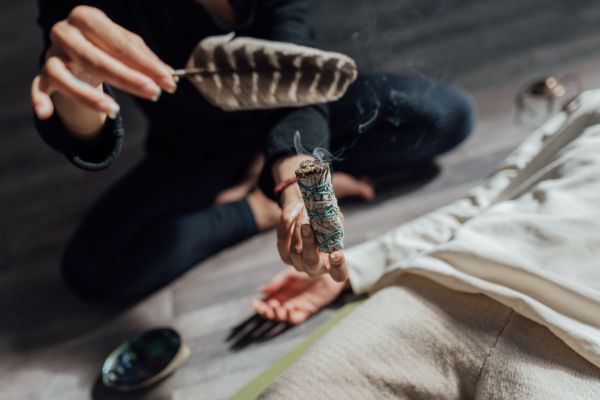
Nervous System Regulation: Don’t accept the first medical opinion as the only path. There is a whole world of holistic healing available.
Waste Management.
“We’re going to party and this,” or “I’m going to have people over, and we’re going to hang out by the pool and all that.” The only way, because I did not trust myself in those environments or the nightclub, right? I just needed to say no. I had to become a hermit. Just started saying no. People started to leave my life, which was good. I needed those people to leave my life. I was boring now. I was not any fun because I did not want to go to the different things that they were inviting me to. That eventually helped me to curb my alcohol problem.
You were not fun to those people. I can relate to that because once I got sober, once I’m in recovery and I no longer drink and do drugs and participate in those types of activities, those people do not want to hang out with me. I started attracting a new tribe, which you started attracting the new South tribe as well. That leads me to the next subject. I want to talk about biohacking, which is next. There’s a lot of hype around biohacking. I know that you’re into the biohacking culture. What would have been the most beneficial, I guess you can call them modalities, when it comes to biohacking, and the first things that people can, should you recommend them experiencing?
I’ll share this. When I went to the jungles of Peru in 2014, I’m sorry, Brazil, I went to Brazil first. I had my first stint with plant medicine. Now, when I was a teenager, I tripped on acid, and I took some mushrooms, and I experimented, but never in an intentional, ceremonial way. It was just more of a party favor. It was just a way for me to have a different type of high. I did have these euphoric experiences, and I was learning about the universe through that, but I did not know how to integrate that in any way. When I went down to the jungle and I had my first ayahuasca experience, I tried all of it. I’ve done a lot of ayahuasca. I’ve done all of the things.
The cactus medicines, the DMT medicines, the mushroom medicines, but I did it all intentionally with a shaman, guide, setting intentions, working through processes. I did it in a good way, and I realized how much this was bringing to the surface for me. The one thing that the shamans kept saying in these plant medicine ceremonies was that the plants were their teachers, and I thought that was odd and I was just like, “That’s a cool metaphor, it sounds cool,” until I realized, “This is like Narnia stuff.”
These guys are having direct communication with plants, and that was very odd but interesting to me. I always hung on to that, and then Wim Hof came on the scene, and he was talking about the power of nature and cold water therapy and breath work and tapping into your inner power, and he kept referring to the cold water as his teacher. That’s what really pointed me in his direction because I’m like, “There’s something to this where they’re referring to an element of nature as a teacher and not another human being.”
I started to do his process, which was the Wim Hof method breathing exercise. What I realized when I would do the Wim Hof method, I would become very present, and my pain would disappear, and my anxiety would disappear, and I was also spiritually getting in touch with what you would call maybe your soul, your spirit, your higher self. I was getting the information that I needed that I was looking for everywhere else through other people. That was like, actually, the information is here. I have it. I do not have to constantly get it from outside sources.
Cold Plunge And Biohacking
I just need to learn how to tap into myself. When I did my very first cold plunge ever in that meditative, intentional way, because we did a lot of cold water stuff in the Navy, but you just gritted through it. That really made my mind present, and that was really the power. I was like, I’ve never felt so present in my life. That’s how I got into the Wim Hof method, and I started doing it, and it was easy to do, and I can take it anywhere I go. I became a practitioner and then became an instructor later on down the road.
We were talking about cold water. We talked about cold water earlier, and he said 10 to 15 seconds. I’ve seen that before. People last 10 to 15 seconds, and what that tells me is he’s not present. If someone’s not present, there’s no way they’re going to be able to last, and you’ve got to learn how to be present.
It’s a trust exercise. What I like about nature and the shamans and all of the nature healers of the world doesn’t matter if it’s South America or Asia. That’s the one thing I found in all my research, because every continent has indigenous people. Every time we think of indigenous people, we just think of Native Americans here in North America or South America. Europe had indigenous people. Africa has indigenous people. Asia had indigenous Everybody had indigenous people. They were all doing very similar things.
They were using nature as their healers in many ways, medicinally, spiritually, all of that. I was like, “All of these people were doing similar practices. Breathing exercises, heat ceremonies, they had different names for it, cold water type ceremonies.” They were all doing similar things, but they were not communicating. They did not have direct communication. I said there’s really something to this, and I really started to study ancient practices of earlier humans and even the present day because they still practice these things, and I started to really learn a lot about the body.
When it comes to cold plunging, it’s your nervous system overreacting. When you get into that cold water, your nervous system’s overreacting. Your body’s going into fight or flight, which is the normal response. That’s actually what you’re trying to achieve. Rather than learning how to surrender and breathe through that process and let go, either fighting the experience by tensing up and just trying to grit and you’ll be in pain the entire way, or you’re just going to get out. It’s teaching you how to react and adapt to stress in a healthy way.
The biggest lever that you can pull in an ice bath experience is surrender and letting go because your body is very smart. We’ve walked across continents. The human body is extremely resilient. We each have the software on how to warm up, how to heat up, how to deal with the elements. We did not have the comforts that we have today. Even a hundred years ago, we did not have these comforts. Other countries right now do not have those comforts. We forget that. The lesson in that is to learn how to let go, not control, and trust. It’s a trust exercise.
You have your breathing as your tool, and that’s where the presence comes from, because all you need to do is focus on the inhales and the exhales. You’re not thinking about what you need to do later. There is no room to think about what you should have done earlier today. All you have is your mind and your breath. That is the lesson. Once you dial that in and you just finally surrender, boom, you’re there. You can stay in that water for three minutes at 35 degrees and be completely fine, and then get out of the water and feel like electric, like good electric, good dopamine, good energy.
The way we’re really supposed to feel, we’re supposed to feel that way. We walk around so lethargic, and we’re just constantly trying to take uppers, energy drinks. “I need energy.” At nighttime we’re like, “I have too much energy, I need to sleep,” take something to sleep. In the morning, we’re doing the same thing over and over again. In reality, human beings are resilient. They’re strong. You get to actually tap into the power that we all have, and that’s what I love about that process.
Cold plunge is more than just a challenge. It's a natural way to reduce inflammation, boost mood, and reset your nervous system. Share on XWhat does that mean top benefits of cold plunging?
Mainly, it’s a nervous system training vehicle. That ice bath, that cold therapy device is a training ground for your nervous system. You’re learning how to train your nervous system to go into fight or flight, which is a normal reaction. It’s like exercise. If you were to go do a HIIT workout, high-intensity training, you know that it’s not going to be easy. Your heart rate is going to elevate, you are going to be tired, you’re going to be exhausted, your body’s going to build up lactic acid from the workout. You’re asking for it by choosing to do that workout. Cold therapy is no different.
You are asking for your nervous system to go into fight or flight. It’s not even like me. I’ve done thousands of ice baths by now. I still have the reaction, my breath. Right away, I switch to switching it over to parasympathetic and downregulating my nervous system. That’s where the training comes in. You realize after doing this as a practice, you do not overreact to stuff so much. You get bad news, something happens, you do not get so triggered anymore because you know how to regulate your nervous system. There is no one who teaches that.
You do not learn that in grade school, you do not learn it in middle school, you do not learn it in high school, you’re not going to learn it in college. It’s just something that you need to learn on your own. I would say nervous system training is one of the main benefits. Two, it’s a very potent, powerful, natural anti-inflammatory. For people who are in pain and constantly taking stuff to get out of pain, your body is a pharmacy. By putting it in that state, your body releases something called norepinephrine, big doses of norepinephrine.
Norepinephrine is also a mood stabilizer. It impacts mood but also works as a powerful anti-inflammatory. It’s very powerful for inflammation, and you also increase dopamine. They report about a 250% increase in dopamine. That surge in dopamine then gives you that feeling of happiness and good, but it’s elevated. It’s not like you have a shot of dopamine and now you’re in the tanks again. The elevated dopamine is mental health. Elevated norepinephrine, anti-inflammatory mood stabilizer.
Nervous system training, burn fat because your body is now cold and it needs to warm up. How does the body warm up? It activates something called brown adipose tissue, which then converts visceral fat to heat. You start to reduce the visceral fat in your body, which is good. You do not want excess visceral fat. Problematic. It’s inflammatory. It causes problems. There’s a mitochondrial benefit to it as well. There’s a blood flow and circulation benefit. When you’re in cold water, all the blood starts to circulate towards the core because the body is so smart.
It says we need to keep the organs warm or at least room temperature. If the organs fail, we fail. Technically, if you got caught in a polar climate, you can lose fingers and toes and still live. Not to say the ice bath is going to do that to you, but the body’s smart and it knows that. What it does is it brings the blood towards the core. When you bring blood towards the core, what is it carrying? Oxygen, red blood cells. You get to basically saturate your organs with fresh new red blood cells. There’s a circulatory benefit as well to cold therapy. A lot of things. Lots of benefits.
Many of the people here in the housing have a cold plunge available. How often should they be in the cold plunge?
There are varying opinions out there, and scientists are talking about it. I say trust your body, trust yourself, find a routine that works for you. There will be weeks where you’re feeling good, and you really want to do the nervous system training, and you might go seven days in a row. For a woman who might be in her period cycle, it’s not the best time to be doing the cold plunge during that time because you want blood to flow. Usually the heat is very good for those times. Women will technically pause their frequency during that time a little bit. I would say start off with a few times a week and try to increase it and play with it. It’s a learning tool.
That’s the whole goal. It’s like you’re doing a two-minute therapy session with yourself every time you get in that cold plunge. What I like to do is I do my breathing before I get in. I get into the cold plunge. I regulate my nervous system by breathing deeply and slowly. When you get into a cold plunge, your heart rate elevates. You get into fight or flight, just like when you’re triggered. You have a panic attack. What’s happening? Brainwaves elevate. You’re really impulsive. That’s why when people argue in relationships, and they’re like, “You did this, and you did that,” no one is listening to each other during that.
No one is receptive during that conversation. No one’s going to be like, “You’re right. I’m going to change my ways right now.” Never happens. The next day, after you’ve processed a little bit and your body is now in a different state, then you are more suggestible. The reason why you’re not suggestible in this state is that your brainwaves are elevating into something called high beta brainwave frequencies. When you get into that cold water, the same thing’s happening. Heart rate elevated. It’s like you’re having a little panic attack.
Respiratory rate changes, shallow breathing, feel like you cannot catch your breath, heart rate elevated, tension in the body. The minute you start to slow your breathing down and breathe more deeply and fully, that then slows your heart rate down. You can increase your heart rate or slow your heart rate down at will at any moment, just by the way you breathe. If you breathe really fast, your heart rate goes up. If you breathe really slowly, you extend the exhale, and your heart rate comes down.
The ice bath is amazing because you’re like, “I can literally control my physiology just by the way I breathe.” As you slow your breathing down, then your heart rate comes down, then your brainwaves say, “We’re not stressed anymore,” brainwaves start to come down. When you can really master the cold plunge and get into a meditation or treat it as a meditation, you can get your brainwaves to slow down into what they call alpha and theta brainwave states.
You ever watch TV at night, and you’re in and out of consciousness, and you’re paying attention to what’s going on on the TV, but then you slip into a dream, and you’re sleeping a little bit, and then you’re up again, and you have this semi-awareness of what’s happening? That’s what they call the theta brainwave state. It’s a low frequency of the brain right before you slip into sleep. Delta waves are sleep. When you’re in that theta brainwave state, which is what they call the meditative state, your mind is most suggestible.
If you’re going to a hypnotherapy session of some sort, they are essentially trying to get you into a theta brainwave state to slow your brainwaves down because they know in that state, your mind is suggestible. Ice baths work the same way. If you get your breathing slowed down, you get your heart rate down, you get your brainwaves slowed down into the theta state, now you’re in a suggestible state. What do you want to do when you’re in a suggestible state?
You want to download new programs and software. When I’m in that ice bath, all I’m doing for the full two, three minutes, however long I decide to be in there, is reciting mantras, prayers, affirmations, I am statements, and I’m just repeating them over and over, because I know I’m in a suggestible state. I use it as a mental health tool, I use it as a spiritual practice, I use it as a physical practice. Water also, there’s something about water that helps to bring emotions to the surface.
You can even have bouts of emotional experiences where you might get out and be emotional and might cry. At Optimyze, I’ve seen many people cry after an ice bath, and they’re like, “Why did I just cry? I was not expecting that. I came in to lower my inflammation, not have an emotional episode.” There’s something about water and the nervous system that brings those things to the surface. It’s very therapeutic if you use it in a very intentional way.
I will say, you mentioned Optimyze. Optimyze is a wellness center. There are four of them around the valley. I remember, and we talked about a different tribe. I used to spend my time drinking and doing drugs, and all of my activities revolved around doing drugs. I joined Optimyze. Next thing, happy hour at Optimyze is cold plunging. We’re sitting in the sauna together. We’re laughing, we’re sitting in the hot tub, we’re going and doing red light, all the biohacking modalities, which lead to health and wellness and vitality. Spending time around other people that are also doing those activities. That’s what I want my life to look like.
Changing your environment is so important. That was the hardest part for me because I had friends and I had this weird connection to these friends, and I felt like I was disappointing people by saying no or not showing up for their things. I knew what that day was going to be like. I knew if I went to that barbecue on a Saturday afternoon, there were going to be guys and girls, there was going to be drugs around, there was going to be alcohol around. It was going to turn into a day drinking bender.
At night, we were going to get dressed and get an Uber and go out and party. I knew what was going to happen. I did not trust myself to say I’m going to go and participate in this activity because I knew where it was going to lead me. I knew that if they were going to put the drugs around or if there was a pretty girl at the party, I was just going to go down that road. Changing your environment is everything. It’s probably the best medicine I had, so I was saying no.
What role do breathwork, cold exposure, and community play in overcoming trauma, addiction, and difficult life challenges?
There’s a lot there. I’ll just try to stick to some high points. We spend time culturally, especially here in the United States. Europeans are like this, too. There’s something interesting about the planet. I feel like the closer you get to the equator, the more people are in their body and are not so much in their head. If you ever notice, try to go to Sweden and ask people to dance randomly. They’re just like, “That’s awkward, that’s weird, I do not know you, I’m not going to dance.” Go to just like an African community. They’re just going to start dancing like they do not care.
A Latin community, they’re just way more in their body and less in their head. The United States, to me, is very much developed by British influence and French influence. Culturally, there are a lot of similarities. They’re very mental. Go to Amsterdam or go to the Netherlands. They’re just very mental people, like they’re just really in their head. Culturally, we’re really in our heads. When we’re really in our heads, we have a hard time getting into our body. Plus the jobs, the nature of the work that we do, everything is, “I work from home. I work remotely. I’m on the phone. I’m on the computer. I’m processing.”
We spend a lot of time in the logical, analytical thinking element of the mind. We’re just in our heads. Anytime you can start to get out of your head and back into your body, I think it is a positive. You can do that through movement. You can do that through the therapies as we talked about. The cold, the heat. All of those are sensations for the body. We have got to really get into habits of putting our phone away, taking a break from the scrolling. This is new. I’m not even that old. I’m 47 years old. I did not have phones growing up. Someone called me.
When I got home, I would check the answering machine. I would just call them the next day. That was the pace of life. Here, it’s immediate. Boom, we need to respond. Everyone wants our attention in some way or form. We feel the anxiety. “I forgot to call them back,” or we’re on chat groups and message groups, or we’re just in our heads a lot. We’re constantly in that logical, analytical thinking element of the mind. When you get into the world of breathwork, cold plunging, saunas, all of that, even though it’s like new equipment, it’s all just mimicking nature. Cold therapy is just mimicking a cold stream.
The sauna is just mimicking what the Native Americans used to use. Digging holes in the ground and putting these tents up and calling them sweat lodges, or in Mexico, they had the other practice that they call temazcal. It’s really just old medicine. They were using hot rocks and stones. We now use infrared saunas. We use these circulating cold water therapy devices. They were using cold streams. I just watched this documentary the other day about Geronimo. Do you guys know about Geronimo? Native American, here from Arizona.
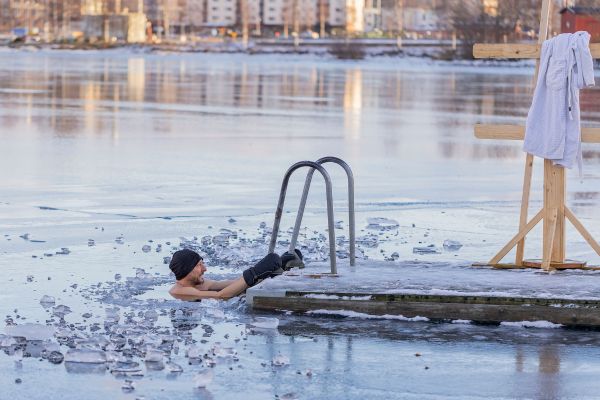
Nervous System Regulation: Unlock a suggestible state for new habits and affirmations by mastering your breath in cold water.
He was, I believe, Apache, and he was fighting with the US Army. He had escaped, and he and his warriors were basically getting away from the US Army. They were tracking him and his group. What they did was cover 70 miles a day on foot at one time, and they were just badasses. What they were doing was they were doing all this training that we see in the biohacking world now. They were doing cold water therapy in the morning, and they would get their bodies really cold and get that energy from the cold, and that would help them with their hiking, running, and walking that they were going to do to create that distance with the army that was tracking and trying to capture them. They were also doing these drills where they call them. They’re basically CO2 tolerance drills, and you see that a lot in the biohacking world.
They would make them drink a big glass of water from the stream. They would have to hold that water in their mouth like this, and that would force them to nasal breathe. By the time they got to the end of whatever type of training they did, however many miles, they’d make them sprint up these hills. They would have to spit the water to show that they maintained that water. They were being forced to nasal breathe.
Because they were running at full speed and learning how to nasal breathe, which is very difficult at first, but then their body starts to adjust to it, and there are all kinds of benefits. Nitric oxide benefits, all kinds of cardiovascular benefits. They basically were becoming like superhumans and were able to cover so much ground because of the forced nasal breathing and because they were cold plunging every day before they would go out on their runs to get away from the army. A lot of this stuff is really just old stuff that is being reintroduced to us now, and it’s being studied by science.
I love it. Now, we’ve been going for a minute, so I want to open it up to questions from the group. Sitting there for a while, I know you have got questions.
If you’re old, you might know who that is.
There we go.
My name is Cody.
Nice to meet you, Cody.
I’m 42 years old. I have a lot of similarities to your story. I was wondering. You talked about restless legs syndrome and insomnia. Is that directly related?
I do not think so. I just think it’s a mode of the nervous system that basically, when we’re lying down at night and we’re trying to relax and settle down, the body is supposed to go through a specific cadence. Our bodies recover and restore while we’re sleeping. That’s why sleep is extremely important, and if you get years of bad sleep, it’s going to mess with your health. What’s going to happen when you lie down at night?
The first thing that’s supposed to happen is the heart rate starts to come down. If you ever track your heart rate when you’re sleeping, your heart rate is at its lowest when you’re sleeping. Throughout the day, it’s elevated, and if you’re stressed all day long, it’s going to be even more elevated. Basically, what I’ve learned that’s happening is that the switches that need to happen to get that body into that sleep state, recovered state, and also cooling. Our body’s in this max conserve element when we’re sleeping.
Heart rate is low, nervous system is parasympathetic, brainwaves slow down into those delta wave states. Now the body’s processing and cleaning and restoring throughout the night. We’re having restless legs syndrome. We’re having that excess energy because the nervous system is still stuck in that hypervigilance mode. It’s not able to go through the cadence that it needs to to get into that restorative mode. When we’re waking up, we’re not feeling fresh and restored. Some of the simple things that you can do are, one, try not to eat anything at least three hours before you go to bed.
The reason for that is that when you eat food, especially if you eat dense food, and I’m bad at this, by the way. I still like to eat at night. What happens is when we eat that food, your body’s like, “Great, now I have got to digest this food all night long.” As it’s digesting that food, it’s going to keep heart rate elevated, and it’s also going to prevent the body from repairing and restoring like it needs to. Outside of that, it’s really about cultivating a practice because a lot of times if we’re having restless syndrome, we might be worrying or thinking about tomorrow or the next day or that same day.
We have got to really start to get our mind under control so that we can go through the switches needed to get the nervous system out of fight or flight. I would recommend anything that’s going to help with nervous system training, breathing exercises, any meditation you can do throughout the day. We talked about the cold plunging and the heat as well, trying to get out of the head and into the body. That’s been my experience.
I was about 21 years old, and I was drinking every night, and then I tried to stop. I could not sleep at all. That’s when I started going to the gym and also developed the rest of my legs through drinking, especially too much. That’s why I asked.
The body is relying on that alcohol and that numbing feeling because the alcohol is probably making you feel a little bit relaxed, and so it’s like it works. We know it’s not good for us because then the body’s having to detox it all night long too, and it dehydrates us as well. The hardest part has always been, even with marijuana, like I’ve always used it as a tool to get to sleep. Most of the time it worked. Sometimes it did not work, and you know that you do not want to rely on it anymore, and then you have got to go through that period of getting your body to readjust to it. The restless legs syndrome is just a telltale sign of the nervous system not being regulated and not going through the process it needs to get into a restorative state.
Do other people have questions? I guess you still have the floor.
You talked about marijuana and cold plunging. Is that something to replace therapy for help with things such as insomnia or anxiety?
Sobriety requires boundaries. Sometimes, the most powerful thing you can do for your health is simply saying no. Share on XCold plunging is the nervous system reset. Anything you can do to regulate your nervous system. There’s a variety of different practices going to be really helpful. Cold plunging gives me a lot of energy. It’s not something that I will typically do before bed. I’ve experimented with it. Sometimes it’s helped me, but most of the time it’s given me too much energy, so I tend to do it in the morning, afternoon, early evening. Something that you can do towards the evening is heat, sauna.
One thing that’s helpful about saunas in the evening is that when your body gets hot from a sauna, well, your AC turns on. Now your air conditioning system kicks on because the goal is it’s trying to cool the body off. Your pores are open, and then your body goes through this rapid cooling process, and we tend to sleep better when it’s cold and cool, and we get deeper sleep as well. Deep sleep is really important because when we get good deep sleep, that’s when our body is restoring. I would recommend cold plunging during the day and heat. You could do that too.
If you’re trying a sleep strategy and you have access to heat, I would do more saunas in the evening and then allow your body to keep that AC turned on and cooling. Now, when you just get right into bed soaking wet from the sweat, still take a shower, of course, to get that sweat off your body. Just allow your AC to stay on. That tends to help with settling down and sleeping at night. There’s obviously a wide variety of different herbal supplements that assist with sleep that I think could be really helpful, that are safe, that you can use. If you’re ever really struggling in the middle of the night, one thing you can focus on is a five-second inhale, five-second exhale.
When you do the five-second inhale through the nose and a five-second exhale through the mouth, you’re just counting, so you really get into that routine. What you’re helping to do is balance the different hemispheres of the brain, but you’re also getting your heart to slow down because it’s hard to get into sleep and sleep well if your heart rate is elevated.
When you’re worrying about something, which I think we all do in some way, shape, or form, and we have a pattern to worry about the next day, that fear or uncertainty is also keeping our heart rate elevated. The body does not know what’s real and what’s not. You could be thinking about something, and that’s reality for the body. Any way you can get the heart rate to slow down naturally is going to allow you to slip through those sleep cycle stages that I think are really important.
Can I ask one more?
Sure.
You touched on nasal breathing and said that people would make a mouth shut. Is that actually effective or is that more of a fad?
No, I think it’s effective. Here’s the deal with the nose. The nose has hair in it, so it acts as a natural filter. Also, there’s a rifling element that occurs when the air comes in through the nose. It actually is a narrow passageway, and it passes through the sinuses as well, and then that air is warmed before it gets into the lungs. There’s this whole filtration element that’s occurring when we breathe. If you think about it, the room has stuff in the air. Our immune system is always interacting with the outside environment, just like when you touch food.
The reason why people say your immune system is in your gut, 80% of your immune system is in your gut. You may have heard that figure because if you grab something from a plate. Let’s just think of a bowl of pretzels and chips at a party. How many people are putting their hands in that and taking that and putting it into their mouth? That’s something from the outside environment that the body now has to deal with. The immune system is essentially going to prepare for any outside bacteria that would be harmful.
That’s why the troops of the immune system are at the gate in the gut, ready to attack anything that comes through. Think about air in the same element. The air has stuff. There’s all kinds of stuff. It could be perfumes. It could be all kinds of stuff in the air. Pollution, you name it. When you breathe through the nose, it’s allowing it to go through a filtration process. It’s allowing it to warm before it gets into the lungs, so it’s better for the immune system.
Also, our body produces something called nitric oxide as the air passes through. Nitric oxide acts as a vasodilator, which means it opens blood vessels, and that’s healthy for blood flow, circulation, and oxygen. It’s also healthy. It has antiviral properties. It’s actually working alongside your immune system to eradicate anything that’s foreign and could be problematic. When you breathe, especially at night, a lot of us do it. You’re bypassing all of that, and so that will essentially end up with respiratory issues. Maybe you get sick a lot, immune system issues.
They’ve also talked about how the jawline can change for mouth breathers, your teeth, and dental health as well. There’s a really good book that goes deep into this, and it’s called Breath by James Nestor. He talks a lot about the indigenous people. What they would do is, when they saw a child’s mouth breathing, they would always remind the kid to close their mouth and make sure they breathe through the nose. If you notice indigenous cultures, they have big, powerful noses and wide noses and also strong jawlines as well.
In our comfortable society, our jawlines are becoming more narrow, and then there are obviously dental issues and all kinds of stuff. Any way you can figure out how to nasal breathe all day long is the way to go. With the Geronimo example I gave you earlier, they’re forcing these warriors to nasal breathe even when they’re sprinting, which is extremely difficult to do. Nasal breathing is the way to go. I would say experiment with it, play with it, and if you feel like you’re waking up more alert, more rested, then that’s a good sign. You’re welcome.
Thanks for the questions, Cody. Those are good. Now we’re coming to the end. Is there a question that I should have asked you that I did not ask, or anything that I missed?
No, we talked about a lot of things. We talked about the military. We talked about growing up in New York and Queens, talked about the mind-body connection, talked about nature. For these followers, people tuning in to this show and the environment that we’re in, I think we hit a lot of things. I have so much random information. I could go in a lot of different directions, but I feel complete unless you have some.
No, how can people find you? How can people connect with you? If they want to learn more, if they want to follow anything you want to promote?
I have a big event coming up on August 1st. It’s called Jungle Rhythms. It’s a sober event basically, and it’s not like a sober event. It’s just that we are not doing alcohol there. We have people from all over the valley that come. I host it at Mountain Shadows Resort. I bring in live music. I’m really obsessed with indigenous music because it was such a savior for me. I have these folks from West Africa coming to play indigenous African music, which is so beautiful.
Something about African music puts you in that good mood. It’s very uplifting, and they sing, and it’s old and powerful. We will have live musical performances. There will be cold tubs there. We do a Wim Hof Method breathwork session with live music, which is also very powerful. We’re going to have guest speakers as well, talking about psychedelics and ketamine treatment, health and fitness, the Human Genome Project, and longevity and life extension. We also have a woman there who will be talking about relationships, whether you’re looking to improve your relationship with your current partner or looking to have a new relationship, a healthy relationship. It’s like a one-day wellness festival.
She’s going to be a guest. We have her scheduled soon. She’s great in a few weeks. She will be here in a few weeks. She is great.
It’s like a one-day wellness festival. It’s called Jungle Rhythms. That’s the next endeavor that I’m doing. Other than that, you could find me at really any Optimyze location. We have a Tempe location, Arcadia location, North Phoenix location, and a Scottsdale location. For my Instagram, I’m pretty active on there. It’s just my name, Michael_Roviello. The name of our company is Optimyze, and we spell it Optimyze.me. I’m easy to find around town, that’s for sure. I’m involved in a lot of the wellness events, and I do some public speaking as well and talk about a lot of the same things that we talked about and go a little bit deeper on the science and all that too.
Is there anything you need from us or anything we can do that we can help you with?
The most important thing for our society is that we all just get to a better place. At the end of the day, we’re going to have the most impact when we’re in a regulated, good place. We’ve all been punched in the mouth by life in some way, shape, or form. I love the fact that people come here to be better and to get help. That says a lot because, like me, I was too good and I did not want to take any help. The more humans that can wake up to their own power and open their hearts and live a beautiful life and impact other people in a beautiful way, that’s how everything changes.
The government is not going to fix our problems, and some corporations are not going to fix our problems. We have to do it, and we cannot do it if we are not in a good state. If we are low energy or too high energy and anxious and impulsive, that’s not productive. As long as we as human beings can continue to be better, love each other and share and help each other, and be in service, there’s nothing more powerful than that. That’s everything. We’ve overcomplicated life a little bit, and life continues to get a little bit more complicated, but be in service, do not take things personally, love people, even strangers, help people out in need when you can, in any way, shape, or form.
It does not always need to be financial. It could be a compliment. It could be something that just gives them a lift for that day. Those are the most important things. What’s more important than that? That’s what builds a beautiful community, a beautiful place, a beautiful state, a beautiful city. It’s the energy, our energy. That’s all shared. That’s all I can ask for.
Michael, thank you so much for being here, and let’s give it up for Michael Roviello.
Thank you.
Important Links
- Michael Roviello on Instagram
- Optimyze
- Camelback Recovery
- The Four Agreements
- The Secret
- A New Earth
- The Power of Now
- The Mindbody Prescription
- Breath
About Michael Roviello
 Michael Roviello is a U.S. Navy veteran, certified Wim Hof Method instructor, XPT coach, and co-founder of Optimyze, a natural wellness and biohacking company with four locations across the Phoenix Valley: Arcadia, North Phoenix, Scottsdale, and Tempe.
A Queens, New York native, Michael served as a helicopter rescue swimmer and combat search and rescue crewman with deployments to Afghanistan and Iraq. After the military, he built a corporate career in higher education while privately battling PTSD, insomnia, anxiety, chronic pain, and alcohol misuse.
When spinal fusion surgery and pain medication failed him, Michael declined a recommended second surgery and committed to natural healing: breathwork, cold water therapy, sauna, plant medicine traditions, and deep inner work. He has not needed a pharmaceutical, pain clinic, or additional surgery since 2012.
Today Michael teaches breathwork and cold exposure across the U.S. and Mexico and is on a mission to help veterans, first responders, and everyday people heal naturally. Find him on Instagram at @michael_roviello and at OPTIMYZE.me.