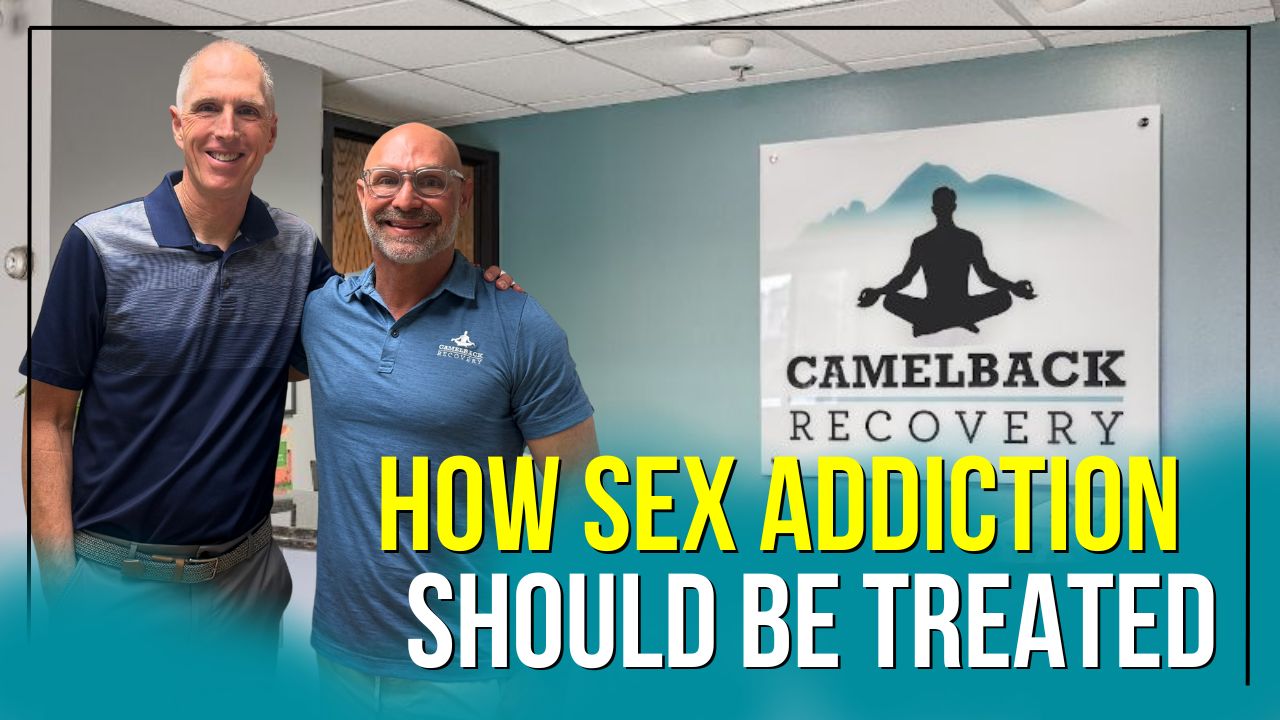
What if the substance was never really the problem? In this episode of the I Love Being Sober Podcast, recorded live at Camelback Recovery Treatment Center in Phoenix, Arizona, host Tim Westbrook sits down with Dr. Marcus Earle, Clinical Director of Psychological Counseling Services (PCS) — one of the most respected behavioral health practices in the country.
Dr. Earle has spent over 35 years treating individuals, couples, and families struggling with sexual addiction, trauma, OCD, compulsive behavior, and dual diagnosis mental health issues. The PCS Intensive Program has over 40 years of experience pioneering the week-long intensive therapy model, with a multidisciplinary care team of 25+ clinicians and individualized treatment plans designed to promote lasting growth and change.
In this honest, eye-opening conversation, Tim and Dr. Earle explore:
- What sobriety really means in sex addiction recovery — and why it’s far more nuanced than abstinence
- How unresolved trauma drives addiction, compulsive behavior, and relapse
- The connection between OCD, process addiction, and substance use disorder
- What dual diagnosis and mental health treatment looks like when you go beneath the surface
- Why so many people in addiction recovery are also carrying issues they’ve never named
- What long-term, thriving recovery actually looks like — not just white-knuckling it
Whether you’re in recovery from alcohol or drugs, struggling with a process addiction, dealing with trauma or mental health challenges, or loving someone who is — this episode will meet you where you are.
Recorded live in front of clients at Camelback Recovery’s Outpatient Treatment Center, this is the I Love Being Sober Podcast — real stories, real healing, real recovery.
🌐 Learn more about the PCS Intensive Treatment Program: www.pcsintensive.com
🌐 Camelback Recovery: www.camelbackrecovery.com
#ILoveBeingSober #AddictionRecovery #SexAddiction #TraumaRecovery #OCD #DualDiagnosis #MentalHealth #SubstanceUseDisorder #SoberLife #RecoveryPodcast #PhoenixArizona #CamelbackRecovery #OutpatientTreatment #PCSIntensive #RealRecovery #SoberPodcast #HealingTrauma #ProcessAddiction #RecoveryIsPossible #OneDayAtATime
—
Watch the episode here
Listen to the podcast here
How Sex Addiction Should Be Treated
Dr. Marcus Earle On Sex Addiction, Trauma, OCD, And What Real Recovery Looks Like
Welcome to the show. We are coming to you live from Camelback Recovery. As always, we are recording in front of a live audience of our clients and community. Our guest has spent decades working on the front lines of some of the most complex and often misunderstood issues in behavioral health. Sexual addiction, trauma, OCD, and the deeper wounds that drive compulsive behavior.
Dr. Marcus Earle is the Clinical Director of Psychological Counseling Services, or PCS, the practice his father, Dr. Ralph Earle, founded in 1974. Dr. Earle has spent over 35 years working alongside his father, treating individuals, couples, and families, and together they co-authored Sex Addiction: Case Studies and Management.
He and his father also built the PCS Intensive Treatment Program, which has helped countless people find real, lasting healing. Here at Camelback, we treat substance use disorder, mental health, dual diagnosis, and trauma every single day. We know that for many of our clients, what is underneath the substance use is often something deeper. Trauma, compulsive behaviors, OCD, or things they have not even named yet. That is exactly why this conversation matters. Dr. Marcus Earle, welcome to the show.
Thank you, Tim. I appreciate it.
First, to give you guys some context or a little background, I have known Dr. Earle since 2016. Maybe in 2014, I went back to school. When I got into the field, I went back to school, got my master’s in addiction counseling, and did my pre-practicum and my practicum at PCS. I got to see Dr. Earle 3 or 5 days a week. I saw him quite a bit. We have worked alongside them and with their patients while we were in sober living. We had lots of people from PCS stay with us, and they do amazing work. They are known all over the country. They are known all over the world, for that matter. They do really good work, and it is a pleasure to have you here.
Thank you. It is good to see you again. It has a long history now.
It is, yes.
It is fun to see what you have got going here.
I graduated in 2016. I remember when we sat down, I wanted to do my internship with you. I remember sitting down, and you asked me a question. Camelback Recovery was just getting started. I did my pre-practicum and my practicum, and then I wanted to continue with my internship, the internship portion of it, where I actually got my hours, and you looked at me, and you said, “If you had to choose between Camelback Recovery and PCS, what would you choose?” I said, “Camelback.” You were like, “Okay.” I do not remember how long after you said it. I do not remember how it worked out, but basically, I did not end up doing my internship there.
I have no idea or recollection about why I said what I said.
I would have done the same thing if I were in your shoes. I was not committed to being a therapist, really. I was committed to being an entrepreneur. I was committed to Camelback Recovery. I was committed to building a treatment program where I could help people. At that time, I did not even know I was going to be in a treatment program. It was just sober living. Sober living. Look what has happened. Now we have the full continuum of care. We are a dual diagnosis treatment center. We have got it, it is great. I am just so grateful. I am grateful to you because you were part of my journey and helped me get to where I am.
I hope you guys consider that a good thing.
PCS, The Intensive, And The Work
Give us a quick overview of PCS and the intensive treatment program. Who comes to you? What does the work actually look like?
We have a group practice, and there are 23 therapists now in our group. People come, Tim said, from all over the country. We have two things that we do. We do an intensive program, and then we have local clients as well. The intensive model is described as an eight-day program from Saturday at noon to the following Saturday at noon. In that period of time, there are 70 hours of contact, 34 hours for each individual. That is unique in our field. We were the original intensive program, which used to be called intensive outpatient. I have relabeled it as intensive treatment because there are a lot of IOPs now out there.
Hold on, I do not know if you guys heard that. Seventy hours of therapy in seven days, basically. It starts Saturday at noon and ends Saturday at noon. It is eight days, but it is seven days, 70 hours. That is ten hours of therapy a day. Thirty-four of them are individuals. It is pretty intensive.
It does.
Nobody else does that.
The nice thing about it is that for the individual treatment, clients work with five different therapists. They will have a therapist for an hour or two, then another therapist for an hour or two. It works really well because instead of settling into a rhythm with one therapist, you get stretched and pushed, and you get different personalities, get different modalities. It works really well. We do a nice job of communicating with one another. It keeps the flow going throughout the week. We work with a lot of different things. We used to be known primarily for sex addiction. That still is a vein.
Primarily, what we are looking at is trauma now, and that shows up in marriages, and that shows up with depression and anxiety. We will get people with those labels, if you will. What we are trying to do is pay less attention to the label, pay a lot more attention to the person in front of us. What drives you? How come the way you have learned to cope? We have all learned both productive and less productive ways of coping throughout life.
Generally, we can get underneath and look at what is driving things. That helps to calm the system and allows us to have more choices. Most of us are just driven by stuff that we do not pay enough attention to, and we start paying attention to it. Awareness is great. Awareness is not enough. You have to actually get in there and sit with yourself and learn to sit with the uncomfortable things that we have been working to avoid.
Awareness is not enough for recovery. You have to get into therapy, sit with yourself, and learn to be comfortable with the uncomfortable things you have been working to avoid. Share on XI say we because it is true for me as well. We are all in the same boat for sure. It is a lot of fun doing the work this way because for me, I get to do a Tuesday, Wednesday, Thursday morning group, which I love doing. I can see the progression of people. Most importantly, equally important to me is that I get to see what great work our team does. That is a lot of fun as a director to get to see. See the people you work with doing really brilliant stuff.
One thing I also want to mention, five different therapists see each person. Has anybody ever lied to their therapist? This is the way that it works. You see, there are five differences, so you are in a session with one therapist, and they take these notes, and I do not know if they still use FileMaker or something like that.
We have a new program now.
Basically, the therapist is taking notes. You get done with that session like, “I made it. I am done.” You are going to see the next therapist. While you are walking to see the next therapist, they are uploading the notes from your last session to the next therapist. You are really not starting over. You are really picking up from where you left off. You are really not off the hook. You think you are off the hook, but you are really not off the hook. I do not know anybody else who does that. I am not aware of anybody else who does that, but it is brilliant. Thank you. The PCS Intensive is known for treating sex addiction, but it sounds like the work goes much deeper than that. What other issues are you typically treating alongside sexual addiction? You kind of already answered this.
The emphasis for me is that I start each group now asking people to talk about what they do not want to talk about because I think there is so much that we hide, and there are all kinds of reasons we hide. We either learn to hide to survive, or we hide because shame is so big, and if people really knew me, they would not like me. There is everything in between those things. I tell people, “I would hate to see you leave not having shared something with us. If you take something home with you, that is going to continue to haunt you. Let us get down to the table.”
Doing it ironically in a group is super helpful. The last choice most of us would make is to share the most embarrassing thing in a group. That is the most helpful context to share things with a group of people. Generally, what people find is that I am not alone, because they hear other people’s stories, and I am sure you guys have experienced this. There is the odd comfort, “They have similarities as I do.” We are so darn isolated in our culture now, and that is not improving.
I wish it were, but we are still headed down a more isolative way of living life. We communicate through phones, through text. We do not even talk most of the time. Really, the emphasis for me is to try to help people come out of that hiding and talk about the things that they find really difficult to talk about. Understandably so, because when things happen to you as a child, or they do not happen to you as a child, we take that on. A child’s interpretation of the world is that it is about me.
We define the world according to the way we viewed it as a child. “I must be the problem.” That is the definition that most kids make. You can take that definition of “I am the problem” and sink into shame and try to slip into the background, or you can take that “I am better than that” and shift into gear, and you become a performer and sometimes an adrenaline junkie. There are all these different choices that we make. We are really trying to get underneath stuff and create a safe environment for that.
For our audience, many of whom are in treatment for substance use, how common is it for someone struggling with addiction to also be dealing with sexual addiction or other process addictions, even if they have never identified it that way?
It is pretty common. All of us have some process addiction component, if you will. I would not go to the extent of saying addiction to everything, as it gets liberally used. Are we out of control with certain things? Do things get the better of us? That is a common thing that really is not talked enough about. Do I shop too much? Do I spend too much? Do I talk too much? Do I try to be the person everybody wants to be around?
There are all these things that I think can get out of control. We would have percentages and not even know what they are because I do not pay attention to that. How much crossover there is with sex addiction with process, other process addictions, or alcohol, I just know that there is always going to be something else. It is not just one addiction. Other things are going on. For all of us, I think it is letting the whole story out and being honest with ourselves.
I love working with couples. Even if I am working with an individual and we have the partner call in with our collateral call because we would like to have more information, we cannot just trust self-report because we have our own biases. Having a person who knows you quite well call and talk about that provides the additional information that is really helpful. I completely forgot where I was headed with that. What was the question again?
The other addictions, and you were mentioning how everybody has some process of addiction.
I was talking about seeing us in our totality. Allowing other people to have feedback about us, where I was headed with that is that, as a couple, even this morning, that happened, where a guy is talking about his wife, and she keeps hammering on him. I go, “Of course she is.” What she is doing is giving you an opportunity, reminding you of who you have been so that you can continue to work on your own shame.
The things that you want to push away, she is bringing back into the forefront again, because really, until you can embrace that and make peace around that, you are feeling defensive, you don’t want to make her the problem, you are not healed. You are not where you need to be. The other people in our lives are not the problem. They are just pointing out our challenges most of the time. That has been a tough one for me because I am really good at making other people the problem. My humility has helped me own what I have been doing to contribute to the difficulty that others are experiencing with me, rather than making them the issue.
When I first got sober, drugs, alcohol, and stimulants were my drugs of choice. I got sober, and then it’s cake, pie, ice cream, then yoga and exercising, and all of these other ways to, I guess you could say, numb out. Those are like the process of addiction. How often do people move from one addiction to another addiction? They get sober from whatever it is, sex or substances or whatever, how often do they switch to a different solution?
Often. You said this, go from one side to the other, I am done. That is even true with the residential treatment program, you go to an intensive, you see an individual client for a period of time, “I am good now.” We do cross the line, and we are feeling better or feeling more comfortable in ourselves, but that line crossing is just a line crossing. There are so many more lines to continue to cross.
It has to be the mindset of a long-term recovery that is continued work on myself, and that hopefully is inclusive of therapy for a long time. It does not mean like weekly therapy all the time, but certainly coming in to touch base, it is having close friends who really know you. The friends you want to have are not the friends who agree with you all the time. Those are nice friends to have. They are not the best friends to have.
The best friends are the ones who are going to challenge you from time to time, and you are going to be upset with them. That is a really healthy friendship to have. “You said what to me?” or “You think this about me?” That is a really good friend who is willing to be honest with you. Those are the ones you want. They are going to push you and challenge you. This numbing out is something that we all struggle with from time to time. We just go about it differently. We have all developed an expertise in numbing.
We escape.
Yes, it will constantly be there. A quick aside is that I do not think recovery is about everything that is going to stop. It is the awareness that, yes, I can stop the things I really need to stop, and there are going to be things that continue. I need to be aware of how I am continuing things, being aware of the things that you will continue to repeat, perhaps would prefer not to repeat. It was interesting because I am in a learning process. It was one of the things that working with my father for 35 years taught me that I did not recognize. I was seeking my dad’s approval.
I am sure it was quite obvious to everybody else. To me, it was not. It was not until 27 years into practice that I woke up and said, “I need to become my own person.” It was a very long journey to do that. If I am in the field, I have a doctor’s degree, and it is taking me this long to catch up with myself, become more aware. We are all on a long journey of becoming more aware. That is not discouraging to me. That is encouraging to look forward to, that each year I am going to grow more and more. I can look back at each year and say, “I am more grown up than I was the previous year.” That would be a nice statement to make each year.
As Dan Hardier and Sullivan would say, “You’ve got to look at your progress, not the goal, the ideal, because the goal or the ideal is like the horizon and it is going to continue moving.”
Gives you direction.
Sexual Addiction And Sobriety
If you look at where you want to be and you are always looking at where you want to be, then you won’t ever feel good about your progress. Always measure backwards, AMD. If you are measuring backwards, then you know how far you have come. It is much more, I guess feels better. Let us talk about what sobriety actually means in sex addiction and recovery. It is not as simple as not drinking. How do you define it, and why is it so much more nuanced?
It is complicated because our sexuality is a really great part of us. When it gets out of control, it becomes problematic. Are you going to stop being sexual the rest of your life? No. Some people move into what has been labeled sexual anorexia, where they just push away, “I do not want to deal with that anymore.” That then becomes another challenge.

Sex Addiction: Our sexuality is a great part of us. When it gets out of control, it becomes problematic.
How do I healthily embrace my sexuality and also curtail the out-of-control part of it? For me, I think that is the most difficult part of this because I want to have a healthy sexual relationship. I start to go that direction, and it kicks in. It is challenging in that regard. It is much like you stop drinking, and you end up being in a party environment because you want to be social with people, and it is the same challenge.
Is it like controlled drinking?
No, I would not want to say that because there is a pleasure aspect to being sexual, with self or with others. Drinking, we could say, could be pleasurable as well, but the first drink, hopefully, if you continue to drink, it would be because you really like the taste of the alcohol. There is a pleasure in that. Sexual pleasure is a step up. I hope for people that is true. For us, there is generally a period of time of stopping. The reason to stop is just to recalibrate. What is life without being sexual? Who am I? That is the bigger question. Who am I if I am not being sexual?
What goes on underneath me when I am not being sexual? That is a data collection period of time to which I am going to stop, and some people are more successful than others with that. You see a lot of rigidity around that. If you cannot stop, then you are not sober. Sometimes, the effort they are making is the effort they are making. There is some lapsing, and some lapsing can happen if you want to stay married or you want to stay in a primary relationship, so there is a choice in that.
Maybe you just do not want to be married. Just all this openness to all these possibilities. I think that to me is a more sophisticated recovery and a more sophisticated treatment program is trying to understand what is actually happening. Sobriety and sexual sobriety differ for everybody. For some, they do not return to any of the behavior, like there is no masturbation, there is no pornography.
Some might find that from time to time I do that, and I still feel sober. That is an over-time recovery process. Not everybody is going to agree with me on that. It is just after doing this work for so long, there is just a lot of diversity. I would still consider people to be sober. They have just decided that it is still part of their healthy sexuality, and it does not lead to being out of control for them any longer.
It is not like sobriety from substances, where it is as if you drink or use, you are not sober. It is different.
Initially, it needs to be that.
It has got to be like a period of time.
With alcohol and drugs that with alcohol, if you are truly an alcoholic, you are never going to have another drink because you are going to lose it. If you are not truly an alcoholic but alcohol has been a problem for you, and you do not get treatment, you might be able to drink later. We do not really have a sophisticated way of knowing that.
I also think about prescription medication. For example, when I had my shoulder surgery, I was prescribed pain pills afterward, and I took the pain pills, and they helped me and then, but I do remember sitting there going, “This is a slippery slope.” It is a slippery slope, but I was far enough along and pretty stable in my recovery that I was able to say, “I feel okay, I am good.” I do not need the pain meds anymore.
I am sure you told people.
I did. I shared with my sponsor, I shared with my friends, and I was very open about it.
Which sets the difference maker. Let us just go back to sexual sobriety. If you are going to do those things, but you are going to keep them a secret, then that is a problem.
If you are not able to tell somebody, then it is like there is something going on here. If you are not willing to tell your sponsor and people that you are close to, then there is probably something else going on.
If a guy is married, if he continues to say, “I can do this healthily, I can look at pornography, and I can masturbate, but I am not going to tell my wife.” Not okay. You’re still addicted.
Shame plays a huge role for our clients, whether it is around substances, trauma, or compulsive behaviors. How does shame show up in sex addiction, and how do people move through it?
It is the driver. I think it is the driver for all of us. No matter the addiction, no matter the behavior, because not everything is considered addiction, but we work really hard. Some people like to be in front of people. Shame is underneath that insecurity, this self-doubt, there is something wrong with me, I am less than. It is inside all of us to varying degrees. I do not think that the goal of recovery is to eliminate shame. I have a strong belief that it is our ability to befriend our shame, to understand our shame, to get to know our shame, and to be able to sit with it.
Shame is underneath insecurity and self-doubt. Share on XThe goal is for me to become more comfortable with this part of me that I have been so utterly ashamed of. I think it is disgusting, horrifying. My ability to sit with that part of me is most important. That is the hallmark of a great recovery for any individual. To be able to sit with that which has felt ugly inside of me. In sex addiction, I do not think it is any different than anything else. It is our ability to work that through, is to be able to talk about things we do not want to talk about.
That is why I say what I say in a group. It is to get the stories out that are somewhat horrifying to tell anybody about, and then to continue to process that. The greatest shame reduction is one, telling the story to a group of people. Two, if I learned to come alongside myself, the adult me now can go back and hang out with the part of me that just felt awful for whatever reason. When I can befriend myself in that regard, I can understand, I can be compassionate to myself, I can be patient, then we are in a really solid place.
It is always like, I am on a rock, and I am solid. It is never that way. There is always a wave that is going to come and knock you off. Solid to me is that I can climb back onto that rock. I can climb with my friends, with my sponsor, with my partner, I can climb back in, can tell the state what happened, and get back on track again. If we could have that kind of understanding that all of us go through, it would be a more humane process for everybody.
Is shame ever healthy? Is there a healthy level of shame or healthy shame?
That is what I am saying, like, I do not think it is healthy to think that you are awful. It is healthy to be aware that there are parts of me that still think I am awful. It is more about the relationship of shame, rather than shame being healthy. It would be nice if we could eliminate shame. Maybe to your point, I think our shame keeps us more humble. If we have a relationship, there is a humility in knowing, I feel less than, or I feel like I am really screwed up in these ways.
That keeps me grounded, or when my behavior is not aligned with my values. I do my best, but my behavior is not always going to be aligned with my values. The awareness knowing that it is like, “That does not feel good. That is why I am going to live by the principles in all my affairs. I am going to live according to my values because I want to feel good. I do not want to feel restless, irritable, or discontent.
I do not want those feelings, which is why I want to act out or drink or use or do something else that causes me to numb out.” It is different. I do not want to. We get into these dichotomies, like I do not want this and I do want this, per se. I forgot what your list was. I want to feel miserable. You are going to feel miserable. Let us just acknowledge that that is going to happen. If we keep saying, “I do not want to,” then we are trying to push away that which is going to occur.
You are putting energy into that. If you put energy into it, it is going to happen.
You put energy into it or not, these things are going to occur. We’re human beings. We’re going to feel miserable. We’re going to feel awful about ourselves. We’re going to be embarrassed. It’s life. This goal of not to or I do not want to just sets us up to fail.
We are human beings, and we will feel miserable. This goal of “not to” or “I do not want to” just sets us up to fail. Share on XIt is not reasonable, it is not realistic.
The acknowledgement that I am going to do better.
As they say, being in recovery, I get to feel all of my feelings, not just the good ones.
That is why it is there.
You’ve got to have the pain, the anger, the frustration, the loneliness. If you feel those feelings and you embrace those feelings, then the joy, the happiness, the freedom, the fun, the laughter feel better. You have to have both sides of it. You work with clients who have OCD alongside these other issues. Can you help our audience understand how OCD shows up in the context of addiction and compulsive behavior, and how treatment has to adjust?
We get obsessed with certain things, and it just gets locked in. You get into repetitive behavior, and that gets locked in because it is comfortable. There is a soothing aspect to it, and it makes sense. I want you to see that that is sensible. It is not a wrong thing. It got put in place because it became a self-soothing mechanism. Really, the work around the OCD component of things is how do I sit with the discomfort of not doing that?
That is where you are going to need help, where people can come alongside you. They could be present with you as you are sitting through not doing the repetitive, either repetitive thought or the repetitive behavior, find out that you are still going to be okay because your system is going to be screaming at you like, “If I do not do this, if I do not keep repeating this thought, do not keep repeating this behavior, that life, I am going to fall apart. Life is going to fall apart. I am going to die.” It is a more extreme version of that.
When you can practice sitting with not doing, not repeating, and finding other ways of soothing yourself, then you can start to let go of those things. It does work. It is just really hard because you are convinced that death is around the corner. Some catastrophe is going to happen. That is understandable because we grew up with those types of things happening around us. It is difficult. Definitely worthwhile getting help around that one when somebody knows how to help you sit with them. It is called exposure therapy to be exposed to the difficulty and not repeat the same behaviors. Super helpful.
Trauma, OCD, And Mental Health
Remember, we are going to, if you all have questions, there is a section at the end where we are going to open it up to questions. Trauma is something we deal with every day here at Camelback. It underlies so much of the substance use and mental health issues we see. How does unresolved trauma connect to sexual addiction and other compulsive behaviors?
In my family growing up, there just was not a lot of connection. We looked good, we sounded good, we had family trips, and Dad is successful. We are socially engaged. I was into sports, my sister was into sports, and she is doing pretty well academically, not great, but pretty well. It is somewhat of a surprise that I am here. I was home alone because my mom was teaching at the time, as well as my dad working. No clue where my sister was at the time.
I found my dad’s pornography, and it is like an immediate hook for me. That just filled a gap. That just became my go-to. That continued to evolve over time, because what was the adrenaline and exciting trail off for a while, so that I needed more, evolved to where I would fabricate relationships in my mind, so it just took over. After all, I do not have in my history what we call big T trauma. I was not beaten, there was no huge event that happened in my history, and so, it took me a while to acknowledge that loneliness was enough.
I did not really need to have some big T thing that neglect is a powerful influence on us, as abuse. When you are neglected, that is a form of being abused. It is just not one that we tend to flag as that commonly. It is like you are ignored. Maybe that was a good deal because a lot of violence was going on around you. It is not good. It is one of the things that research has shown, back in the studies around attachment that Bowlby did, is that when you completely neglect a monkey, because we are meant to be connected.
Not everybody likes to be connected, they think, but actually, there is a strong, powerful driving force in us as a connection. For me, not having connected, I think that is true for a lot of sex addicts. That is why my dad’s original book was titled Lonely All the Time. That is the experience I think for most sex addicts is not feeling seen, not being known, feeling heard, and understood. Sex becomes an outlet because it is a fabricated way of connecting.
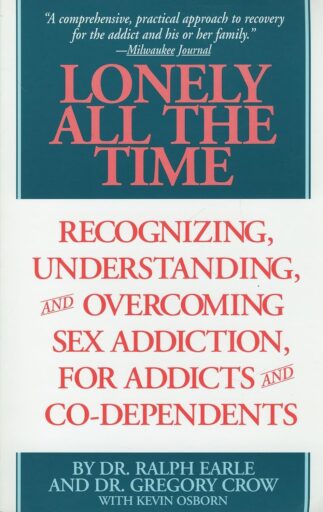
Lonely All The Time
Whether it is chronic affairs, it can be voyeurism, it can be exhibitionism, it is all about creating a connection. In our day now, which has been catastrophic for me with the access to the internet, you have video chats, have dating apps, you have all these things that can keep you occupied in the sense of fabricating a relationship with whatever it is. Underneath that, there is a sense of not feeling known. Ever feeling really seen or understood.
Which I think actually goes across all addictions. Whether it’s a substance addiction or a process addiction, the root of all addictions is very similar. Each addiction likes to feel special. They are very similar. They all have similarities. We treat a lot of dual diagnosis here, mental health and substance use together. In your experience, what mental health issues most commonly co-occur with sexual addiction or process addictions, and how does that shape treatment?
Depression is common, and anxiety is common. Depression is like getting tired of repeating the same thing again and again. Isolation leads to depression. The anxiety part is being so wary, being hypervigilant, who knows? What do they know? Those two are the most common. Personality disorders, there is a lot of grandiosity, so there is no narcissism. There is some sociopathic stuff where, “I do not care about people, I only care about myself.”
There is this mixture. Again is still true in most addictions. I do not get caught up in those types of things because again, I think they are more the symptoms of what is underneath. Sometimes you need to address medically, so a medication to calm that, so the treatment can happen. I would view that as a means to an end, not necessarily something that you would have to continue the rest of your life.
There are things, even like bipolar is considered to be lifelong. It is probably over-assessed and diagnosed, and I would rather see people do the work on their trauma, change their lifestyle, and be in a very supportive living environment. After doing that for a period of time, then work with a medical professional and say, “Let us try and tie you down and see how you do.” We have become way too dependent on medications as an answer.
We have lost a sense that we really can have found healing inside of us and with others. When we do that, it opens doors, and you may need to look at nutrition as well. There are just a lot of different factors, and if you address all of those, then I hope people become a lot less dependent on medication for them. Some do need it. That is not wrong, that is not bad. I just think that we overly depend on it, and we sell ourselves short.
In my experience, when someone gets clean and sober from substances, and this is myself, everything has to change. The eating habits, the sleeping habits, you actually pray, meditate, do a gratitude list, new friends, new hobbies, new interests. My whole life changed, and that’s my experience. That’s what works is when people change everything. Is that similar to sex addiction, or do you have an opinion on that?
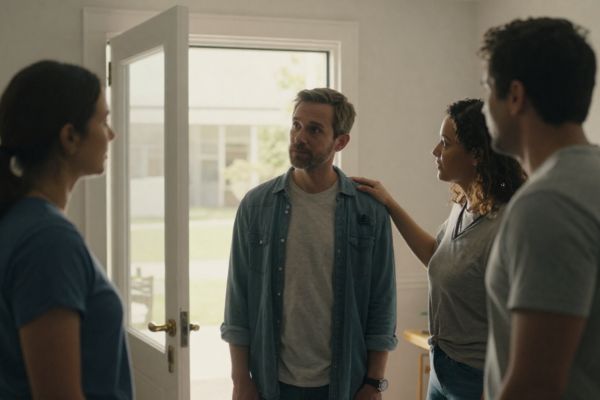
Sex Addiction: When we find healing inside of us and with others, we open the door to recovery.
The entry about sex addiction, you could do it by yourself, so it’s not always inclusive, and to change all your friends, and so, in that regard, it is.
I’m just thinking about it. I’m like, “It might be a little bit different.”
In that regard, it is, but if you’re the one who’s going to strip clubs and you are doing all this stuff with a group of people, then you probably have to change your friends because it’s not going to work.
That’s the environment that you are putting yourself in on a regular basis. You probably need to change things up.
Sometimes, jobs, if an isolated job, you may need to look at doing something different, where you are around people more. It is this mentality of whatever it takes to change things up, so I do not return to the thing that I do not want to return to. You have got to do it. For me, it was not hiding. It was telling on myself all the time. That was a new thing because it’s really good at hiding. Actually, that’s a practice for everybody. It’s just keep telling yourself.
Hold yourself accountable. If you hold yourself accountable, then in recovery, I have learned to play the tape forward. What is going to happen if I do this or say this or whatever, then it is playing the tape forward. I am going to have to make amends. I am going to have to have an uncomfortable conversation. I am going to have to say sorry to this person, and I do not want to do that. That alone, just playing the tape forward, has helped me tremendously throughout the years.
That is nice. The sex addiction piece where there is uniqueness is when you are in a committed relationship, and the betrayal that takes place, and the recovery process around that. It’s easier for a lot of partners where there is an addiction, there’s a substance to say, it is a substance, a substance that did this. It feels more personal. If somebody has had affairs, they bring other people into the house. That is a whole different level of betrayal that is very challenging to work through. It is. Honestly, most people end up staying, and I think that’s a good thing.
Boys had a lot of work, because they are holding space both for the addict who is in recovery, feeling good about their recovery. As you are holding space for a person who feels betrayed, and the bottom has just dropped out. One is on this trajectory, the other is on this trajectory. It is really tough for addicts to slow down and have empathy, because they are excited about what’s happening. They are unloading information, but what they unload is tanking their partner. You get something going in different directions, which is pretty unique to sex addiction.
For someone in early recovery from substances who suspects there may be something else going on, trauma, compulsive behavior, OCD, what would you say to them, and how do they even begin to address it?
Is there is this inkling that something is going on?
Yes. They think that there might be something else going on. I have seen that in the rooms of AA. I have got people, they are sober from substances, but then they have got these other behaviors going on.
The easy answer is that there is something else going on.
If you think there is something else going on, there is something else going on.
That does not mean it is always a problem. That is the thing, I think this is where shame comes in. The difficulty we have with being upfront about what’s going on is that people do better when they talk about the things that they’re concerned about. Just talk about it. The worst that is going to happen is you pick the wrong person to share with, and they hammer it around you. The most common scenario is that people say, “Thank you for sharing.” Oftentimes, they will have a similar story because we tend to surround ourselves with people who have similar stories.
There is an opportunity for connection that, when we continue to hide, we miss opportunities for connections. I am generally sending people back from our program, asking them to create lunches, breakfasts, dinners with the friends they currently have who do not know their story, so they tell their story. I want to create a bridge from where they have been sitting with us to the people at home, who are far more influential than we are, and let themselves be known by those people. These little nagging things need to be talked about because sometimes they are things that are attached to our shame, and they are not really problems.
If you sit with somebody and you talk about these nagging things, sometimes you will find out, “I have just misinterpreted that. I have seen that in a way that is from a young perspective, and if I bring that out in the open, it helps me to see it from an adult perspective or an alternative one that I did not think about.” I spent a lot of time with people just reframing things that they view as just not okay. They say, “Maybe this works for you.”
Relationships And Family
What do you want the family members and loved ones of people in our audience to understand about these issues, especially if the person has never disclosed the full picture?
If you have a sense that somebody has not fully disclosed, expect them to. To hold on to that expectation, it can be crazy making. There is a concept called gaslighting, where the truth is distorted and manipulated to the point where you feel like, “Maybe I did not see that correctly.” You saw it correctly. For partners and for family members and for friends, oftentimes they have learned to just dismiss that. There is a good story, there is a good explanation, and there is a reason for it. If that is in your history, then I would say go back and pursue those things because it is better to find out.
Better does not mean like it feels better, just better to find out because not finding out leaves you in potentially more painful situations down the road. Not finding out, you miss an opportunity for a deeper connection with the person that you are across from. That is what I find most enjoyable about the work. By doing all this difficult stuff, and particularly when you do it with partners, with family members, the type of relation that can evolve from that far exceeds where it was. The depth of connection when we talk about these really difficult things is really profound.
Without knowing, having all the information, the relationship cannot go as deep. It is much more on the surface.
Which is where a lot of relationships reside.
That is where they will stay forever.
Why do people divorce? It is those things they just do not talk about, or if they do talk about, they do not. They do not allow themselves to dig into themselves to see how they are a part of the problem.
It takes a lot of courage to really dig deep and get underneath the issues.
Another truth about relationships is that each of you is the problem.
Answering Questions From The Audience
There’s a term instead of breaking up, it is called conscious uncoupling. I’m sure you’ve heard of that, which makes total sense. It is like conscious uncoupling. They are taking responsibility, not blaming. What was my contribution? What do things look like moving forward? What did I learn? It is like this relationship happened for me and not to me, as opposed to that person who is a terrible person because of ABC or XYZ. Let us open it up.
What advice do you have for people who are suffering with isolation, but they want to reach out, but maybe they are just shy, or maybe have just reached out to people and been rejected in the past?
That is really common, and that is a tough one. I was definitely more shy growing up. I just kept putting myself in situations that were beyond what I thought I could. It is the tenacity to continue to put yourself in situations that are uncomfortable. There is no easier way to do it. If you have misses, then you might want to reassess, where am I making my efforts? It’s because we do not always make the best effort to begin with. We go places because we are wired up to stay safer.
That’s how we’re wired up. Unconsciously, you might go to places that are more likely to have something that does not work than work. Those initial rejections, you are probably just choosing the type of people more likely to do that, to reject you. It does not mean that you are a problem. It does not mean the other people are the problem. This is how life is. It is the tenacity to put yourself in situations. There are lots of self-help groups, which are a great place to put yourself out, to be with people.
It is probably the safest way to go about it to begin with. The interest that you have is to look at how you could chase those interests with other people. I have a history of saying yes to things, even though I did not know I was saying yes. Having a yes principle is also really helpful. If people ask you to do things, “I do not know that I am actually going to be good at doing what you are asking me to do.” I have doubts about that. I am going to say yes, because I will learn something.
I have said yes to giving talks that I was not prepared to give when I said yes. I figured out that I said yes to teaching a sex ed class in my graduate program way beyond my comfort zone, because I did not grow up with healthy sexuality. That was really helpful for me, and I am standing in front of 500 undergrads talking about vulvas and penis and all this stuff. I got comfortable with that area quickly.
Otherwise, I would be up there shaking and shutting down. Stretch yourself and realize that it takes time. It is not going to just change quickly, and I think that’s the most discouraging part, that things sometimes do not rapidly change, and it’s over time. If you keep the commitment to yourself and you keep saying yes to things and you keep stretching yourself, you get there. Every time you get there. Sorry, there is nothing easier.
Is lust considered a sex addiction or a sex addiction?
Yes, because you can get caught up in lusting. That often looks like a lot of chasing and pursuing. Once you arrive, “I am done now,” because the lusting after is the adrenaline, and that’s the addictive component, and that whole chase and pursuit piece is what people get excited about. This happens a lot, like, “I got you done.” That’s a pretty common pattern.
The most damaging thing for partners is drawing hard lines. When they get broken and they choose to stay, they feel bad about themselves. Share on XThank you.
Good question.
Sex addiction and porn addiction are a lot more common than people like to make it out to be, and it has been issues in my relationships in the past with my partner. How do you suggest I can be a supportive partner without compromising my values, my integrity, and my boundaries?
You get to decide what your boundaries are going to be, and those are what they are. What is healthy for you is healthy for both of you, and so that’s the starting point there. You make a decision about what you are comfortable with, then your partner has to make a decision for themselves what they’re comfortable with. That sometimes creates a break in the relationship. The decisions we make initially pay attention to how they may be reactive, because it’s new, it sometimes feels like the carpet is yanked out from under you, and so you want to get grounded again.
We get desperate, and you are never going to do this again, which is always a naive statement because most people will allow it to happen again. That is why the reactive boundaries often are the case. That is why we use those that are the ones that you cannot depend on for yourself. After you have maybe laid the law down, give yourself some time, give yourself some grace to say, “I have been thinking about this, this is where I come from now.” If you stay where you do, you stay where you do. It’s a recognition that all recovery is bumpy. How rigid do you want to be initially?
It’s weighing what boundaries you have with the person you’re across from and how willing they seem to be to do the work. It is this balancing thing that is really difficult, really difficult, but you get to call those shots. I just encourage partners to be in consultation about that and to give themselves a little bit of time after the initial shock and then the reaction to that and to be good to themselves to say, “That was what was going on. That’s okay. That was necessary. I wanted to strangle them.”
Healthy thoughts. That is not a bad thought, and I may have even pounded on them physically, and I am not proud of that, but I needed to get that out. There are a lot of things that happen that I would normally say are very unhealthy things for people to do in a relationship, that I say are probably pretty healthy for you to do. It’s that initial part that you have to get yourself through to where you can come up with something that’s more sensible.
The most damaging thing for partners is drawing these hard lines, and they get broken, and then partners stay, and then they feel bad about themselves. That is a setup in our field. Historically, that has been problematic. A more gentle way to approach it is, “How do these boundaries stand now?” You keep reassessing things as they go. You’re going to reach that point where you say enough is enough. If your partner, you just think they are not going to stay with it at that level, then it’s painful, sometimes relief, but oftentimes painful.
Thank you.
You’re welcome. Ask anything. If there’s nothing, that’s okay.
Episode Wrap-up And Closing Words
Is there a question I should have asked you that I did not ask?
I think we got two things. For me, it’s how do we have a gentle approach to our recovery? There is a long-standing tradition in addiction treatment programs of being a bit harsher and harder. I am all for being firm and being strong where you need to be strong. It needs to be a gentle, compassionate process. That does not mean wishy-washy and does not mean allowing for it to continue to do nonsensical things.
We all have these different parts of us that have learned to cope with the difficulty. We are better if we learn to come alongside all these different parts of us and understand why they do what they do, so we can be more compassionate towards ourselves and our recovery process. That allows us to be more compassionate to others as well, so it just feeds off itself. I am not big on the hardline recovery process. Why don’t you just try to find out why they are not right now, rather than making accusations? The more we stay away from judgment, the better we are.
Everyone has their own process.
We definitely do. It is unique to every person.
Some need to go to rehab fourteen times, and some one time.

Sex Addiction: Recovery is not just about you. Challenge your treatment system as well.
I just brought up another thing. Some of you are going to be in groups. They look like a rock star in recovery. They often end up on our doorstep. The rock stars in recovery often are not taking the gentle approach. They’re just doing a lot of performing things that look good, sound good, but that’s going to land at some point in time. I hope none of you are a rock star in recovery.
I hope you are a participant. You lead where you lead. The goal is not to become the best person in recovery. That would be a mistake. I think it’s better to be a person in recovery. You have the strengths and assets that you have. Bring those into your recovery process, and with your peers, just be in it with everybody else. It is a lot better that way.
Where can people connect with you, find out more about the PCS Intensive, learn more about your program, or anything else you want to mention or promote?
It’s PCSIntensive.com. It is easy to find. All you guys want to call and ask me a question, do, I will answer them. If we are not a fit, I will definitely try to point you to a fit. I prefer people to be in the right place for themselves. We are not always in the right place. It is a lot more important to me. The business is our business will work as long as we’re doing a great job. I really want people to be in a setting where they feel safe, and they are making progress. That’s a bigger deal. By the way, because you mentioned this, the repetitive residential program, if you are in that, get somebody who is going to help you to step back and look at why that is happening.
It is too easy to just keep repeating residential programs and to be more of the same. There needs to be a change in the process. Do not let people convince you or others you are around that you just need another residential program. That is not true. If it did not connect well enough the first or second time, then that is not likely a process for you that is going to work for you. Let us get creative. You need a creative therapist who is going to help you be creative.
What is going to be your recovery process if that one is not working for you? It’s really important because we are spending a lot of money and spending a lot of time on something that is not making enough difference. Let us figure out how to come. That would be the question to ask, more importantly. That is both probably you and the treatment system around you. It is not just about you. Challenge your treatment system as well. They need to be challenged.
Dr. Earle, thank you so much for your time. It is a pleasure. This was an important conversation, and I surely got a lot out of it. I know that folks here got a lot out of it as well. Thank you for being here. Let us give it up for Dr. Marcus Earle.
Thank you.
Important Links
- Dr. Marcus Earle
- PCS Intensive Treatment Program on LinkedIn
- PCS Intensive Treatment Program on Facebook
- PCS Intensive Treatment Program on Instagram
- PCS Intensive Treatment Program on X
- Camelback Recovery
- Lonely All the Time
- Sex Addiction: Case Studies and Management
About Dr. Marcus Earle
 Dr. Marcus Earle is the Clinical Director of Psychological Counseling Services (PCS), a nationally recognized behavioral health practice in Scottsdale, Arizona founded in 1974. For over 35 years, Dr. Earle has worked alongside his father, Dr. Ralph Earle, treating individuals, couples, and families navigating some of the most complex and misunderstood issues in mental health — sexual addiction, trauma, OCD, compulsive behavior, and dual diagnosis.
Dr. Earle co-authored Sex Addiction: Case Studies and Management and has been instrumental in building and leading the PCS Intensive Treatment Program — a nationally recognized, one-week, 72-hour multidisciplinary treatment program offering over 32 hours of individual, couples, and family therapy, 10+ hours of experiential and psycho-educational workshops, and 30+ hours of group therapy — designed for those who feel stuck, are in crisis, or are ready for profound transformation.
The PCS Intensive Program brings over 40 years of experience and the collective expertise of more than 20 therapists to stimulate, inspire, and encourage individual and relationship growth — working with clients struggling with addiction, trauma, intimacy disorders, anxiety, depression, and more.
Dr. Earle continues to work directly with individuals, couples, and families as both an individual and group therapist. His life’s work is rooted in one belief: that real healing happens when you stop treating the symptom and start addressing what’s underneath.
Learn more about the PCS Intensive Treatment Program at www.pcsintensive.com