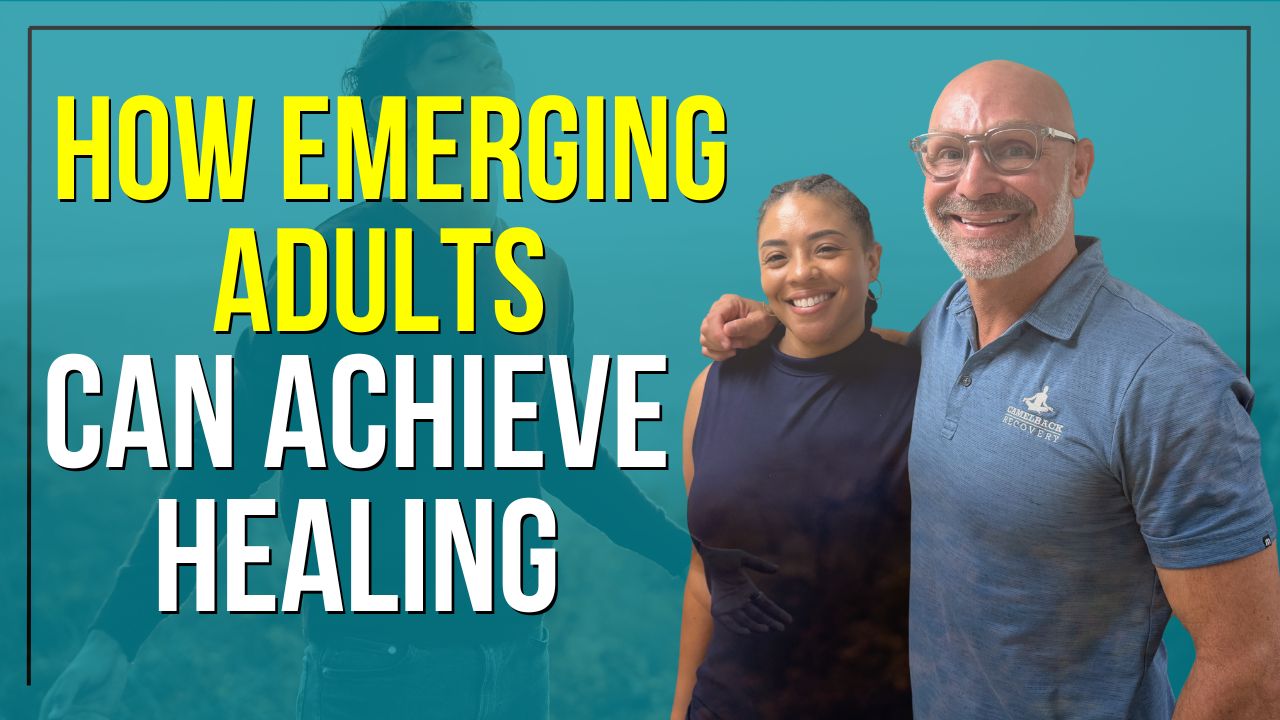
What actually keeps women from walking through the door of a treatment center — and what keeps them from staying once they’re in? Tim Westbrook sits down with Dr. Whitney Howzell, a licensed clinical social worker, US Army veteran, certified sexual therapist, and Vice President of Inpatient Operations at Meadows Behavioral Healthcare, for one of the most honest conversations about recovery this podcast has ever had.
Dr. Howzell breaks down why shame is gendered and shows up completely differently for women than for men, why emerging adults struggle to engage in treatment even when the consequences are right in front of them, and why the prefrontal cortex matters more than most treatment programs acknowledge. She talks candidly about digital culture, dopamine, and how recovery has to evolve to meet a generation that was born into the internet age.
The conversation goes deep on intimacy — not the physical kind, but the kind most people in recovery have never learned: eye contact, vulnerability, what it means to let someone actually see you. Dr. Howzell also discusses her work treating sexual trauma, sexual compulsive behavior, and the new Willow Healing Center at Meadows Behavioral Healthcare, a combined women’s program that integrates eating disorder treatment with intimacy disorder treatment after clinicians discovered the two were almost always co-occurring.
This episode is for anyone in recovery, anyone who loves someone in recovery, or any clinician who wants to understand why the one-size-fits-all treatment model keeps failing the people who need it most. Recorded live at Camelback Recovery in Scottsdale, Arizona with a live audience of clients and staff.
—
Watch the episode here
Listen to the podcast here
How Emerging Adults Can Achieve Healing
Dr. Whitney Howzell — licensed clinical social worker, US Army veteran, and VP of Inpatient Operations at Meadows Behavioral Healthcare — breaks down the real barriers keeping women and young adults out of treatment, why shame is the silent enemy of recovery, and how the digital age has completely changed the game.
My guest is Dr. Whitney Howzell, a licensed clinical social worker, US Army veteran, and one of the leading voices in trauma-informed care for women and emerging adults. She holds advanced degrees in social work, public health, and education, as well as a PhD in Human Sexuality Studies from Widener University.
She’s a certified sexual therapist, certified sex addiction therapist, and a member and teaching faculty of the American Society of Addiction Medicine. She serves as Vice President of Inpatient Operations for the Claudia Black Young Adult Center, Gentle Path, and Willow Healing Center at Meadows Behavioral Healthcare. She oversees treatment options for emerging adults and families navigating addiction, trauma, mood disorders, and sexual compulsive behaviors.
‐‐‐
Dr. Whitney Howzell, welcome to the show.
Thanks for having me.
I am grateful to have you here.
Long time coming.
Who Is Dr. Whitney Howzell
I had Jaime Vinck here and at the end of the show, I said, “Do you have anybody that you think might be a good guest?” She said, “Dr. Whitney Howzell, for sure.” She didn’t even hesitate. You built a career at the intersection of trauma, addiction, and sexual health, a combination most clinicians don’t hold. How did that path come together for you?
That’s a lot of stumbling and a lot of trying to figure it out. It was interesting. I started off my career at Planned Parenthood. I was one of those folks who went into the schools, and I was the condom lady. I would come in, show folks how to use contraception, talk about pregnancy, and talk about the dangers of teen pregnancy. Over the years, it started to morph into something more therapeutic. I figured, “I should go get an advanced degree and get paid for doing the things that I’m doing.” You start to feel woefully inadequate for what’s being put in front of you.
I did a stint in public health. I worked with the CDC for a while, tracking disease and doing epidemiology. While it’s super important work, it is boring. You’re not around people. You’re looking at numbers. You’re looking at data all day. I’m like, “I’m in grad school again. How am I going to pay for this? You know what you should do, Whitney? You should join the Army,” says no one. I joined the Military. I knew going into social work school that I wanted to do sex therapy.
It’s important to me not to have a certificate in it or a little five-week training, but to dig deep and get an advanced degree. I wanted to have exposure to all facets of sexuality. Not just the pathology part, where we talk about addiction and being bad. I wanted to talk about, “What does it mean to be your sexual self?” I wanted to look at how you evolve through your lifespan and embrace all parts of your body and all parts of your being. That’s how I came into getting the degree, into social work, and helping people.
I was on the East Coast for a long time, doing couples work. I had a colleague who said, “Why don’t you come out to Arizona?” I’m like, “I’m not coming out to Arizona.” She’s like, “You hate the East Coast. You hate the snow and the weather. You’re from Florida. You can handle heat.” I thought, “This is different. It’s a very different heat.”
It’s dry heat.
Dry heat is wild. It’s like an oven. I still wasn’t biting. I said, “I don’t even know if there are Black people in Arizona. I’m not coming out there. What are you talking about?” She’s like, “We gave them your resume, and so we’re doing it.” In my career and who I am, the biggest theme has been going with the flow, flexing, taking advantage of opportunities, leaning into things, and failing up. That’s how I’m sitting here, honestly. It’s being open.
When the door opens, walk through it.
Walk through it. Why not? See what happens. If it’s rough, go ahead, step back out, and say, “I’m not going to do that anymore.”
It doesn’t matter whether you turn right or turn left. In my experience, there’s nothing in life that’s that big of a deal. When I turn left, it’s like, “Next time, I’ll go right.”
How many times in life did you think it was that big of a deal, and then you get through it, and you’re like, “That wasn’t that bad.” It feels like a flip.
My very first sponsor, who was my sponsor for seven years, his son committed suicide. He shot himself in the head, and he found him. About a year and a half after that, I got together with him. He said, “Tim, I realized that most things in life that people think are a big deal are not a big deal.” I’ve carried that with me ever since. It has been a couple of years since he shared that with me. I have embraced it. It’s so true. It’s, to your point, not a big deal. Is there an event or something that happened in your life that caused you to be so passionate about human sexuality and that path?
The thing that’s most prominent in my mind, and I hold as a guiding light for social work, for intimacy development, and being super passionate about it, is that my father had cancer. When you see someone get sick, people start to look at them as a person who is sick, not someone who’s lovable, who still wants a hug, or who still wants to be intimate with folks. You treat cancer like that person or like that entity. It’s like some unspoken rule of, “Because I’m sick, because I’m ill, or because I have an addiction, I don’t still need those basic human needs.”
When I first came out of school, I was doing counseling and sex therapy with cancer couples, veterans who were amputees, and women who had mastectomies. I was teaching people how to embrace their bodies, how to grieve their old bodies, and how to step into a new form of intimacy. That work is tough, especially when you’re doing support groups and couples counseling when folks are still fresh in it, but the conversation is so important, so you don’t lose that piece of your humanity that you normalize wanting to be intimate with someone. When I say intimate with someone, I’m saying being with them, having that connection, and feeling vulnerable, not necessarily an actual act of sex. Do you know what I mean?
I 100% know what you mean. I used to think that intimacy was having sex. This is pre-sobriety intimacy sex. Once I got sober, I learned that intimacy is much more about vulnerability, being open, and a real, true human connection. I didn’t learn that until I got sober and started doing the work.
One of the toughest things that I’ve seen in groups, couples work, and individual sessions is people struggling even to make eye contact. An intimate thing to do is to look in someone’s eyes. When you look at me, what do you see? Do you see that I’m nervous? Do you see that I’m faking it until I make it? Do you see all the flaws?

Emerging Adults: It is an intimate thing to look at someone’s eyes.
We spend so much time trying to get people not to see that. Sit down, be with someone, talk to them about your day, or talk to them about what you’re fearing and what you’re anxious about. It is so intimate to sit and connect with someone. We don’t do that enough. We don’t even look at that as part of basic human sexuality.
I was listening to a book. It’s The Next Conversation by a guy named Jefferson Fisher. He was talking about eye contact. I had this question because a lot of times, when I make eye contact, I’ll make eye contact the entire time. He said, “You don’t need to make eye contact the entire time. Sometimes, if you’re making eye contact the entire time, it can come across as being a little too intense.”
He was like, “Don’t make this weird.”
I’m like, “Oh,” because I have the tendency to do that sometimes. He said, “You want to connect at the end. You can talk and look in a few other places, but then towards the end, as you finish your thought, you want to lock eyes.” I was like, “That’s good.”
It takes that small thing for someone to realize, “You see me. You’re here with me. You’re present. I’m going to stay engaged.”
You’re also an Army veteran. How did your Military experience shape the way you show up as a clinician?
Sometimes, it’s too intense. My Military experience has helped me become organized. I often say this. I can’t curse here, right?
You can.
It has helped me filter through a lot of bullshit to get to what I need to do. There’s an experience that is almost a stereotypical thing that we see. Someone’s in boot camp, and you see a drill sergeant yelling at them in their face. It’s like, “What are you yelling about? Give me the order. Tell me what I need to do. I can filter all of that other distraction out.” That has helped a lot.
It has also helped a lot in my connection with clients in that I see what you’re presenting, but I’m paying attention to what you’re not saying, like the body language, the nuances of communication. Even when clients are upset with me, and they’re yelling, “This is your fault. This is shit treatment. I didn’t get this. I didn’t get that.” It has helped me to hone down to not take things personally, listen in, and say, “I know what you need. You need accountability. You need connection. You need someone to see you. You don’t need me to respond with aggression or as much intensity.” Surprisingly, I carry that from the Military more than anything else.
Women And Recovery — The Real Barriers
What are the most significant barriers that prevent women from seeking treatment in the first place and then from staying engaged once they’re in it?
Shame is the biggest deterrent for anyone in recovery or treatment, but for women in particular. Much of how a woman organizes her personal world has a lot to do with relationships, how it’s perceived that she shows up, and her ability to get things done. For example, we have these roles, all of us. For women in particular, my role or my identity is wrapped up in my role. Am I a good mother? Am I a good daughter? Am I a good partner? Am I playing good enough? Sometimes, before entering treatment, we have this feeling that we failed all of those things. What does that say about me?
Shame is the biggest deterrent for anyone in recovery or treatment, especially women. Share on XThere is this heavy shame that folks come in with, saying, “I’m flawed in some kind of way. How do I even exist in a community with other women?” It’s all marred and shame. Once you can filter past that and acknowledge it, you have higher treatment engagement, and you get deeper connections. You see that no matter where someone is in their recovery journey, whether it’s an initial crisis or whether they’re making the decision to stay in treatment or step-down care to PHP or IOP, getting a sponsor, or having a small group. It’s shame that will keep you from connecting with others to stay in the community.
Do you think that’s more likely for women to have that type of shame or that level of shame versus men?
Shame is gendered, and it shows up in different ways. For men, what I see a lot is that shame is wrapped up in success. They’re like, “I come in with this failure.” For women, that shame is wrapped up in a role or a relationship that has failed. They’re like, “I couldn’t accommodate. I couldn’t share. I couldn’t nurture. I couldn’t uphold.” It’s very different in the way that it’s visible in the room.
I’m thinking about my young adult community at CBC. The way in which men interact in a community and group happens a lot faster. The way that I see women interact in a group is almost a very slow burn. You’re trying to figure out, “Am I safe? Can I be vulnerable? Are there people here who are experiencing the same things that I’m experiencing?”
I don’t think that it makes women show up worse in recovery at all. It’s different. That safety-seeking around, “Can I be vulnerable? Can I connect with people?” is important for women, firstly, when it comes to treatment engagement, more so than I’ve seen it with men. I’m not saying that it’s any less, but looking at how women show up, you very much see that safety-seeking first.
Does it take longer for women to feel safe?
For sure. Going back to how Shane shows up, the roles that women play, and how we’re socialized to be relational. If you think about a lot of the things that have driven women into treatment, a lot of it has to do with a relationship that they may perceive as having fallen, failed, or hurt them. How do you expect them to then come into a new community and build a relationship with someone when they’re like, “This thing that I’ve built over here doesn’t work for me?” It takes more time to get engaged. That safety-seeking is important.
Emerging Adults — A Generation Struggling To Engage
Let’s go on to emerging adults, a generation struggling to engage. Why do so many emerging adults struggle to fully engage in treatment even when the consequences of their behavior are severe, and they can clearly see the damage being done?
That’s loaded. When we’re talking about emerging adults, and I’m going to use it interchangeably with young adults, emerging adulthood is a very specific theory and a specific lens through which we look at young folks. From a black and white paper stance, we’re talking about folks who are 18 to 29. We know that with the facets that come with emerging adulthood, it can go all the way up into your 30s.
What do I mean by that? Emerging adulthood is a period that’s marked by instability, feeling in between, looking at endless possibilities, and being optimistic, but also, it is an intense period of self-focus and selfishness. That’s important. I named those themes and facets so that we’re not stuck in a chronological age, like when you’re 30, you’re not a young adult anymore. Being a young adult could be anybody younger than your grandparents. It’s where you are developmentally.
From a physiological standpoint, some would say consequences don’t affect emerging or young adults in the same way because their prefrontal cortex isn’t even fully developed. You’re still going through brain development. Judgment isn’t there. Our consequences are not conscious. Moreover, they haven’t hit rock bottom right from a very basic point of view of what it takes for someone to stay engaged and want to get help.
It’s often driven by outside factors. It could be your family telling you you’re doing something wrong, and you need help. You’re not moving on to perceive developmental tasks that people should say you should move on to. When you think about it, it is, for lack of better words, a mindfuck. One moment, you’re seventeen. Your parents are making all your appointments. You’re going to a pediatrician.
The next moment, you’re eighteen, and they’re like, “You’re an adult. Get insurance. Get a job. Go do this. Go do that. You need to have it figured out like yesterday.” How do you do that? What’s the real difference between somebody who’s 17 and somebody who’s 18, or somebody who’s 20 and somebody who’s 21? There is no real difference.
There are these societal expectations that we place on people and say, “At this point in your life, you should be doing this.” Ultimately, when someone’s not able to meet those expectations, we say, “You have failed. You have fallen.” You see things like the classic failure to launch, which is a catch-all term that can mean all of the factors that come with not moving on to that developmental task. It could be depression, anxiety, or a latent mood disorder. It could be using substances for the first time.
The interesting thing, and full circle going back to all of those facets that I named, is that it should be pretty normative for a young adult. You should be out exploring. You should be allowed to hit your head and figure it out because there are those possibilities. There’s that optimism. There’s that feeling in between, “I’m a teenager, but I’m not an established adult. I need someone who’s doing more adulting to help me figure this out.” When we don’t normalize that piece and don’t get them to a set point where they’re like, “This is where I’m supposed to be,” it is harder for them to stay engaged in treatment and recovery.
You could even look at that from a broader sense when we’re looking at the way that technology and digital media have shaped young people and the way they interact with the world. Instead of demonizing it, it’s important to approach them with that context and through that lens that these are folks who were born in a digital age. This is their life. How do we adjust and accommodate recovery so they can stay engaged in it? I said that it was super loaded. I felt like I was rambling.
I was at a baseball Diamondbacks game. When I was a kid, I used to go to a baseball game, and it was just the game. Now, when you go to a game, you’ve got all these little side shows. That’s what it’s like. I went to a Suns game, and it is the same thing. You have all of these little side shows, competitions, and things that you can bet on and gamble on. That’s where we are. It takes so much to keep us engaged that we’re off doing all these other things.
It’s a dopamine nation. The world is set up for intensity seeking and constant stimuli, but when it comes to anyone in recovery or anyone who’s struggling with an addiction, we say, “That’s too much for you or you’ve abused that thing that we’ve piled on you since you were born.” It goes without any type of accommodation or with any type of context to how they can exist in a world where there’s constant stimuli, especially for an emerging adult.
Even for an established adult, when I look at the different treatment centers we have, the number one thing people struggle with when they come in is being calm. They’re like, “I need something to read. Where’s the programming? I need this amount of therapy.” I’m like, “You need to go take a nap. That’s what you need to do. I need to reset your nervous system. The amount of intensity that you’re carrying with you, you don’t even have time to develop new coping skills.” I know clients hate when we say, “Go use your coping skills.” They’re like, “What the heck does that mean? What do you mean go use my coping skills?” Go sit still. Go meditate.
Go sit in the sauna without your phone, without anything. No music. Sit.
People can’t even go to the bathroom without taking their phone.
That’s true. I saw a sign once in the bathroom that said, “This is not an internet cafe.” It’s true.
I’ve seen us do a lot of demonizing with emerging adults, with the way in which they interact with the world or use technology or digital media. Considering myself a more established adult, I could be home, and I’ll have the TV on. I’ll have my cell phone up. There’s a tablet, and there’s a computer. There’s so much going on. I’m looking at Instagram reels. All of us are doing it.
Instagram, TikTok, YouTube.
All of it. At what point is that intensity causing you to dissociate? Are you using it to escape? Are you numbing? Moreover, going full circle to what we started talking about, where’s the connection with others? I see this a lot with emerging adults. They’re plugged in and have so many connections with hundreds, sometimes thousands, of people via the internet. I often wonder, “Is there one person that they connect with that knows the real them and that they can be vulnerable with?”
Are they going deep with anybody?
What’s deep? Do you know how? Going deep goes back to, as cliché as it sounds, being vulnerable, being able to sit with someone during the best of times, during the worst of times, and them accepting you. That’s a scary thing, especially when we’re talking about a support group or a treatment program. It’s like, “You expect me to come in here, share my deepest darkest secrets with you, and talk about my trauma? I don’t even know this person.” You go back to all of those walls that someone has put up. That shame creeps back in again, and it keeps someone from being connected and fully engaged. That’s the same for women. That’s the same for emerging adults or for anyone who’s in treatment.
For someone who has never been able to get below the surface or create a deeper connection, what are the steps they can take to start building those relationships? I know a lot of people that I have very surface-level relationships with, which is appropriate, but then you want to have a couple that go deeper. How does a person who’s never had a relationship that’s deeper than the surface go about developing a relationship that’s deeper than the surface?
Starting with themselves. We want to go deep, but if you can’t identify who you are, what you want, and what you need, how deep can you go? There’s that cliche of starting with the man in the mirror. It’s like, “How do I invest in myself? How do I get to know myself? What’s my identity? Who am I if I’m a woman and I don’t have all of those roles? How do I introduce this person to someone else and bring them fully into relationships?” You have to start going internally first.
You see a lot of that in couples work, too, especially when there’s been betrayal, trauma, or they’re going through a rocky patch. It’s instinctual for people to say, “I have to fix the relationship,” but no one’s looking at each of themselves individually first. It’s like, “Where’s my accountability? What do I need? Am I different now in this relationship? Have I evolved?” All of those things are important. Looking inside and going internally first to even identify who you are and what you want is super important before you can go deep with anyone else.
Going internally to identify who you are is important before you can go deep with anyone else. Share on XI love that. The brain isn’t fully developed until around 25, is what they say. How does that biological reality shape how you approach treatment for young adults differently than you would for someone in their 30s or 40s?
The tenets that I talked about earlier of emerging adulthood, that feeling of being in between examining possibilities and helping them find a sense of optimism, but moreover, there is a self-focus or selfishness that we don’t tap into enough. We tell people, “You shouldn’t be selfish. You shouldn’t care about yourself. You should give. You should nurture. Show up in the world accommodating others.”
There’s a piece that’s very much developmentally appropriate for a young adult, and that’s self-focus. I jump to appeal into, “What do you want? What are you trying to get out of this?” Sometimes, a very basic question is not examining if someone is ready for recovery, but, “Do you want it? Do you want to be sober?” I don’t think we say and examine that enough. You should want it. It’s the right thing.
This addiction thing is bad, but for many folks, it’s serving a purpose, especially if you’re an emerging adult, and you’re trying to formulate your own identity outside of your family system and outside of what your friends say. You’re building values. An important question to that is, “What do I want?” We don’t tap into that enough.
We could examine the brain. We could talk about consequences. We can do all of that psychological stuff that the book tells us to do, but bringing a young adult into treatment, being a collaborative partner, and saying, “What do you want? What are you trying to get out of this?” is super important. Even if sometimes the answer is, “I don’t want to be sober now. I’m doing this because my parents say I have to or somebody else says this is bad.” Let’s use it.
It’s like, “Let’s talk about it. How does this get you to independence? How does this get you to the autonomy or the level of autonomy that you want?” Approaching them with that respect and acknowledgement gets you further than condemnation and shame that your behavior is bad. It’s interesting when we try to use shame to heal shame. It does not work, especially with younger folks.
I had an interventionist on the show, Andrew Engbring of Reflection Family Interventions. He talks about interventions. For example, medications. A person doesn’t need to want it for medication to work. Medical interventions work, regardless of whether a person wants them or not. To your point, you’re saying they might not want it. It doesn’t matter if they want it. In my experience, eventually, they need to want it, but to get them into recovery, it doesn’t matter if they want it or not.
It’s not if they want recovery. It’s where they want to be and where they are. A very basic tenet of psychotherapy is stage readiness for change. It’s like, “You’re still pre-contemplative? Alright. Let’s plan this for a while.” You were in maintenance. You’ve been in recovery for a long time. Maybe you had a return to use. I want to talk about where you are. What’s your environment? What are those stressors? What got you back to the point where you’re like, “I need to use this over here to escape what’s going on over here.” All of that context, bringing someone fully into recovery with every facet of their life, is what’s going to keep them engaged.
Family dynamics are complicated with emerging adults. Parents want to help, but can slip into enabling. How do you work with families to find the right balance?
First, it starts with an education on what’s enabling. It is understanding boundaries but moreover, understanding or acknowledging that you have a changing relationship. What does it mean to go from a parent-child to a parent-adult child? What should that look like? It has to look different for the parent and the young adult. In order to have some autonomy, your relationship has to change. For many people, especially for a parent, it’s tougher than the actual change that needs to happen for the young adult.
Family systems stay the same for a reason. One is out of safety because it’s what people know. It’s comfortable. What happens when somebody steps out of that system? What happens when a young adult starts to have their own set of values, or they’re going off into the world, and they realize, “The thing that I grew up with doesn’t serve me anymore.” How do you tell your family that in the most loving and compassionate way, without a big, “F you, Mom and Dad. This is what I’m going to do?”
That also takes skill. That type of communication, something that we’re expecting someone who was a teenager the other day to be able to do and articulate perfectly, is an unrealistic expectation. When we’re talking about enabling, and we’re talking about boundaries with parents within the family system, it takes time. You’re not going to do that in one family meeting. Everyone’s not going to agree or come to the table. It takes stages, and it will look different in each part of your recovery, especially for a young adult.
It is them understanding, too, that you say you want mom and dad to pay for this thing. Until you can pay for it yourself, you probably need to do what they tell you to do. If you don’t want to do that, then we probably need to start talking about how you can become more independent and gain your autonomy away from this system. That’s an even harder conversation. Acknowledging first around what’s working, what’s not working, and what each person wants is pivotal to moving change along.

Emerging Adults: Acknowledging what is working, what is not working, and what each person wants is pivotal to moving change along.
How important is it for the family to be engaged with treatment?
It depends on what folks are showing up with. I know that family systems are super important in recovery because we’re not just treating any individual. Although we all have that identified patient, the problem or the black sheep. We send them to treatment. They’re the problem. You soon figure out that it’s a system that has to change your bid, or there are a lot of other people in the family who have other roles who are enabling the same type of dynamic family system or toxic system.
I say it depends because, in that, you could have a family system that is abusive. You could have an environment that enables or fosters the use of substances or that maladaptive behavior. Sometimes, you don’t want to introduce them into healing right away, or a person needs a period where they can find their own voice and where they feel safe in order to make a change in the system. That takes time.
Each person is different. Each family is different. The same family interventions are not going to work for everyone. For example, what we see a lot is folks coming in, and everyone is learning about boundaries. We’re talking about enmeshment and how that’s detrimental to someone’s recovery. For some cultures and for some folks, there’s a very fine line between enmeshment and community. For them, it means safety.
Sometimes, secrets keep us sick, but secrets also keep us safe. It is figuring out what that delicate balance is in changing the system before you go in with a bomb or that broad brush and say, “You need to do this because we know that this works. This is the only way that person is going to recover,” which is not true all the time. It is being able to look at the person or the individual, their culture, and their community, and then making an assessment to see if it is safe or if it is the right time to do the family system work.
Every program is individualized. It has to be.
That can push people out of wanting to seek recovery when we’re trying to put this square peg in a round hole. We’re like, “This is this intervention. I know it works. You do this.” They’re like, “It doesn’t work for me. It doesn’t work for my family or I don’t have the time, the money, or the space to sacrifice to do this. Then what?” Are folks like that left out? What are they going to do? Customizing care and being collaborative are going to be super important. For the clinician, treating a client and remaining curious and culturally humble.
Digital Culture And The Recovery Experience
Let’s talk about digital culture. How has digital culture, social media, gaming, and constant connectivity changed the recovery experience for young adults? Is it making things harder? Are there ways it’s helping? You already started talking about this.
It’s a little bit of both. It starts with an acknowledgement on our part. We’re delivering interventions. We have a population or age group that’s coming in where they are of the digital age. I can remember when computers first came out or when the internet first hit. This is a generation that has the internet, computers, iPad, social media, and gaming. Everything is digitally at their hands. With the blink of an eye, you can get a computer from Amazon. You have your phone. You have smartwatches. This is their world. Moreover, the world and society are set up in which they have to interact with it.
I like to say digital media overuse rather than technology addiction. The average emerging or young adult who goes to college or school has to take their test online. They have to register for classes online. Oftentimes, they’re operating off chat rooms and smart boards, using everything tech. To tell them, “I need you to not use your computer for another 45 days,” can often mean stalling out their life. It’s not possible.
How do we approach it in a way in which we look at the things that they’re using it for that have become maladaptive? For example, are you using tech or your digital world in which you’re escaping, you’re dissociating, you’re intensity seeking, you’re harming yourself, or you’re harming others. You don’t have any actual connection, and you’re losing your ability to be vulnerable. We want to talk about how we can reduce the time in which you spend in your digital world. Is it helping? Is it harming? Have you built relationships? Have you lost relationships? We look at it the way in which we would look at any vice when it comes to addiction.
In some ways, digital media has helped us keep people engaged in treatment. When I think about folks who are going back to communities that are so isolated, that maybe don’t have access to get to a support group or get to a therapist, or someone who’s living in some place rural, and they’re trying to connect with someone with the same thoughts, beliefs, values, and hobbies that they have. The internet is helpful for keeping them engaged. There are ways in which it can be used that have helped and have pushed recovery forward, and in some ways, like anything, people use it to escape.
You can use something therapeutically or you can use something to dissociate. That’s the question. Is it a fine line? It’s like, “Am I doing something to get high? Am I doing something to numb? Am I doing something that’s helping me, that’s productive, useful, and helping me dig deeper?” How do you even know?
One thing I love doing in the therapy room is tracing an addiction interaction. When someone comes and presents with an addiction or a problematic behavior, we see the crisis point or what got them there. I’m looking at a case with emerging adults. I’ll have a mom say, “All they do is spend time on the video games for hours. Surely, they have a tech addiction.” When I dig deeper, there are so many things that happened right before they got on the game.

Emerging Adults: I am not a believer in taking away somebody’s coping mechanism without giving them something healthy to replace it with.
I’ll give you a great example of an addiction interaction we see that utilizes tech. An average college student comes in and has to study for a test. As any other young person, they’re like, “I don’t want to do this. I am procrastinating. I would rather do a whole lot of other things than sit down and read a book all day.” Maybe they get on their phone for a couple of hours. I say a couple of hours like it was nothing, but a baseline for young folks. They’re on Instagram. They’re scrolling. They’ve lost time. You look at the clock and realize, “I’ve got to buckle down and study.”
What we’ve seen is that they’ll introduce a stimulant. Maybe it’s something mild. Caffeine is a stimulant we don’t like to talk about that people often abuse. They’re like, “Let me pound a Red Bull. Let me get 5-Hour Energy so I can be up to study to do this thing called life.” After a while, they need a break. Maybe that break involves them trying to calm down. They’ve introduced something that’s going to be a downer, like alcohol. We’re talking about college life. These things are so ingrained in our culture. They’re using alcohol to calm down. Maybe they’re like, “I still need to calm down some more. I’m too stimulated. How about I spark a blunt? I’m going to smoke weed now.”
After they’ve done that, maybe they take the test. Surprise, maybe they didn’t pass it because they didn’t do all the studying. They’re like, “I’m depressed. I don’t want to think about it. I need to numb. I’m going to pick up this game controller, and I’m playing this for hours until I don’t feel anymore.” Mom comes to a point where she’s like, “Why have you been on this game for hours?” They don’t see everything that has happened in between that can also be problematic, or points at which we could have intervened.
Maybe we could introduce a new type of healthier stimulant. Maybe we could have gotten you into a study group. I’m not a believer in taking away somebody’s coping mechanism, whether it’s maladaptive, without giving them something healthy to replace it with. That can be the same for technology. That’s the same for people who even self-harm and people who use other substances. This problem or this thing that we’ve deemed problematic serves a purpose.
It’s the solution. They have to have a solution. If you take away their solution, there’s got to be something else.
If you don’t replace it with something that may be healthier, they’re going to find something more intense. Identifying what those vices are and what the problem is, and seeing if we can replace them, goes a long way when we’re talking about staying engaged in recovery, and recovery that’s going to be sustainable and practical, especially for that emerging adult.
I named four different vices in that example. That’s pretty normal in their world. If I have a young adult who’s coming out of treatment for the first time, I can’t be disillusioned that they’re not going back into a college setting or a place where no one’s experimenting, no one’s using drugs, or no one’s using alcohol. That everyone is going to respect their want to be sober. What tools can I give to prepare them for an environment if they want to remain sober? That’s the key to keeping them engaged in recovery.
Sexual compulsive behavior is something you treat clinically. In a world where explicit content is a scroll away at any moment, what are you seeing in young adults you work with?
I don’t even know where to start. I watched Love Island for the first time. I’ve never seen so many people kiss so many different people in the span of three minutes. I use that example because it’s so normal. The first place I go to is, “How do I use this and not demonize it? Is this now a part of culture that’s overt and normal? Am I behind the times? Is this pathological? What purpose is it serving? Are people making real meaningful connections when you date like that?”
I don’t think the point is to make a meaningful connection when you date like that. Sometimes, it’s the experience of dating and interacting with people and figuring it out. That’s one, albeit some would say, benign example because it’s right there on cable TV. You get on the internet, and you see there’s exposure to pornography or explicit material. Since you have technology that’s available for folks younger, it’s going to be out there.
It’s important when it comes to exposure to explicit material or even when we talk and look at porn that we approach it from a realistic angle. I don’t operate from a lens that condemns folks. I operate from a lens of, “Let me pop this fantasy bubble a little bit, and let’s talk about how this is not real.” Establish a baseline of, “Is this what you want, or is this what you see and you think is normal? How can we contaminate the fantasy of it?”
What do I mean by fantasy contamination? Talking openly about the use of pornography or explicit material without making it taboo is super important to take the sexiness away from it. Get to a point where you can discuss it, and you’re like, “You know that’s a movie. You know that’s a clip. You know someone said, ‘Action,’ and then someone cut when they caught a cramp. This is airbrushed. None of this is real.”
Talking openly about the use of pornography or any explicit materials without making it taboo takes the sexiness away from it. Share on XIt is making sure that we acknowledge that and then bring back to their reality what is normal. It’s like, “Do you want a connection? Is this for fun? What purpose does this vice serve? What does this explicit material mean for you? How has it served you? How doesn’t it serve you? Does it keep you out of a relationship? Do you dissociate? Does it even feel good when you’re engaging in this? Do you remember?”
I talk about vices and coping mechanisms. If somebody tells me, “I like it. It feels good. It’s consensual,” I’m not going to take it away from you. If you’re approaching it and you’re saying to me, “I don’t like the way I feel after I engage in this behavior, after I look at pornography, or after I solicit sex from someone. I don’t like that I don’t have a connection. I feel values are incongruent,” then we can talk about changing the behavior.
You’re like, “I don’t like that I didn’t make a meaningful connection after kissing 23 people on TV.” I’m like, “Do you want to try something a little lighter than that?” Start with that. “What purpose does it serve? Was it pleasurable? Do you like it? You didn’t like it? Can I give you something else? Are you willing to try something else?” All of those start with conversations. All of those open conversations are a part of reducing shame. Full circle, if there’s shame present in the room, we can’t be vulnerable. We don’t want to change or admit the flaws if we’re trying to hide them.
That speaks to awareness as well. It’s being aware. You turn right or turn left. We get to live life, and we get to try these things. If you want to try kissing 23 people and see how you feel, there’s the awareness. It’s like, “Let’s talk about it. How do I feel now?” There’s guilt and shame, like, “It doesn’t feel good. I feel empty. Now I don’t have anybody. I’m by myself. Do I want to do that again?”
You can have those conversations without shaming, without condemnation, and talk about it like it’s not a thing.
It’s not a big deal. It’s like, “This is something I did. I explored, and I don’t like it.”
Going back to those tenants of emerging adulthood, exploration and experimentation are something that is very normal for that age group and something that they would be doing. Someone who is 23 doing that on TV, I get it. Someone who’s 43, like me, doing it, I’d be like, “What’s going on? Are we having a midlife crisis?” That also shows how, as we evolve, no matter the age, as a woman, the way in which we need and want intimacy can also look different. The 23-year-old Whitney wants something very different than 43-year-old Whitney, for sure.
Technology aside, what gives you the most hope when you look at this generation’s relationship with mental health and recovery? They do seem more open to talking about it than any other generation before them.
I see this all the time, not just with the clients, but the younger folks coming into the field where they’re willing to say, “I’m not okay.” When you can acknowledge that you’re not okay, you’re least likely to be more accommodating. You’re more likely to establish boundaries. You’re more likely to accept help. It can make people uncomfortable when someone says, “How are you doing?” You expect them to say, “Great,” and someone says, “I’m not okay today.” Most people are like, “What do I do now?”
It’s okay to create a space where someone can say, “I’m not okay.” You don’t have to do anything. That can be their responsibility. I feel super hopeful that folks are willing to acknowledge that and that they’re willing to reach out for help. There are so many avenues where they can get help. There are so many communities of people who want the same thing and are willing to establish new boundaries and evolve.
That’s a cool thing about this generation, which I’m learning. They’re like, “No is my new favorite word or I’m not doing that. That doesn’t serve me. That doesn’t help me. It doesn’t help me be more intimate. I can’t be vulnerable while doing that.” They’re least likely to want to go through the motions. That’s so different, but also so cool. You can teach a lot of older folks how to do that by watching and observing.
Answering Questions From The Audience
This is the time we set aside for questions from the audience.
What advice would you give to someone who’s having difficulty with body positivity issues or struggles with body positivity?
I would first ask, “Are you using external forces to validate your body? Are you using comparison?” I would start with something basic, one thing that you like and accept about your body first, and work on that. We go into it with a lens of, “I have to accept my whole body. I like everything about myself.” Guess what? That might change from day to day. That might look different as you get older. It may look different when you’re engaging in different activities. Start with one thing that you like, and work on that then work your way up to something different. Something more whole body positivity.
When I say one thing about your body, I’m not just talking about the physical aspect. I’m talking about the gifts that your body gives you. Maybe you don’t like the way that your legs look, but they work. You can walk. Maybe I don’t like my hands. They’re super wrinkly, but I can use them. I hate the sound of my own voice. I am not looking at this episode again. I’m dreading it, but I’m so grateful that I have the ability to speak and articulate. Even have the space to do so with people who are willing to listen. Expand your view on body positivity. Start with one thing and take your time. Thank you.

Emerging Adults: Expand your view on body positivity. Start with one thing and take your time.
I love everything you talked about, but I love how you touched on intimacy being something that is not necessarily sexual, and intimacy going much deeper than that. You also touched on Love Island.
I can’t stop watching it.
It’s addicting.
That’s a problem.
Kissing and dating 23 people in the span of two weeks can be a lack of vulnerability. I wanted to ask you. How do you view polyamory? What would you say to someone who wants to perhaps take on the level of polyamory without necessarily needing to have sex with multiple people?
With any way in which you express your sexual self or being in a relationship with someone, there needs to be explicit conversations. You need to talk about rules. You need to talk about boundaries. You need to establish safety. It should be consensual. The doors are open when there is that agreement, whether you’re polyamorous or monogamous.
First, starting with, “What do I want? Is it consensual? Do I feel safe?” Those are super important facets when we talk about intimacy within a relationship, any type of relationship. If you don’t have that basic foundational structure, there’s no type of relationship that’s going to work. Also, having ongoing communication with your partner or your partners.
I’ve seen polyamorous relationships where there is one party who is not engaging in any type of sexual activity, whether that’s somebody within that relationship or outside. It’s important to say that and talk about what you need for safety. Is it more communication? Is your form of intimacy within that relationship the person who is emotional support? Do you need a hug? How is someone going to show up for you?
The cool thing about polyamorous relationships or non-traditional relationships is that you are so primed and open for communication. Communicating with someone is so intimate. It requires you to be vulnerable and, moreover, be able to trust your partner or your partners in that. Find that foundation, establish it for you and your partners, and communicate.
Thank you so much.
What are the early signs of sexual dysfunction and incompatibility in a relationship? When is it time for therapy, and when is it time to call it quits?
When you say early signs of sexual dysfunction, are we talking about something physical?
Yes.
Someone is having erectile dysfunction, or there are arousal issues. Are we talking about that physical sense?
Yes, and then maybe some addiction issues as well.
To the relationship? To substances?
A sex or a porn addiction.
Got it. If you ever go to see a sex therapist, the first thing that they’re going to do is have you do a standard biopsychosocial assessment, where you can talk about experiencing sexual dysfunction in any facet. Any good clinician or therapist would first send you to a medical provider to make sure that there’s not something else going on. Is it physical? Is it medically related? Are the changes in your body, your environment, due to age, or due to stress? All of those things contribute to actual sexual dysfunction.
We want to talk about what the tenets are that are bringing you into therapy. Is it trust? Is it the lack of not having sex? If we’ve established that it’s not a functional problem, is it a lack of communication? Is it disinterest? That sometimes is a very difficult thing for people to talk about. If someone is within a couple, and I see them coming in with, “My partner would rather look at porn and masturbate than be intimate with me.” Oftentimes, I’m seeing an avoidance issue, fear, anxiety, or performance anxiety. There could be so many other facets that come up within the system.
The other thing that I would encourage a couple to do is not just engage in sex therapy as a couple system. Oftentimes, our intrinsic belief is, “I have to fix the relationship,” rather than the individual. It is making sure that they’re seeing someone separately about that. If substances have come into the relationship, and behavioral addictions, pornography, compulsive masturbation, or all of those things have come into it as well, I would ask, “Is it secret? Do you know about it? Is it a form of self-harm? Is it impacting your intimate relationship with each other?”
There’s an extensive assessment that happens before we say, “The problem is you’re looking at porn and masturbation, and we’re not having sex with each other.” Sometimes, that needs to be said. There could be a snowball of things that come with it. What do you do when your partner says, “I’m engaging in masturbation and watching pornography separately because I’m not attracted to you or I’m using substances because of my own fear, my own anxiety around sex, or all of this other crap I got going on separately.” That’s loaded. I know I gave you a lot. Start with getting an assessment, and start with a conversation. It’s a great question.
Are there any other questions out there? I’ve seen this before. Some of you come up to the front and say, “I have a question for you, but I didn’t want to ask.” Remember, if you have a question, somebody else has that question, too.
How do you start feeling safe with sex when sex has always felt unsafe?
Acknowledging that sex feels unsafe, trying to identify the why, re-establishing what you need for sex to be safe, and examining the intimacy of vulnerability. When we’re talking about the actual act of having sex, we’ve put it in a box. We say, “This is how you have sex. This is the way. This is the position. This is with the who. This is the why.” I don’t think that keeping it in that box and not expanding helps open you up to be intimate and vulnerable with someone. Safety involves intimacy and vulnerability.
It’s a lot of sexual trauma. I’ve been through therapy for it. They’re a safe person, but sex to you has never been safe since a kid.
Have you read or heard the phrase The Body Keeps the Score?
Yes.
Have you read it?
No.
I would highly recommend that you read it. Oftentimes, we carry trauma in our bodies. I’m going back to learning about yourself and treating your own trauma before we can even engage with a partner. To your point, with partner safety, it is like, “I trust them. I don’t feel safe in my own body,” because of many of the experiences that you’ve likely had with sex.
We often carry trauma in our bodies. You just need to go back to learn about yourself. Treat your own trauma before engaging with a partner. Share on XSometimes, our bodies betray us in interesting ways. Sometimes, we’ve engaged in trauma repetition through other sexual acts. Your mind also associates being hurt, being scared, and having fear with the actual act of sex. You have to start unpacking that actual trauma through other interventions, like talk therapy, somatic therapy, bodywork, and body positivity. It all starts with you and trusting your own body and its own responses first, especially when it comes to arousal.
A common thing that I see when I’m treating sexual trauma is folks feeling betrayed by their bodies. I’ve had folks who struggle with sexual trauma who are men. They’re like, “What does it mean that I was molested or I didn’t want to do this, and I still got an erection? What does it mean that I still felt aroused, and my body responded in a way in which my mind was telling me no? How am I carrying that into scenarios with safe people?” Start with your own body by doing some somatic work, and then step up the therapeutic interventions.
Maybe you’ve been doing talk therapy for years. You’ve been vulnerable. How do we introduce our body to being intimate with someone, acknowledging or identifying other erogenous zones, and feeling comfortable talking to our partner about how to touch you, what you want, and when you can stop? I’m going to keep going back to communication when I talk about sex, especially when I’m engaging with a client in sex therapy. It’s not something that we can get around. To be comfortable, it has to be an ever-evolving conversation. I would start with symptomatic work, honestly.
That also answers my other question of how you start liking your own body when it’s been used and abused. Thank you.
No worries.
Who’s next?
I have a question for the audience. You don’t have to answer this out loud. It can be by a show of hands. When we talk about sex and intimacy, has anybody ever engaged in a sex act or been with someone when they didn’t want to? It’s more common than you think. Have you ever engaged in a sexual act or been intimate with a person, and you didn’t feel adequate, you didn’t feel sexy enough, or you didn’t feel like you could perform? I’m seeing hands go up. That’s universal across genders and across age.
If we’re coming into a situation, and we don’t want to do it, we don’t feel comfortable, we don’t feel good enough, or we don’t trust ourselves or our body. The experience is not going to be as enjoyable. You’re going to go through the motions. A lot of times, we see folks, especially those who’ve experienced sexual trauma, who have started introducing substances because they’re like, “I need to let go of my inhibitions. I need to take something to relieve my anxiety to get through this.” You start to see the addiction interactions happening more when we get to start with ourselves, go within, and trust and feel out our own bodies.
We’re all going through the same stuff, honestly. That’s what those hands showed me. It’s cool that everyone in this room, or the majority of people, put up their hands, and other people saw you. That is a form of vulnerability. Discount yourself out. When you’re able to be in a room like that and acknowledge something as personal as intimacy issues, or feeling scared or afraid to talk about sex, or not wanting to do it, or even being traumatized, you’re halfway through when it comes to, full circle with our conversation, reducing shame and showing up as fully you and vulnerable.
I was watching a Theo Von clip, and he was talking about life. He was like, “You think everything is good, and then you get a big scoop of life. You’re rolling along, and then you get another big scoop of life.” That’s it. This is life. We’re all living life. We’re all going through the same things.
Life be life-ing. That’s the best way to describe it. Some days, you get up, and you’re going through it. When you finally go back home and lie down, you’re like, “What the heck was that? What happened?” You have these decision points where you can say, “I had a hard day. I couldn’t handle it. I need to take a drink. I need to do this.” You can say, “I had a hard day. I did hard things, and I got through them. I’m so grateful.” It is sitting in that gratitude and thinking about, “I made it through another scoop of life. I can do this thing at least tomorrow.”
Is there a question that I should have asked you that I didn’t ask?
No. I like that because I like conversation, interviews, and asking questions. I like being with people. I like this space that you have created. I think this is cool. I felt super comfortable. At least I think our conversation was organic. Do you have any more questions?
Is there anything that we can help you with? Is there anything you need from us?
Keep doing you. Creating spaces like this is rare. There are a lot of people who hang signs on the wall and say, “I do treatment,” but they’re collecting money. They’re not creating a space where people can feel comfortable and connect with each other. That’s rare, especially when we’re talking about addiction work, where it can be so much of a medical model. There’s a formula and a way that you do things, and that’s it. Being able to create a space where people can be themselves, is collaborative, and you can vibe with folks, that’s going to keep folks in treatment.
In that same vein, what I’ve tried to do, especially when it comes to treating emerging adults and women, is not to make treatment an add-on. We have all these specialty populations. People say, “I do women’s treatment.” That means that they incorporate all the things that are trauma, attachment, and substance use issues. Those are human issues. Creating a space where people can feel safe and there is a place to be curious, even as the administrators and clinicians, is so important to keep good treatment going. Being curious, being humble, being open to new ideas, evolving, and flexing? You’re doing the thing.
Discussion Wrap-up And Closing Words
Where can people find you? How can they connect with you? Is there anything you want to promote?
I’m at the Meadows Behavioral Health. We have created this cool new women’s program, which has combined our previously eating disorder program with our women’s intimacy disorder program. We combined it because what we found is that the majority of women who are in our eating disorder program all had an intimacy disorder, and all of our women who were in the intimacy disorder program came in with some sort of eating disorder.
What was keeping them from engaging in treatment was judgment, separation, and shame. We brought them together. We’ve normalized the program. It’s called the Willow Healing Center. It’s curious. It’s open and flexible. It’s for women and by women. It’s a cool space. You can find me at anything having to do with the Meadows Behavioral Health. My Instagram handle is @DrWhitneyHowzell. I’m on LinkedIn. I’m executive producing a podcast called Beyond Theory, which is cool. You can look for that on all platforms. On all other platforms, I’m @DrWhitneyHowzell. Thanks for having me.
That’s it for Dr. Whitney Howzell. Thank you so much.
Important Links
- Whitney Howzell on LinkedIn
- @DrWhitneyHowzell on Instagram
- Meadows Behavioral Healthcare
- Claudia Black Young Adult Center
- Beyond Theory Podcast
- The Next Conversation
- The Body Keeps the Score
- Why Rehab Isn’t What You Think It Is with Jaime Vinck
- How Family Interventions Lead To Lasting Recovery with Andrew Engbring
About Dr. Whitney Howzell
 Dr. Whitney Howzell is a licensed clinical social worker, US Army veteran, and nationally recognized expert in trauma-informed care, sexual health, and addiction treatment for women and emerging adults. She holds advanced degrees in social work, public health, and education, and earned her Ph.D. in Human Sexuality Studies from Widener University. She is a Certified Sexual Therapist and a Certified Sexual Addiction Therapist, and serves as a member and teaching faculty of the American Society of Addiction Medicine (ASAM).
Dr. Howzell currently serves as Vice President of Inpatient Operations for the Claudia Black Young Adult Center, Gentle Path, and Willow Healing Center at Meadows Behavioral Healthcare — one of the nation’s leading behavioral health systems, located in Wickenburg, Arizona, near the Phoenix metro area. In this role, she oversees inpatient treatment programs for emerging adults and families navigating addiction, mood disorders, personality disorders, family-of-origin trauma, and sexual compulsive behaviors. She is also the executive producer of the podcast Beyond Theory.
Her clinical work sits at the intersection of sexual health, intimacy, trauma, and addiction — a rare combination that makes her one of the most sought-after voices in the field. She is passionate about reducing shame, personalizing care for special populations, and building treatment environments where people can actually heal.