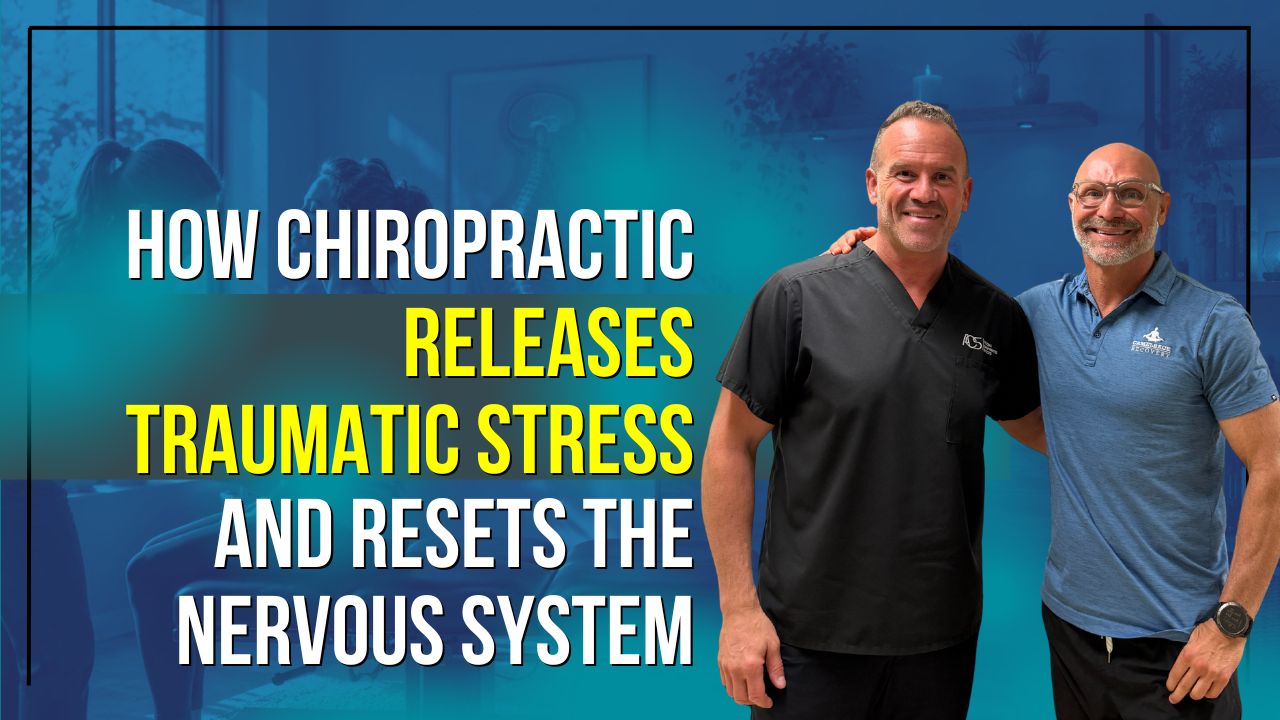
What does your spine have to do with staying sober? More than you think. In this episode of I Love Being Sober, recorded live at Camelback Recovery in Scottsdale, Arizona, Tim Westbrook sits down with Dr. Marc Blackstone, a board-licensed chiropractic physician with more than 25 years of clinical experience who has spent the past five years bringing chiropractic care into mental health and addiction treatment settings.
Dr. Blackstone breaks down the mind-body connection in plain language: how a chiropractic adjustment affects far more than the joint being treated, why addiction and mental health conditions keep the sympathetic (fight-or-flight) nervous system stuck in overdrive, and how adjustments help activate the parasympathetic (rest-and-digest) response that lowers cortisol, reduces anxiety, and supports better sleep in early recovery.
He also delivers one of the most important warnings of the episode: unresolved chronic pain is a real relapse risk. With more than half of chronic pain patients likely to use opioids, treating the physical damage people carry into recovery isn’t a luxury. It’s relapse prevention.
In this episode, you’ll learn: how a rugby injury at age 14 led Dr. Blackstone to chiropractic; what he sees treating clients in recovery settings versus traditional practice; what actually happens in your body during an adjustment; why the body reverts to old patterns (and why one visit isn’t enough); how chiropractic supports people detoxing from opioids, amphetamines, and alcohol; the forgotten history of chiropractic sanitariums treating mental health in the 1920s; his advice for anyone in early recovery dealing with pain; and what it would take to bring chiropractic care into every treatment center in America.
Whether you’re navigating substance use disorder, supporting a loved one in recovery, or running a treatment program and wondering what holistic care really looks like, this conversation makes the case that recovery has to include the body, not just the mind.
Connect with Dr. Marc Blackstone: info@azchiropracticservices.com | drblackstone.com
I Love Being Sober is hosted by Tim Westbrook, MS, founder and CEO of Camelback Recovery, an addiction and mental health treatment center in Scottsdale, Arizona. Learn more at CamelbackRecovery.com.
—
Watch the episode here
Listen to the podcast here
How Chiropractic Releases Traumatic Stress And Resets The Nervous System
Dr. Marc Blackstone on calming the nervous system, why chronic pain is a hidden relapse risk, and his vision for chiropractic care inside every treatment center.
The Mind-Body Connection In Early Recovery
Welcome back to the show. We’re at Camelback Recovery in Phoenix, Arizona. Our guest is Dr. Marc Blackstone, a board-licensed Chiropractic Physician here in Arizona with more than 25 years of clinical experience. For the past five years, Dr. Blackstone has focused his practice on something you don’t hear about every day, bringing chiropractic care into mental health and addiction recovery settings.
He works with people recovering from substance use disorders and co-occurring mental health conditions, treating the chronic pain, musculoskeletal injuries, and physical stressors that so often come with early recovery. He’s here to talk about the mind-body connection, how chiropractic works on the brain and nervous system, and why he believes this care belongs inside of treatment facilities.
—
Dr. Blackstone, welcome to the show.
Thanks for having me.
They obviously love you because they’ve been working with you and now, we’re going to talk about it.
That’s great. Thanks for having me on. I appreciate it.
Let’s start with your personal journey. How did you first find chiropractic? What drew you to it as a career?
From Rugby Injury To Chiropractic Pioneer
I had my first chiropractic experience when I was fourteen. I suffered a rugby injury. I got a compression fracture in my mid-back and created a curve. It crushed my spine in the middle, around T8, the middle of my back, and then it also gave me scoliosis after that. That created a structural imbalance, and my mom took me to the chiropractor.
It started from there. She’s a single mom. She couldn’t afford to take me regularly. I wish I’d had regular care and advice over that time, which didn’t happen until I was older and able to afford a bit more, and then once I was in chiropractic school. That led me to it. I had those aches and pains and a few other injuries along the way. That’s how I got to chiropractic. As far as my experience over the years, I hadn’t tied it into working in recovery.
My very first practice, I’ll start early on my earliest experience, one of the reasons I never got into that. I’m a normie, if I can use that terminology. I hear it a lot. I’ve had a lot of close family and personal connections that have gone through both mental health challenges as well as substance use. For me, early on, one of my earliest experiences was probably why I didn’t go down that road. I had a very close family member come home late. I was less than ten years old, and they were drunk. They told me about how drunk they were and they drove home and all these other things. It stuck with me, and they were telling me how they did cocaine and all these other things.
When you were ten?
I was actually nine. I was freaked out because it’s not that I haven’t dabbled in certain things over the years, but I never took. It’s always held a place for me. My very first office was in this little strip mall in Canada. I’m originally from Canada. My first practice was on the main level of a strip mall, and upstairs was rented out to an AA group. A lot of my very first patients came from that group. It was interesting to tie in. I put it together back then, but it’s still nothing that I thought about, focusing a practice on that. I started to see the benefits.
Over the years, I’ve had people that were in and out of their addictions. Sometimes I didn’t know when people were using, and then I’d treat them and they’d be like, “By the way,” and I’d think, “Oh, boy.” It happens. A few years ago, it was during COVID when practice was not humming along, during the lockdowns. I responded to an ad, which was talking about chiropractic and mental health. I thought, “That’s something that I’d always wanted to work within that framework.”
I responded and talked to them. They said, “It’s mental health, but the primary focus is substance use disorder.” I thought, “I’m going to go give it a shot and see what it’s about.” I looked around for comparables to see if there’s anybody else working with the population. Much to my amazement, there are very few. Not in this state. Some in Florida and Texas, occasional here and there, but nothing substantive.
I started, and within a week I was hooked. It opened up. I’ve always felt that most chiropractors are pretty compassionate. I think you have to be. As far as empathizing and fully understanding because I’ve never walked a mile in any of your shoes. In terms of just understanding, particularly with regard to certain family members and close friends who have struggled over the years. It gave me a different insight. Within a week, I was like, “I love doing this.” I’ve always loved being a chiropractor, and I love doing what I do, but within this population, it just stuck.
What’s the difference between working with this population versus the normies?
Shifting The Pattern Of The Nervous System
It’s not a direct approach. When you have someone that’s coming in off the street, and they’re coming in for an adjustment. Sometimes, as a chiropractor/business owner, you get a little distracted with the business aspect. People are coming in. We want them to get better, but you still have to balance it. It’s not salesy, but it’s still like conveying the message of health.
People aren’t always interested in hearing an entire message. For me, with a population that I see at different facilities, everybody is there for change and for bettering themselves. The majority who are on that journey want to change their lives and get better. They want to change their behaviors, change patterns, and live healthier lives.
It’s more than just a physical adjustment.
A lot of it. The physical part is the part that we see is the neurological aspect. For a lot of people, you go and crack their backs and do this and that. For me, most chiropractors will tell you that the major part of it is that it affects your nervous system, just like everything else. Our inner nervous system is what allows us to interact with our environment. This is just the vessel.
When I think about it and I’m treating somebody, I’m not just going into the joint that’s inflamed, or the muscle that’s tight, or things like that. It’s going in and trying to make a shift in the pattern that their nervous system is stuck in. That’s a lot of it. That’s what happens when you go to group therapy, when you go to your individual therapy, or when you’re taking certain medications. All these things. We’re trying to shift a pattern. We’re trying to achieve a balance.
Interestingly, just prior to starting this, we were talking a little bit about having the yin and the yang and the balances. That’s what we’re trying to achieve. We’re trying to find this balance, and that goes for every aspect of our lives. This physiological balance, cognitive balance all boils down to how your nervous system is working. If we can get in there and correct a little bit of that, and then we’re having some correction with your group therapy. You’re handling cognitive aspects.
You’re modifying your physical activities, exercising, doing resistance training, yoga, walking. Whatever you like to do. You’re modifying your nutrition. All of those things are efforts to achieve this balance. I don’t care if you’re in recovery or not. Everybody should be working towards that anyway. We are in our own way. We just get distracted because there’s a lot of things to distract us.
You see our clients here at Camelback Recovery. You’re at the residential facility, and then you’re also here at the outpatient facility now, which is newer. How often do you see our clients?
Once a week.
What a difference do you notice from the very first time you see someone? What progress do they make? How quickly do they make progress?
Addiction keeps the nervous system in overdrive. Adjustments help activate the parasympathetic response for lasting calm. Share on XEverybody progresses differently. The one common thread is that when I do my examination, everyone has imbalances. There are physical imbalances that I can measure objectively. I don’t have an X-ray machine on site. I have one in my office, but it doesn’t do me any good here. Ideally, we would have an X-ray of them, but we look for things that we can measure objectively or posturally like high shoulders, high hips, short legs, and head tilts. Things like that.
We have to take into account that they might have scoliosis or other structural problems there, but we’re looking at that. Almost everyone has an imbalance of some kind. If I asked you to stand up, even if you went to the chiropractor, you might not measure it the same way. I’d probably find something. This is not to say that I try to be as objective as possible, nor am I just saying that everyone has that. They’re all different. That’s my litmus test from visit to visit. Certain things we see correct quickly and other things take longer.
Again, everybody’s different, and it depends. Sometimes the ideal would be to have people see them twice a week, at least at the beginning, because we’re trying to shift this pattern. Their body’s stuck in a pattern. Our bodies incorporate every injury we’ve ever had, and things don’t truly ever heal to 100% because our bodies adapt and compensate. It creates these different patterns of movement and posture. The real way to change that over time is to do all the things I was just talking about and try to find that balance.
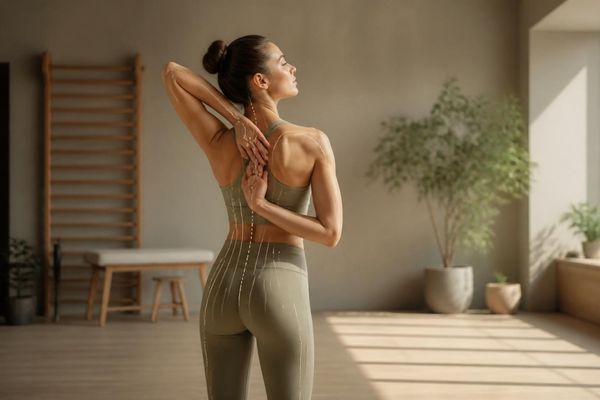
Chiropractic: Our bodies hold onto every injury we’ve ever had, creating deep physical patterns of movement and posture that require intentional consistency to change.
It’s not just the chiropractic. I wish it was. That would be cool, but it’s finding that balance of everything in your life. As far as what the clients need, I try not to be generic and try to do what each client needs specifically. Again, ideally, I’d be here twice a week at the time. Eventually, that’s the goal for where I see things.
Being in recovery myself, what I’ve noticed and know is that everything has to change. There are all these things. I’ve been seeing a chiropractor for years. I’ve been sober for fifteen years and I’ve been seeing a chiropractor the whole time, and I still see a chiropractor. You hear people say, “If you start seeing a chiropractor, you’re always going to have to see a chiropractor.” What’s your response to that?
Yes.
I think it’s true. You’re going to have to see your chiropractor but if you don’t see one, then you don’t know that you need to see one.
It’s not so much the idea that we’re creating this, “We’re just adding on another addiction here.” It’s like, “I have to see the chiropractor.” Your body gets used to feeling a certain way, and your nervous system is used to a certain level. I have a lot of different instances, but I have an interesting one. I had a patient years ago who was asthmatic and didn’t think much of it because it wasn’t a bad asthmatic. She had enough symptoms over the course of the few years I was treating her. She felt like chiropractic care was helping.
She wasn’t doing much else as far as that asthma went, but when I stopped seeing her, she moved away, and the asthma came back, which is interesting. There could be other factors. When she came back to town, she called me up and said, “Is it okay if I get in? I want to start treating my asthma.” I see that a lot. We never like to say that we treat or cure anything. We’re just working with the musculoskeletal system. We’re working with the joints, the ligaments, and the nervous system. Not the bones. We see a lot of these amazing things.
Is there a difference between your chiropractic services versus another chiropractor who does not work with people struggling with mental health or co-occurring disorders?
I would say yes and no. As far as fundamental training, if they’re a licensed chiropractor working in this state, anywhere in North America, they’ve gone to school. They have to pass the same set of examinations. As far as a fundamental level, no. Understanding the way that, whether you’re in here for mental health or substance use or both, then yes. It’s understanding whether someone’s detoxing, how long it’s been since they used last, and how their nervous system is responding.
As a chiropractor, we often work with the nervous system. We’re promoting the autonomic nervous system. This is the one you don’t have to think about. You have your sympathetic fight or flight, and parasympathetic which is your rest and digest systems. Most people, when it comes to mental health or substance use, it messes with your sympathetic nervous system a lot. Usually, it elevates the response.
Prolonged elevation of the sympathetic nervous system is bad for you on many physiological levels. Whether it’s sleep, digestion, and heart. Everything is affected. It’s understanding a little bit about that and in terms of the adjustments that we give. There are many different chiropractic techniques out there. A lot of them are excellent. It’s a matter of finding one that helps balance everything out. We develop our nuances within what we do over many years.
In your opinion, is there one chiropractic technique that is superior or better than another? Does it just depend upon the person?
I’m not big on technique. It’s about having enough within what you do or knowing enough. If someone comes in saying, “I don’t want to have my neck crack,” which we hear often. We don’t want to hear that. My thing is having the right tool so you can do a non-manipulative adjustment for the patient. The same thing with the rest of their body. Some people don’t like to hear that noise.
Relaying back to the question with certain populations. Someone coming off opioids can be highly sensitive to pain because their body hasn’t had to deal with their internal opiate system. The factory was shut down, so they need to reactivate it and have those produced again. It’s understanding and being sensitive to things like that when you adjust the patient. That’s a visit-to-visit and patient-to-patient basis.
What surprised you the most by working with people in recovery?
That’s a big question. The first week of working in recovery, it was candid. You see many people at a very low point when they start caring. It’s watching them pick themselves up and being there to help, even if it’s just talking and not adjusting. I don’t ever give advice that’s not within my scope but listening. That’s the candor of it.
If someone is at their bottom or they know they’re at their bottom, they’ve already shared in a group that they’re at their bottom. Everybody knows they’re at their bottom. They’re not coming in there with a game face on. That’s what I make up. Maybe that makes sense.
That’s the way I see it. Having that willingness to want to change too, and being at that point of like, “I’m going up from here.”
People that are here want to change, typically. When you say mind-body connection, what do you mean? Break that down for someone who’s never thought about their body as part of their recovery.
We’re affecting the nervous system with everything we do. The nervous system controls everything in our body, from your immune function to your digestion to your thoughts. That’s your nervous system working. It’s neurochemicals. It’s synapses. It’s everything. It’s like this amazing symphony that’s sometimes in tune, sometimes not.
A lot of people would treat psychology without looking at what else is going on inside. Not looking at the nervous system. Not necessarily taking into account other systems such as digestion, immune, and all these other things. It’s finding that link between the brain and the body because everything’s an extension of your nervous system. We talk about spirituality, too, if I can throw that in. Again, no matter what you believe in, you look at the complexity of spirituality of what we have going on.
You have to think there’s a higher being, purpose, or power that created this to coordinate it. Not being religious in that sense, but when I look at the effects we have on the nervous system by treating somebody. Again, it comes out on so many levels. An adjustment affects not only cognition. Studies have shown that we’re activating the parasympathetic nervous system. We’re decreasing anxiety. All those hormones, cortisol, and neurotransmitters such as epinephrine and noradrenaline. Things that are elevated, whether its substance use or mental health issues. Those are always elevated.
They found that chiropractic adjustments help lower that down. There’s automatically a connection. I’m going to just skip for a second because it ties in with mental health and the mind-body connection way back. Modern chiropractic was discovered and developed around 1895. That’s where the first adjustment was. Shortly after, there’s some chiropractors, including the developer of chiropractic, B.J. Palmer, who opened chiropractic sanitariums. They were treating a lot of mental health patients, mostly in the Midwest. It was cool. They had great psychologists on staff, therapists, and a chiropractor. They had strict exercise regimen training, nutrition, and all these types of things.
Unresolved chronic pain isn't just a physical issue. It's a massive relapse risk that requires real, dedicated treatment. Share on XNow people are in treatment for a long time, but they found a pretty good success rate. It’s hard to say what the rates are. I’ll look at that and I’ll also look at the advances of Matt-assisted treatment and combination therapies. Having that mind-body approach creates a beautiful balance. I envision it becoming more pervasive throughout treatment in general. I’m not an expert in substance abuse and mental health treatment from that perspective. On the chiropractic end, I’d love to see this.
At the very least, it’s a compliment to all the other work we’re doing.
This is a balance. From my perspective, it’s amazingly difficult to do what some of these great doctors are doing, balancing out medications. Everyone is different, and everyone is at a different place on that spectrum in trying to achieve that. It’s a tough job, but I feel it takes a village.
It does take a village, for sure. Many people come into recovery carrying years of physical damage, injuries, chronic pain, tension, poor sleep, and high blood pressure. How does that physical state affect someone’s mental health and their ability to stay sober?
Whenever we see that, it is the sympathetic nervous system I was talking about, the autonomic response. There is an elevation of chemicals like cortisol and epinephrine, while some others are depleted, depending on the type of substance. With opioids, we see a depression of that until withdrawal starts, and then the sympathetic response causes everything to elevate. With amphetamine, you see just the opposite. Everything gets dumped in at once. Again, it’s all elevated and that’s going to lead to all these other things like poor sleep and all the other physiological things that you’re telling me about in terms when someone comes into recovery.
People come into recovery carrying physical damage, injuries, chronic pain, tension, and poor sleep. How does that physical state affects someone’s mental health and their ability to stay sober?
Again, you want to concentrate. We’re trying to make a change. In order to do that, you have to set a healthy foundation. It’s trying to find that balance early on. When you come in after, whether you’ve come out of a detox or you’re coming into a program. It’s setting a new foundation for yourself and it’s trying to find that balance to build on. Whether it’s sleep or working on your sobriety, you have to make space for it cognitively and physically having those things.
You do not want to think about how poorly you’re sleeping, because we all do. When you have bad sleep, where you’re not sleeping well. You want that regulated. It’s tough enough for doctors to balance out medications, and that’s not necessarily where you want to be, but it has to be for a little bit. It’s finding other avenues to help regulate and balance that out. Whether it’s chiropractic and gradually introducing exercise, working on a balanced diet, or eating healthier. It involves slow increase to build a great foundation so that things are more balanced as you go. In terms of what I see, the effects on the nervous system, particularly with the sympathetic. It involves bringing that down and managing those to build from there.
Why Chronic Pain Is A Relapse Risk
Can unresolved physical pain be a relapse risk?
There are some studies that show that people start using opioids. In particular, studies have shown that over 50% chronic pain patients have used are likely to use opioids. They found that with chiropractic, a study showed that this number was significantly reduced because. Over 80% of people will have back pain of some type in their lifetime. There’s definitely a road there, whether it’s opioids or other substances.

Chiropractic: Over fifty percent of chronic pain patients are vulnerable to opioid use, making alternative physical treatments essential to breaking the cycle.
It’s one of my questions when I start seeing someone. I’m like, “Did this start because of an injury like back pain or from a car accident or sports injury or just a fall?” A lot of people, when they’re under the influence, do interesting things. Going back to the question before, I see a lot with chronic injury. If that’s not addressed and that’s one of the reasons why they started using, then there’s a higher likelihood that people will probably relapse. Especially if it’s something physical. It’s about finding that balance.
Walk us through what exactly is happening in the body when someone is receiving a chiropractic adjustment?
What we look for depends on the person and the type of injury they have. Generally, we look at the joints. Those joints are affected by things called mechanoreceptors. They give feedback to the brain and say, “Everything’s working here. There’s no injury in the tissue.” When there is stress to the tissue, they send a signal of injury, and everything gets locked down around it. It’s like a pattern. If you do not break this pattern routinely, and most people do not because they have an injury and let it manifest for a while, they do not realize that they’re injured.
For example, “I have a stiff neck.” It will go away in a few days. Your body adapts, and then it compensates. The injury is still there. It’s just that your body is pretty good at adapting. The older we get, the more injuries we have. The more your body is like, “Remember me? I had an injury.” What happens is we make the adjustment however that is. Whether it’s a mechanical force of some type that changes the input to the nervous system from those mechanoreceptors. It allows the body to make this change.
It changes to the musculature albeit briefly. It’s balancing things out, and you get a little window for some change. Unless you’re doing things to help, that’s why we promote certain stretches and exercises and things to help reinforce the change and that normal motion that we’ve created. The body is very intelligent, and it says, “You’re tricking me,” and it goes back into that same pattern. That’s why we often see people regularly to begin with, especially at the beginning. That’s why it’s like two times a week. Some people do more, depending on the type of injury and what’s going on. We like to see that change.
The Road To Healing Is A New Path
It’s like you have a road that you travel. If you have a road that you travel, it becomes the path, and that path becomes worn out. That’s the path. Now, if you have a chiropractic adjustment, you’re trying to create a new path. The old path is still there but you’re trying to create a new path. That’s why you want to see people. It’s like, “No, you have to come over to this path.” If they don’t see you for a while, they go back to the old path. The more they see you and the more they have the adjustments, the more likely they are to stay on the new path. The path of least resistance, especially at the beginning, will be to go back to that old path.
That’s a great analogy. That’s usually what happens. A lot of people will try chiropractic. They’ll go once or twice. They’re like, “That didn’t feel good,” or they’ll be like, “It hurt a little bit.” It’s because your body was one way, then we’re trying to balance it out. It experiences that, but then you have these aches and you’re like, “Where did that come from?” A lot of people don’t make it to the third or fourth visit. Sometimes not even the second visit.
That might have been that time to shift. When we get this small shift, people are like, “A-ha, I see that it’s changing.” The body has a tendency to go back into that same pattern. Has anybody worn braces before? If you have braces, and then what happens after the braces? You put on a retainer usually. What happens if you take the retainer off? It goes back to where it was. It’ll take time, but they tend to revert back, then people are like, “I had braces. Why do I need them again?”
What are the physiological effects of an adjustment on the brain and nervous system? Why would that matter for someone dealing with addiction, anxiety, or depression?
Again, it goes back to the sympathetic response. Mostly through the parasympathetic response to the vagal nerve, which is cranial nerve ten. It runs throughout your body. They find certain things, especially with cervical adjustments. It can happen with everything. We’re trying to raise that parasympathetic response to counter what’s going on or decrease that sympathetic response that occurs with major depressive disorder, anxiety, stress, and with substance use disorder, whether it’s opioids and withdrawal, amphetamines, or alcohol.
It has an effect on the nervous system. It’s helping to promote parasympathetic activity, which will help with the good hormones and the good neurotransmitters. Exercise does the same type of thing in different ways. Again, you don’t want to do that if the joints aren’t working properly or you have an injury. That’s how the adjustment works.
Debunking Chiropractic Myths
There’s a lot of skepticism out there about chiropractic. What does the evidence say and what do you tell the skeptics? We already talked about this. Do you have anything else you wanted to add?
There are still skeptics, but it’s not the way that it’s been. I have a lot of friends who are medical doctors and other types of practitioners. We all have a healthy respect for one another. They respect that. We stay in our lane. Moving forward, there’s a great way to collaborate, to continue this partnership that we have. As we said, it takes a village. We need it. You can’t just have one person treating you for everything. It’s better to have many people on your health team no matter what, whether you’re in recovery or you’re an athlete. It’s important to have that to achieve that balance.

Chiropractic: True collaboration in healthcare means building a complete village for the patient, ensuring different fields work together rather than relying on a single provider.
What changes do you start to see as people start to heal? Are there any specific stories that stick out in your mind?
What I start to see is not only people moving more, but in a recovery setting. I see energy levels rising, clarity of thought, and better movement. Most people have trouble moving around on the chiropractic table, but I see better ease of movement. This is over time. If I see someone for 30 days, it’s tough. I often see people for a few months, and we see a significant shift. Not just in energy, but in everything, including confidence. When you change someone’s posture, you change their confidence. Even just having someone come in with a smile. I know it seems weird, but smiling increases the blood flow to your prefrontal cortex. Plus, smiling is like the lazy man’s exercise because it only takes four muscles to smile.
I’ve never heard that before in my life.
Twenty-seven muscles to frown.
It’s more work to frown.
Yes.
It’s exhausting to frown, and it’s energizing to smile. Have you heard that before?
Try it.
True recovery isn't just cognitive. You have to heal the vessel, not just the mind, to build a solid foundation. Share on XFake it until you make it.
Sometimes.
How do you see traditional treatment models versus holistic ones? Where does chiropractic fit into that picture?
As I was saying before, they have tried the chiropractic approach. It was a small subset, and that was in the 1920s. That’s not necessarily something that’s moving forward. That alone is not the path, and they have exhausted a medication-assisted-only type of path. It’s having this combination of the two and a nice balance. Chiropractic fits in by bridging the mind and body, as we were saying.
We’re working a lot with psychiatrists who are prescribing medications. Seeing what diagnosis, they’re working with and what they’ve ascribed to the patient. Understanding the substances the patient was using or not, and having that interplay. We also work with therapists and psychologists to get a better understanding of where the patient is coming from.
It might be as simple as some people have gone through major trauma, physical trauma, or emotional trauma. They don’t like to be touched a certain way. They don’t like to be adjusted a certain way. Being sensitive to those things are little things, but the combination of all of those things and a nice interplay between chiropractic. The more traditional professions that are treating it are crucial.
Moving forward, I would love to see chiropractic in every facility, and everybody who wants treatment to have it. I say that gently because deep down, everybody should have an assessment when they come in. It should just be part of that assessment. Whether they get treated or not, that’s okay. At least it opens up another avenue for the client and the patient to think, “There’s an alternative,” because they’re going to learn something new that day. Something new about themselves. Whether they want to proceed with the treatment, I don’t know. That’s where I would love to see chiropractic in that position.
For other treatment center owners or other clinical directors who are reading, what would it take to bring chiropractic into their treatment center?
There have been a few hindrances in the past for chiropractors to readily go into treatment centers. As far as reaching out, they can always reach out to me. The model I’m working with aims to bring chiropractic into every treatment center and promote chiropractic for everybody. We try to do it in a way that is easy for the owners and clients. Without getting into too many fine details, we always have a way to work with it. It’s a matter of each treatment center, depending on what they do, and we’re still in our infancy in terms of what we’re doing. We love to work with different owners and figure it out so that we can achieve that.
People will be able to contact you directly. Are you glad that you get to see a chiropractor on a weekly basis here? Now, let’s open it up to questions.
Practical Tips For Healthy Bones
I follow a pescatarian diet, but what guidance or advice would you give so that I can make sure my bones stay healthy?
As far as diet goes, that’s not my total expertise but I want to make sure that you’re getting enough vitamin D, which is very important. When I say vitamin D, probably a clinically significant dose. I’m not supposed to talk about amounts. That would be better for a nutritionist or talking to your primary care physician who is probably also managing if you’re taking any medications. A lot of it’s not just diet. You want to keep your bones and your joints healthy.
Vitamin D and exercise. Doing some resistance training is going to be very important. Not so much the cardiovascular, but doing some resistance. That can be simple. For instance, you can do isometric exercises. That’s just not even moving. That’s just tensing the muscles very tight and then relaxing and doing cycles like that. There are ways to do this because you want to be able to support the joints, and you also have to have some stress on those joints for them to stay healthy.
Can we see you outside of this when we leave Camelback?
Yes.
Are you all full?
We are pretty full, but we do make arrangements for people after they have completed their care, and hopefully they’re getting some good aftercare as well. That’s one of the things within building a great community. What they have done here is amazing and having that support moving forward. My information is available, and we can see people outside of here.
I’m just wondering because you’ve helped a lot, especially with my recovery. My screws, my bolts, and a lot of other things, they hurt a lot less than they normally do. Thank you.
You are welcome. We like to promote that. If I cannot do it, I’m going to find someone who may be closer to where you are or where you are living because it’s not always convenient. It’s a big place.
I know you’re very busy, too.
That’s the thing. I want to build this network of other doctors who understand where the patients have come from. That’s a big thing for me, too. One day at a time.
Slay. Thank you.
I wonder if we can set something up, especially for our alumni, a way for them to come and see you. Whether it’s here at our clinic or something like that.
We can certainly work on that.
They start seeing you at residential and then they see you here at the outpatient for them to have the option to continue seeing you after they graduate from IOP. That would be a good thing.
I would love to be able to do that. I’d be happy to.
I vote yes.
When you change someone's posture, you change their confidence. Your body and mind are deeply interconnected. Share on XThis is just for my own curiosity. Have you ever had an instance where someone did get injured? Do you know any other chiropractors who have injured someone doing an adjustment or something?
For myself, no. Thank God. After twenty-five years, things can happen. Most chiropractors do not have a high incidence of injury. Chiropractic is an extremely safe profession to practice in, and it’s also safe for many patients. I read a study that stated your incidence of injury from going to your family physician, or primary care physician, is a 76% increase, making it 76% more likely to have an injury from that than a chiropractic adjustment. Again, I don’t want to step on toes. I’ve heard of things. I don’t know if any of them ever happen, so I’m not going to speculate.
I can believe that. I’ve had some bad physicians here and there.
You’re asking tough questions.
I wasn’t a believer in your voodoo for a while, for a long time, because anybody who tries to pop me, it doesn’t work but for me, it works. You’ve managed to do that. What would you tell somebody like me before becoming a believer of the voodoo?
Give it a try. Open yourself up to the idea of it. You can talk to whoever you’re going to see. Ask them if you have questions or concerns. Get an adjustment and see if it works. Maybe even open yourself up to going a few times. As I said, sometimes the first one doesn’t always hit. Be open to that. If you don’t like the idea of being adjusted a certain way, such as a neck adjustment or a manipulation, then ask if they can use a mechanical adjusting instrument, like an activator.
I’m stiff as hell. I appreciate your time.
It’s my pleasure. Good question.
What advice do you have for someone that’s early on in recovery that’s dealing with pain?
Set realistic expectations. Take a look at it. Talk to the doctors, your chiropractor, or your therapist and say, “I’m dealing with this chronic pain. What is a realistic expectation for me dealing with this pain?” Often, our brains say, “This is not working.” I have seen this countless times where people have chronic pain. They’re in recovery, and either the facility or the doctors are not addressing it, but often it’s the expectation of the patient.
They probably did address it, and the patient still thinks, “I should be better. It has been two weeks.” You have had this injury for twenty years and have been medicating yourself for fifteen of them. How do you make that shift? When I was a kid and I would get injured, the mindset was, “You’re better, or you’re playing,” Once again, you might still have the injury, but you’re out there. As you get older, those injuries start to last a little bit longer. Recovery when you’re ten is fine. At twenty, maybe half a day. In your 30s, you think, “Maybe a week.” In your 40s and beyond, it gets up there. It is managing those expectations because a lot of us tend to say, “I used to heal up in a day. There’s no problem.”
I went and saw the chiropractor, why am I not okay? Why am I still in pain? It is going to take a minute.
A lot of it is managing your expectations. I try to do that when I’m talking to each person. Depending on what is going on, it is never going to be a quick fix. Recovery is not a quick fix. We’re a society that wants things now. Why can I not just click on Amazon? Why can they not deliver that? I try to manage that. Most chiropractors are pretty good about that in terms of telling patients, “We need to see you, and this is why.” Maybe not exactly like that, but it’s trying to help them manage.

Chiropractic: A simple smile does more than just shift your mood—it naturally increases vital blood flow straight to your prefrontal cortex.
If people have a certain thing in their mind, particularly when it comes to recovery, thinking, “I’m going to be better in 30 days.” It’s probably not going to happen. I have never been there. I do not, but I know that from having many injuries, and I know that they take a long time. I set myself up now. I had a shoulder injury and I stopped lifting upper body stuff, did other things, isometrics. For five months, I thought, “I’m giving myself a year if I need it.” In my mind, I was like, “I’m not going to do that.” It was uncomfortable, but after about five and a half months, I went back weeks ago, and it has been pretty good. It’s things like that. That’s where I would say I know it seems like a weird thing.
I can relate to that because I have my shoulder bothering me a little bit. It has been probably 3, 4, or 5 months or so, and I’m not able to lift as much. I backed off then I went back at it a little bit. I’m like, “It still hurts. It’s been months.” I’m in my 50s, so it takes a little bit longer to heal these days. I don’t like it.
None of us do.
Those types of things help, and that will promote as well. When you do something and you do it properly, and you build that. I was talking about that foundation earlier, when you build that properly and you have something to build towards, then you’re doing it right. It is like the old-school chiropractic sanitariums I was talking about. They did it right. They claimed 65% of their schizophrenic population was able to return to normal life or a normal existence after chiropractic, nutrition, and psychological treatments.
That was the rate they claimed. If you think about it, those types of things could be achievable. I do not know about the follow-ups. I do not know if they kept track of the population. If anything, it’s creating that foundation to build your health on. I love to ski. I envision myself in my 80s, still being active and skiing, maybe. God willing, with grandkids or something one day or even with my own kids still. Those are the types of things that keep me going from that perspective and just having your health.
Every day I wake up, “Thank God I woke up.” There are bad days and there are rough days. Every day, I wake up and I do my own little meditation, and then I go and I move. I’m an early morning exercise guy. Some people call it getting out of the way, but I like it. It brings my thoughts together. I was a little anxious about coming in here. My sympathetic were up, and my run focused me. I ran six miles. IT was not fast, but I did it.
You get outside. You get your vitamin D. You get your sun. You run. You get your endorphins up. Is that your workout?
I like to run, but I only run three times a week because I like to move every day. The other four days, I usually do some resistance training. I make sure there’s a good balance. I keep it simple. Push, pull, legs, all as separate days. Knock on wood, I have no knee issues. Shoulder, yes, but a lot of those injuries stem from the old injuries that I had for years and they start to manifest over time. I have been working in a profession where I’m lucky to not work at a desk, but it’s also physical. You’re moving around, so you have to take care of yourself.
Are there any questions that I should have asked you that I did not ask you?
I feel like we touched on everything.
Joe has another question.
You have two? Here we go.
For someone that’s been lifting for literally half my life, are there any supplements that you would recommend taking for joint pain? I know about fish oil but that’s about it.
Healing is about building a new path. It takes time, consistency, and a willingness to stay the course, even when it's tough. Share on XI am probably not that chiropractor. There are a lot of chiropractors who love their supplements and who are very well versed with certain supplements. I’ve never been. Even when I was a kid, the only thing I take religiously is extra vitamin D. I know it’s weird, but I started taking vitamin D when I lived in Canada.
I read an article about twenty-five years ago, right when I finished chiropractic school. It was talking about vitamin D and how it’s the base cause for what they are finding for a lot of not just autoimmune diseases, but also many disease processes in our body, and having a deficiency of vitamin D. All the literature these days, everything points to having a healthy amount of vitamin D in your system and a normal amount.
That’s the one I would always say. Make sure you’re getting enough vitamin D. It’s at the base of so many different processes in your body. There are so many things now, including peptides and this and that. At my age, I do like to dabble with a few things, but none that I’m going to talk about right here. In terms of supplementation, my whole thing is that. I cannot comment on other things. I do not like certain proteins. If you’re going to take extra proteins, I do not love whey protein. We can talk about that after.
I just started doing the cold plunge. Is that something you would recommend joining?
The cold plunge is great. A lot of those types of things are going to help to lower that stress response. I know it seems weird, like I’m getting something super cold my body should be. However, it helps to lower it. It increases parasympathetic activity and lowers sympathetic activity. The fight-or-flight response, which is not good for you long term.
I’m going to promote the cold plunge all day long. I just did and it felt amazing.
They’re great
I usually do about three and a half.
What’s the temperature?
It’s at 38 degrees, then I do box breathing. I do 4 in, hold for 4, then out for 8. Hold for 4, in for 4, hold for 4, and out for 8. I do that nine times through, and usually I do 10, 11, or 12.
When you’re doing that as well, that’s going to help not just with the cold plunge, but the breathing that you’re doing. It helps to also promote that parasympathetic activity. I know it all boils down to, “I have to make sure my parasympathetic and my sympathetic are balanced.” That’s what we want. Again, that type of thing or even, you hear some people. You can change the tone in your body, the musculoskeletal tone, because the vagus nerve runs very close to the larynx, where the voice box is. You have seen those people who do that gurgling, or that type of thing. Doing that for twenty seconds also helps to change that tone. It helps relax everything in your body. Something you can try. Try that when you’re in the cold crunch.
Where can people find you? How can they learn more about you? How can they connect with you?
I’m sure you will have my email up. it’s Info@AzChiropracticServices.com. I know it’s a short one. My website is just DrBlackstone.com.
Thanks so much. Is there anything that you need from us, or anything that we can help you with?
You guys have been so awesome. You’re very accommodating, and I love being here. I love taking care of everybody. It’s appreciated.
We appreciate you. Thank you for your time. Let’s give it up for Dr. Blackstone.
Thank you so much.
I appreciate it.
Important Links
- Dr. Marc Blackstone
- Dr. Marc Blackstone on LinkedIn
- Dr. Marc Blackstone on Instagram
- Info@AzChiropracticServices.com
- Camelback Recovery
About Dr. Marc Blackstone
 Dr. Marc Blackstone is a board-licensed chiropractic physician in Arizona with more than 25 years of clinical experience. For the past five years, he has focused his practice on supporting individuals in mental health and addiction recovery, working with clients recovering from substance use disorders and co-occurring mental health conditions.
His clinical expertise spans a wide range of chiropractic and physical medicine treatments, particularly for musculoskeletal injuries, chronic pain, and the physical stressors that often accompany early recovery.
Dr. Blackstone treats clients weekly at Camelback Recovery’s residential and outpatient facilities, and his mission is to make chiropractic care widely accessible inside substance abuse and mental health treatment centers. Reach him at info@azchiropracticservices.com or drblackstone.com.