
What if the part of you that wants to drink, use, or self-sabotage isn’t the enemy — it’s just trying to protect you the only way it knows how?
In this episode of I Love Being Sober, recorded live at Camelback Recovery’s outpatient center in Scottsdale, Arizona, host Tim Westbrook sits down with licensed professional counselor and IFS therapist Kristy Crabtree for a deep conversation on trauma, healing, and what it actually means to recover from the inside out.
Kristy breaks down Internal Family Systems (IFS) therapy in plain language — explaining why we all have protective “parts,” why no part is bad (even the addictive ones), and how to work with your inner world instead of fighting it.
In this episode, you’ll learn:
- What IFS therapy is and why it works for addiction and trauma
- The difference between a “manager” and a “firefighter” — and which one is driving your behavior
- Why your addictive urge has a positive intention (and how to redirect it)
- How trauma gets stored in the body and blocks spiritual growth
- A simple breathwork technique to regulate your nervous system right now
- How to begin healing the inner child without becoming overwhelmed
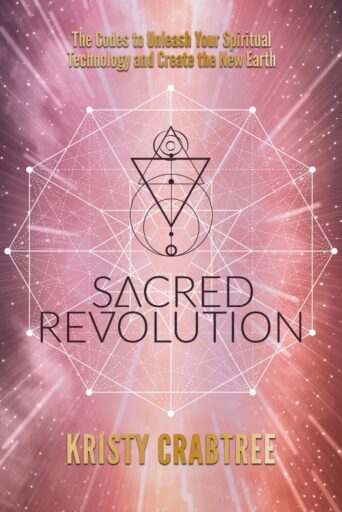
Kristy Crabtree is the founder of Inner Light Counseling in the Phoenix/Scottsdale area and Sacred Revolution, a consciousness expansion practice. She is the author of Sacred Revolution and Reclaiming Eden, and host of the Transcendence Talks podcast.
—
Watch the episode here
Listen to the podcast here
Achieving Wholeness And Lasting Recovery
Welcome back to the show. This episode is special because we are recording live here at Camelback Recovery in front of our outpatient community. At Camelback Recovery, we focus not just on sobriety but on trauma healing, emotional integration, and building a life that feels meaningful and spiritually connected. Our guest brings a powerful perspective on that work. Kristy Crabtree is a licensed professional counselor, spiritual guide, and advocate for consciousness expansion.
After overcoming significant childhood trauma and health challenges, she devoted her life to understanding the connection between psychological healing and spiritual awakening. She is the founder of a group counseling practice specializing in trauma recovery, where she integrates evidence-based therapies with wisdom traditions. Her work with internal family systems has helped many people access deep healing and transformation. Kristy is also the author of Sacred Revolution and Reclaiming Eden and host of the Transcendence Talks podcast. Kristy, welcome to I Love Being Sober and welcome to Camelback Recovery.
Thanks, Tim. Thanks for having me.
I am so grateful that you are here.
Me too.
Her Story – Trauma, Illness, Awakening
You have walked through childhood trauma and serious health challenges. How did those early experiences shape your path into this work?
For me, you do not know what you do not know until you do. I do not know if any of you guys have had the experience of having repressed memories. Obviously, that is not something that you can be aware of. There is a line of consciousness that is above our level of awareness, and then there is what is below. It takes specialized modalities to get to what is below. It takes really going deep within to expand outwards in your consciousness. For me, I did not realize, as Carl Jung would say, that what is repressed will dictate your life, and you will call it fate, because you have no idea that it is running your life.
It is like this script that plays, and you do not realize that it is scripted. For me, it was finding out through expanded states of consciousness that I had these repressed memories and then having them validated literally liberated my soul because what I found is that that cave where those memories were hidden was where the medicine was too. That is where my gifts lie. It is where my freedom was, and it is where my boundaries were, and all those things that I did not have access to before those memories came up.
Was there a moment when you realized that psychological healing and spiritual awakening were connected?
Absolutely. When I say gifts that were revealed, I completely believe with all my heart that we have God-given gifts. God says, “These are the things that you’re coming here to accomplish.” You have a contract. Often, those gifts are buried. Some things are usually expressed during childhood. Our parents tend to minimize or diminish, or they get distorted or wounded.
Really, healing and consciousness evolution, or spiritual evolution, are about uncovering and releasing the parts of us that we had to learn to adapt to survive, that were never real and true in the first place. Once you release those, it is like you get back to that innate childlike curiosity. It seems like curiosity brings us to those gifts, and the expression of those gifts is the spiritual path.
Now, have you always been spiritual?
I have always had curiosity. I did not grow up with any religion, and religion confused me. I studied it in college because I was like, “I literally went to church for the first time.” I think for a wedding in my twenties, I had no exposure, but lots of curiosity. I studied religion, and I studied a vast number of them, and just took what fit. It has always been this self-led path of seeking.
A lot of people in early recovery struggle with the word spiritual. What does spirituality mean to you outside of dogma or religion?
For me, it means really self-knowledge to know ourselves at the deepest level is to know our source and our creator. It is like that path that leads us within, also leads us to knowing our creator, whatever that means to you. The other thing about that is it is really about authenticity and integrity. We betray ourselves in the name of perceived safety all the time. It is in those little moments where we sell out our integrity, our North Star, that we start to veer off that path, but we do it for good reasons. Those betrayals start in early childhood.
Maybe you always wanted to be, I do not know, a singer, and everybody’s telling you, despite you being able to sing really well. That is not a safe path for you. Maybe you should really explore science, math, or something more traditional. You should be an accountant. You stuff yourself in this box that never fits your gifts and your abilities. It is veering off that path in a way of self-betrayal that takes us away from ourselves. Spirituality is alignment. How aligned can you be with your true nature despite what everybody else says you should be?
It is like, “God, tell me what to do.”
It is like this path of surrender. Surrendering what is not yours. It is really like aligning your will with God’s will because again, you’re in contract with the divine of what your purpose is uniquely on this path. To find it, you have to surrender everything that is not that.
It is like learning to get quiet, learning to ask for direction again, and you turn right, you turn left, and it is like what is what feels right?
Yes. When you say that you touched your heart and that heart-brain coherence is critical because the programming lives in here. It lives in your head. It is like, how often do you say, “That sounds like a great idea.” You feel passion well up in your heart. Your head goes, you’re not good enough. You’re not going to ever be successful at that. He can do it better. Maybe I just should not try. It is that first initial knee-jerk reaction that your spirit speaks to you. The naysaying that comes after that is the programming. It is that discernment that’s so critical, and when you align your head in your heart, you start to get clear in your own discernment because it is our trauma that clouds that path.
When you align your heart with your heart, you start to get clear in your own discernment because it is our trauma that clouds that path. Share on XThe naysaying, and I think it is not just the internal person or whatever that’s speaking doubt into your consciousness. It is your subconscious mind. It is also your environment. It is the people you’re around. It is the environment that you’re in. If you’re in an environment where people are not going to support your goals and your ambitions and your dreams and your visions, then it’s probably a lot harder for someone to actually go for their dreams.
Energy is contagious. You start to really get indoctrinated and believe the people who are around you the most. When you start words have vibration, and spelling casts a spell. When you hear these words, it starts that vibration, it casts a spell on your consciousness. If you hear it enough times, it becomes true to you. You create that prophecy or that vision for yourself.
We have 50,000 to 60,000 subconscious thoughts every single day. Those subconscious thoughts are just running through your mind over and over again.
How often do we challenge them and take a step back, like take that macro view and say, “These thoughts are on repeat. They’re strengthening.” I almost look at them as a well-worn hiking path. Thousands of people walk up and down Camelback every day. You can see exactly where the trail is. If you stopped walking that path and you said, “I’m going to try something new,” and you took a less well-worn path, eventually you’ll start to create a more worn path. That’s how our neurotransmitters and our brain work. You have to stop actively thinking those thoughts and carve a new path. That takes a lot of intention. It takes something deeper than the mind. The mind can only take you so far on this journey.
Internal Family Systems (IFS) & Trauma
The path of least resistance is to go back to that old path. Talk about internal family systems and trauma. For someone new to IFS, what does it mean to say we are made up of parts?
Parts are multiplicity. We’re not just one cohesive, coherent human. How many of you guys have the experience of getting home from work, you’re exhausted, part of you just wants to binge eat because that feels right, and you feel like you deserve that because you had a hard day, and the salty and the sweet sound really soothing. The other part of you is like, “Summer’s coming and I wanted to lose five pounds, so I should not eat the salty or the sweet. I should probably grab some vegetables. I worked really hard.”
You start having these arguments with yourself. Both of these parts, the one who wants to binge eat the salty and the sweet, and the one who wants to lose five pounds, are trying to protect you in some way. One, we would call a firefighter. One we would call a manager. The manager is the one who wants you to lose 10 pounds and feel good. The manager is the one who wants to protect you from feeling crummy. The manager’s in your head saying, “If you lose those 5 or 10 pounds, you’ll feel good in your body. You’ll be loved. You’ll get acceptance.”
The firefighter is saying, “I do not want to feel unlovable or I do not want to feel the stress and the heat of work. It was a tough day. I’m going to put out this fire immediately with this fire hose. I’m going to binge eat the snack.” They both want the same thing for you. They want you to feel comfortable, safe, and loved and approved of, but they go about it in different ways.
What they’re protecting is what we would call the exile or the part of us that was deeply wounded, usually in childhood, sometimes in older adult life, though. When we do not want to feel the pain of these young parts that literally hijack our nervous system, we start to develop these protectors. Managers are more proactive and tend to look at something good in society, but they get a little out of control.

Wholeness: When we do not want to feel the pain of childhood trauma that literally hijacks our nervous system, we start to develop inner protectors.
Where firefighters are reactive and say, “You’re feeling the thing? No, let’s just put it out.” Addiction would be a firefighter, where workaholism would be a manager. Both of them are doing the same thing for us and accomplishing the same task, but in different ways. One of them we tend to shame ourselves about, the other we tend to give ourselves accolades about, which can make it a little more insidious, even.
When you say multiplicity, what does that actually look like in daily life?
That looks like those little arguments that we have with ourselves. It looks like maybe mom’s or dad’s voice, the parental voice in our heads, telling us that we’re not good enough, and it looks like those critical inner voices in our heads. When we do not have that heart and mind coherence, the chatter gets really loud, but it all stems from these young parts of ourselves who just want to feel loved. When they’re unhealed, the managers and the firefighters can get out of balance or out of harmony. The goal is not to get rid of them. They’re protective. We need them for survival.
They ring the alarm bells for us. What we want is to integrate them so we’re more self-led. In IFS, there’s a concept of being self-led, meaning there’s a part of us. Some people call it the spirit. Some people call it our connection to God. There’s the part of us that’s all knowing. When you meditate, the part that’s the observer. When we’re more led by that observer, and we can be with our parts versus being in our parts, we’re more self-led. I might come home, and maybe my husband does not greet me with a hug. I might have an insecure part that comes up and goes, “What’s his deal? What did I do? Did I do something to make him mad?” If I decide to be confrontational when I get home, I am now in a position.
If I’m with a part and I’m being more self-led, I can have the awareness to go, “That feeling is coming up. This feels like the part of me that’s five and felt very rejected by my father. I wonder, I’m just going to have some curiosity. Is this real right now? Am I just projecting something old onto this scenario? Maybe he’s just stressed or having a bad day. Maybe I can be curious instead of reactive.” That’s what being more self-led looks like, or being with that part versus being in it. It is a very powerful but subtle distinction of how we are with ourselves.
Being curious instead of being confrontational, you’re curious. I’m just thinking about having boundaries and like the way that I want to be treated. Just trying to figure out what makes the most sense, it’s like if you’re feeling disrespected, and it’s like, “Wait a second, hold on, what’s going on inside of me? Where is that coming from and why am I feeling the way that I’m feeling?” It’s never about the other person. Why are they acting the way that they’re acting? That’s disrespectful, but they’ve got whatever they’ve got going on in their world, so that does not really matter.
We can get curious about it with another person, too. I can say, a part of me feels activated when you ignore me, when I walk through the door, “Are you doing okay today?” It hit my system, where I felt that in my body, is like this sinking feeling in my gut. I’m wondering if that’s about me or you. We can get really curious. There are parts of the self that we can identify. There are seven Cs. I do not know if I can name them all right now, but we’re in self-energy versus a part when we do not have an agenda.
Parts always have an agenda to keep us safe. If we’re self-led, we have no agenda. I’m genuinely curious. I’m feeling compassion towards, I’m in my creativity. I’m confident. I have clarity in the situation. When we’re in those traits, self-energy, we can approach it very differently than if we’re hijacked by a part who’s like, “Why didn’t you greet me? What’s going on?” Look at whatever. We start a fight or a confrontation.
There are others, so you could be confrontational, but the other thing that could happen is you do not say anything.
Which is also a rejection of self because then we sit in it, and then we make up stories.
They say make up stories, and you become resentful, and then it just ends up being bad also.
It’s going to pop up later. You suppress it now. The emotions live in the body. You can feel them whenever we have any psychic injury, and again, the need to be confrontational or repressed is coming from an old psychic injury. Psychic injuries are very similar to physical injuries. If you guys have ever been injured, like a knee or a hip, and you do not take care of it, what happens? Your body compensates for the injury. If you do not take care of it over time, the body will compensate in ways that are going to be way more detrimental than if you just dealt with it in the moment.
Emotions are no different. When I work with people, I can start to see, you’ve held that and repressed that so deep for so long that now you’ve compensated and your relationships are impacted, and your work is impacted, and your ability to manage and regulate your emotions is impacted because this initial wound, like, has all these walls of protection around it. You’ve built this really sophisticated castle, and nobody can get in, and now you’re lonely, and you want love at the same time, but you do not know how to navigate that. It’s like this irreconcilable issue. I want to be loved, but I’m terrified of letting you in. What do we do? We’ve got to get to the core wound.
How does someone start to identify that they’ve got some of this going on underneath? A lot of people just do not have any awareness of whether there is something deeper, and there is something traumatic that happened a long time ago. That’s why I’m feeling the way that I’m feeling. People do not even know how, why, or that they should get curious.
In IFS, we have a formula for that. You can really do IFS on yourself if you feel inclined. The first thing you want to do is your triggers or your tour mentors are your tour mentors. They are there to mentor you. We live in a really friendly universe, even though it does not feel that way all the time. What starts to happen is when you’ve been injured in early childhood, like let’s say you have a parent who was so incredibly depressed and just never dealt with their stuff, so they could not show up for you. You deserve to have Mom there at the soccer game.
Transform your tormentors into your tour mentors. Share on XYou deserve to have a warm meal, but she just could not show up. You take that and internalize it because, as a baby, as a child, everything that happens around you is because of you. We do not have that ability to discern. “Mom’s sad, I must be bad or not good enough.” All these parts of us are adaptive. They come in to protect us so we can get through childhood and still function. We might have a part that goes, “I’m just going to become really hyper responsible and not ask for help and really not need anything because it hurts too bad when mom does not show up for me.”
I’m just going to start becoming hyper independent, and we’re not aware, we’re not conscious. Maybe as an adult, I know women tend to relate to this one more than men. They take on those hyper independent parts, and then they just pretend they do not have needs, but they like begging for somebody just to notice and care on the inside, and they start to build resentment, but do not speak it. We get really closed down. The first step is to notice when I’m tormented. That’s my mentor. You’re getting these opportunities all the time to get re-triggered so that the universe can show you the root cause of why you’re getting triggered.
It will happen over and over again until you figure it out. You’re going to get endless opportunities. What happens is the first step is to go, “My husband came home, he did not hug me. I felt that one in my body. Where did I feel it?” I want you to just close your eyes when that happens. Get really curious. Where do you feel tightness, tension, sensations in the body? Hits in the heart. If you tune into your heart, if you get curious, you always put a hand where I feel it. I ask myself, “What are you holding in here? What are the thoughts? What does my heart want me to know about this?”
It’ll tell you, “I feel really hurt. I took that really personally. I had this feeling that maybe he just does not care that I’m even home. Maybe he just does not care. How old is that feeling? When is the first time I remember feeling uncared for? That goes back to five when mom was diagnosed with depression and started taking that medication and stopped getting out of bed.” I try to visualize myself at five years old. “Can I see her? Can I see this kindergartener back in the ‘90s with her Reeboks and whatever? I can see her. She looks really sad. Can I make eye contact with her?
What does she need from me right now? Not from my husband. How do I become the primary attachment figure that I’ve been waiting for?” Instead of seeking it outside of myself. “What does this five-year-old me need? She’s hijacking my nervous system.” It’s as if this five-year-old is frozen in time and is coming up to be like, “I’m going to just knock on the door of your awareness. Can you be her for me? Can you give me the things that I need? Can you be the first adult who can show up for me in the way that I needed somebody to then?”
That’s always the challenge. Can you be with her or him now in the way they needed you to be there then? What does that mean? Maybe that just means I need to give myself a little more tenderness. Maybe that just means I need to speak up and ask for my needs to get met. Maybe that means I need to stop trying to prove myself by working so hard and rest when my body is craving rest. We need to start listening and then look at that child and say, “Baby girl, I’m not going to do to you what mom did. I’m going to show up. This is what that looks like.
Why don’t we just go upstairs and take a bath?” Put some magnesium in there and like, hold space for this feeling instead of numbing it out the way I usually would or react the way I usually would. That means a lot of things for a lot of different people. The most important part is that we tend to have so much shame around that wound. It’s very important to recognize that these parts all have an adaptive and positive role. Even the suicidal parts. They just do not want you to have to feel pain tomorrow. They’re not showing up. It looks bad.
On the outside, people would say, “That’s horrible, and that’s scary.” If you ask that suicidal part, if you really sit with her and you say, “What are you doing? Why are you here?” “I’m having these intrusive thoughts in my head.” She’s going to say, “I just do not want you to feel pain anymore, and there’s a way out.” You can be with these parts and say, “Maybe there’s a gray area. Maybe you can ring the alarm bells for me and let me know, yes, you are in this much pain, and what can I do to get out of pain that’s not this?”
You can start to broaden your emotional tolerance and broaden your capacity to be with yourself and feel. As we get into these habits of taking over and controlling our lives, again, those hiking paths get really well-worn, and we’re very quick to put out the fire of our pain instead of just learning how to sit with it in it. Our parents did not have that capacity. It was like the minute you’d start to show emotion, it was shut down in some ways. We do not have that capacity for ourselves. It’s breaking these cycles.
Your addictive urge isn't bad. It just has a bad roadmap. Share on XIn addiction, we often see self-sabotage. Why do you believe no part is bad, even the parts that try to destroy us?
In addiction, the parts of us that want us to pick up and use or drink, they just want the quickest way to get out of pain. Let’s just be honest, it works. It’s a very quick way to get out of pain. The intention is positive. I want you out of pain. They’ve just been given a bad roadmap. They’ve been seduced by something that works very well and very quickly, but has some long-term effects that are not adaptive to life and to vitality. The intention is good. When we can talk to these parts and get to know their intention for us, we can reduce shame by finding out that it’s always positive. I’ve never sat with anybody whose part had a negative intention for their life. They just did not know a better way to do it.
It’s the solution. Drinking, drugs, acting out, it’s all the solution. We want safety, we want to feel better, we want to be secure.
In the brain, in addiction. Our brain, literally, in the limbic system, confuses drinking and drugging for survival itself. The three F’s run our lives for survival. It’s food, fighting, and we’ll call it fornicating. The three F’s. Drugs and alcohol get prioritized in the limbic system as higher because they release more serotonin and more dopamine than those behaviors.
Because of that confusion in the brain, the brain goes, “This must be really good for survival.” Just like a piece of chocolate cake releases more dopamine than a piece of broccoli. I’m not going to go home and crave broccoli. That’s horrible for survival. I will die if all I eat is broccoli. Chocolate cake will probably save my life from starvation. My brain will prioritize that as higher. Drugs and alcohol, even more.
If someone here notices an inner critic or an addictive urge, how would you guide them to work with that part instead of fighting it? We already went over this. Do not know if you have anything else to add.
I would say compassion is the biggest thing. We’re so quick to beat ourselves up. We’re so quick in recovery to look back at the wreckage we’ve created in our lives and go, “That’s too much.” Cultivating compassion, seeing the positive intention that we’ve had for ourselves, no matter how far a riot’s gone, is going to be critical because we have to get past that shame wall to get into the real meat and potatoes of the work.
What’s the difference between suppressing apart and healing apart?
When we separate, it’s really about letting the firefighters or the managers take control. It’s really indulging in those behaviors, whether it’s usually numbing and distracting in some form, whether you get the accolades for it or you get criticized for it by the people who love you, but being with it is really taking time to, again, look with, get curious about yourself and why this part is speaking so loudly.
Consciousness Expansion & Spiritual Growth
Consciousness, expansion, and spiritual growth. You talk about consciousness, expansion. What does that mean in practical terms?
Have you guys ever dropped something on your foot and it hurts really badly? When you drop something on your toe or your foot, it’s like your consciousness shrinks. All you can focus on and feel is the pain in your toe. You cuss, and maybe your kids are around, and you’re like, “I just cussed in front of my kids, but it did not even matter because I did not notice anything but the pain.” As the pain starts to subside, which it does relatively quickly, your consciousness expands again, and you start to become aware of what’s in the room.
When we’re in emotional pain, our consciousness gets very small and very fragmented. All we can focus on is the pain, and our lives start to revolve around it. As we heal, a byproduct of healing is increasing our sensitivity. We’re not very sensitive when we have to numb because it hurts so bad. When we increase our sensitivity, we start to become aware of other people. We start to develop more compassion inherently. We start to become aware of needs outside of our own safety and survival. Our consciousness starts to grow and expand in that way.
Just like in the twelve steps of recovery, after we go through the twelve steps, the last thing to do is to give back and serve others. That’s what consciousness expansion is. It’s like, “I’ve healed my pain.” Of course, we go through it again and again. We meet ourselves deeper and deeper as we go through the steps and do it over. In any school of spiritual growth, the next step is to get outside of our own pain and expand into being in service to others. That’s usually people or planets. It’s expanding outside of our own pain.
In any school of spiritual growth, the next step is to get outside of our own pain and expand into being in service to others. Share on XHow trauma and nervous system dysregulation block spiritual experiences.
It’s like what we talked about with psychic injury. Are you guys familiar with the chakras? They’re energy centers in the body. We have these energy centers in the body. There are seven in Eastern philosophy, shamans identify nine, and our pain tends to be carried from the heart down. The chakras develop in relation to us growing up and aging. When we’re an infant and our needs are just survival needs and love, our first chakra is developing, and that’s where all those things are housed.
If we get an injury as an infant, it’s in our root chakra. It’s really deep. It’s at the base of our spine. If we are more in the potty training era, 2 or 3 years old, our second chakra is developing. Our playfulness, our curiosity, and our sexual expression and curiosity are developing. If we get injured around that time, it’ll be rooted there. It goes up and up and up. The chakras above the heart are more spiritual chakras or energy centers. If we get an injury that’s really deep, like I had one in my root chakra, so it affects everything up.
I had to work from the base of myself, which is going all the way back to infancy, where the injury happened, excavating it like an archeologist, because it was buried deep, and clearing it out because everything on top of it developed. It’s almost like the leaning tower of Pisa. It’s like if the foundations cracked, everything above it is janky, and it could fall down. You’ve got to like excavate your wounds all the way to the root of where they occurred.
I’ll do that with people through hypnotic regression, go back to the time when the injury first began, and people will remember infancy and utero things. They’ll go so far, and then they’ll be able to see what precipitating events happened after that, which then facilitated that wound. Again, we live in a friendly universe, so when these patterns happen, they want to be healed, so they’ll repeat until we become aware and have the capacity to go deep enough to get to the root of it and unplug it from there, so we can build a solid foundation.
Integration, Humanity & The New Paradigm
What does integrated masculinity and femininity look like in healing?
This is a deep question. I wrote a book called Reclaiming Eden, and it talks about the masculine and feminine aspects of self. Regardless of our gender identity or sexuality, we all embody a masculine and feminine aspect of our energy. My wound personally was around early childhood sexual abuse. Because of that, I opted to be way more masculine. It was not safe to be a female.

Reclaiming Eden
I was still identified as a heterosexual female, but I was very much in my masculine. I’m going to prove my worth, I’m going to be a high achiever, a high earner, and it put me into adrenal fatigue and burnout to the point where my system was falling apart and demanded that I look behind the curtain to figure it out, but it pushed me into my masculine energy.
People will also go really deep into the feminine, where it’s like we’re paralyzed, we cannot make a decision. This learned helplessness, when our feminine energy is out of balance. Looking at our injuries, we notice it shakes up our polarities between masculine and feminine, and there’s some healing usually inherent in that that has to happen to find our polarity again and to feel safe in our masculinity, safe in our femininity, and figure out what that means.
If someone is in early recovery and just trying to survive, what is one step they can take towards consciousness expansion that does not require anything extreme?
Come back to your breath. When you are just trying to survive, and you do not feel like safety is established, you’ve lost a job, you do not have money coming in, you’re worried about your living situation, that pain is real, and it’s going to keep you very contracted. What tends to happen is when our actions are dysregulated, our breath tends to become dysregulated. There’s a very simple exercise you can do where you just put a hand on your heart and a hand on your belly, and you inhale for four, and you exhale slowly to eight.
That breath stimulates the vagus nerve, and it just slows it down. The vagus nerve runs through your entire body, and it regulates your nervous system. When you can slow down the breath, it’ll slow down the thoughts and bring you back to that heart-brain coherence, back to center, where you can think outside of the monkey mind here and start to get some clarity on what those next steps might be.
If you could say one thing to someone here who feels broken, what would it be?
Do not give up on your journey because the very thing that you feel broke you is the medicine that you likely have for yourself and to also offer to the world. Reach out a hand, ask for help. Do not do it alone. Obviously, you guys are doing that because you’re all here. I find that the spirit puts the people in your life that will help you find that medicine within yourself. If you could just ask to be guided, ask what the next steps are, and ask those things to be available to you, they will be.
Answering Questions From The Audience
Now is the time to open up the floor. Who’s got a question?
I heard you talking about the breath, and it brings clarity. Breathwork has been a really big part of my journey thus far. I was wondering, is there any correlation between the breath and connecting different energies within your body?
Thanks for asking that. I’m actually a breathwork facilitator as well. Breathwork is the most psychedelic experience you can have sober. We have DMT inherent in our body, in our lungs, and it’s energy work. It’s like the ultimate form of energy work, to be honest, as someone who’s done breathwork. The coolest thing about doing breath work is that it will start to activate the energy centers or the chakras where the wound is held. You will literally breathe and feel the blockages in each chakra.
That chi, that life force energy, will start to pour into it and get that wheel. Chakras are a toroidal field or a wheel. It’ll get that wheel spinning again. When that wheel starts to spin again after it’s been stuck, it’s like the sludge starts to move. You start to feel that sludge move through the body, and you become aware of what those repressed emotions are. It creates a coherent field of safety in your body so that it can be expressed and released. I’m so glad you’re doing breath work. It was a game-changer in my journey of recovery as well.
Towards the end of the session, sometimes I’ll tense up my body and try to push everything to my core. When I release, I’ll find negative thoughts come in like Shameful thoughts, whatever. Afterwards, like just sitting with the thoughts, it’ll be like stillness out. Is that like, essentially like a blockage, like being released and all of that coming out, and then just sitting with it instead of rejecting it? That’s where the stillness comes from?
Yes. That’s pure surrender. It’s interesting because, like when you talk about tensing up, I work with medicine men and things like that, too. My teacher in the jungle teaches me that you close off, as if you do not want the negative energies to come in. You literally start closing off at your core, your sacrum, and your throat, and push out the negative energies. There are two schools of thought. That’s how the shamans do it. In breath work, we would say you surrender to that.
Just allow, allow the shame to come in, examine it, be with it, face it head on. When you do that, it’s like, we’re so afraid of those things, and we give them so much power over us. Just by sitting with it and examining it and letting it in, it’s a way of sending it love and allowing it to move through your system. The way I look at it is, if you look at how energy comes into the body, there’s like a force field in our heart. It goes like this, and it goes down into the floor, and it comes back up, and it’s this loop. It’s electromagnetic, and trauma causes static in the electromagnetic field. When you feel it, it’s like you’re clearing out those radio waves, you’re letting it move through, and you’re getting a cleaner signal.
I got one more question just to follow up. Sometimes I’ll find that when I’m doing it as well, I almost see my mind trying to push away, not necessarily push away the thoughts when I’m judging the thoughts, like why am I feeling this way? It’s just like a thought will come in, but then it will disappear, and I’m just focusing back on the breath. Is it more of just allowing it to come in, and just not judging it whatsoever? Sometimes I’ll have doubts, like I cannot hold my breath this long, all these things, and I’m like, focusing on that. It’s just trying to get to a state where you allow that to be there and just not look at it for like the human elite, like the programming, I guess, type of way.
It’s just noticing, being that observer, getting curious about it, and then allowing consciousness to do what it does. The beautiful thing about these human bodies is that once we move the resistance out of the way, they heal themselves. When you do the breath work and set this intention to heal, you’re allowing that resistance to come up. You’re observing it, and you’re letting it move through that field. You’re pushing it out with the breath. You’re bringing in that source of energy or whatever you want to call that. It’s like this self-cleaning mechanism.

Wholeness: Once we move the resistance out of the way, the human body heals itself.
If you can just be in that state, feel it, be the observer, cry, scream. Sometimes breath work gets gnarly, and you feel the urge to like, to shake, move. I’ve seen people in breath work, literally like, they look like they’re convulsing. If you think about trauma, you guys, there is a loop of unprocessed stuff, and it’s through the body. If you were a child and you started crying and your dad smacked you, you would stop crying immediately.
You stop expressing that emotion, and it gets trapped wherever it is. There’s an action potential and completion that needs to be finished. What you’ll start to notice through breath work is that your awareness will observe what the feeling is, and then you can allow your body to complete that action potential to come to closure with that, and close that loop that never got to be closed. The more you can just trust your body to express and stand in your awareness without judgment, the quicker you heal through breathwork.
Thank you so much.
For someone who can relate to the childhood sexual trauma, and I’ve been doing this for a long time, so it’s not my first rodeo, but I always get to the point where it’s uncomfortable, and I dodge instead of working through that. For somebody who’s, “I want this to be the last time. I want to get over it.” I brought it up several times, but Mother Hunger is a book that I’m reading, that holy Toledo, what that nurturing does in the early stages that I feel like I probably missed out on. I cannot really recall, except at a certain age. For somebody who constantly runs when that starts to get uncomfortable, what is your advice?
All I can say is it’s a process. I wish there were a magic wand, and like here, I have the solution, but I would really examine it. The way I look at it, like if you picture a diamond, it’s multifaceted. When you have a trauma, it’s almost an imprint like a diamond. Sexual abuse does not just affect one area of your life. It’s a multifaceted phenomenon that affects almost every area of your functioning. I know that. I had to examine that from every facet. It’s something for me personally, I could not do in a year’s time or two years’ time. It’s like it took this expansion of capacity to sit with it and be with it.
I would say do not try to tackle that in early recovery. It’s almost like this honoring of your system, because when you have that urge to run away from it, honor that. Do not try to push past that growth edge. Try to sit at the edge of that. With love, with self-compassion, with curiosity, hopefully with a good therapist. If you have to take steps backwards and put it in a box for a minute, do that. I literally, in my own mind, had created a box where it’s like, just have to put the sexual abuse here so that I can show up as a mom, so that I can show up at my business, so that I could show up for my clients.
There were days when I was going through my own process where it’s like, I cannot show up, and that was okay. It was like my cue. There’s too much coming at me circumstantially, where it’s just not the time to revisit this because I need to function. I had this little God box by my bed where I could write. It had Post-It notes in it. I would tell my little girl, I’m going to get emotional. She was two, and I would have to look at her, and she’s like, “Baby girl, I see you. I know you’re still suffering, and I do not have the capacity to show up for you right now.”
I would tell her, “I cannot promise that I’m going to be here for you today, but what I do promise is that I’m not going to give up on you.” I would put her in my God box. When I got the opportunity to show up for her, I would take that opportunity, but it was not consistent for me. I did not have the capacity. I had to work towards having capacity. She built this mutual trust and understanding. I had betrayed her so many times by doing the same thing that my parents did, pretending it did not happen.
My first steps in no longer betraying her were just promising her that I would continue to try, and I kept her in a safe place until she could. Actually, in that box, she was not alone. My grandma, who had passed away, was my person. I would always picture her before I put her in the box that she was sitting in my grandmommy’s lap. That’s where she would stay. When I could not be with her, my grandmother was caring for her and nurturing her.
When you're ready to access and be with that pain, the medicine will be there too. Share on XSometimes it’s a family pet if you did not have anybody in your life, but I would just encourage you to get an image of her. Develop compassion for her. Recognize she’s the one running away. Of course she is. She’s so little. It was so activating and so overwhelming. Of course, she cannot sit with that. Find a safe place for her to be until you can reach her. I hope that helps.
Thank you.
You’re welcome.
Remember, I know a lot of people might have a question, and just know that somebody else probably has that question as well. If you’ve got a burning desire, you’ve got something on your mind. A lot of times, people will come up after, and they’re like, “I had a question. I just did not want to ask it in front of the group.” It’s like, no, ask it.
On the lighter note, what is it exactly that you do for work? You’ve mentioned parts work, and I’ve always done that in therapy. Would you describe yourself as a therapist, or do you do something a little different? I also know you have a spiritual aspect that I don’t usually see in therapy.
Thanks for asking. I am a traditionally licensed psychotherapist, so I do IFS with clients in therapy. I love spiritual practices that I guess would not be considered evidence-based by insurance standards, but that are so fundamental to healing. As you mentioned, the breath work, hypnosis, and things like that. I do have spiritual coaching that I do to help people on a more spiritual level who are into the expanded states and non-traditional modalities. I’m a traditionally trained psychotherapist who sees clients in psychotherapy as well.
What advice would you give somebody? I lost my daughter when she was three and a half, and I just have sheer rage towards God. Anytime somebody mentions it, it just sends me into that.
First of all, I just want to say that I’m sorry for your loss, and that’s a loss that is incomprehensible. I actually just worked with a man who is in a similar situation to you, and his daughter was roofied and did not know, and she got in a car and got in a head-on collision, and she passed. I guess I want to ask you, what is your belief system about what happens when we die, if you do not mind answering?
I believe in God and like Christian and stuff, but the only reason I do not say I want to fight God and Jesus anymore is that my son said that was pretty dumb. I just feel pure rage. I’ve been through some really wild stuff in my life, and I’m like, “Why her?”
Sacred Revolution
I’m going to share some things that are out of the box with you if that’s okay. You can take or leave what fits and leave what does not. I also work with a medium, and I have some mediumistic abilities myself. There’s an organization called Helping Parents Heal. The founders are the Ginsburgs, and they lost a child and needed solutions and answers. They put together an organization of parents who have lost children, and they certify these mediums, and they go through a rigorous process, and they connect parents with the souls of their departed children.
I’ve been working in conjunction with the Forever Family Foundation and helping parents heal, and that’s the most progress I’ve seen parents make, because whether you believe that the soul survives physical death or not, you get to hear your child speak through the voice of another. It’s been a really beautiful thing to witness in the parents, the bereft parents that I’ve worked with. My personal belief in doing this work with parents is that souls have a contract that I’m going to share my personal experience with you.
I had spontaneous healing at three years old, and I was born with a left ventricular septal defect in my heart. It was very severe. I was supposed to have open-heart surgery at four. Right before my scheduled surgery, I had spontaneous healing. I have a memory that came to me where I made a contract with God, and God said, “I will heal you if you promise to heal people with your voice.” I agreed to that contract, and I spent the rest of my life doing exactly that. I’m on this voracious path of healing and helping and whatever.
I did not realize that that was a contract until much later, in a meditation. Sometimes kids are contracted to help a parent on their soul’s journey because, as a soul, you may have said, “I’m a very advanced soul, and I want to learn one of the hardest lessons that a human can come down here to learn.” You signed up for that club. As shitty as that sounds, there’s like this sense of accountability on all levels.
I’m at a place where I realized my soul chose early childhood sexual abuse because I know how to walk in the dark with people. There’s nothing that you can bring to me that is going to scare me. I’ve walked in the deepest darkness of my own. I am not afraid of it. The medicine is like, “Bring it on. You cannot scare me with your s***.” What I trust for you is that underneath that rage is a lot of pain.
When you’re ready to access and be with that pain, the medicine will be there too. The gift, the ability, like your unique medicine that you have to offer the world. I also trust that your daughter is working with you to help you find that when you’re ready to hear her and listen. You can communicate with her. You can learn how to communicate, how to hear her, and how to listen. I would not be surprised if you’ve already had experiences like that that are very easy to dismiss or push away, but I can see it. You’ve had them. You know what I’m talking about, right?
Yes.
When you’re ready to step into that, you can ask her to guide you to that shared contract experience, meaning, and purpose that you guys have together. I actually just worked with a woman. This is going to sound crazy, you guys. We’re just going to go down crazy rabbit holes. That’s how I roll. I had a woman come into my office, and she looked at me, and she’s like, “Is there a soul with me?” I said, “I see a little boy around you.” She started crying, and she said, “I do not know if I lost a baby or not, but I think I did a few weeks ago.”
I said, “Was it just a quick bleed?” She said, “Yes.” The soul came in, this little boy. He told me, “Kristy, tell my mom I came in just quick enough to implant into her uterus because that left my DNA there. It’s always going to be there. She’s going to start having dreams about me, and I’m going to guide my mom to her purpose. I needed to just come in real quick. We had that established connection. I can guide her. Did not want a full incarnation.” I was like, “Do I say this to this woman?” I said it to her. I just decided to trust.
As weird as that sounded, she goes, “Kristy, I have been having dreams of him for like three weeks, and he’s trying to show me how I can change my healing center in Denver and do these things.” The things that spirit teaches me are mind-blowing. Be angry, feel the anger, do not suppress it. Find a healthy outlet for the anger so you can move. Ask that, and you can start to touch the grief even if it’s just with a toe, and if you feel comfortable, talk to your little girl and ask her for that guidance. Thank you for sharing that.
Is there a question I should have asked you or anything else, anything I missed?
I just appreciate you guys. No, I do not think so. Just thanks for the vulnerability and the candor and for the questions. This has been great.
Discussion Wrap-up And Closing Words
Where can people find you? How can they connect with you? Where can they find your books?
The books are on Amazon and Audible. Sacred Revolution is my book about how I went through the process of healing myself, and it has a lot of IFS, spirituality, and therapy stuff blended together. Reclaiming Eden is more of a mystic. I walk the realms and pull stuff down from the ethers, and it’s expressed through that book. That one gets a little woo-woo.
If you’re into the woo, if you want a different perspective on who Christ was outside of the dogma of the church, it’s an interesting read. It’s what I channel. Those are my books. I own Innerlight Counseling. We have wonderful therapists around the valley. I have a company called Sacred Revolution, where we do some of the expanded consciousness work.
Tell us about your podcast.
My podcast is called Transcendence Talks. It’s like this. I like to talk on the edge of consciousness, spirituality, healing, and how those things bridge together. If you guys are curious about that, I’ve got some great guests on that show, too.
Kristy, thank you for being here. We appreciate you. Is there anything you need from us or is there anything we can help you with or I can help you with?
Thanks, Tim. No, thanks for the energy. Thanks for reciprocity in your energy. It was really wonderful. Thanks for sharing your heart with me. I appreciate you guys.
Give it up for Kristy Crabtree.
Important Links
- Kristy Crabtree on LinkedIn
- Sacred Revolution
- Reclaiming Eden
- Transcendence Talks podcast
- Mother Hunger
- Helping Parents Heal
- Forever Family Foundation
- Innerlight Counseling
- Sacred Revolution
- Camelback Recovery
About Kristy Crabtree
 Kristy Crabtree is a licensed professional counselor, IFS therapist, and spiritual guide based in the Phoenix/Scottsdale area. She is the founder of Inner Light Counseling and Sacred Revolution, and the author of Sacred Revolution and Reclaiming Eden. She hosts the Transcendence Talks podcast.