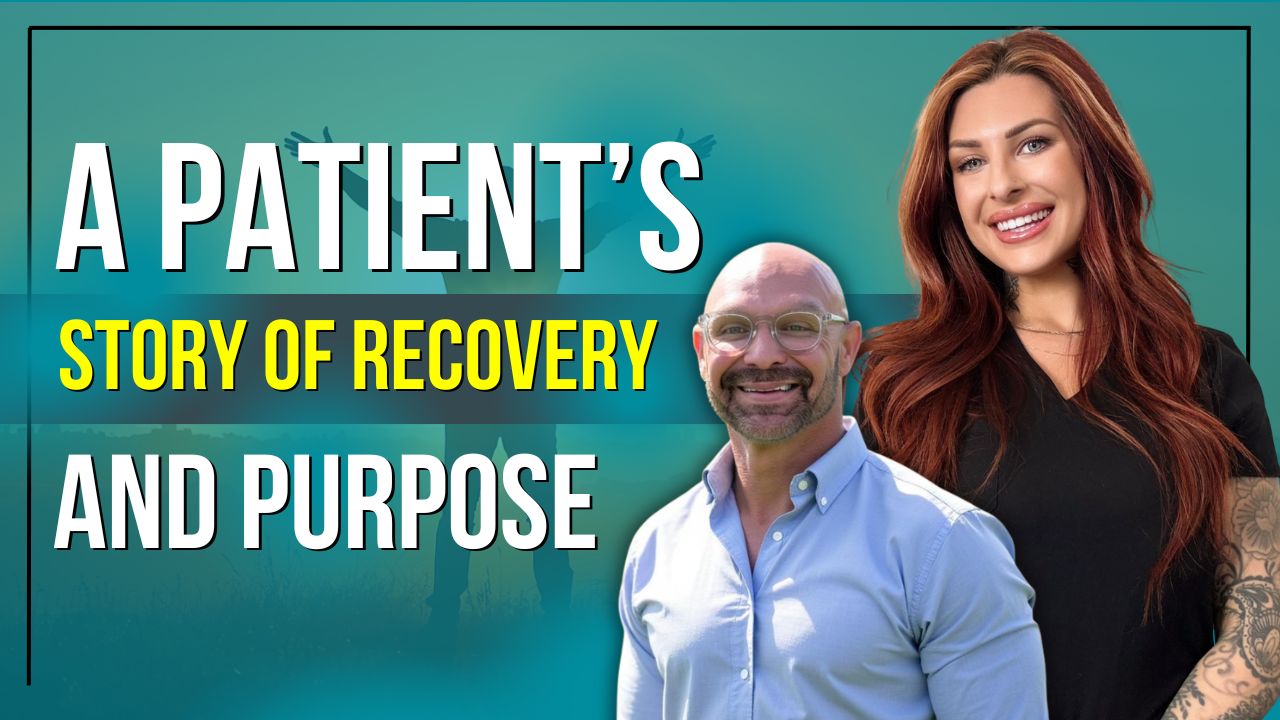
Hannah Keller lost three siblings, battled addiction, and hit rock bottom before finding recovery at Camelback Recovery in Phoenix, Arizona. In this episode of I Love Being Sober, host Tim Westbrook sits down with Hannah to talk about what it really takes to rebuild your life from the ground up. Hannah was a patient at Camelback Recovery. Today, she’s an employee helping others find healing. This conversation covers grief and loss in recovery, how motherhood became her turning point, the role of faith and spirituality in staying sober, what people misunderstand about addiction recovery, mental health and dual diagnosis treatment, and what it means to find your identity and purpose after addiction.
If you or someone you love is struggling with addiction or mental health, this episode is proof that recovery is possible and that your story isn’t over.
Camelback Recovery is a Joint Commission accredited dual diagnosis and addiction treatment center in Phoenix, AZ offering inpatient, outpatient, sober living, TMS therapy, EMDR, medication-assisted treatment, and holistic therapies.
Learn more at camelbackrecovery.com
Follow Hannah: @hannahmkeller
Follow Tim: @_timwestbrook
Follow Camelback Recovery: @camelbackrecovery
#addiction #recovery #mentalhealth #sobriety #traumarecovery #dualdiagnosis #addictiontreatment #soberlife #ilovebeingsober #phoenixarizona #camelbackrecovery #griefandloss #faithinrecovery #soberliving #TMStherapy #EMDR
—
Watch the episode here
Listen to the podcast here
A Patient’s Story Of Recovery And Purpose
How Hannah Keller Went From Fighting For Her Life At Camelback Recovery To Helping Others Fight For Theirs
I’m excited about this conversation. My guest is someone who knows what it feels like to sit exactly where some of you are sitting right now. Hannah Keller is a woman of deep faith who has walked through addiction, trauma, and the loss that most people can’t even imagine. She lost three siblings. One in a car crash when she was just a kid, two more to drug overdoses. She’s a mother of two beautiful daughters who she will tell you that straight up saved her life. She hit rock bottom, rebuilt from the ground up, and she stands on the other side of a story of what I think is going to hit home for a lot of people here in this room.
Here’s the part that makes this extra special. Hannah was a patient right here at Camelback Recovery. She sat in a room just like this one, did the work, and fought for her life. She came back not as a patient, but as a member of our team, helping other people find their way to healing. That is what a full-circle moment looks like. That’s recovery in action. Hannah, welcome to the show. I’m so glad you’re here.
Thank you. I’m so glad I’m here too. It is wild, the full circle. It is. I was a patient here, and I had the best experience. I felt loved and adored here. I got the help that I needed when I needed it. I’m grateful that I got to work here too. That was great.
Hannah’s Life Before Recovery
For people in this room who might be early in their journey, just to start off, tell us where you came from and what life looked like before recovery.
I was born and raised in Orange County, California. I had five siblings. My parents were divorced before I was even born. I don’t remember too much about my childhood. I think it’s the part of our bodies that suppresses those memories because they weren’t all good. My father was an alcoholic, and most of the reason why my parents were not together. My siblings were all out of the house. My youngest brother was thirteen, and he lived with his dad. I was this only child for quite some time.
When I was in fifth grade, we moved to Arizona. When I say we, my parents both moved to Arizona, and I went back and forth between houses. In the middle of fifth grade, my oldest brother had organ failure from drinking and was in ICU. This was because my youngest brother had passed away in a car accident from drinking and driving. I didn’t understand what that was. I was about 10 or 11 to understand what loss was, but I saw everybody around me going through the grieving process.
My mom was no longer present in my life, she was coping with that pain, and so I no longer got that nurturing that a mother should be giving a child. My dad was not in the picture. I was alone and just navigating all alone and watching everybody else do what they needed to do. In fifth grade, my brother was in ICU from his alcoholism, and I was in and out of the hospital. He was unconscious, had a trach, and I experienced that. I don’t know how to explain what that experience was like, it just was what it was.
Just doing life. My sister got really deep into her addiction, and that is when I got deep into my addiction because she was the one that was offering me the drugs that she was using as well. I was fourteen when I started smoking pills, and I thought it was so cool because that’s what she was doing. I had my first drink when I was about eleven, I got drunk for the first time because I was angry with our mom, and my sister was like, “Here, let’s drink because we’re angry.” that’s the first time that I knew that in order to not feel something, I could do this.
That became a whole thing throughout my entire life. I was in Arizona, we moved back to California, and I finished my time in California going to school with my brother in the hospital. He got out, he had to learn how to walk again. He had a colostomy bag, and I was helping take care of this person that was incapable of taking care of himself at a very young age. They put him on prescription painkillers, and after that, it turned into heroin and all of that. I watched my siblings in their addiction.
I watched what they were doing, and I was a participant because they were people that I looked up to, and I wanted to be like them. I am a child of sexual abuse, my father was my abuser. I never said anything about that at all, ever, until I got into my late twenties. I was always trying to escape where I was at, where my feet were at. It was uncomfortable. Everything going on around me, I didn’t understand. My frontal lobe wasn’t developed, I was young.
When I was seventeen, I fell in love in high school, and I moved to New York because I thought if I moved away, life would be different for me, and I wouldn’t be around this chaos that I had in my life. It was chaos. I moved to New York, and I realized that when I was there, it was still chaotic. I didn’t understand why it was like that. I still was unhappy, I didn’t know who I was at seventeen. I just lived my life. When I was eighteen, I got pregnant, and it wasn’t intentional, it was definitely an accident.
I knew that, I don’t know, I needed to keep my child. I couldn’t get rid of this little baby growing inside me. I was like, “I guess this is what I’m doing.” Everybody fought me, like, my mom was like, “Yeah, don’t do that,” I was like, “You don’t know what you’re talking about. Nobody knows what they’re talking about. You guys are all insane and crazy.” I got married because I thought that was the right thing to do, having a baby, and I was a wife and I had a baby.
I thought maybe if I do this, life will be good. I had my baby. My sister was deep in her addiction in California, and I talked to her every so often, and she ended up calling me while I was in New York. My baby was about five months old, and she told me she was in rehab. I felt this like relief that she was going to be better, and I was grateful because her voice sounded like my sister again. She called me every night while she was in rehab to just do her little check-in with me.
This went on for about two weeks, and I was waiting for that phone call every night. It was a three-hour difference for me in New York. She stopped calling. I was like, “Something’s wrong.” I didn’t hear from her for about a week. I took my daughter to our doctor’s visit, and I got a phone call from my mom, and she was hysterical. I’ve already gotten these phone calls before, my grandpa had committed suicide, and I was there when she got the news that my brother had passed.
I knew what her voice was, and she let me know that my sister had overdosed and died while I was in my doctor’s office with my child. I flew out to California. We didn’t have a service for her, we just had a family get-together. When I got home, I knew how to get rid of that pain. I had been raising a kid and being a wife, and I didn’t really touch much on my alcohol or drug use. This was a time where I felt like, “I don’t want to feel this anymore.”
I took my painkillers that I got from delivery, and I got high. I didn’t process the loss of her, and that trickled into my addiction even further. I ended up having another daughter because I wanted my daughter to have a friend, and maybe that would fix my marriage. I hated the person I was married to. I came up with this idea that I wanted to move back to Arizona. I had to manipulate this man into moving to Arizona because if I moved, life would be good.
If I’m uncomfortable in this area, if I move here, then things will be different. This is an issue in my life, that if I think I move, things will be different. I get to Arizona, and the neighbor across the street was a drug dealer. I started sneaking around and getting heavily involved with drugs and hiding it from my husband and my family, and they had no idea. I was really good at hiding it. I didn’t want to feel uncomfortable with my life. I didn’t want to feel any of that.
I did that. I asked for a divorce because if I get a divorce, I’ll be happy. That wasn’t true. I found another man. I want to be loved so badly. If this man’s not working, so maybe this one will fix me. Maybe I’ll feel better, and maybe life will be good. I got remarried. It was great for a little bit. He was an addict, and he was at a job site. We were married for a year. He drank and drove and he killed somebody.
He got sentenced, he got 10 to 20 years in prison. That sent me into an absolute spiral because I finally felt like a little bit of happiness. I felt a little secure, and somebody did love me, and I was content, and my kids were well taken care of. I went down a huge spiral. I know what to do to numb that pain, and it was drugs and alcohol. I just did that. I did that for years, and I was just trying to survive.
My kids were taken care of. I don’t know how I managed to do that, but they were. I ended up meeting somebody who ended up being my boyfriend for just a little bit of time, and he said, “I’m sober,” I was like, “Yeah, me too.” I was only sober for like a couple of weeks because I knew where my life was going. I’d seen what it had done to my siblings, and I knew that I was going down that road. I tried to stop on my own, and it wasn’t working.
This man came into my life and was like, “Why don’t we go to an AA meeting?” I was like, “Yeah, I’ll go. I’ll support you.” They started talking, and I realized like, “I think I’m one of you guys.” Like, I think I’m right where I’m supposed to be. For the first time, I feel like I could hear people talking about things that they were going through, and I related. I was like, “I’m not alone in this.” I’m really not. My story isn’t that special at all.
I started going to AA. I found a sponsor, and I was with her for four years. I thought when I got sober, life was going to be good. Everything was going to change for me, but it actually got worse. It got worse because I was battling a lot of mental health issues too. When I was drinking and using, I wasn’t able to process anything, and nothing was coming to the surface, and I didn’t feel anything. When I got sober, I felt all these things, and I didn’t know where they were coming from.
For a long time, I was like, “Something is wrong with me, and I’m sober, but I don’t know what that is. Why isn’t this feeling going away?” Now I’m like, “I think something is really wrong with me.” I got into therapy, and I was in therapy for years, and we’re talking about all this stuff, and I’m like, “Something’s still wrong.” When I was fourteen, I got put on antidepressants, anxiety medication, and I was diagnosed with anxiety, PTSD, depression.
As I got older, I’m like, “No, something’s still wrong. These aren’t working.” It was, “You have a mood disorder,” it was mood stabilizers and this and that, and nothing was working. It was like, “I’m an alcoholic and an addict, that’s my problem.” That went away, and it was like, “No, there’s still something wrong.”
How did you know that something was still wrong?
I could feel it, like my soul was off. There was like a darkness, a heavy darkness, like a cloak over me that I wasn’t viewing things the way I should be. I don’t know, I didn’t feel peaceful. I wasn’t content. I was something was always wrong still. Even though there was nothing really going wrong, there was something wrong. I didn’t work my program properly. I didn’t do what was suggested to me, and I had relapsed a couple of times.
When you forgive, the chain of bondage no longer has power over you and your decisions. Share on XMy last relapse, my life, I thought, “This is going to make me feel better,” because that’s what it’s always made me feel better. It didn’t. My life spiraled in three months. I met my boyfriend now, who is the only person in my life who told me blatantly what I was doing was wrong and that I was an alcoholic and I needed to get back into a program because I’m sick. I listened to him and I got back into my program, and I started working my program the way I was supposed to.
I had a year sober. It was Mother’s Day weekend, and my childhood abuser, my father, showed up to my mom’s house unannounced. I didn’t know he was coming, and I didn’t have a relationship because of who he was. I finally said the things that he had done to me, and nobody believed me. My mom told me I was crazy and that that never happened. The only person that believed me was my boyfriend, my sponsor, and my therapist.
Now the cat was out of the bag, and I was processing my childhood, and this man showed up to the property, and I became like paralyzed. In an attempt to get my kids in the car to leave, because I don’t want this person around me or my children anymore, he assaulted me. I called the police, and him and my mom told the police that I had hit my daughter, and that’s why he assaulted me. I was falsely accused, I was arrested, and I was put in jail for something that I didn’t do.
When I got out, I spent the night in jail and I got out the next morning, and all I wanted to do is see my kids. I tried to call and see my kids, and my ex-husband’s like, “You’re never going to see them again.” That is something that it wasn’t a threat, he meant what he said. This happened in Payson, Arizona, and we drove.
My boyfriend came from Vegas because he witnessed the whole thing on facetime as I’m trying to get my kids in the car and I’m panicking. He’s the only one that could talk me off the ledge. I’m getting in my car, he sees this thing. He comes to Payson, and he gets arrested as well because he called my brother and told him that he needed to come to the house because my dad assaulted me. My family all conspired against me.
Are you sober at this time?
I’m sober at this time.
How much sobriety did you have?
I had almost a year, I had about eleven months’ sobriety. This happened in June, I hit a year sober in July. It was something that like I couldn’t wrap my head around of what was happening, and we drove down to Phoenix. I got an attorney, and the attorney was like, “I just need you to sit still because if you get charged for this, it’s not good. It’s a felony.” I was like, “Okay, what I know about the program is like when something is told to me, I need to listen because somebody else probably knows better than I do.”
I sat patiently, and it was a lot because I still didn’t understand. How could this possibly happen, and how could why my mom do this to me? Shortly after, about two weeks after, I got served a custody order. When that happened, something inside me happened. I completely lost my mind. When I say I lost my mind, like I was no longer Hannah. I had so much agonizing pain inside myself of like betrayal. Having my children stripped away from me was painful.
I became not only depressed but suicidal. I had voices in my head telling me that I shouldn’t be here anymore, and I couldn’t fight that. I was going to meetings like was suggested, and it was like, “I’m going to meetings, I’m talking to people,” but I cannot get out of what is happening in my mind. I ended up attempting suicide in my home. I didn’t want to drink or use over it, I just didn’t want to be here anymore. Drinking and using isn’t going to take that pain away, I didn’t want to feel it anymore.
I attempted, and I ended up going to Quail Run for about ten days. The craziest thing is before I attempted, I was online researching, like, “What can help me? I don’t think I can afford treatment. I don’t have insurance, and so I don’t know what to do.” I found Camelback Recovery that did TMS. I started doing some research on it, and I called in, and I actually talked to Dr. Robbie. It was like supposed to be a consult for like 20 minutes to just tell me what it was, and I spent about almost 90 minutes on a phone call with him telling him my life story.
This is going to blow your mind. I’m telling him this life story. We set up an appointment, and it was for a Monday. I attempted, and I’m in the psych ward. I call my sponsor, and I was like, “I need you to call Camelback and tell them that I’m not intentionally missing my appointment, that I’m here because I just tried to kill myself. Can you please tell them that when I get out, I know I need to go there and get what I had originally had an appointment for.”
My sponsor’s like, “I had no information.” “It was just Camelback Recovery. Please look it up, figure it out.” She did. You can’t call in, you can only make calls out on the little phone on the wall. At the end of the day, I called her, and I was like, “Were you able to call?” She’s like, “Hannah, I have a phone number for you. You need to call. It’s Dr. Robbie’s phone, and you need to call him.”
I was like, “What?” She’s like, “Yeah, you need to talk to him, and that’s all I can tell you.” I’m like, “Okay, give me the phone number,” I’m writing it with like a crayon on a piece of scrap paper from our colorings that we did. I write down the number and I call, and he’s like, “I’ve been waiting for you to call. Are you ready to like surrender? Are you done? I know you’re hurting, but are you done? Do you want some help?”
I was like, “I want help,” he’s like, “I want you to come here for treatment. We’re going to take care of it, and I want you to come.” I was like, “I can’t do that. I have rent, and I have a car payment, and I have all this,” all these excuses. He literally said, “Fuck all of your things. Are you ready to come?” I was like, “This is my life that we’re talking about, my life that I almost ended. Yes, I’m ready.”
I don’t know who the driver was at the time, but she came and picked me up from Quail Run and brought me here. They let me stay at the Perishing house, and I had transportation, and I came and I did the things that were suggested to me. While I was at Quail Run, actually, I was diagnosed with borderline personality disorder. That was the first time I heard that because I was depressed and PTSD and a mood disorder and all that.
I finally got an actual diagnosis of borderline personality disorder. When I got here, it was verified that I indeed had borderline personality disorder. It was like all these things started making sense. That feeling that I had that something was wrong was true. I did have something wrong. I had a mental illness that was never properly diagnosed or treated. Now I had the keys.
I had the keys to unlock this door about myself. I did a lot of I did the therapies, and I worked with Dr. Robbie, and we did the internal family systems, talking about the parts. I was able to understand myself, but also, I did a lot of things that forgave the people that have hurt me in my life. I was able to process the loss of my siblings, and I was able to sober through the process and continue to work my program, and I finally felt free.
Now going back, you said you finally were able to forgive other people. What did that do for you? The ability to forgive other people? I know a lot of times and I think that’s true for a lot of people we have resentments or we have anger and rage, and it’s just so hard to forgive other people. How important was that for you to forgive other people?
When I had all this resentment, I would sabotage everything around me. I was so hurt and wounded and it was everybody’s problem except for mine. When I forgave, it became like I was responsible for the things that I had done. Took away that power. “I was so angry at you that I did this to myself. I was so angry for what you did to me that I’m going to hurt myself, and I’m going to do all these things to myself because I’m so angry with you.”
When I forgave, it broke that chain of bondage that you no longer have power over me and my decisions, and my soul is free from this hatred that I have. When I forgave people, specifically my father, I’m sad for him. I look at him like a very sick person. It was huge for me because you know what you have done to me no longer controls and dictates my life.
I don’t get an excuse anymore to behave a certain way because of what you did to me. It really just broke me free. Same with my mom and same with everything else and every other person in my life that has caused harm. It has removed like any feeling. I don’t have love and I don’t have hate, I’m just very neutral. That’s peaceful. Now I have peace for doing that. That was that was very important.
The Moment Of Surrender
There’s usually a moment or sometimes a series of moments where something breaks open and you realize you can’t keep going the way you’ve been going. What was that turning point for you?
It was when I was in here. People talk about in their recovery how they hit rock bottom and what that was like and why they got sober. It was like I hit rock bottom in sobriety, and I knew when all that happened, I had a decision to make. We have two different paths. We can take this path or we can take this path, and this is going to lead to this, and this is going to lead to this.
It’s like I can either be a victim and stay the same and do what I always did because I know how to make things feel better and I know how to navigate this because this is what I’ve always been used to or I can have a different experience and see where that takes me. I wanted a different experience. I wanted to be different and I wanted to get help, but I wanted to heal. I didn’t want to just be sober. I wanted to actually heal the root problems and the core belief system that I had about myself.
So that’s where that shift happened. When I was in here listening like I had a group of people with me, and I got to hear their stories and their problems, and the therapist and all that. It was like, “I have a choice. God gave me this gift of this man Dr. Robbie coming into my life, that was no mistake.” I need to take it and value what was given to me and actually do something with it. That opportunity doesn’t really come around often. That was unheard of. My shift was in while I was in here.
Yeah, I know a lot of times, people think that once they get sober it’s all sunshine and rainbows. It’s like there’s a lot of work that happens. I know for me, my first five years of sobriety. Separation, divorce, bankruptcy, my real estate license was revoked, I lost my business. There was a lot that happened.
What People Get Wrong About Recovery
Being sober and leaning on the people that I was connected to, including doctors, therapists, other people in recovery, that really helped me process and work through all the things and to your point, forgiving myself and then also forgiving other people, because that’s the only way I’m going to be happy is if I can truly forgive other people. I think The Four Agreements has been really big for me too. Not taking things personally, always doing my best, and the other four agreements I’m not thinking of them right now. What’s something that people misunderstand about recovery that you wish they could experience just for one day?
I wish people could experience true being happy, joyous, and free. Life still lifes you in sobriety, there’s still bad things that happen but you get to feel all of it. There’s some level of gratitude in that that we get to feel bad things and good things because when we’re using, we’re numbing bad things but we’re also numbing our happiness. We’re not capable of feeling anything. The actual peace and serenity that you get.
When you look in the mirror, you can see who you are, and you know who you are. I wish everybody could experience that for one day. Just looking in the mirror and be like, “I know who that is.” They love themselves and they honor themselves and they value themselves. Do you know what I mean? You know what I’m talking about. It’s hard to get sober, but when you do the work, you have that.
You say life lifes you sometimes. I think one of the things that I’ve learned in sobriety or in recovery is just to be grateful for everything that happens, every single thing that happens. Even if I think it’s bad, like it might feel bad in the moment, but it’s always good on the other side. It’s like life happens for me, not to me.
All of these things that happen again, separation, divorce, bankruptcy like all the things. I lose my house, I lose my business, I lose my like whatever. All these things happen, and until I get to a place of gratitude, I’m a victim. If I’m a victim, I have no chance. The sooner I can get to gratitude, the better off I’m going to be and the more quickly I’m going to be able to work through it and find the reason. Okay, this is why this happened. Doors open, doors closed everything happens exactly the way that it’s supposed to.
My boyfriend, he’ll have seventeen years of sobriety. I know he heard it in a meeting somewhere, but he I have never heard it, and he said it to me, and it’s something that I actually live by on a daily basis. He said we either have good days or great days. A good day is when everything happens the way it’s supposed to, there’s no speed bumps or nothing, no stop signs, and life just goes the right way. It’s happy and good.
A great day is when the world goes to shit and everything that could go wrong does, and we don’t drink, use, self-harm, or do anything to hurt ourselves. That’s the great day. On a daily basis, I’m like, “Did I have a good day or a great day?” It raises my frequency. It’s like I don’t have a bad day. It’s either good or great. I live by that.
Faith, Connection, And Community
I’ve never heard that before. Actually that’s good. Good day might not seem like a great day, but I didn’t hurt myself over it. You’re a woman of faith, and that’s a big part of your story. What role has spirituality, connection, or community played in keeping you grounded, especially during the moments when you weren’t sure you were going to make it?
I found God in the program. In the program, it’s like your higher power, my higher power is God. It’s great to believe that something is greater than me. When I don’t have the answers or I don’t know my way, God is doing and leading me and guiding me. I think there’s no coincidence or mistake in God’s world. All the things that I’ve gone through and all the people that I meet is not a coincidence, it is divinely orchestrated.
There is no coincidence or mistake in God’s world. Share on XHaving a phone call with Dr. Robbie and then him letting me come here, that is divinely orchestrated. That is not me doing that, that is God. The women that I have in my life my sponsor, the women that I sponsor are all going through something that I’ve already gone through. That is not a mistake. That is God bringing together where He knows that I can help somebody else.
Even before I became and did this, I sat in my car and I prayed. I said, “God, give me the words that You need me to share so somebody can hear something that they need to hear.” I am very close in my faith because if I try and control my life and do things my way, I end up back to where I started. I have to give it to something better and greater than me in order to continuously live the life and go down the path that I’m going down. It is a beautiful thing to have that in my life.
Looking Someone In The Eye
What does it feel like to sit across from someone who is right where you used to be and say, “I’ve been there?” How does your experience change the way you show up for people here?
I have empathy. You can tell me your story, and I can love you through that because I know. When you cry and you’re telling me how hurt you are, I know what you’re feeling and I know that hurt. It’s not hard to show up for somebody. It’s really not. It is nice to hear when someone’s like, “Yeah, I’ve been through that,” because then you feel less alone.
I share my testimony and my story because I don’t want people to think that they’re an anomaly. I want you to know that there are other people that are going through what you’ve gone through, and they can tell you how they got out of it, and that’s like very important. It’s very important to see the other side because when we’re in it and we’re sitting in it, it’s like, “I can’t do this, I don’t know what I’m going to do.” When you see somebody who did it, you’re like, “Okay, they did it, and I think that I might be able to too.” It gives you hope. If I can just transmit the message of hope, that’s satisfying.
There is a way out, you can do this. Before I did Ironman, I didn’t run, bike, or swim. I didn’t do any of it. Doing a marathon was something that was like, “There’s not even possible,” let alone Ironman. I remember I went to watch a friend do Ironman, and I remember looking around at all these people, and some were like old, skinny, fat, missing arms, missing legs, and all these people are doing Ironman. I’m looking around at these people, I’m like, “I can fucking do this.” It’s like anybody can do it. It’s the same thing with recovery. Anybody can do it. I like that you shared that. Yeah, because you’re in a great place, and you were here just like all these people that are here.
Yes, I was.
Figuring Yourself Through Self-Discovery
Recovery’s not just about putting down substances, it’s about figuring out who you actually are underneath all of it. What have you discovered about yourself in recovery that you never would have found in active addiction?
The biggest one is my values and my morals. My love for myself. I had never loved myself. I viewed myself as like worthless like I wasn’t supposed to have anything in my life, like I wasn’t deserving. That’s what I thought. I wasn’t worthy. That’s what I how I viewed myself. I wasn’t worthy of happiness, of having the goals that I had. I was never going to make it because I wasn’t deserving of having it.
With recovery, all the things that I wanted to do with my life, I am doing it. My friends are different. I have a huge support system. I’m in a healthy relationship with somebody who loves and honors and values me because I deserve that, because I’ve done the work within myself to receive but also to give. My moral compass is different. The things that I used to do that I thought was okay, I’m this woman now that I look at that and I was like, “That wasn’t good, and I know why I did that is because I didn’t value myself.”

Patient: With recovery, you can do all the things you want to do with your life.
Now I hold myself up to a very high standard with the people I surround myself with, how people treat me like I have boundaries, and I don’t tolerate disrespect. There’s a lot that goes into that. The biggest one is my morals. The difference between right and wrong because I didn’t know what that was. I didn’t know what right and wrong was. That’s crazy.
It’s the lying, cheating, and stealing. It’s the addictive behavior. The addictive behavior is not the drinking and the drugging, it’s the behavior. It’s the lying, cheating, and stealing.
Yeah, I used to say I lie, I cause problems, and I steal.
Answering Questions From The Audience
Glad you’re on the other side of it. I think I want to open it up to the questions.
I have two if that’s allowed. How long ago were you at Camelback?
I was at Camelback in June of 2024.
You mentioned that forgiveness was a big part of your recovery. What did that process look like for you?
I did this thing I don’t know if Dr. Robbie does it, but apparently, your brain operates in two different sections. When you’re right-handed or left-handed, he had me write a letter to my parents, specifically to my dad, with my right hand, saying how hurt I was and how I forgave him. He had me write another letter with my left hand, and that triggers your child self. I wrote as my child self when I was hurt, saying how hurt I was. “How could you do this to me?” “I forgive you.”
It was very interesting. I cried during that process. I was hysterically crying. I actually ended up videoing myself. I put my phone up, and I sat on the couch with my journal, and I had music playing. You can see the expression change as I’m going from right hand to left hand. I felt it. I felt a release. After that, it was like I feel nothing for you. I don’t hate you, I don’t love you, I feel nothing. That’s when I knew like I actually did forgive you.
I’ve never done that before. I’ve never done something like that, but that is what I did. Now I forgive people by praying every single night for the people that I have a resentment towards. I ask God to give them everything that they deserve. I hope you give them peace and happiness and love and contentment and let them persevere in their life.
At first, when I pray for them, it’s like, “God, help them get hit by a bus,” you know? It’s like, “Sorry,” you know what I mean? As the time progresses, my heart is getting softer and softer to this person, and then I mean what I say. That is something that was told to me in the program is to pray for those people, and now that is what I do. The big major one, I did that right-hand, left-hand journaling.
Thank you for coming, super inspiring. I was able to resonate with a lot of things you said, like that phone call you received from Dr. Robbie. It wasn’t from Dr. Robbie for me, but when I was in detox, I remember having one of the nurses reach out to my brother to have my brother reach out to Camelback. I didn’t hear anything else for that. I was literally on my sixth or seventh day at detox, about to discharge, and I was freaking out. Jefferson gets on the phone, and I’m just like, “Holy cow, that changed my life completely.”
I guess my question was, have you experienced in a way like a supernatural thing with God? For me, it was the same thing at detox. I had a gentleman talk to me and just told me, “Just fall to your knees, ask for forgiveness, talk to God.” I did that one of the days, and it completely changed my life. I feel like that was my turning point of my struggles, my addiction. That was just like I was like, “I couldn’t believe it,” that literally was my turning point. Did you experience something like that?
Not a massive “oh my gosh,” on a regular basis, I have what I call like my God shots, where I’m like, “That was God.” After losing my daughters, I get them back in October but after losing my daughters, there was a homeless man sitting outside the smoke shop, and I went to go get a vape. He’s sitting there, and I go inside, and I was like, “Can you break this change? I’m just going to give some.” The guy at the smoke shop’s like, “No, just pick a snack on us. Just get a snack and give it to him.”
I was like, “That was so nice. Thank you.” I grab a snack and I go outside, and I’m like, “Hi sir, my name is Hannah. I just wanted to give you this. Are you okay?” I could not understand, he wasn’t talking. I’m just like, “God bless you,” he looks up at me and he says, “You’re a good mom.” Everything after that was gibberish, and I didn’t understand him. I got in my car and I cried. “Okay God, I have guilt and shame, and I feel like I did something wrong, and I’m missing out, but God, You’re reminding me I’m a good mom.”
Things like that happen to me all the time. I’m very God-conscious, and like I said, nothing happens by mistake. When you ask in your prayers like, “God, help me to see what You need me to see today,” you’re going to start being like, “There You are, there You are, there You are.” It is something that is constantly happening in my life.
I was just driving home from Vegas, and my GPS I’ve driven from Vegas all the time. My maps is telling me to go this way. I’m like, “No, that’s not the way to go. I know how to get home.” I keep driving, I’m not listening to my GPS, and there’s a roadblock. They completely shut the road down, and so I had to turn around and go back. As I’m driving, I’m like, “Okay, that’s so silly God, because this is You reminding me that when I try and do my way, You’re going to block it off. It is not supposed to happen. When I listen to You, the road opens.” It’s just like little things. “Okay God.” Yeah, just keep looking.
That’s awesome. Thank you.
I just had two questions. Do you ever feel like you’re stuck in your sobriety like, okay, you’re sober, you’re doing the things, but you don’t feel so different?
That does happen in sobriety. What it mostly is that life is okay, and that’s uncomfortable and it’s weird. We think nothing’s happening because it’s stagnant, but you have to keep doing the next right thing. I don’t know what that is sometimes. It is like going to my meetings, talking to my sponsor and stuff. It is a strange feeling. When we’re used to all this chaos and confusion and life is good, you’re like, “Something’s wrong,” or “This is weird. I don’t think I’m doing this right.” That’s good. You’re right where you’re supposed to be.
If you’re doing these things and you’re going to your meeting and you’re working your steps, you’re not stuck. You’re still doing something. It’s when we become complacent and we don’t do those things, you’re going to start having a problem. You’re start going to get irritable, discontent, your mind’s going to start being a little swirly. That quiet isn’t always a bad thing. It doesn’t mean it’s bad, and it doesn’t mean you’re doing something wrong, it just means it’s different for you.
If you are in recovery, you are not stuck. You are still doing something. When we become complacent, we will start having problems. Share on XThank you.
This is less of a question, more I guess it’s a question, I don’t know. Do you ever feel like you hit rock bottom and then you keep hitting rock bottom and the world is like, “How low can you go?” If you feel like that, how do you handle that and why do you think that is?
I had thought I hit rock bottom multiple times. I did. I was like, “This is my rock bottom,” I’m like, “Wait, no, this is my rock bottom. No, like this is.” The difference is when I finally hit that last one, like I said, I had a choice. I could stay the same or I could change. That’s your decision to make, and you have to make that decision for yourself, and nobody can do it for you.
Do you want to have a different experience in your life? If the answer is yes, you have to be willing to be uncomfortable for a little bit. You have to be willing to do really hard work and do what’s suggested and do the things that they say because you don’t know what’s best for you. Somebody else probably does. Probably a professional. I’m not going to fight somebody that knows a little bit more than me because I tried to do that, and then I’d hit a rock bottom again. It is that surrender and committing yourself to having a different experience.
Thank you.
You’re welcome.
A Message To This Room
You’re sitting in front of people who are in the fight right now. Some of them might be having the hardest day of their life. What do you want them to hear from you now?
That you are worthy. You are worthy, and you are loved. It may not feel like it but you deserve to be happy and you deserve to have the life that you want and you are very deserving of it. No matter what you feel, you are deserving. That is what I will say.
Is there anything that I should have asked you that I didn’t ask you?
I think we touched down on it. The only thing is I have this diagnosis of BPD, and I want to touch on that because it is mental health as well. I am no longer medicated. I feel like I’m not going to say I’m cured of BPD, but I have total control over it and I navigate my life solid. I’m solid in my mental health. I thought, “I have BPD, there we go, it’s going to be good for me,” it’s like, no, that’s not my excuse.
I was like, “I have BPD, that’s why I did that.” It’s like, “No, no, no, that’s not an excuse,” I don’t allow my mental health to be an excuse and my diagnosis to be an excuse for me. It does not have power over me, it is just something I have. I put it in the back of the bus, you know? When it comes up, I’m like, “Go to the back of the bus, like you don’t get to be here.” I have control over my life.
How did you get to that place? That’s powerful.
A lot of work. A lot of work. I did a lot of research, and I read some books. There’s this book called The Buddha and the Borderline, and it’s this woman’s story about borderline personality disorder. I was like, “I’m going to be really pissed off at the end of this book if she’s like, ‘Yes, I’m cured.'” I was going to be pissed. She wrote her whole story, and at the very end, she’s like, “I still have BPD, I learned how to live with it, and I learned how to manage it well.”

The Buddha and the Borderline
“Sometimes I still have a bad day, but I know what to do with it and I have the tools now.” That was big for me, and it’s just like I had to do a lot of work and a lot of research and self-reflecting, know what my triggers were, know what that looked like for me, and be honest and accountable. It’s nobody else’s problem, it’s mine. I had to be accountable for my behaviors and my actions with that.
Acceptance is the answer to all my problems. What does your morning routine look like?
In the morning, I always wake up an hour and a half to two hours before I need to be somewhere because that’s my moment of alone time. I don’t meditate. I’ll be honest, I don’t know how to do that. I still have a problem being inside my head alone. I put on worship music, I have my coffee, I journal, and I pray. That time alone with myself is so detrimental. I cannot wake up and be like, “Okay, I got to get ready and leave.” I need that time to myself. Every single morning, I get up earlier than I should, and I just sit with myself. My thoughts on paper and, “Thank You, God. Help me be of maximum service today. Whatever I need to see from You, give me the eyes to see it.” I do that, and I do my prayers at night too.
How important is that morning time for you?
So important because I was just in Vegas for the weekend, and I did not have that routine. I’m like, “Ugh.” I’m sitting in the elevator, I’m like, “Okay God, I’m so sorry. It’s me, Hannah. I didn’t have my coffee, I didn’t have my music and just chill.” It was just like go, go, go. I just feel off. I know it’s very important to me. Don’t disturb that.
I can relate. I give myself an hour. Breathwork, pray, meditate, gratitude list, I drink my coffee. It’s like I do all the things. It’s so important. If I wake up and I’ve got to leave at 5:00 AM, I’m going to be up at 4:00 AM, which is a little early. That’s what I got to do. Where can people connect with you, find more about you?
Just my Instagram. It is my work page, so after leaving Camelback, I’ve been an esthetician for fifteen years. Now I’m working at a med spa and doing my own thing. I do still talk about sobriety on there, and I talk about my life, and then I talk about work. It is @Hannahmkeller. You can follow me and you can reach out or whatever.
Do you want to talk about your services that you what I do on there?
My face is red because I did a treatment yesterday. It’s all skincare, so I work with an injector, we do injections like Botox, filler, I do microneedling, chemical peels, I do all that. I’ve become very close with my clientele because I speak truth over them. I’m honest, and I’ve built really good relationships with people in there. Yeah, I work with a lot of women. I work with men too, but a lot of women come in to see me, and I’m really grateful for that.
Awesome, Hannah. Thank you so much for being here. I appreciate you. I got a lot out of it. I got to know you a little bit more, and I know that everybody else here appreciated you as well. Let’s give it up for Hannah Keller.
Thank you very much.
Important Links
- Hannah Keller on Instagram
- The Four Agreements
- The Buddha and the Borderline
- Tim Westbrook on Instagram
- Camelback Recovery on Instagram
About Hannah Keller

Hannah Keller is a woman of deep faith, a mother of two, and a living example of what recovery looks like when you refuse to give up. After losing three siblings, battling addiction, and facing trauma that most people can’t imagine, Hannah rebuilt her life from the ground up.
She completed treatment at Camelback Recovery in Phoenix, Arizona, and later returned as an employee to help others find the same healing she fought so hard for.
Hannah is passionate about mental health, sobriety, self-discovery, and using her story to help people feel less alone. She shares her journey on Instagram at @hannahmkeller and believes that no one is too far gone to come back.