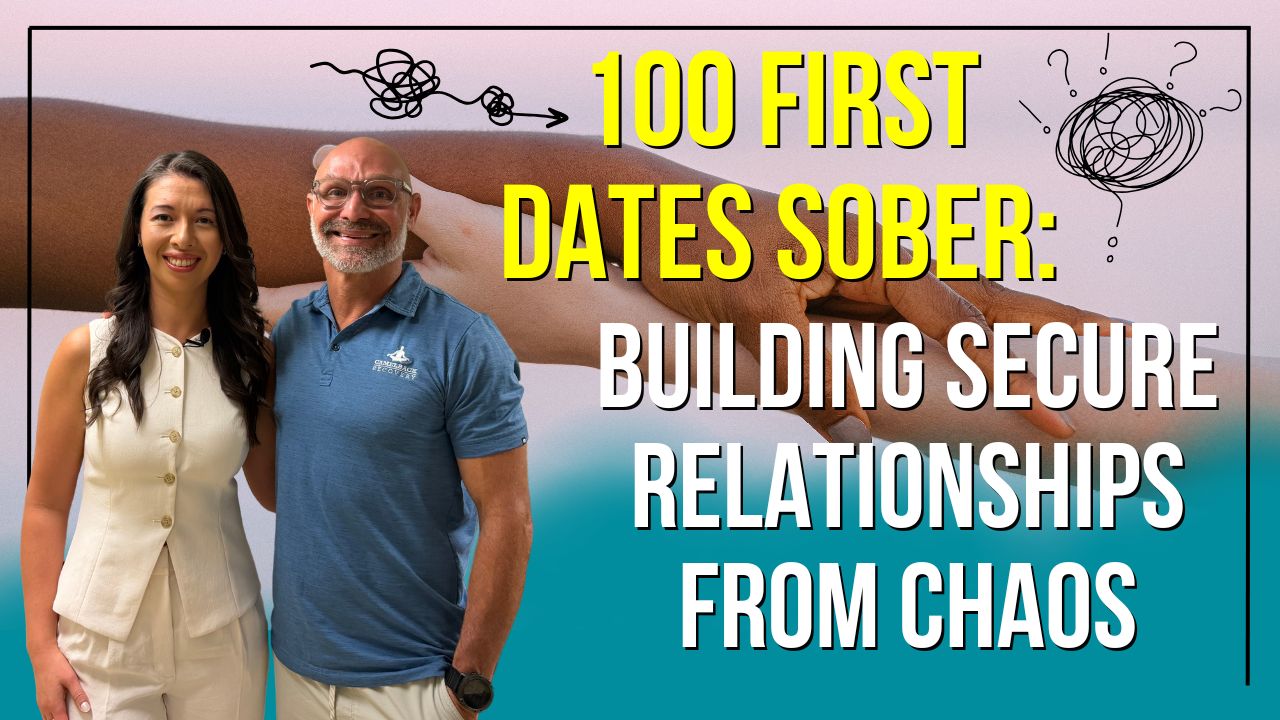
What happens to your relationships when you get sober? In this episode of the I Love Being Sober podcast, recorded live at Camelback Recovery’s outpatient treatment center in Phoenix, Arizona, host Tim Westbrook sits down with Melissa Nanavati, a TEDx speaker, author, and relationship coach for executives and high performers.
Melissa’s story will resonate with anyone navigating sobriety and connection. After graduating college at nineteen, she began drinking heavily to fit in, was clinically diagnosed with an anxiety disorder, and struggled with anxious attachment and people pleasing. She went on more than 100 first dates over ten years, about fifty of them completely sober, before meeting her husband. Now eight years sober, she hosts alcohol-free gatherings of 80 people in the Scottsdale area, had a dry wedding with 100 guests on the dance floor, and teaches the neuroscience of connection to high achievers around the world.
Tim and Melissa dig into why your romantic relationship is either the biggest energy leak or the biggest force multiplier in your life, and how unresolved friction always falls into one of three buckets: unmet needs, unseen efforts, or unresolved issues. Melissa breaks down the four types of relational courage most people never consciously practice, then walks through her complete BRAVE framework for having hard conversations: Begin within, Request the time, Affirm and ask, View and validate, and End with action, including why you should always be seated, touching, and why a thirty-second hug changes everything.
For couples rebuilding after addiction, Melissa explains the three neurochemicals behind chemistry and desire, dopamine, oxytocin, and serotonin, and the practical weekly habits that rebuild the spark. For singles learning to date sober, she shares how to create real chemistry without alcohol, why hiking dates and daytime dates work, and how she made a goal to never have a bad date again. The live audience Q&A covers healing while dating, dating apps, and how to meet value-aligned people in person.
Whether you’re in recovery in Phoenix, Scottsdale, or anywhere in the world, this conversation is a masterclass in building secure, resilient relationships in sobriety. The I Love Being Sober podcast is produced by Camelback Recovery, a leading provider of addiction treatment, mental health support, and sober living in Phoenix and Scottsdale, Arizona.
—
Watch the episode here
Listen to the podcast here
100 First Dates Sober: Building Secure Relationships From Chaos
Relationship coach Melissa Nanavati on dating sober, closing the energy leaks in your relationship, the four types of relational courage, and the exact framework for having the hard conversation you’ve been putting off.
Our guest is Melissa Nanavati. Melissa is a TEDx Speaker, Author, and Relationship Coach for Executives and High Performers. Her approach blends neuroscience, biology, and lived experience to help driven people build thriving relationships while chasing big goals. She knows this territory firsthand. After struggling with anxious attachment and alcohol misuse and going on more than 100 first dates before meeting her husband, Melissa became deeply committed to studying the neuroscience of connection.
In their first year of marriage, she and her husband raised $1.1 million for a world first Antarctic expedition while running two businesses. Through all of it, their relationship remained the most peaceful part of their lives. Melissa holds an MBA with a specialization in negotiation. She spent twelve years teaching at the college level and now translates the research of her lived experience into science backed tools that help high achievers have hard conversations, close energy leaks at home, and build secure, resilient relationships.
—
Melissa, welcome to the show.
Thank you so much for having me.
We scheduled this a while ago. We have lots of mutual friends. We’ve never met in person, so I’m grateful to have you here on this show.
Likewise. We have at least 3 or 4 mutual connections that have already been on this show.
Exactly. As we all know, our audience is mental health and/or addiction and we all have relationships. Whether it’s intimate relationships, spouses, significant others, family members, or friends, they’re all connections and they’re all relationships. We all get to be in those relationships. I’m grateful to have you here.
I’m excited to be here. Thank you, all of you, for taking the time and space.
Melissa’s Personal Journey And Sobriety Path
Before we get into the tools and the science, take us back. You’ve been open about struggling with anxious attachment and alcohol misuse and going on over 100 first dates before meeting your husband. It’s a lot.
Highly not recommended. The goal is that no one else has to go on 100 dates. That was never the goal.
How long did it take you to go on a hundred dates?
About ten years in total. It was spaced out. It wasn’t all in a short period of time, but I also took a couple of years where I wasn’t dating because I was navigating post-letting go of alcohol for about two years. I didn’t go on any dates. There were a few more in a few of those years.
What was the season of your life like and what changed?
I graduated from college very young. I was nineteen years old when I completed college. I thought, “This is great. I’m finally going to be able to adapt socially.” Going into the workforce as a nineteen-year-old, not the same experience I anticipated it would be. I started drinking heavily to fit in. That was my mechanism of coping for many years. I was clinically diagnosed with an anxiety disorder and on top of that, I had anxious attachment and people pleasing tendencies.
Very much deeply understand that experience and so for me alcohol was the outlet for me to stop experiencing other people’s feelings. I found myself deeply empathic. I was a chronic social drinker. Not alone. When I quit drinking, I retreated for quite some time to be able to just be able to navigate socially again and to discern what is my experience versus what is someone else’s.
It was through that experience of letting go alcohol that I was able to get off anxiety medication. I found everything else came down. All that heightened experience was less because I wasn’t on the emotional roller coaster of the hangover. That was a big part of my own journey. Dating sober was a completely different experience and realizing that there are a lot of people who either drink moderately or not at all.
Building Relationship: Instead of being the thermometer that reads the temperature of the room, we became the thermostat.
I had this limiting belief that the only way for me to connect was to be like everyone else. It was through doing years of therapy, group therapy. Everything I was done. Reading every book I could get my hands on that I started to understand how the brain works. That’s when I became deeply committed to the science of understanding connection and how to create connection beyond doing what everyone else is doing.
Is that through finding different people? It’s like you attract what you are. I remember when I drank. I didn’t want to date. I wouldn’t want to spend any time with anybody that didn’t drink. I was like, “Why would I want to spend any time with you?”
I could not agree more.
Tell me your experience.
Very similarly, it was a limiting belief that this was the only way to socialize. When I started to figure out there was ways to socialize that didn’t involve alcohol, I got into partner dance. I got into a lot of more activity-based things. Even like getting into Michael Roviello, who I’m sure was here. Going to places like Optimyze, where you have cold tubs, sauna, and people are health conscious.
Looking for places where people were value aligned was key for me to not only change my own belief structure around what was possible, but to start meeting the right kinds of people. I’ll say even the last like twenty dates I went on before I met my husband, were so much closer to what I was looking for because I was looking based on core values. Not just based on what the herd was doing.
That was a key big transformation for me was getting crystal clear on what are the like two or three core character values that I need in a partner. Then what are the two or three core lifestyle values. One of those for me was sobriety. I wasn’t going to date anybody who wasn’t sober. I was blown away by the number of people that were options when I finally just committed to that.
I remember I had a sponsee that when he first started dating. It’s like when you first get sober, you still think that everybody drinks. You still think it’s like a thing. If you don’t drink, it’s weird. It takes a minute before you realize it’s not weird. I remember my sponsee. He had a couple of girls that wouldn’t date him because he didn’t drink. My perception is like you’re just not there yet, or that’s the vibe you’re giving off. Until you fully own sobriety and like, “This is my life, and this is the way I live my life. These are the people I want to bring into my life.” Until you get there, it still might be a little bit of a dance.
Even now. My husband and I are local to the Scottsdale, Phoenix area. We throw gatherings at our place, I would say once a quarter. We are able to round up about 80 people that don’t drink. For me, it’s bizarre now when I go to an event and people are drinking. It is so not the norm of how I’m living. For context, too. I’ve been sober for eight years.
In this time, what I’ve discovered is that if you just say, “I’m having a party, a gathering. Bring some sparkling water or don’t bring anything at all.” People will do it. Instead of being the thermometer that reads the temperature of the room, we became the thermostat. We said, “This is the temperature. This is the vibe, energy, frequency that we’re going to be at, and you’re either on board.” It doesn’t mean they can’t drink other times, but not in our space.
We made a hard rule about that, and people have listened to that. We’ve had incredible community gatherings and people feel safe to be authentic because there is no alcohol. It’s been incredible to see. We had a dry wedding. We had a hundred people there and a few people snuck in flasks, if I’m being honest but that’s their choice. That was the thing. We wanted to create a space where people could have fun and dance. I don’t know that there is any other times where you see a hundred people on a dance floor dancing sober.
You can create that. Getting into the driver’s seat, whether it’s in your community or in your own relationship, is key. It is like, “I’m going to be the thermostat. I’m going to set the temperature of the room. I’m not just going to read the temperature of what everyone else is doing.” When you can own that as part of your identity, it’s magnetic. People love being around it because you show them what’s possible.
I would say that me not drinking, I end up attracting people that don’t drink. It naturally happens. When I used to do cocaine, I attracted people that did cocaine. That is what you attracted. You label it as alcohol misuse as opposed to alcohol abuse. What’s the difference to you or do you want to speak to that?
I will even sometimes call it alcohol abuse and misuse. I use it interchangeably. The thing that I avoid saying is, “I am an addict,” because that is not an identity that I want to ascribe even to my past self. Some people find it extremely helpful, but the way that I ultimately got sober was just by choosing the identity of someone who is sober. Could I qualify as an addict? Probably, but I choose not to adopt that terminology because for me, it doesn’t help.
I don’t disagree with that, especially being in the rooms of AA like, “I’m Tim. I’m an alcoholic.” To your point of the identity, when I got sober, it was, “I don’t drink.” I got there very quickly, and my experience is that when people are saying, “I’m trying to quit. I’m trying to make it to 30 days. I’m trying to make it to 60 days, or I’m just trying to make it another day.” Those are the people that don’t make it. It’s harder that way, as opposed to just adopting a new identity. My identity is I don’t drink. I had a nicotine habit as well, and I got rid of that. The way I got rid of that was the same thing. I don’t drink.
For everyone, it’s different but language is so incredibly important. There’s even neuroscience to show if you say, “I don’t run yet.” If you add the word yet, it opens possibility in your brain. Add the term yet to the end of a statement and it opens up possibility. The same thing in relationships like, “I’m not at a point where I’m regulated yet.” It creates space between where you are now and where you’re going.
Getting into the driver's seat, whether it's in your community or in your own relationship, is key. Share on XSimilarly, I used not drinking as a form of rebellion. Part of what helped keep me sober, especially in the first year, was I didn’t even change my friend groups at the time. I had to consciously go to bars and choose not to drink right out of the gate, which I don’t recommend. For me and the identity that I had at the time, I was somebody who thrived on being different on some level. When I decided to quit drinking, I made a public post on Instagram.
I said, “This was my last drink. I’m never having a drink again.” I did it so that I would feel shame if I ever let down that promise that I had made publicly. I chose to say, “I’m sober.” This is my new identity, and it was an act of rebellion. When I viewed it that way, it became fun. Everybody has a different way through, but for me, I loved the idea of doing something different. I adopted it as an identity of something that made me unique and special, versus made me weird. When I was able to view it as something that made me special, it made it very easy to quit.
Tell me a little bit about your first year of sobriety. Now, you didn’t go the twelve-step route?
No. It’s also a form of rebellion. I had a good friend at the time who was going to AA, and she invited me in. She said, “If you want to come, be a part of this.” It was almost the idea of, I wanted to believe I didn’t need it. Again, it was just this form of rebellion. That was the way that I operated. That was the reason also I was drinking initially was to be cool. This was my way of telling myself, “This is a new way to be cool is to not drink.”
I didn’t go to AA, but I started following even Instagram accounts like Sober Girl Society, and all these different things that made it cool not to drink. I got into the mocktail thing. I got into something different. I also took an obscene number of baths. Which is bizarre to say, but the reason this was so powerful is when we are drinking or when we are using any substance, we’re always looking for a change of state. It’s like a change of emotional state.
Getting into a bath, I discovered one of the fastest ways to get you into an alpha or a theta brainwave state. If you’re familiar with brainwave states, it’s the speed at which your brainwaves are moving. There are different labels for different levels. When you’re in a creative state, that’s an alpha state. When you’re close to a sleep state, that’s a theta state. With baths, warm water is one of the fastest ways to change your state physiologically. I took candle lit baths, I would say like six days a week because it was a way for me to change my state that didn’t require a substance.
Does it bring you to the theta state?
It does. It drops you into theta pretty quickly, unless you’re thinking or on your phone or doing something there. It gets you into this very relaxed state very quickly, which is what alcohol was doing for me at the time.
Do you do magnesium as well? Was that more helpful?
Yes. I would say so, but overall, just even warm water will instantly change your state. Being able to physiologically affect my state change to find new ways to downregulate at the end of the night versus being out drinking with people was huge for me. It was also key for my anxiety and to be able to manage and work through that. Again, I got super routine. Every morning was the reading, morning pages, and doing a meditation. I did all the self-help things that you can imagine but over time, I was able to get more lax with those habits because this was just my new way of being.
How long were your baths for?
It’s like an hour. As I said, I spent an unreasonable amount of time in a bath.
You were going for it.
I was going for the full sweat. It was basically a sauna experience.
The Impact Of Alcohol On Early Relationships
Did you have to take a shower after your bath?
Absolutely.
What role did alcohol play in your relationships back then? What did you discover about connection once you removed it?
Building Relationship: Skills are domain specific. You can be courageous in your job and your work, but then come home to your partner and be absolutely terrified to have a hard conversation.
I could not date people that I didn’t align with anymore. It allowed me to stay in relationships that were out of alignment for a very long time. I was able to date people where we didn’t have that much in common other than drinking. Similar with friends. When I removed that element of it, it allowed me to get much more clear about what were the actual values, and what people do I want to surround myself with. In many ways, I was trying to stay with people that I felt wouldn’t leave me. I was not choosing who inspired me. I was choosing who wouldn’t leave me.
I would say that’s people pleasing. Would you say also like the fun response fawning?
Unbelievable, yes. I was an extreme fawn responder to just about everything. For me, learning to also navigate hard conversations for the first time. That’s where I started reading a lot about all the different frameworks that were out there and ultimately ended up developing my own framework. One with my husband where this is the exact practices we take our coaching clients through we do some co-coaching with relationship coaching clients. I do dating coaching as well, and helping people learn to navigate those hard conversations because I used to avoid them.
Defining Relationships As Energy Leaks Or Multipliers
You say your relationship is either the biggest energy leak or the biggest force multiplier in your life. What do you mean by that?
I think a relationship, especially a romantic relationship, and everyone across the board that’s achieved some degree of success will agree that who you choose as your partner is one of the most important decisions you will ever make. There’s many reasons for this, but one of the biggest ones is I’m a firm believer that it’s either draining your energy or it is going to be a huge expander for you.
When I say draining your energy, what I’m discussing and what I’m meaning by that is that you have a lot of unresolved stuff. The brain naturally likes to close open loops. We hate having open loops. Relationships where you are not consistently practicing relational courage, where you’re not sharing what you need, are creating and stacking up open loops over time.
What a relationship that is not an energy leak and expander means is that you’re consistently cleaning what I like to call the windshield between you and keeping that clean. When you’re thinking about, “How do I make sure that I’m not creating open loops?” There’s three buckets where all friction in romantic relationship falls into and I’ve had this vetted against with many PhDs out there that have worked with couples for many years.
All relationship issues fall into 1 of 3 buckets. You have unmet needs, unseen efforts, or unresolved issues. When you’re thinking about those three things, distilling whatever friction you’re experiencing in your relationship into one of those buckets, you can start to systematically address it. An unmet need is usually you haven’t said it, you haven’t said what you need, or you’ve said it and it’s been unclear. I’ll give you a great example.
Saying, “I want to feel supported by my partner.” What does that mean? That means a lot of different things to a lot of people. Being able to be hyper specific about a need that you have so your partner can fulfill it. I’ll give you an example. I was working with a couple once and the wife would say, “I just want my husband to make us feel protected when we go through the airport.” Anyone guess what protected means?
I asked her to get hyper specific. What are one or two things that your husband could do? She said, “I would like my husband to keep track of our daughter’s roller bag.” Simple, but to her, that meant protection. Make sure that the daughter walks on the inside whenever they’re crossing streets. That was it. Once he knew that, he was able to do it. When we use general words like protected, supported, loved, and we’re not getting specific about what those needs are. We set our partner up for failure because they can’t fulfill it.
When you understand, what is that unmet need and being able to distill that down into something specific and time bound. You set them up for success. When it comes to unseen efforts, so often we’ll start making changes for our partner and then build up resentment because it’s unacknowledged. Even having the habit of every night saying, “What can I acknowledge you for,” or vice versa, “Here’s what I’d like to be acknowledged for.”
It gives them the opportunity to bring awareness to the things that you’re doing. The unresolved issues is a more complicated one and usually one that needs help either in facilitation if it’s a bigger issue that has been unresolved for a while. Sometimes, it’s as simple as saying like, “Let’s make a decision about how we’re going to use this new money. Are we going to save it? Are we going to spend it?” Having proactive conversations about things that are important to you.
This all just sounds like communication.
It is. At the core, it’s communication.
If you just break it down, it’s communication. A lot of people need help with communication.
We weren’t taught.
Exactly.
With baths, warm water is one of the fastest ways to change your state physiologically. Share on XThe thing is, too. Something I always want people to recognize is skills are domain specific. You can be courageous in your job and your work, but then come home to your partner and be absolutely terrified to have a hard conversation. That’s one of the things that people who identify as high performers or high achievers struggle with, is they think, “I’m good at my job. Therefore, I should be good at relationships.”
Skills are domain specific. You have to practice the muscles of relational courage in the category of relationship. This can be with friends. This can be with the community. You can practice it in other ways, but being practiced at being courageous at work is not the same thing as being practiced at being courageous at home. That is a big misunderstanding that people need to understand. It’s okay to struggle in the domain of relationships. It doesn’t mean you aren’t equipped in other ways.
Practicing The Four Types Of Relational Courage
Now, all these skills that you’ve developed in terms of relationship and communication. I take it that you’ve become a lot better at them since you’ve stopped drinking alcohol.
That is an understatement.
Exactly. For all the people in this room that are newly sober, and they want to go down this path of better communication, better relationships. Whether it’s with a current spouse or a new significant other or new relationship. What are the first steps? What are the first things they can do?
One of the very first steps or focus points is, I mentioned relational courage. There’s four types of relational courage. If you think through as I’m sharing these, which one do I struggle with the most, then start small. When we’re thinking about relational courage, the first is the courage to be vulnerable. Which just simply means sharing your internal world. This is a big one.
You don’t have to share your deepest, darkest secrets to start. Share something small. Share something low stakes. What that does is it trains your brain to stop predicting a fight, a disagreement, an abandonment but having small examples of where you get to be vulnerable allows you to see that it’s safe.
You’re building the muscle just like you would in a gym. You’re not going to go and pick up a 100-pound weight. You’re going to start with a 5-pound weight. The same thing with emotional courage and relational courage. Starting small with being vulnerable. The second type is the courage to ask for what you need. This is super hard as a former people pleaser.
Start with something small and low stakes. Ask your partner to take out the trash this week instead of you taking it out. Something very low stakes before you ask for these big emotional needs. The third is the courage to ask what your partner needs. Now, we often avoid this one because we are afraid of not being enough, not fulfilling. In some cases, maybe they have told us once and we are like, “I don’t want to be called out or not remembering.”
This is where you can preface and say, “I know you may have told me before, but what is one small thing I can do for you this week?” Very small. Break it down and make it specific. Most likely, their initial answer will be, “I just want to feel loved. I just want to feel supported.” What is one specific action I can take so that I can make sure I do that for you?
The fourth type of relational courage is the courage to bring up issues to be addressed. Start with something small. Not the fight that you have had 100 times. Again, it is about building the nervous system and regulation and that safety for you on a baseline level so your temperament is more calm when you are asking for these things.
The first time you do anything new, it is going to feel scary. It is going to feel terrifying, in fact. When you can start to view that fear as your compass, that means that is something I have got to do. You do not have to start by pushing the biggest metaphorical boulder up the hill. Start with the small rocks. Start with little things. That way you can build up confidence.
I know that for me in sobriety, the courage to have hard conversations is one of the biggest things that I’ve learned. I’ve gotten better at it over the years. I know in my experience, life is a lot easier if I have these hard conversations. If I don’t have the hard conversations, then I start building up resentments, then it could end up being a shit show.
It absolutely will. Again, it’s open loops. It’s draining your energy. If you think about even going to work, you go to work with somebody you have some issues with. The energy it takes to get in that room is so much extra effort. What we’re doing when we’re pleasing people is we are making the choice in the short term to avoid the discomfort and thinking that the long term doesn’t exist, but the long term does exist. The longer that we ignore those little things, the more they pile up. That’s why I call them energy leaks because that’s exactly what they are.
It’s not going away.
They don’t disappear.
The BRAVE Framework For Navigating Hard Conversations
I personally have dealt with this. It’s like, how do you schedule these hard conversations? How do you bring up these hard conversations? We know we need to have hard conversations. The longer we don’t have the hard conversations, the more we know that we need to have them and they start building up and building up. How do you recommend someone have these conversations? Do you put them on the schedule? Is it a nightly review? Is it weekly?

Building Relationship: The first time you do anything new, it is going to feel scary. When you can start to view that fear as your compass, that means that is something I have got to do.
This is a great question. I have a free PDF that all of you will get access to. It is called the brave framework, and I will walk you through it. It is the exact framework with scripts of what to do. What I always recommend is, if you have a big issue that has gone unresolved for a long time, start with something else to practice the skills of having these conversations. Don’t go for the biggest one. Start small.
In terms of routines, what you want to do is have a weekly practice of just asking. I have clients who love this phrase. If you can bring this into the vernacular, especially in your relationship, it’s so helpful to say, “Any smudges on your window?” Meaning, are there any little things that are bothering you? Are there any little things that we just want to talk through, address, and make it a weekly practice? Call it your Sunday morning practice.
It’s saying, “Sunday morning, let’s just take ten minutes. Any smudges on your window? Anything I need to take accountability for? Anything that I can do differently?” Frame it like you want them to win. That’s the key in all of this. This may be a time that you also bring up things that are bothering you. But the goal is that it feels like a win because people will get on board.
This is a negotiation foundation and fundamental. People will get on board if they feel like they’re getting something out of it. Saying, “I want to make sure you are doing well.” Rather than, “I want to make sure I’m doing well.” Leading with how it benefits them then you can get them on board for it but in terms of the actual framework.
I love the acronym BRAVE because that’s what’s required. B stands for begin within. Meaning starts with getting clear of what outcome you want from the conversation. Most people go into these hard conversations having no idea what they want out of it. Identify, do you want to break a pattern? Do you want more support? Do you want to feel more connected? Which bucket does that fall into? Additionally, make sure that you’re getting into a regulated state before you have the conversation. Not in the heat of the moment or when you’re feeling intensely.
I’m a resolve it now type, which I have had to work on to change to be a I’m going to resolve it when we create the space to do it. Making sure that you’re getting into a regulated state. R stands for request time. Do not just bring it up and catch someone off guard because it’s going to immediately put them into a defensive state. Say, “When is a good time to discuss something small?” You always say it’s small even if it’s big, because nobody wants to hear, “We need to talk.” Saying, “I’ve got something small to discuss. When’s a good time?”
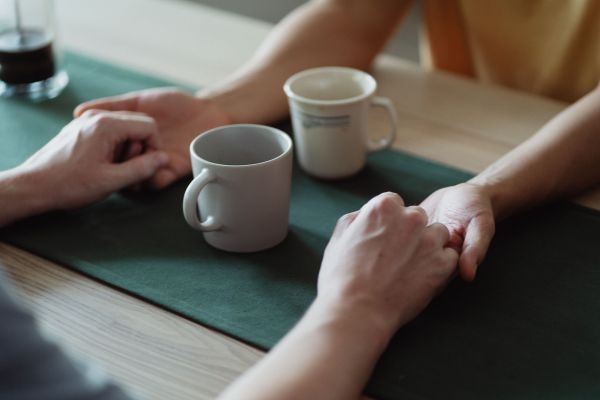
You can find a time when you’re both in a more relaxed state. Before you get into the conversation, the first thing you want to do is make sure you are seated next to the person. Hand on the leg or hand on their hand while you’re having the conversation. This causes a release of oxytocin, which is the neurochemical required for bonding.
If you are seated with a hand on someone, it is very hard to raise your voice. It is very hard to get dysregulated because it reminds you’re on the same team. The entire conversation, your hand, your leg, something needs to be connected and always seated. When you are standing, you are in either a fight or flight mode. The worst conversations happen when you’re standing.
You said next to each other. Are you looking at each other?
Yes. Ideally looking at each other, but a little more side by side, because if you’re facing someone directly that is more confrontational. You want to be seated next to each other ideally on a couch. Touching and maintaining contact.
A in the framework stands for affirm and ask. You always start by saying, “I want to remind us we’re on the same team. I love you. I appreciate you.” Something that puts you more in a relaxed state so you can approach the issue as it’s you and your partner versus the issue, not you versus your partner. You’ve got your affirmation and then they ask, “I noticed whenever we have a conversation, we have a pattern of doing X, Y, and Z. This is what I would like to happen instead.”
Making a very crystal clear ask of what your request is. You then ask them, what’s your experience when this occurs. That’s where the V comes in. V stands for view and validate. View their perspective. Remembering that you have two lenses of reality and it’s about understanding what’s their perspective of this issue. Once you hear their perspective, validation. This is the most important and most misstep in all disagreements.
Validation does not mean agreement. It does not mean I am wrong and you are right. Validation is simply the acknowledgement of the emotional impact that you may have had before and taking that accountability and saying, “I’m so sorry when that conversation hyped. I do X, Y, and Z. Here’s what I’ll do differently.” That validation is key so the other person can hear you. E stands for end with action. It’s getting very clear about, what is the behavior change that we’re both going to have moving forward for whatever the issue may be because it’s always both of you.
You are always playing a role. It’s never one person. Getting clear on, what is the one or two things that we’re each going to do differently moving forward and ending with a hug. Which seems so trivial, but there’s so much research and so much science to show. If you can have a 30-second hug at the end of that conversation, disagreement, getting to resolution, even if you didn’t fully resolve it. It’s going to downregulate both of you significantly.
They say 30 seconds is when the oxytocin is released.
It’s released even through touch, but the 30 seconds is when you are able to slow the heart rate down. If you are holding someone close enough or long enough, it changes the rhythm of your hearts and puts you back in sync.
A 30-second hug is a long hug.
The courage to be vulnerable simply means sharing your internal world. Share on XYou’re taking a couple breaths together.
I remember I was probably five years sober at the time. Me and my friend Ross would hug each other for 30 seconds. It’s a long time but that’s when the oxytocin gets released. This reminds me of Jefferson Fisher. He’s all about getting the defenses down.
This is exactly what this is. It’s very similar. The biggest thing for me, especially in this framework is about having the touch. Touch is so key. My husband and I have had so many funny conversations, like hard conversations. We’ve had a lot of them, but that’s how we’ve kept it clean. That’s how we’ve kept our windshields without smudges. Who knows how many hard conversations? I would never even call a single one of them a fight.
The reason is because we don’t let our emotions escalate. What has happened before is one of us will start to get activated. We’ll start to sit up straighter and I’ll say, “Hold my hand,” like absurdly. Almost a yell, then we both just start laughing because we realize how silly it is. We’ve been able to stay in this regulated state, even having some of the hardest conversations. That’s the thing. It’s not about never having these conversations. The faster you can have them, the more you practice that skill and build muscle, the better and easier your relationship becomes.
It’s like, “We’re on the same team.” Most things in life are not that big of a deal.
We make them way bigger.
We don’t need to make them a big deal. How can we work through this without making it a big deal?
That’s why you call it something small. Even if it’s not. It doesn’t matter. It can feel huge.
It is something small.
At the end of the day, our issues are not that big. Life is too short. Much so about how you frame it is everything. It’s about framing the conversation, the touch. All of that is just keeping you remembering that this is the person you chose. With that, just surrendering to the fact that you’re two different people. You are not going to have the same opinions, take on things in most cases. My husband and I joke a lot because we could not be more different.
Literally the only thing we align on is values. He is the ultimate extreme outdoorsman and endurance athlete, and former military. I could not be more intense and different than myself. I love to dance. I want to just stay indoors. Nothing we like is the same. We don’t like the same movies. We don’t like the same food. We don’t like the same thing. We are constantly navigating these conversations, but it’s a true testament to the fact that when you choose someone you choose so fully, you will be able to work through anything.
Her husband name’s Akshay. He’s going to be on the show. I think we’ve got him scheduled in a couple of weeks. I just remember the story how during COVID, he ran around your cul-de-sac for like 24 hours straight or something like that. I think your neighbors thought that he was a nutcase.
They still think that.
Identifying Patterns Of Friction In Couples
When you start working with a couple, how do you quickly identify the pattern they need to break and the real source of friction?
Many of the patterns that they need to break are around when they are each getting dysregulated. Coming back to those three buckets, unmet needs, unseen efforts, unresolved issues, where does the pain lie for them? quickly identifying, which bucket does it fall into? Now, let’s have a third party who is not going to take sides, help facilitate the conversation that needs to happen in that area.
What I find 100% of the time is that they have the same goals. They both want to feel more connected. They both want to feel loved. They both don’t want to have these issues. Even just bridging it quickly to, what are the core goals of our work together? The way that I work with people is my goal is to have them out the door in three months, which is very different from a therapeutic approach.
Mine is very much future focused, action oriented. We’re not going to dig into your past other than to do some basic forgiveness work, which is needed to clean the slate. Committing to allowing that person to be the best version of themselves and saying, “I’m not going to hold you accountable for your past,” which is easier said than done. Starting fresh from on, getting that mutual agreement and creating the new culture of the relationship. Oftentimes when two people come together, there’s no conversation about what you want our relationship to be like, feel like, or look like.
Building Relationship: Validation does not mean agreement. It does not mean I am wrong and you are right. Validation is simply the acknowledgement of the emotional impact.
We’re both bringing all of our baggage, all of our stuff from our previous relationships and assuming the other person is going to know. It’s about creating a foundation and a layer of understanding of, “This is how the culture of relationship is going to work.” Usually, that alone, just saying, “We are now going to every Sunday have a quick conversation if there’s anything that needs to be resolved.” It completely shifts the relationship.
The problem is, one partner can come in with a high degree of emotional intelligence, and know all the tools. Unless the other partner says, “This is the new culture of our relationship and how we’re going to operate.” One person’s trying to lead it and the other person is frustrated or confused. The person who’s very emotionally intelligent will say, “These tools don’t work.” When you can agree, this is the new culture of a relationship and get that agreement of where we want to head and what are our issues that we need to resolve. This is our framework for doing it. Issues resolve very quickly.
I’ve had clients literally on the brink of divorce that said they rate their relationship a 4 out of 10 and in three sessions, got to an 8 out of 10. It’s that fast when you can get that mutual agreement and the commitment to the new identity of we are people that resolve things. Usually, it’s one person dragging the other person along, versus both people from an objective third party getting to a commitment and agreement. This is how we’re going to move forward.
I like that. You talk about the identity of the relationship. We talked earlier about identity. I don’t drink. I don’t smoke. This is who I am, and that’s the same thing with the relationship. This is who we are. We work things out.
You both have to commit to that.
Both people have to agree.
It’s not just one person. It’s both partners. Even the way that I work with couples specifically. I have a different structure. I don’t meet with them every time. I meet with them as a couple, and then I meet with each of them individually, and then as a couple. The reason for that is when they’re just in the room with me, they will share way more than when their partner is there initially.
The goal is to get to a point where they can share everything they share with me when their partner’s in the room. Especially in working with other people who’ve dealt with pleasing people. The last thing you’re going to do when your partner’s there and eyes are on you is share what’s going on. I’ll meet with a couple individually, together, individually, together to be able to bridge that.
Do you find that when they’re meeting with you individually, they might be trying to convince you that they’re right?
Always.
It’s like, “I’m trying to get you on my side.” “No, I’m right. She’s crazy.”
My goal is to make them feel that I’m on their side. The reason for that is because if they feel like someone’s on their side, they feel braver to have those conversations. I never agree with them and say, “Your partner is crazy.” Not once. I don’t agree with that, but I create the space for them to be heard. Most of the time, just being heard is all someone needs.
Being heard and from there and saying, “Even if that is true, even if let’s say you’re correct, what can you do differently? Here’s what you can do differently to elicit the response that you’re hoping for.” The goal is that no one ever feels like I’m picking a side, especially when we’re together. Individually, that they still feel like they have someone who’s on their team.
Rebuilding Chemistry And Spark For Couples In Recovery
A lot of people in recovery are rebuilding a marriage. Others are learning to date sober for the first time. What can couples do to rebuild the spark in their relationship?
I love this. I’m a firm believer that you can have chemistry or a spark with just about anyone. I did not have the movie moment with my husband. We always joke that I was hoping it wasn’t him because I thought, “This man is nuts. He wants to ski across Antarctica? I am not signing up for this. This is everything that I thought I didn’t want.”
As I got to know him and through seeing that value alignment, we built a beautiful, deep sense of chemistry, connection, desire for each other but ours was a slow burn. We did not have the movie moment. In working with couples, too, not only from my own lived experience. When you’re looking at the neuroscience of what is happening in the brain, there’s three core neurochemicals that are being activated when you’re with someone, especially early-stage dating.
The first is dopamine, which is a reward system in your brain. That is activated through novelty, play and competition. When you are first dating someone, there’s a ton of novelty. Everything’s new. One of the most important things in long term couples is to have new experiences together and to operationalize it. Once a month, let’s say you switch off planning a surprise date. The anticipation of knowing that is coming creates a sense of dopamine.
Begin within. Start with getting clear of what outcome you want from the conversation. Share on XSimilarly, it doesn’t have to be these grand vacations. You can go for a walk in a park that you’ve never been in. You can take a different drive home. You can go for a drive together to a beautiful area. Thinking about how I can infuse novel experiences on a weekly basis is one of the foundations of that. The second neurochemical at play is oxytocin, which we’ve mentioned a little bit, but it’s the release of that bonding hormone. That is activated through sharing vulnerably.
When you share your internal world, you’re getting this huge dump of oxytocin for both you and your partner. Similarly, maintaining eye contact in moments of shared joy. It’s not just all about touch. It’s also about eye contact. It’s about presence, vulnerability. You can activate that. Oxytocin is also one that tends to drop long term with couples, especially when there’s been some breach of trust or anything like even going through a big sobriety journey. You’re going to feel disconnection. Disconnection means loss of oxytocin. Finding ways to infuse more touch, more play, are going to release both of those neurochemicals.
The third one is serotonin, which is the mood stabilizer. Serotonin is activated through sunlight, exercise, but also positive social interactions. The more playful, positive interactions you can have with your partner, the more serotonin is going to be increased. Thinking about it from even just a neurochemical stance, it’s about infusing novelty and play. All the things you had when you were dating someone early on, but operationalizing it as you get into a relationship because otherwise you can become roommates.
What I’m hearing you say is you’re essentially trying to go back to the honeymoon stage of the relationship.
Functionally, yes, but operationally. Knowing that you can keep that alive forever.
You’re extending the honeymoon phase.
This belief that you can’t have that forever is false. I’ve had the privilege of interviewing couples. My husband just finished co-authoring a book exactly about how to build a thriving relationship as a high performer. In our manuscript, we got to interview couples who’ve been married for 40-50 years. If you met them, you would think they’re on their third date because they’re just all over each other. There’s so much love. There’s so much touch. There’s so much play. It’s just proof that when you’re intentional, you can keep that alive forever.
Creating Authentic Chemistry While Dating Sober
For those who are single, is there a way to create real chemistry on dates, especially without alcohol in the picture?
As somebody who also started dating, my husband completely sober, and I have been on a lot of first dates sober. I would at least 50 of those dates were completely sober. It is about not doing the traditional date. Instead of just sitting across from somebody at dinner, go to coffee and then go for a walk in the park. Do something where you are physically active. You are moving. You are having some movement, and also having a couple of questions planned. Interesting questions.
One of my favorites early-stage dating questions is who do you admire and why? It doesn’t matter who they admire, but their reasons why will tell you that person’s values. Finding playful questions to ask ahead of time, not just going and saying, “What do you do for work? What did you do this afternoon?” Being thoughtful about having the types of questions that create interesting conversation.
Asking what people are inspired about, like what someone is inspired about presently, what they are working on, what they are passionate about. If you get people talking about things they’re passionate about, they’re going to associate that excitement and that connection with you. It’s about having interesting conversations and doing something a little out of the norm, even in those early dates.
I like hiking date. It’s a great one.
Make sure of someone a little bit because going out into the middle of the desert with a stranger, not 100% recommended. Maybe date two.
It can be a screening tool as well. It is, “Do you want to hike Camelback?” “No, I don’t want to hike Camelback.”
I went on a hike as one of my first dates with my husband.
I think a hiking date is a great first date.
It’s also terrifying as somebody who’s not a hiker, but it was great. I got the novelty.
Building Relationship: If you get people talking about things they’re passionate about, they’re going to associate that excitement and that connection with you.
If the hike goes well, then you can go for a bite to eat after.
Exactly. Also, daytime dates are not a bad thing. People think that they have to immediately do an evening date. It’s like going on a weekend brunch date or an afternoon date, especially if you’re concerned about alcohol being a normal part of the equation. Finding things like even going for a walk in a park is a wonderful date. It’s very romantic. You could go for a walk at sunset. There’s so many things that you can do that don’t involve alcohol.
Now it has to be at 5:00 AM.
You see how someone handles the heat.
That’s true, or we can go do a cold plunge.
Exactly. Go to like an Optimyze. Do a drop-in session and go do the whole circuit.
For sure. We are going to open it up to questions. The floor is open.
I’m not sure if I’m going to articulate this correctly. It’s in regards to being single and wanting to date. Is it necessary to find the spark within ourselves? I’m not sure if I’m asking the right question, but you did mention something about establishing very much self-centered in a good way and then finding connection elsewhere.
As someone who has had difficulty dating in the past, picking the wrong people, and failed first dates. All the things. How would you recommend moving forward? Would it be connecting with the self, first and then going out and connecting with others? Can you do that at the same time? What would you recommend?
I’m a big believer that you can do both simultaneously. If you feel that you want more time to just be with yourself and feel deeper connection with yourself, honor that. It’s about choosing what feels best to you. When I started dating, I had taken a break, especially after getting sober to reconnect with myself. There was a certain point where I said, “I want to try this,” because there’s some things that you can only practice in relation to other people.
I can tell myself I’m courageous all day, but until I get on that date, I’m not getting a chance to practice. There’s beauty in being able to both heal and work on yourself at the same time as you’re in relationships, similar to anxious attachment. For context, I had been cheated on by every previous partner until my husband. Every one of them. Every single one.
Did you find out about all of them?
Yes. Two of them left me for the people they were cheating on me with and they are married to them now. I’m happy they found their person. Genuinely, I can say that now. I am happy they found their person. When I came into dating my husband, I had a lot of baggage around being cheated on. I had been cheated on by my previous partner who had a hiking partner who was female. My husband is a big hiker. He had a female friend he wanted to go on a hike with and I said, “This is my stuff. This has nothing to do with you but I just want to share with you, I do feel some discomfort because of my past experiences.”
By me saying not that this is his fault, but acknowledging it as my past, he was like, “Thank you for sharing that with me. Maybe I won’t do this long hike with her alone,” but just knowing that, he was able to affirm to me like, “I am not those people.” We were able to work on that together. That is not something I could have healed alone.
That trust is not something I could build just purely by myself. Some of that work and that trust rebuilding happens in relationships. Being open to that. You can heal so much on your own. You can say you are great, then you get in the situation. All that predictive mechanism in the brain comes back. There is a lot of power to still dating.
One thing I would encourage you too, and this is something I had to do as well with a lot of bad dating experiences. I wrote a whole book on my dating experiences. It’s that, if you start treating every date as an opportunity to practice a skill for yourself, even if it does not go well. You will not feel like it is wasted time. My biggest issue was, “This is a waste of my time. What am I doing here? This isn’t my person.” I said, “I’m going to start using every day to practice a specific skill.”
For example, I want to practice asking better questions and being a better listener. I am curious if I can make this date so fun, even if the other person is so boring. I made it a goal to never have a bad date again. I am going to have fun even if I do not like you. Being able to come to every date with that approach of, “I am going to get something out of this for me. I am going to develop my skill,” made it so much easier to continue dating. I started to enjoy dating again.
Disconnection means loss of oxytocin. Finding ways to infuse more touch and more play are going to release those neurochemicals. Share on XI always joke that I got bummed out about dating around my 60th first date. I was that weirdo that also kept it in a spreadsheet. Around there, I made that conscious decision, “This is going to be fun. I’m going to have a good time and maybe someday I’ll write a book about it.” That’s exactly where things ended up. When you can approach dates as, “This is for me. This is my personal development. This is my gym.” Think of this as, “This is my training gym for relationships.” You’re going to have a way better time.
Modern dating has shifted to online app-based dating out of convenience, out of everybody’s busyness. All the things. If that hasn’t worked in the past, if whatever bad experience. It obviously is not a very great pool of people. A lot of catfishing, so on and so forth. What would you recommend for someone who is looking for the opportunity to find connection? Also practice those skills like, “I’m going to have fun no matter what. I’m going to practice X, Y, and Z no matter what. I don’t know if that would be possible if I’m picking from a very polluted pool. If it’s not app dating, what would you recommend?
I still recommend always using at least one app because it’s a tool. If you can treat it as a tool and also make it time out, because I know how depressing it can be to scroll on the app endlessly and then have conversations that go nowhere. What I would say is get in person. Make a point to be in a new environment every single week. That’s how I met my husband, Michael Roviello, funny enough.
The reason that I met my husband is I went to one of his workshops about how to do ice baths. I’d never done an ice bath before, breath work, and Wim Hof. I went there and I connected with him afterwards and I said, “I’m looking for a man.” True story. I was very clear about, “This is what I’m looking for,” but be willing when you go to these events to connect with people that are partnered, to connect with people that could be friends.
The biggest mistake people make when they go to events, they’re like, “I’m going to meet my person. I’m going to have this movie moment when I go there. I’m going to be so attracted to them. It’s going to be amazing.” No. Go there and make a point to get three phone numbers before you leave that could be friends because the people that go to the type of events you’re going to could know someone.
Also being honest about the fact that you’re looking for a partner, because there’s so much shame about saying you want a partner for some reason in our society, but that’s BS. I don’t think that’s how anybody should operate. If you don’t ask, you won’t get what you’re looking for. If you can operationalize and say, “Every week I’m going to go to an event where someone could be value aligned.” Go to health focused events.
If you’re looking for someone who doesn’t drink, also look for professional events and make a point to connect with at least three people before you leave. I had to get over my fear of talking to people because I was also chronically anxious talking to new people beyond everything else. The way I got over this was I spent six months where I did not allow myself to leave the gym unless I talked to three people.
What a horrifying experience, but the most amazing experience of building that muscle of courage. I even had one incident where I asked a gentleman to take his AirPods out so I could ask him how to use a bench. I didn’t have a good question. Have questions prepared to avoid humiliating experiences, but I will say, now there are great stories.
With meeting people offline, look up events and just commit to two hours a week. It doesn’t need to take up all of your time. Connect with at least three people before you leave. Not just people you’re attracted to, but anybody. You never know who has a friend, who has someone, and who knows someone. There’s so much beauty in that in person connection, but not ruling out the apps.
If anybody else has any questions? Remember a question that you have is probably a question that somebody else has. I’ve seen people come up to us at the end of the show and they say, “I had a question, I just didn’t want to ask it.” That being said, does anybody else have a question?
What I will say, too. This is an awesome moment to practice and build that muscle of relational courage to ask a question that maybe feels scary to ask. This is a safe room and a safe space.
Where can we find you?
Closing Thoughts And Unasked Questions
Before we get there, we will get there. I want you to talk about your book. I want you to talk about where people can connect with you. Before we get there, is there anything that I should have asked you that I didn’t ask you?
It’s not so much a question that should have been asked, but my biggest recommendation to everyone is to take that seriously. That inventory of those four types of relational courage that I mentioned. Which is the courage to be vulnerable, the courage to ask for what you need, the courage to ask for what your partner needs, and the courage to bring up issues to be addressed. Take an honest inventory for yourselves and say, “Which is the one that I’m going to commit to practice this week?”
I want each and every one of you to think of one small thing that you can do that’s going to help you build that muscle of relational courage. We can talk about it all day. You can think about it all day, but putting things into action is how we make measurable change. I’ll just say, as someone who was chronically anxious, probably addicted to alcohol, and had a lot of fear when it came to connection. It’s so much easier on the other side of that thing you’re afraid to do. When you’re able to build those skills is when you’re going to see incredible transformation beyond your wildest dreams in your life.
Accessing BRAVE Resources And Scripts
Where can people go to get the BRAVE scripts? Where can people go to connect with you, and learn more about you?
My last name now is quite hard to spell, but it’s at MelissaNanavati.com. It is where you can find my website to connect. It’s also my Instagram handle, if you want to connect there. I share a lot of free insights, information. In terms of the BRAVE scripts, it’s at MelissaNanavati.com/BraveScripts. On YouTube, it’s at @PeakPerformanceLove. The book is also called Peak Performance Love, but it won’t be out until later of 2026, but it has been a beautiful process of distilling down a lot of those concepts. I’ll definitely be sharing it on Instagram and everywhere on social media as soon as it’s ready.
Audience Support And Final Offers
Is there anything we can help you with? Anything you need from us?
The biggest thing that I love to see is just everyone implementing something they learned. That would be touching for me, to hear from any of you on Instagram or even shoot me a note privately on my website that you took away something and you did it. It’s that feedback loop of taking action and then getting the positive feedback loop that allows us to create change. For somebody who’s been in a lot of mental and emotional pain and distress, I know how painful that can be, but courage is your way through. Thank you so much.
Melissa, thank you so much for being here. I appreciate you. We appreciate you.
Important Links
- Melissa Nanavati
- Melissa Nanavati on LinkedIn
- Melissa Nanavati on Instagram
- Melissa Nanavati on YouTube
- BRAVE Scripts
- Optimyze
- Sober Girl Society on Instagram
About Melissa Nanavati
 Melissa Nanavati is a TEDx speaker, author, and relationship coach for executives and high performers. Her approach blends neuroscience, biology, and lived experience to help driven individuals build thriving relationships while pursuing big goals.
\After struggling with anxious attachment and alcohol misuse, and going on over 100 first dates before meeting her husband, Melissa became deeply committed to studying the neuroscience of connection.
In their first year of marriage, she and her husband raised $1.1 million for a world-first Antarctic expedition while running two businesses. Through all of it, their relationship remained the most peaceful part of their lives.
Melissa holds an MBA with a specialization in negotiation, spent 12 years teaching at the college level, and now translates that research and lived experience into science-backed tools that help high achievers navigate hard conversations, close energy leaks at home, and build secure, resilient relationships. Learn more at melissananavati.com.