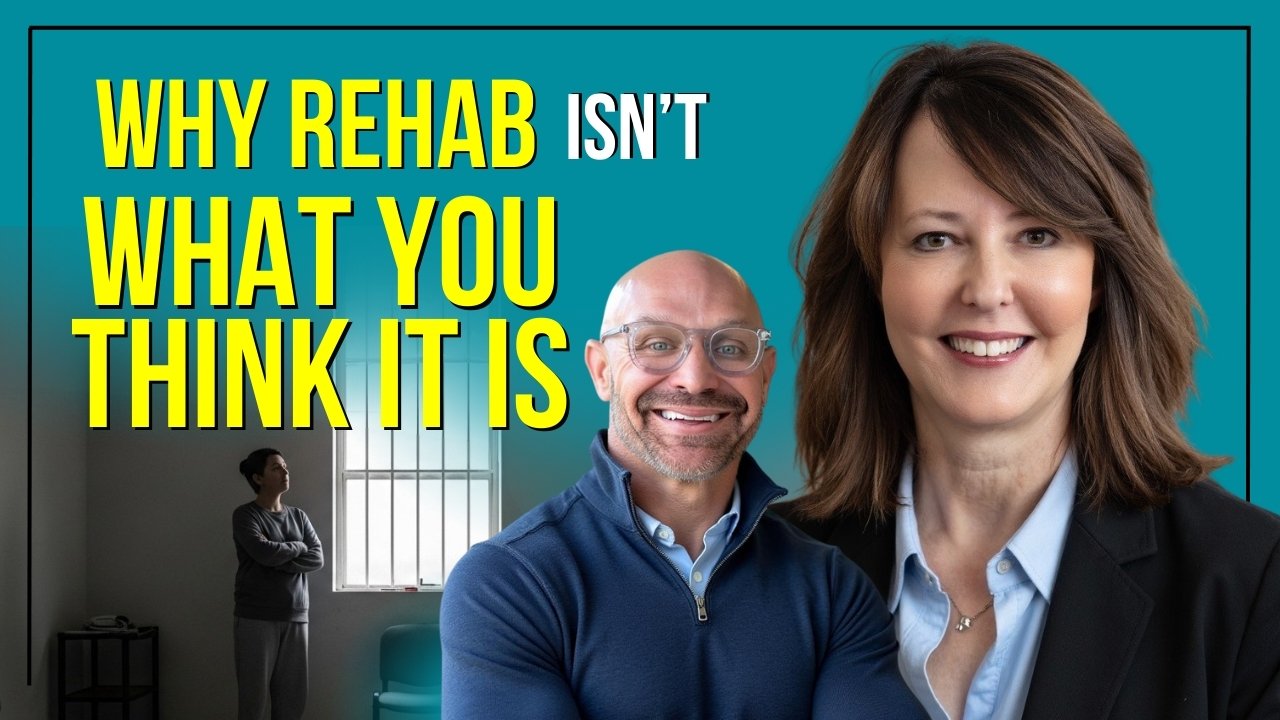
In this episode of I Love Being Sober, Tim Westbrook sits down in person with Jaime Vinck, President of The Meadows Behavioral Healthcare, to have an honest, no-hype conversation about addiction treatment and recovery.
Jaime is the author of The Rehab Playbook: Demystifying Addiction Treatment, a guide written to help people in treatment and their families understand what rehab actually does, why it sometimes falls short, and how to approach recovery with clarity instead of confusion.
Recorded live at Camelback Recovery Treatment Center in front of outpatient clients, this conversation speaks directly to people who are:
- Currently in treatment
- Early in recovery
- Returning to treatment after relapse
- Skeptical due to past treatment experiences
- Family members trying to help without causing harm
Together, Tim and Jaime explore why rehab isn’t a “fix,” how trauma and mental health influence addiction, what accountability really means in recovery, and why aftercare and daily structure matter more than motivation alone.
This episode also addresses common misconceptions about rehab, including:
- Why treatment doesn’t always work the way people expect
- How broken or poorly matched programs can impact recovery
- Why relapse is not a moral failure
- What ethical, effective addiction treatment actually looks like
If you or someone you love is navigating addiction treatment, recovery, or the decision to seek help, this conversation offers realistic hope, practical insight, and a clearer understanding of the recovery process — without shame, fear, or false promises.
—
Watch the episode here
Listen to the podcast here
Why Rehab Isn’t What You Think It Is
What People In Treatment And Their Families Deserve To Understand About Recovery
This conversation is a little different than a typical episode. We’re at Camelback Recovery with people who are doing the work of recovery. People who’ve made a courageous decision to be here, and many who didn’t come into treatment for the first time. Some of you have been through treatment before. Some of you have had experiences that helped, and some that didn’t. A lot of people carry questions like, “Why didn’t it work before? What’s different this time? How do I know if this is going to help me?”
Our guest understands those questions deeply. Jaime Vinck is the President of Meadows Behavioral Healthcare and Author of The Rehab Playbook: Demystifying Addiction Treatment. She spent her career not just treating addiction, but thinking critically about how treatment works, where it breaks down, and how we can do better for patients and for families. This is not a lecture. This is a conversation. We’re going to talk honestly about treatment, what it can do, what it can’t do, why it sometimes fails people, and how to approach recovery in a way that gives you a real shot long term. Jaime, welcome to the show.
Thank you, Tim.
I’m so grateful to have you here. We go way back. The very first time we met was at a conference, a lecture, or whatever it was when you were at Northside Counseling. It was a long time ago. I’m grateful to have you here.
Thank you. Thanks for the work you’ve done since then.
Acknowledging Past Treatment Experiences
Likewise. A lot of people here have been through treatment before. Some had good experiences, and some didn’t. Why do you think so many people leave treatment feeling like, “It didn’t work for me?”
Before we tackle the million-dollar question, I want to talk a little bit about the work that I’ve done and what my background is. I am a licensed professional counselor. I started working in treatment in 2004. I’ve seen it in all of its versions and have had every job in a residential treatment center on the therapeutic side. The question that you ask is a great one because I have spent a lot of time for years designing programs, looking at outcomes, working with regulators, and looking at the ethics behind treatment as well.
To answer that question, “Why doesn’t treatment work sometimes?” We have to take a big step back and look at what’s going on with someone from a whole person standpoint, mind, body, soul, and relationships. It’s very difficult in an abbreviated time frame to work on every single one of those components. I know the research tells us that 90 days of treatment and the odds of long-term sobriety increase by 60%. If we even look at 90 days addressing all of those components, it’s difficult to do.
The other piece that I’ve come to believe over 7 or 8 years is that a lot of folks go into treatment and don’t have the opportunity to look at their trauma. A lot of people don’t believe that they’ve got trauma. I know I didn’t until I went to survivors at the Meadows, where I learned the messages that I carried and the shame that I carried because of things that I went through as a child.
When we look at trauma, what that means to us, what it means in our family of origin, adult trauma, our ability to look at that, our ability and willingness to work on it, and the capabilities of a treatment center to address what we call the fire in the basement, your trauma. Those are all of the reasons why I believe people leave treatment and feel like it didn’t work.
The other interesting thing too is that oftentimes, in addiction treatment, we go through detox. We’re feeling good after that. We’re like, “I got this.” Maybe not. That premature feeling of, “I’m good. I can live my life without going through all the steps.” I’ve seen that bring a lot of people down, too. It’s a very long-winded question, too. There are myriad reasons why people don’t have successful outcomes.
I started Camelback Recovery with Sober Living. According to the statistics, more than 90% of people relapse within the first couple of weeks or within the first year of leaving treatment. If someone goes to Sober Living along with an outpatient, their odds of success increase significantly. One of the things that we did at Camelback Recovery was to get people to buy into three months of Sober Living, which was a good thing. To your point, people get to a point where they think, “I’m good.” The reality is that it’s not that you’re not good. You’re on your path, but more support is always better because you’re going to be triggered. It’s too easy to go back to your old ways.
That first year is so important. Clinically, if we can provide the scaffolding to get folks through that first year, then the odds of increasing sobriety over five years increase again by 75%. That’s why we love things like outpatient programs and Sober Living. Let’s work together, get that scaffolding, and get someone a year under their belt. A whole lot of possibilities occur.
Ninety percent of people relapse within the first year. People who make it to a year have a 50% chance of making it to five years. If you make it to five years, you have an 85% chance of making it for life. I remember when I celebrated five years of sobriety. Everybody said, “Congratulations. You’re no longer a newcomer.” I was like, “What do you mean?” That’s been my experience, being in the rooms and being around recovery. One year is the first milestone. After that, it’s five years. The people who make it to five years have to have a good chance of making it.
Everything you think you know about rehab is probably wrong. Share on X” via=”no”]People do get better. One of the reasons that I wanted to write this book is for people to understand. I get texts probably ten times a year from folks that I worked with years ago who say, “I’m good. Thank you.” Not to say everything’s been perfect and rosy, but they still have that sobriety. If there has been a slip, they’ve got the tools, and they’ve got the wraparound services so that a slip doesn’t have to become a full-on relapse. Staying connected to me is 95% of the battle.
Why did you write this book?
I started to write this book during COVID. I was working at a residential treatment center down in Tucson. We worked against all the odds to stay open during COVID. We kept getting new mandates, “You’ve got to close your pool. You’ve got to close your gym. You have to do all these things.” The phone was still ringing. People still wanted to come into our care. We all worked together very hard as essential workers to keep the doors open.
I’ve always been in love with the work, but I’ve developed a newfound respect and regard for my co-workers. I thought, “We’re just one place in Tucson, Arizona. This is going on across the entire country.” We know that during COVID, people didn’t get better. They got worse and needed more help. Virtual wasn’t always a fit for everyone. I started to interview people who were working in the field.
My first book was called The Treatment Team. It was written about the people who were doing the work in the 50 interviews that I did. I was going to self-publish and ended up being introduced to an agent who said, “You know a lot about treatment. We should redo this as a playbook because I just put my daughter in treatment. I had no idea what in the hell I was doing. I needed something like this to take me through the steps from someone who’s had the jobs and knows what to do.” I went back to the drawing board and wrote The Rehab Playbook: Demystifying Addiction Treatment.
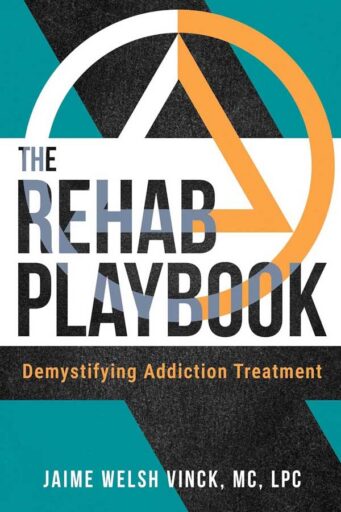
The Rehab Playbook: Demystifying Addiction Treatment
Who is this book for?
This book is for 1 in 10 people who need treatment. This book’s for the other nine.
How many people in the United States need treatment but don’t get it?
It depends on what you read, but millions. Between 20 million and 40 million, depending on what you read and what you believe. This book is written to talk to people who are struggling themselves and also their loved ones. In each chapter, I’ve got a section for fans and family to take the information that was shared and talk to the family members and loved ones about it. Oftentimes, it’s the people that care about us that are looking for help.
When someone says, “I’ve already tried rehab.” What do you think they usually mean underneath that statement?
They are ashamed. The fact that I’ve tried rehab and it didn’t work or I failed or the treatment center was crappy, or whatever we tell ourselves. Sometimes, that’s true. Not all treatment centers are wonderful, but I believe that there’s learning in every treatment experience. I don’t believe in failed treatment. I believe that when we look hard enough and close enough, there is something that was learned. When we build those upon one another, then we will have our breakthrough.
I’ve seen and heard people say, “I sent my loved one to treatment. It cost me $50,000, and they relapsed. It was a complete waste.” It’s not a complete waste.
We don’t know when someone’s going to get their miracle. There used to be a thing years ago in treatment. You’ll remember this. If someone AMAd or left against medical advice, a lot of treatment centers wouldn’t admit them back in. That never sat right with me. I always think, “If someone had a recurrence of their cancer or their heart disease, or any other chronic illness, would you say, ‘No, you can’t come back?’” We wouldn’t. I believe if someone AMAs and wants to come back to the same treatment center. That’s beautiful. That tells me they felt safe here, and you’re doing something right because it has the potential to be a sacred place of healing. Come on back. Welcome home.
How do you separate the two different groups of people, “Treatment didn’t work or I didn’t get what I needed?” What’s the difference between those two statements?
Nothing. I feel like when someone says, “Treatment didn’t work,” we get to flip that, reframe it, and look at what did work. As we were talking about how, in every treatment episode, there is goodness. First of all, you walked in the door. That’s something to be celebrated. It is to dig in and look at the positive aspects of the work that was done and the work that was undone. You’ve seen this countless times someone will leave treatment and go into an unhealthy family situation. It’s a setup for failure. There are a myriad of things that we can look at and say, “How would we have done it differently? Let’s do it differently.”
In every treatment episode, there is goodness. Share on XThat speaks to progress. It’s progress and not perfection. A relapse doesn’t mean that you’ve failed. You could say it’s two steps forward and one step back. I remember when I had Brandon Lee on the show. He says, “I’ve been in recovery for eleven years.” He stumbled a couple of times. He relapsed a couple of times. Only because someone relapses doesn’t mean that all of the work they’ve done didn’t do anything.
That can be a tough sell to family members, but to realize that, if someone relapses, if they pick something up again, and then they seek help. That to me shows that things did work. I do look at that as a slip rather than a full-on relapse.
They’re on the path.
There’s work yet to be done.
What Treatment Is (and Is Not)
What do you think treatment is realistically designed to do? What do you think it’s not designed to do?
Treatment is not designed to be the silver bullet that’s going to fix anyone. First of all, what it is designed to do is to provide stability and with residential treatment, detox, and the wraparound services to provide safety. We all know that by the time someone often asks for help, they’re close to death. We’ve got to keep that in mind and to know that step one is safety, both physical and psychological safety, and to begin to provide the tools for repair wherever that repair needs to happen. We talked about mind, body, and spirit.
There’s a lot more to it than just stopping the drinking and stopping the drugs.
That’s why it’s so important, the point I made a bit ago about people who will go through detox and say, “I’m good.” You’re not.
There’s a lot more work that needs to be done. Why is it dangerous for people to come into treatment believing this is supposed to fix them or change everything overnight?
It’s because of unrealistic expectations. Expectations aren’t good. What does the big book tell us? That’s future resentments. I’ve seen so many people walk through the doors of treatment and believe that in 30 days they are going to have this wonderful and beautiful life. Certain components will be wonderful and beautiful, but to say we’re fixed implies we’re broken. We’re not broken. We have a chronic disease that has impacted our brains, but we’re not broken. We don’t need fixing. We need healing and tools.
It’s a journey. You mentioned trauma earlier. Do you believe that trauma is at the root of all addiction?
Yes. I don’t even need to think about that one.
Even if you think it’s not there.
I tell this story and it is in the book that I wrote. I used to tell it in groups. When I was in graduate school, I went through a trauma certification. We all had to do our trauma timelines. I don’t know if you do something similar here. We talk about all of the trauma in our lives. Some of the stories were heart-wrenching. People have been through hell on earth. Another one of our students said, as she did her trauma timeline. When she was a senior in high school, she ran for president and lost. That was heartbreaking to her. She considered that her trauma.
One of the other graduate students said, “You are pissing me off. I went through all of these deaths, sexual abuse, and this and that. You went through that? How dare you?” I’ll never forget it. Our professor said, “You stop because everyone’s pain is maximum. If you’re going to be any good at this work, you need to come in with an open heart and an empathetic spirit to say that it had an impact on your nervous system. It created shame. It impacted the way that you show up in the world.’ Let’s get to healing.” I never forgot that.
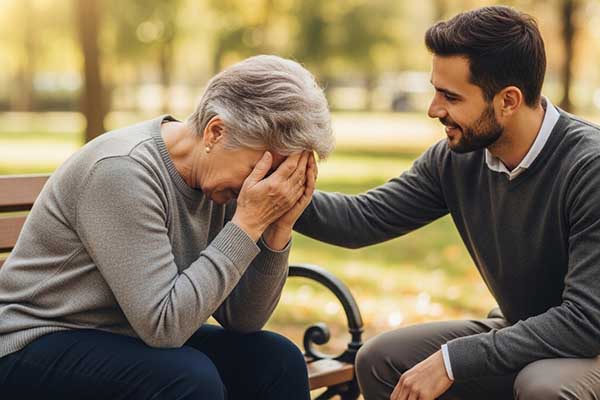
Rehab: Everyone’s pain is maximum to them. You need to come to them with an open heart and an empathetic spirit.
How important is it for someone to acknowledge that they have trauma in their past?
It’s 100% critical because what is trauma? It’s something that impacts our nervous system. We all carry our trauma in every place we go. When we have trauma that has impacted our nervous system, and again, everyone has a different type of trauma. It’s there. It’s in our body. We carry it. Our body also doesn’t know that we’re safe when something triggers us. We don’t know what’s going to trigger us either.
It is to be able to recognize that and to say, “That’s an old wound. That’s something else that’s going on in my body.” It is to be able to have tools to calm yourself and to say, “This isn’t that.” I use that all the time so that I can remind myself that whatever I’m feeling, we understand how our trauma shows up in our body. We can say, “You’re safe.” This isn’t to say all is well.
They say awareness is 90% of transformation. Being aware that you’re being triggered is like, “Let me sit with that. What’s going on?”
It manifests in different ways. Some people get angry. Some people shut down. Fight, flight, and freeze. The one that they use now is fawn. When we’re triggered, we either fight, flight, freeze, or fawn. I’ve thought a lot about that, where you see people who are overly nice, overly complimentary, and overly approval-seeking. That can be a manifestation of trauma, too. It’s a way to create safety. Understanding where trauma shows up in your body is so important. It helps us be in relation to others.
Trauma, Pain & Why Substances Made Sense
How important or do you think it’s important at all, for the families of the loved one to acknowledge that they have experienced trauma?
It’s critical. It’s anything that we can do as a family system to move the focus off of the identified patient, that you’re the problem, and to look at it as we know the system that a family is.
Moving on, trauma, pain, and why substances made sense. Many people here use substances to cope long before they ever thought of it as an addiction. How do you explain that without excusing the behavior?
We’ve all got something. We’ve all got a coping strategy. It helps us get through the day. They’re all good until they’re not. It is to be able to look at substance use, porn, gambling, shopping, or anything that we do to help us cope and to be able to understand when it becomes unhealthy and why. It’s to be able to replace those unhealthy coping skills with healthy ones.
What’s your definition of addiction? Do you have a definition?
I have an understanding of it. I would say that it is utilizing unhealthy coping strategies in spite of negative consequences. I wouldn’t even say coping strategies.
One of the definitions I’ve heard is a behavior or substance that you continue despite negative consequences. It’s pretty basic.
That says it all. It applies to everything, whether it’s gambling, shopping, sex, relationships, or all of the above. This is such an interesting phenomenon. When we treat one, when we get sobriety in one, then something else will wear its head.
It’s any behavior. It was many years ago when TikTok came out. I remember looking at TikTok to help me go to sleep. I remember looking at TikTok, and next thing you know, it’s three hours later. I lose sleep, and I feel terrible the next day. That could be considered a negative coping strategy.
It’s not correct to say digital addiction anymore, so misuse or overuse. It’s a whole interesting point of view when you look at TikTok, Tourette’s, and all these different syndromes that have been created, and Instagram. At Meadows, we have a sex addiction program. We go into OnlyFans and all of those things, and the impact that that has on folks and the addictive nature to it.
For people who don’t identify as traumatized, how do you help them understand why their nervous system still matters in recovery?
To talk through the definition of trauma and to break it down into any time that we have felt threatened that we believe our physical safety and psychological safety are threatened. That can be trauma.
What happens when someone tries to stay sober? They get sober. They go to treatment. They try to stay sober without addressing the trauma.
What I’ve always thought is that I’m a big twelve-step advocate. The research shows us that twelve-step and cognitive behavioral therapy are the secret sauce. That’s what we need to do. We’ve got the community. We have cognitive work. What we don’t have with that is the body work. That’s top-down. Not bottom-up. When we work bottom-up, that’s where we can deal with the sensations and the things that we may not understand unless we do that work.
Accountability Without Shame
A lot of people hear the word accountability, and they think punishment or shame. How do you define accountability in recovery?
To me, accountability as a human is to do what you say, say what you do, and be in truth. This is true in recovery, but it’s also true as humans. The most dangerous thing we can do is lie to ourselves and to be that rigorously honest human. That, to me, is the essence of accountability.
The most dangerous thing we can do is lie to ourselves. Being rigorously honest is the essence of accountability. Share on XIt’s doing the next right thing and doing what you say you’re going to do. I believe, and we see people, that if someone breaks the rules at our treatment center and then they break the rules again. Letting them continue to break the rules is probably not going to be helpful, not only for the rest of the patients at the center. It’s not going to be helpful for them either. Can you speak to that? Why is that not helpful to hold someone accountable?
It’s not helpful to them because it rubber stamps poor behavior. The only way that we can embrace change is to have our positive actions reinforced. If we reinforce negative behavior and there are no consequences, then we’re told this is okay. That, again, will not be something that will move them toward healing.
It does set a horrible example to the other folks. When someone repeatedly breaks rules, I want to know why. To me, that’s not a disciplinary matter. That’s a clinical matter. That would be a very long talk between my client and me. Why don’t you deserve to live? Let’s go right to it. What are you doing? Why don’t you deserve to live? Help me understand that.
Why are you sabotaging yourself?
At the end of the day, I tended to be very dramatic as a therapist. We state the worst consequences. When we do self-sabotage repeatedly, we are jeopardizing our lives. What about this experience do you think you don’t deserve?
How can treatment help someone take responsibility without reinforcing the belief that they’re broken or defective?
By believing they deserve it and that they’re walking in the door because they deserve repair. They deserve healing. That’s the basic work. Why are people not ready for treatment? First of all, if you look at the whole stages of change, they haven’t gone through what they needed to go through to believe that they need to change their life. To me, embracing that, “Maybe I’m going to look at life in a different way,” is very different than saying, “I’m broken.”
In my opinion, it’s the belief that I’m worthy.
All humans have inherent value, including myself.
If someone has their limiting beliefs, it’s “I’m not worthy.” It took me a long time. I’ve been sober. I’m coming up on fifteen years.
Congratulations.
Thank you. March 8th is my sobriety birthday. I’d say it’s been a journey. I wasn’t worthy of everything right away. I can say that I’ve become more worthy. It’s the belief in myself that I am worthy. How important is it for someone to believe that they’re worthy, and how did they get there?
It’s one of the most important things. We get there by doing work on our shame. There’s so much shame that goes along with addiction, depression, anxiety, trauma, and all of it. We have a shameful core. As we fill in that shame core, and we don’t have the opportunity to empty it, that’s where that lack of inherent value and worthiness comes in.
I would also say that if my behavior is aligned with my values, then I’m going to feel good about myself. I’m more likely to feel that I’m worthy. If my behavior is not aligned with my values, that’s the lying, cheating, and stealing, then that’s the stuff that eats away at my core.
In the repair, a lot of it is relational because when we’re in our disease, we do things that impact others. As part of the twelve-step and as part of family healing, to be able to make amends and for both parties to do like, “Here’s what I regret. Here’s what I resent. Here’s what I appreciate. Here’s how we move forward.” That is such an essential part of worthiness and so often to know that you are loved.
Families, Expectations & Pressure
When is it time for someone to go out and start making amends to their family members?
We do it in residential treatment. We begin that process. You can’t begin that work without psychoeducation for the family members, so that they understand. My loved one can’t just say no. This isn’t a choice. There’s a lot of education from a neuroscience and addiction standpoint that I believe needs to happen with loved ones before we can sit in chairs like this and talk about what we regret and what we resent. We’re not letting anyone off the hook. It’s educational, and it’s so important
It’s a process. What about the family member who says, “When is my loved one going to make amends to me? They’ve been through treatment. I’m ready for them to apologize. I’m ready for them to take responsibility.” I’ve seen that, too. It’s a process. What do you say to that family member?
What are you doing? What’s your work? Tell me about the work you’re doing, and then let’s dig in and figure out why that is a priority at this moment. I’m going to let you know when your loved one is ready to do that, but now let’s talk about what you’re doing.
I love that. How often does the family play a part in where the addicted person is?
Addiction and all mental illnesses are family diseases. They impact the entire family. Without any blame, shame, or finger-pointing, it’s all part of this whole ecosystem. Understanding the role everyone plays is essential in all family systems. The other point I wanted to add about what you mentioned, and I talked about this in the book, is the stages of change for family members. We all work with a stage of change model. I don’t know if you’ve got it on the wall here. Most treatment centers do. There’s pre-contemplative, contemplative, action stage, and then maintenance.
Anytime we want to make a change, there are various stages of readiness or preparedness. That’s true for families, too. In our perfect world, our loved one and our family members are in lockstep in a stage of change. That’s pretty rare. For a family member to look at their stage of change and how ready they are not only to change the identified patient but to change themselves is an essential part of the work.
When someone slips or relapses, what’s the most unhelpful way to interpret that? What’s a more useful way?
Is this for a family member or for the person who slipped?
Both.
For the family member, the worst thing we can do is finger-pointing and to make it about ourselves and say, “Do you know how much this hurts me? Do you know how much money I spent on you? If you loved me, you wouldn’t have done that.” Take yourself out of the equation. That’s the first thing.
For someone who has been through treatment and may have relapsed, not to completely let themselves off the hook because we don’t want that. That can get dangerous, but to say this can happen. Get back on your horse. Reach out to someone. It doesn’t mean you’re a failure. It doesn’t mean it’s over. It means that we need to look at things a little bit differently. Seek help. You’ve got people that care.

Rehab: Relapsing does not mean you are a failure. It means you need to look at things a little bit differently and seek help from people who care.
What do you say to the patient who relapses and doesn’t take any responsibility for the relapse? Meaning they’re the victim, essentially. They say, “This happened. The treatment center did this. The house manager did this. The BHT did that. My dad did this. My mom did this. It’s all external. It’s not my fault. You would relapse too if you had to experience what I’ve experienced.”
That’s someone’s disease talking loud and clear. That’s a relapse trigger. Something that we look for is treatment trashing. It’s when someone says, “I didn’t like my counselor. The food sucked. The beds were awful.” When we start looking at the negative of the treatment experience, and then we go to other relationships, that’s the disease talking. It is to call someone out on “We’ve heard plenty from your disease. Let’s talk to you. What’s going on here? What are you afraid of?”
It’s the responsibility because if I’m a victim, I played the victim before it. I have no chance. I got a look in the mirror. Where was I wrong? What was my part? What am I going to do differently next time?
What’s the payoff? I believe that none of us do anything without getting paid in one way or another. For victims to call them on their secondary gain, what are you getting out of being firmly placed or planted in your victim seat? You know the Karpman drama triangle. I have that in the book, too. When someone digs in on being a victim, they’ve got someone else that they’re appointing as a rescuer and someone else that they’re appointing as a persecutor or a perpetrator, even. What’s your payoff here? What’s your primary and secondary gain from being so stuck?
Let’s talk about aftercare and daily life afterward. Why aftercare and daily life matter more than motivation? Why do you think people feel strong in treatment but struggle when real life happens?
Outside the bubble. A lot of treatment centers don’t even allow electronic access. That’s great. That’s that psychological and physical wraparound we talked about to create safety, which has to happen. As we dip our toe in the real world, we have to deal with things like the voicemails from our dealer and all these other things that we have been able to externalize for the time being, one by one. That’s why I love outpatient programs where we can dip our toe in the real world and then still work with clinical support to look at all these things. We’ve got to titrate our involvement in the outside world.
What does recovery look like outside of treatment to stay alive, especially early on?
Can I shoot for the stars in a perfect world? I would like to see people go to PHP. If they don’t have a lot of recovery capital in their home, if they’re not safe in their home, or if they don’t have a supportive family, then go to a transitional living and then work a 12-step program. If you went to a residential, stay connected through the alumni services.
Alumni services are beautiful. Usually, there’s no cost. There’s an app to provide support. There’s a lot of goodness in alumni. Staying connected to your place of healing, your sacred space, and then continuing the work for yourself and your loved ones in a continued care program for a year, if possible. That, to me, is what it looks like.
Let’s say, for example, someone is from another state. Maybe they’re from California. They come out to Arizona. When is it appropriate for them to stay in Arizona? When is it appropriate for them to go back home to California?
I believe if they’re triggered in their home environment, the people, places, and things, then keep a distance, emotional distance, and physical distance. Some people need to go home for a variety of reasons. Our job is to help them build the recovery capital to succeed at home.
In my opinion, stay away from your environment as long as you possibly can because the path of least resistance is to go back to doing what you were doing. It’s like new hobbies, new interests, new playground, new playmates, new eating habits, new sleeping habits. Everything’s got to change. When you go back to your old environment, it’s too easy, especially if you become triggered. You will become triggered at some point. It’s too easy to go back to your old behaviors.
If possible, that’s the desired impact. We work with a lot of professionals. That’s not possible. I’ve always done a lot of work with flight attendants. I know you met Heather, who was here. They’ve got to be back on an airplane, serving alcohol. That continued care plan looks completely different than someone who’s able to stay on the other side of the country from their old life.
The Role Of Routine, Relationships, And Environment In Recovery
What role do routine, relationships, and environment play compared to motivation or willpower?
I don’t even care for willpower. Willpower is good if we’re talking about having an extra cookie or something. When it comes to wrestling with a chronic disease, willpower is not going to cut it. Motivation, yes. Motivation is hope. It’s hope that I can have a different way of doing things. I can have a different life. The three things that you said are top of the list because those will help us address the people, places, and things that are triggers.
Dr. Ben Hardy wrote a book called Willpower Doesn’t Work. The environment always wins.
Again, this isn’t a matter of willpower.
It’s taking action, doing the next right thing, and putting yourself in a good environment, in positive relationships with people that you want to be like, people that support your recovery, and people that don’t promote the old behaviors.
It is allowing your nervous system and your brain sufficient time to heal, because our brains will heal. Our bodies will heal. There is reason to hope, but it takes time.
There is hope. We’ve seen lots of people recover. Recovery is possible for everybody. Many people feel pressure to get it right this time for their families. How can that pressure interfere with recovery?
You said it, because it’s for their families rather than for them. We cannot do this for someone else. We’ve got to do it for ourselves. That goes back to the worthiness, the inherent value that you deserve to live a different way. Your families will benefit, but they can’t be the main reason you’re doing this.
I remember when I first got sober. My now ex-wife said, “I’m leaving you. The only way I’ll consider taking you back is if you never drink again and you go to rehab.” That’s what I did. I got sober. Six months into my recovery, she said, “You’re not even doing this for me. You’re doing this for yourself,” which is the only way it’s going to work.
We ended up going in separate ways, which I believe was the right thing to do. Regardless, it speaks to the fact that that’s why it worked. It’s because I did it for myself. I’ve never relapsed, which is rare. I believe it’s because I took all the suggestions. I did everything that they told me to do. I did the work, and I did it for me.
I wholeheartedly agree with that. This is an important time not to be selfish and self-centered, but self-focused.
Love yourself.
Love yourself enough to live a different way and connect to a higher power. I don’t care who or what it is. To believe that something is greater than you or is bigger than you is an important piece of it, too.
What do families often misunderstand about what someone in early recovery truly needs?
I’ve seen so many folks with the best intentions believe that they can do it for their loved one. Many family members are hanging on for dear life because they don’t want their loved one to die. They think they can hang on and control someone into sobriety. It doesn’t work that way. One of the biggest mistakes that I’ve seen is control.
If families are tuning into this later, what’s one thing you’d want them to stop doing and one thing you’d want them to start doing?
I would like them to stop making it about themselves and stop thinking about how this impacts their lives. I would love for them to start by thinking, “From a negotiable and non-negotiable standpoint, here are things that are non-negotiable with me, behaviors that I’m going to say, in a very not confrontational but care-frontational way. If you do 1, 2, and 3, then I will take care of myself and ask you to leave, or I will leave this relationship.” I’ve seen that be effective so that everyone understands right away.
These are the boundaries.
I realize I have said things that could be interpreted as contradictory, to know that this is what your loved one needs to heal. These are boundaries that you can have. A loving thing to do is to set boundaries with someone rather than to try to control the hell out of them. I’ve worked with families that are like, “I’m going to take your keys. I’m going to measure the gas in your car. I’m going to read your phone. I’m going to do all those things.” They’re done out of love, but they’re done to make you feel better. Those aren’t the things that are going to help your loved one grow.
Set boundaries with someone rather than try to control the hell out of them. Share on XI have a few more questions, but I also want to open it up to questions from the group. The floor’s open. What questions do you guys have?
You mentioned the recovery statistics and how they progress over the years. How does that differ between someone who’s seeking treatment for mental health-only reasons, versus someone who also has a substance abuse problem?
The numbers are very different. I haven’t seen any numbers on mental health only. I’ll tell you why. It’s because the range in people seeking mental health treatment is so broad that it’s difficult to capture those statistics. We would need to narrow it down a little bit more to see what the diagnosis would be, what the treatment plan was, and those kinds of things.
Is there any information, statistic-wise, on holistic treatment combined with clinical treatment?
Yes, definitely.
I definitely feel like maybe that’s a missing component that I haven’t seen with recovery.
That’s becoming more accepted, to be honest with you. There was a time that people would have looked at things like acupuncture, even neurofeedback, massage, and anything that is more holistic in nature that helps us with our bodies as woo-woo shit. People didn’t have much respect for it. We’ve always known that we heal mind, body, and spirit. The integrative piece is getting more attention, and more research is coming out on it. We’re in their infancy in measuring that.
I know that this could probably cross a boundary with clinical treatment, but identifying the need to be accepted and how an approach where you can say to a patient, “You are loved,” integrate that, and ingrain that in the patient’s mindset would be impactful. When you feel accepted, not judged, and loved, I know it’s crossing some type of clinical boundary by telling a patient, “You are loved,” or, in that regard. They would have a better success rate. Wouldn’t you agree?
One hundred percent. I’ve got two different answers to that. The first one, I work at the Meadows. We are rooted in the work of Pia Mellody. She was the one who began the developmental childhood trauma plays a part in all of our lives, but so much of that is to believe in our inherent value. Every child comes onto the planet with inherent value. Where the problems occur is with developmental childhood trauma.
There’s a variety of symptoms and things we come to believe in ourselves, and shame we carry. I couldn’t agree more that the fact that we all have inherent value and worth and deserve to be loved. That is 100% the essence of any good clinical care. I have no problem telling a patient that I work with that they are worthy of love and that I feel love for them as a human. That’s the first part.
The second part is where you’re spot-on. If we look at suicide research, we know that the number of people who die by suicide in early recovery is extremely alarming. Our suicide statistics are going up in the country. One of the protective factors is the feeling of belonging. A risk factor is when we don’t belong. When we can create an environment where someone belongs and feels part of, then that is sometimes enough.
I have one more because you brought up something that’s close to home. Is there something that could be a communal offset to recovery, where there’s a community program where people can converge, see their fellow peers that are in recovery, and make that transition without having to do Sober Living perhaps? They may have a mentorship program and not necessarily for people who don’t find that particular path aligned with their personal belief system.
There are a number of different options out there. I’m happy to send Tim additional resources. There are different alumni associations and all sorts of different things. There are folks that 12-steps don’t resonate, and we’ve got to find a different approach. Creating that feeling of community and belonging is so important. Thank you for those questions.
Hope That’s Honest
I know you said about people relapsing and stuff like that. What would you say to a person who has been in a lot of treatment centers, 10, 20, or 30 times? Someone who’s continually failed or screwed up and relapsed a lot of times. I was wondering if you thought there was any difference.
First of all, don’t give up. I’ve seen plenty of people get it on their 31st time. To look at each episode individually and collectively, and to see where a different choice could have been made. The main message is don’t give up.
I’ve been in a lot of treatment centers. It gets harder because you hear a lot of the same things, and you’re like, “Why do I keep running into a wall?” I hear that a lot. Don’t give up. I feel good this time around. It’s in the back of your head. When you’ve been in treatment a lot of different times, it’s just like, “When’s the other shoe going to drop?” I’m curious about your thought on it.
It is to look at every episode, what your continued care looked like, where you could have turned left instead of right, and also what you learned each time. That’s so important. Tim touched on this, too. There’s no such thing as wasted treatment. If you allow yourself to use those as a scaffold to look back on what you learned and how you grew from it is important as well.
Any other questions? Let’s talk about hope. For someone here who’s thinking, “I hope this works, but I’m scared to believe it will.” What would you say to them?
I would say I’ve seen it work. Keep doing the right thing. Also, understand there’s such a personal dimension to hope to know what works for you because we all have a different path. It is to be able to keep your own path and to know, “I will do these things that I know are the treatment recommendations. I’ve got to do that.” It’s also to understand what will give you hope and what are things that you want to get out of this, and to keep relentlessly working your plan for hope.
I’m thinking of the statement, “Your best thinking got you where you are now. Your best thinking is not going to get you out of here, so it’s probably a good idea to take suggestions.”
I’m a big fan in the therapeutic alliance. I’m a therapist, but to have a therapist that you trust that will call you on your bullshit but believes in you. When you can’t have hope, let your therapist give you some hope. When you don’t feel loved, let them love you. If you don’t believe in God, let them pray for you to their God, whoever that may be. That therapist and that therapeutic alliance are everything. If you don’t have it, keep looking for it.
What does real progress and recovery look like, especially for someone new in their first 90 days?
Real progress looks like peace, acceptance, where that fear dissipates, and the confidence one day at a time. That’s what it looks like to me. I see real peace in people. Not that halo effect that we get around day twelve and fifteen, but true peace, where we’re like, “I can feel all this shit, and it’s not going to kill me.” That is what is beautiful.
What gives you genuine hope, especially after seeing so many people recover? People who have gone to treatment 10, 20, and 30 times. What gives you hope after all these years working in this field?
I get a text 12/12/12. I’ve got a client who was dead from an overdose. His mother was with him and begged the paramedics to give him one more shot with Narcan and to keep doing CPR. He came back and 12/12/12 is his sobriety date. He never misses one to text me. I worked with him, his mother, and then his wife. I know these things can work. That’s what gives me hope. We’re coming out with new technology and medications.
The adverse childhood experience study was extremely liberating because we know that the research shows us that adverse childhood experiences impact our trauma, our bodies, and the way that we live our lives. When we stay alive one more day, the hope is that there will also be new things that will help us heal. There’s TMS and a lot of good research around TMS. Years ago, there wasn’t the acceptance of medication, except for assisted treatment therapies. Every day, we learn something new.
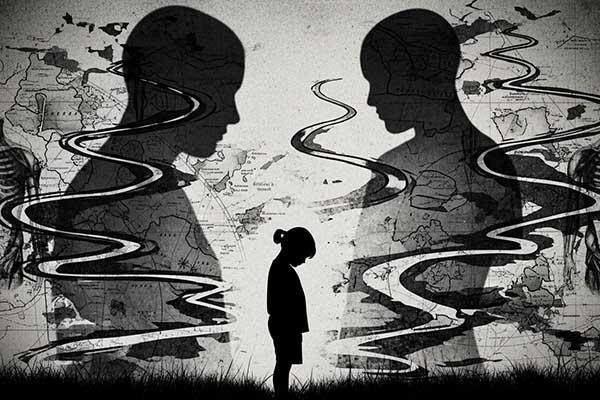
Rehab: Adverse childhood experiences impact our trauma, bodies, and the way we live our lives.
How connected the mind, body, and spirit are as well.
It’s huge.
I have a guy that I see. His name’s Wes Kress. I go there for a workout, but he’s more of a therapist. He does acupuncture as well. When I tell people I go and see him, they’re like, “What does he do?” It’s like, “It’s a workout, but then also it’s like talk therapy.” It’s physical, emotional, spiritual, mental, and all of the things. My experience in recovery is that the physical taps into the emotional, mental, spiritual, and all of the things. There’s more evidence that supports it now.
To be able to do something to move is so important to healing our bodies and our brains.
Doing a cold plunge.
Anything.
Discussion Wrap-up And Closing Words
We’re coming to the end. By the way, Jaime brought books. There are books in the back here for everybody, a copy of her Rehab Playbook. Thank you so much for that.
You’re welcome.
Is there anything I missed, anything that I should have asked you, or anything else you want to mention?
I don’t think so. We covered all of it. I appreciate all of you being here.
How can people learn more about you, get connected to you, and so forth?
My information is in the book. I believe they have my email in here. Feel free to reach out.
Jaime, thank you for meeting people where they are, not where they wish they were. For everyone here, I want to say this. Being in treatment doesn’t mean you failed before. It means you’re still willing to try again and that matters. Recovery isn’t about getting fixed. It’s about getting honest, getting support, and learning how to live differently one day at a time.
Amen.
Jaime, thank you.
Thank you.
Important Links
- Jaime Vinck on LinkedIn
- Meadows Behavioral Healthcare
- The Rehab Playbook: Demystifying Addiction Treatment
- Recovery Through Relapsing With Brandon Lee – Previous Episode
- Willpower Doesn’t Work
- Pia Mellody
About Jaime Vinck, MC, LPC, NCC
 Jaime Vinck, MC, LPC, NCC is the President of Meadows Behavioral Healthcare and a nationally recognized leader in addiction treatment, mental health care, and trauma-informed recovery. With a clinical background and executive leadership experience, Jaime oversees residential and outpatient treatment programs while helping shape ethical, evidence-based standards across the behavioral health industry.
Jaime is the author of The Rehab Playbook: Demystifying Addiction Treatment, a practical guide written for people in treatment, individuals early in recovery, and families navigating the often confusing world of rehab and addiction care. Her work focuses on clarifying what treatment can and cannot do, addressing trauma and co-occurring mental health disorders, and helping families make informed decisions without fear, shame, or false promises.
As a Licensed Professional Counselor (LPC) and National Certified Counselor (NCC) with a Master of Counseling (MC) degree, Jaime brings both clinical insight and systems-level leadership to her work. She is known for her thoughtful approach to accountability, relapse prevention, family involvement, and long-term recovery outcomes.
Jaime Vinck is also active in advancing best practices in the field and has served in national leadership roles, including with the National Association of Addiction Treatment Providers (NAATP). Her voice is respected for bridging the gap between compassionate clinical care and responsible treatment leadership.