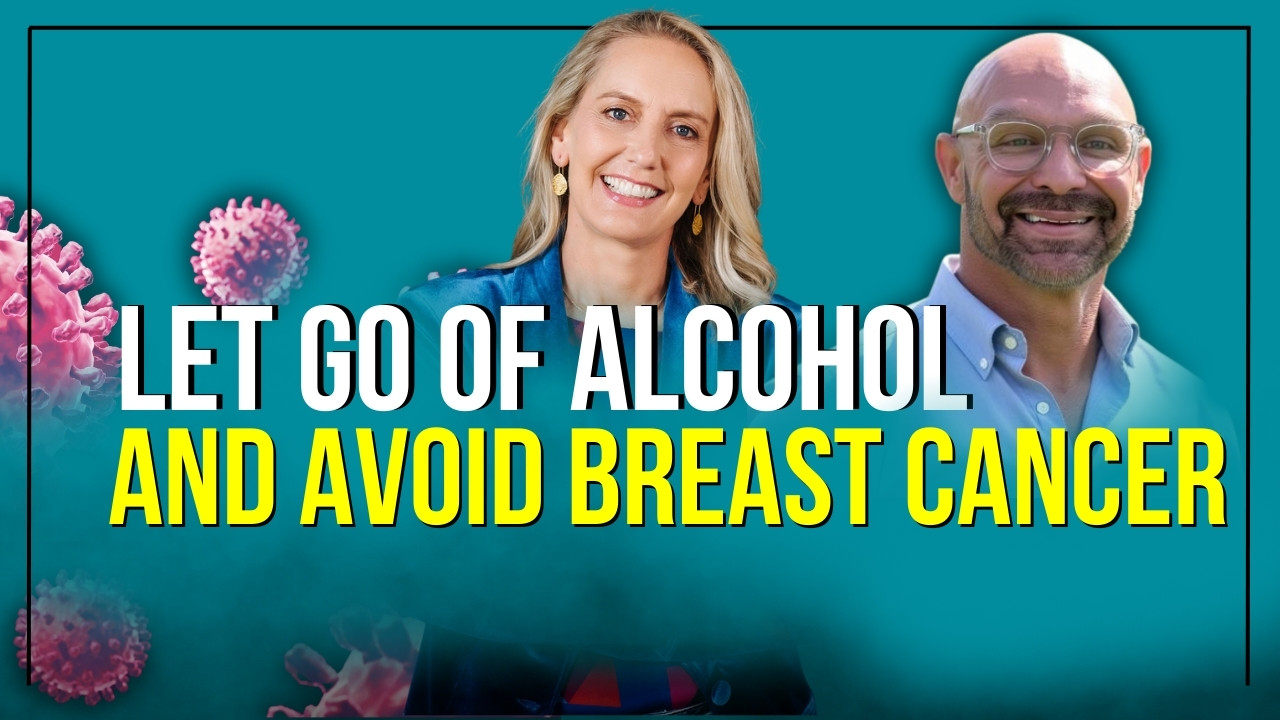
In this episode of I Love Being Sober, Tim Westbrook sits down with Kathryn Elliott, alcohol mindset coach, speaker, and founder of The Alcohol Mindset Coach, to share how she discovered a scientifically proven yet rarely discussed link between alcohol and increased breast cancer risk. Together, they discuss what the research actually says about “moderate” drinking, how alcohol affects hormones, inflammation, and sleep, and why you do not need a diagnosis or a rock bottom moment to reconsider alcohol’s role in your life. Kathryn also explores how to approach these conversations without fear, shame, or self-blame, and how clarity, confidence, and well-being often improve when we choose ourselves first.
—
Watch the episode here
Listen to the podcast here
Let Go Of Alcohol And Avoid Breast Cancer
An Evidence-Based, Compassionate Look At Alcohol, Breast Cancer Risk, And Modern Sobriety
I’m joined with Kathryn Elliott, Alcohol Mindset Coach, Speaker, and Founder of The Alcohol Mindset Coach. After decades of binge drinking in high-pressure environments, Kathryn changed her relationship with alcohol through mindset, not labels or willpower. Early in her alcohol-free journey, she was diagnosed with breast cancer, which led her to explore the under-discussed link between alcohol and women’s health. Now, she helps professionals rethink drinking without shame or deprivation. Kathryn, welcome to the show.
Thank you, Tim. It’s really beautiful to be here.
From Melbourne, Australia.
Yeah, from Melbourne, Australia. We’re in our summer here at the moment, so we’ve got some beautiful warm weather to come, which in the past would have been a massive gateway to lots of drinking, but now that I am nearly coming into my seventh year alcohol-free, it is not even a thought for me these days.
Me too. I have a beautiful weekend planned. I’m going to go on bike rides, I’m going to meditate, I’m going to do cold plunges, I’m going to go to the farmer’s market, and I’m going to hang out with my girlfriend. It’s going to be beautiful. I love it.
Sounds very similar to my weekend. I’m heading down to the beach, the coast with my boyfriend, and we’re going to hang out with my parents for a little bit. We’re going to do lots of swimming and floating and walking and just healthy ways of relaxing.
Kathryn’s Relationship With Alcohol During Her Corporate Years
Before we dive into the science, I’d love to start with your story. Can you share what your relationship with alcohol looked like during your corporate years and what first prompted you to question it?
Yeah, it’s interesting because I think my problematic relationship with alcohol started probably well before my corporate years. Growing up as a teenager in the mid to late ’80s here in Melbourne in Australia, we had a very excessive, normalized, almost celebrated drinking culture. I was a young woman who had a high tolerance for alcohol, and I was told I was a very good drinker. I could keep up with the boys, and so I started off with a very positive identity around my drinking.
It was almost a badge of honor. I took that badge of honor in my teenage years and into my young adult years as well, and it was when I started working in corporate culture as well. I started to see that there was again a very normalized, excessive drinking culture and that to be part of that culture, you needed to drink and of course I performed well. I was able to perform well at drinking, and then I was able to perform well the next day because I didn’t actually necessarily have really terrible hangovers, in that I was able to function.
I started worrying about my drinking early on, really, because I drank so excessively when I did that I would black out. There’s a difference between passing out and blackout drinking. Blackout drinking is when you’re still out there functioning, but that you wake up the next day and you don’t remember hours of a night. It was in those hazy memories or being told about things that happened that I started to really worry about my drinking.
I just thought, “My goodness, how can I wake up the next morning and not remember how I got home and large parts of the evening?” I guess those worries continued, but it wasn’t until I got into my 40s that I realized that I hadn’t grown out of this binge-drinking behavior. I thought that I would, and I wasn’t a daily drinker and I wasn’t what I would say a physically dependent daily drinker, but I’d had problematic drinking through decades of my life.
It became more problematic sometimes when I was going through maybe some stressful periods either at work or in my relationship. I ended up leaving my 24-year relationship. I had some ups and downs over the years in that marriage, and now I look back and I think, “My goodness, all the things that I regret most in my life and my behavior were when I was drinking alcohol.”
Alcohol is the common denominator.
The common denominator, absolutely. You hear this so often with people and particularly I think once you start to live without alcohol in your life, that’s when you really start to see the ripple effect that it’s had on so many aspects of your life.
Once you start to live without alcohol in your life, you will begin to see its ripple effect on so many aspects of your life. Share on XYeah, I can relate. I didn’t drink every single day. Sometimes I drank every day. When I did drink, I never knew when I was going to drink too much. I always I blacked out quite often, and whenever something happened, something bad happened, alcohol was always involved. Every time.
Yeah, and I think that was the thing. For me, it was scary because there were some nights I could go out and I would be okay like I wouldn’t necessarily black out. There were others where I absolutely would, and so for a long time I was in this mindset of I’ve got to be able to moderate. I can do it sometimes, why can’t I do it all the time? I think that’s really where I got stuck as well.
As a high performer as well, I had a lot of other aspects of my life where I was really focused on my health as well. I was exercising, meditating, really into personal development drinking my green juices and taking sugar out of my diet. There was this one area of my life, my drinking, which was not healthy, which was out of control, but also it provided me with that place where I could lose control.
I think in that area there was I guess a piece that I needed to address. What was it about that that I needed to lose control? I needed to find other areas in my life where I could find an opportunity to relax, to release energy, to de-stress. I think I’d probably been using alcohol for all of those things for a long period of time as well as it had become quite a piece of my identity that, like I’d mentioned, I’d had celebrated.
In letting that go, becoming more that sober party person, I don’t party nearly as much as I used to because I’m in my 50s and a party looks different. I’m still a social person and I really enjoy partying and I can do it socially I can do it sober. It’s a different version of me now that shows up, and it’s a much better version, I believe, as well.
You remember what happened last night, and you can drive home and not worry about getting a DUI or getting arrested.
Totally. This is the thing. You can remember everything and this precious commodity of time in life we’re born and then time starts to run out, we don’t know when our time is up. I found that since I’ve changed my relationship with alcohol, I have so much more time because I’m not worried about drinking, I’m not recovering from drinking, I’m not in blackout so I’m remembering everything. I’m more productive, I’m more clear, I have a much better self-esteem and relationship with myself and I’m making better choices in all areas of my life. I think that’s been such a beautiful gift of this nearly past seven years.
Going Alcohol-Free And Getting A Breast Cancer Diagnosis
You made the decision to go alcohol-free before your breast cancer diagnosis. How did that diagnosis shift or deepen your perspective on alcohol, health, and coping?
It’s funny how things happen in life, don’t they? Six weeks after I decided to take an extended break from drinking, I found a lump in my breast. I used to work in media and PR and I was about to start working on a women’s health campaign. I’d come in from the gym and I ran upstairs to have a shower, I was getting ready to go to work, and I just had this download of a thought that I needed to go and look at myself in the mirror.
That was when I discovered that I had a lump in my right breast. I’m not someone who who’s generally negative or jumps to the negative, but I really did think at that moment that there was something there and that the trajectory of my life changed. I think what happened for me with that breast cancer diagnosis and I was lucky that it hadn’t spread to other areas of my body, but I had to start an intense program of treatment straight away.
It was quite an aggressive growing cancer, and so I started chemotherapy the next week. What happened for me was that at 46, I started to question my life, my mortality, and what happened was that I started to question why at this age did I have this diagnosis? There was no family history, there was no genetic link, and the question came up for me was what role could alcohol have played in a breast cancer diagnosis?
Was there a link? I’d never heard of one, and so I started to do some of my own research and I was gobsmacked by what I found. It was interesting, it coincided a campaign had been launched in the US literally that year. DrinkLessForYourBreasts.org was the website that I found. I went there and I was like, “There are scientifically proven links that show that alcohol can cause increased breast cancer risk and can cause breast cancer.”
For me, that was really interesting. I empowered myself with knowledge, I started to do quite a lot of research, and then I was empowered in a way. I was empowered by this choice to continue to be alcohol-free because that was going to help me through treatment, but also it was going to probably reduce my risk of it coming back once I once I got through it.
Did that surprise you that breast cancer and alcohol were linked?
It absolutely did. I obviously knew that there were links to alcohol and other types of cancer like liver cancer, but I guess the absolutely shocking statistic for me was that breast cancer is one of the only cancers that low to moderate levels of drinking have been shown to prove increased risk. Only 7 to 10 standard drinks a week can increase your overall risk by up to 23%. It was really shocking to me that I hadn’t seen any of this information in public health campaigns, that it had never been mentioned to me by a doctor. Even when I was diagnosed with cancer, I wasn’t really asked about my drinking either.
I would imagine that many women are shocked to learn that even so-called moderate drinking carries risk, and you were shocked as well. Why is that message not more available to people?
It’s a good question, isn’t it? I believe that a lot of it is to do with big alcohol and the money that they’re making. Even through breast cancer charities, there’s a lot of fundraising through alcohol. I’ve had my own issues with charities here in Australia where I’ve tried to hold them to account to their partnerships and relationships with alcohol companies, but also that I attended an event here in Melbourne with a leading cancer breast cancer charity.
All of the members were being trained, they were all either people who still had breast cancer or had recovered from breast cancer, and there were bottles of wine put on the table. It’s things like this that make me really angry because this is a leading consumer-facing organization in Australia who is almost saying it’s okay. I think unfortunately alcohol has been so normalized now that people think that it’s safe.

Breast Cancer: Alcohol has been so normalized now that people think it is safe.
They don’t understand that it’s actually a toxin. It’s a carcinogen and a toxin that’s really on the same levels as asbestos and radiation. I think we need to hear more information about it. At least the World Health Organization has now changed their communications around alcohol and are saying that there’s no safe level of drinking now at all.
I would say that it’s more widely accepted. People are realizing that there is no benefit to drinking alcohol. I’ve been sober for many years, and when I first got sober, if I would say, “No, I don’t drink, I don’t need a drink,” people are like, “Well, what are you an alcoholic?” Now, I know a lot of people that don’t drink. They just don’t drink because it’s not healthy. There are no benefits to drinking, there’s nothing good about it. I think that the information is out there and becoming more widely accepted by people. There’s just no benefit to drinking.
We’re seeing a lot of changes here in Australian culture now. I think the younger generation are drinking a lot less than we were. Even when I go out now, I’m much more likely to be in the company of someone else who may not be drinking either or who’s decided that they don’t drink alcohol for health reasons rather than for necessarily problematic drinking. I think this is a really exciting thing, and we’re starting to see in other countries that people are putting labels onto alcohol products now. Ireland have just adopted labeling on their products. I would love to see Australia do the same thing, but we’re not quite there yet.
When I used to go to football games, everybody was drinking. You could see there were people walking around selling beers and the alcohol lines were super long. When I went to a football game recently, most people were drinking water. I was like, “This is really interesting. We’re at a football game, and there’s not a lot of people here that are drinking.” It was it was great, and it was really cool for me to see that.
Yeah, that is so great. I hope I get to see that in Australia. Unfortunately, we’ve got a football code called AFL football here. I used to do a lot of drinking when I watched football games, and obviously now, I go to football games and I don’t drink and I have so much more fun at games than I did when I was drinking.
I remember it. I don’t make a fool of myself.
I don’t have to queue up to go to the toilet, I don’t have to leave the game to go to bars and wait to be served, but what I do notice is the change in vibe when people are drinking around me as well. We have dry areas now where we can sit where people choose not to drink. As often as possible, I will sit in those areas and I notice such a difference in in crowds as well.
The Role Of Alcohol In Hormones, Inflammation, And Sleep
Especially as you progress in the game, the whole vibe changes as you get further in the game and people get more wasted and the lines in the bathroom are longer and you know all that. I believe we’re moving past that. Let’s move on to hormones and health. Can you help us understand the role alcohol plays in hormones, inflammation, and sleep, and why these factors are so critical for women’s long-term health?
By very nature of being a woman, we are at more risk of alcohol than men in terms of health problems, because we have less of an enzyme, dehydrogenase, that breaks down alcohol. Women are at greater risk when drinking. In terms of hormones, alcohol increases the circulating estrogen in our bloodstream, which can then lead to increased estrogen-driven cancers of which breast cancer is one of them.
I had high levels of estrogen recorded in my breast cancer pathology, and so for me, that was really interesting also too to get that information. In terms of even I’m a woman in my 50s, I am now postmenopausal, but women going through hormonal changes, perimenopausal and then postmenopausal. Often, their relationship with alcohol and its impact on their hormones during that period can really have a huge effect on their health in terms of sleep, mood swings.
Most of all, I think for women, even their tolerance of alcohol, as often our body fat increases at this point in time and so we’ve got less water in our system to dilute, and men by very nature have less body fat than women anyway. It’s something to really keep on top of if you are a woman who’s going through some of these changes, that your interaction and relationship with alcohol and tolerance of alcohol can change during this time.
I’ve had many clients who have thought that their mood swings and anxiety have been much greater because of their going into perimenopause. Some of these symptoms may be increased because of this, but once they take alcohol out, they notice the things really subside. In terms of sleep, we know that alcohol has a huge effect on the quality of sleep that we have. Even one drink can affect it, and really what it affects is the REM sleep cycles. Instead of getting up to between 6 and 8 REM cycles a night, we may only get 1 or 2, and the impact that can have on our overall health, if you think about it, over our lifetime, can be absolutely huge.
From your perspective, how does alcohol quietly undermine resilience, emotional regulation, and recovery, even when someone doesn’t identify as having a problem?
It comes back even to this we look at sleep as a pillar of our health in life. If you’re drinking, it is always impacting your quality of sleep. If you’ve drunk, you are waking up earlier the 300 AM wake up. You’re spiking cortisol, your immune system isn’t functioning as well, your moods are not in the same place, you’re throwing your body out of homeostasis all the time.
You think of that happening each and every week, even if you’re only drinking once a week, you are still impacting all of these jobs going on under the surface. We’re not giving our body and brain the best opportunity to perform. That’s what I noticed in myself. Once I took time away from drinking, I could feel the clarity and the and the space that opened up. For a lot of people, the physical changes can be really important as well. You just you start to look fresher and clearer, your eyes are whiter, some people lose weight, but for me it was actually how you feel in yourself as well the self-trust that I developed was so much more important than anything else.
How To Avoid Fear-Based Or Shame-Driven Messaging
You work hard to avoid fear-based or shame-driven messaging. How do you talk to clients about alcohol and cancer risk in a way that feels empowering rather than alarming?
I think it’s all about knowledge-based choice. We need to be empowered with the science-backed information and then we make choice. I didn’t have the information. Would I have stopped drinking earlier if I knew the information about breast cancer? I don’t know the answer to that. What I do know is that the information wasn’t out there, and it’s not about really alarming people with statistics around alcohol or forcing people to quit alcohol because alcohol is part of our culture.
Be empowered to make better choices with science-backed information. Share on XI can’t see that it will ever be not legalized. What I think is important is that more people talk about the benefits of living without it. That is what becomes the magnet, not the negative aspects of alcohol as a toxin and a poison. Yes it is and I’m very happy to tell clients about that information, but that’s not what I use as the drawcard.
The drawcard is actually that living alcohol-free for me has opened up a life that I never believed was possible. I always thought I’d be missing out on something without alcohol, and in fact, what has happened is that my life has expanded. I have developed and expanded as a person. I have accessed more clarity and creativity, and I think in that aspect that’s where there’s real empowerment.
I’m with you. Before I stopped drinking, even when I first stopped drinking, I thought life was over. How am I going to have any fun? At the end of the day, everything I did involved alcohol. That’s why it’s like everything has to change. New eating habits, new sleeping habits, you pray and meditate, you have a higher power, new relationships, new hobbies, new interests, learning how to live. It’s fun. You’ve got to change your identity. That was my experience. I don’t drink. It’s not I’m trying to drink. If I hear someone say, “I’m trying to stop drinking,” it’s like, “It’s not going to work.”
That was where my mindset changed. When I talk about my mindset, I embraced a new identity. Act as if. It takes time. There’s so much in all of that, and people say, “How do you do that?” initially, it’s challenging and difficult, and you do it one day at a time, but you actually you actually have to focus on all the aspects of your life because you’re actually learning things again.
You’re learning how to have fun without alcohol. You’re learning how to relax without alcohol, you’re learning how to go on weekends and vacations and holidays without alcohol. You’re learning to have vulnerable open conversations without alcohol. You’re learning to sit in uncomfortable emotional scenarios without alcohol, but you’re also more present. You start to really experience those beautiful joyful moments.
You’re starting to reset all your dopamine. This is another thing that I noticed. I wasn’t really getting those natural highs in life because I was getting them from alcohol, and then once I started to really focus on my alcohol-free life, I started to have these beautiful moments of joy again just through normal observations. I think things like meditation, I actually learned the practice of vedic meditation before I stopped drinking. That was an area I was really interested in, but I think I’ve been able to be a lot more mindful and self-compassionate as part of my alcohol-free lifestyle.
You become more aware by taking a pause. Share on XMeditation has been a very powerful tool in that for me and a tool for emotional regulation as has breathwork and the actual practice of self-compassion, which Kristin Neff, an American woman who has written an incredible book about the practice of self-compassion, and that aspect has been a really powerful tool for me in my own journey.
Loving yourself.
Loving yourself, being kind to yourself. Also, realizing that you’re not alone that our human predicament and existence and often what we’re going through, so many others are also going through. Sometimes we get stuck in our mind, in our thoughts, and I think that’s been another powerful opening up for me, this power of metacognition that I do have an opportunity always to witness and change my thinking.
I do have the opportunity to witness and look at the conditioning of my thoughts and beliefs and where they’ve come from and that I can reprogram and change those, and that’s very much the work that I do with clients as well. Sometimes, we think we don’t we let our thoughts and beliefs instruct us in life, but yet we do have choice to change all of that.
I love the line, “My best thinking got me where I am today.” It’s like my best thinking got me here, and a lot of times, with our clients, it’s the same thing. It’s like your best thinking got you there. Why would you think that your thinking’s going to get you out of this? That’s changing the thinking. The first step, in my opinion, my experience, is the awareness because awareness is 90% of transformation. Once someone is aware, then they can take the steps to change.
This is it, the power of awareness. How do you actually have awareness? You actually have to pause and stop. More often than not, people are just on that treadmill in life and they never do. There’s never the pause to be the witness of anything. This is what I realized about myself. I spend a lot more time now pausing or getting into activities where I do have more time to regulate as well. I love hiking out in nature, that’s one of my favorite things, on my own actually, because then I can just be with myself but be in an environment where my system feels really relaxed.
Going Alcohol-Free Without Feeling Overwhelmed Or Judgmental
For readers who may be feeling unsettled or even defensive hearing this information, what’s a compassionate first step they can take without feeling overwhelmed or judged?
I think the first step you can take if you are feeling judgmental of yourself, one of the things that I find really useful is if you feel like you’re being judgmental of yourself, why not try putting a friend or someone you love in in that place? How would you respond to them? What would you say to them? The other mantra that I come back to a lot is what would love or kindness say?
Often, we’re coming from a place of either fear or love, when we can come back into our hearts and ask that question, it’s really important how can we soften and come back to that place? I know that the version of me that was in corporate life that was drinking was often in a place of fear, was often on that treadmill, was often caught up in their negative punishing thoughts. We always have our beautiful breath and our hearts to come back to and our bodies, and often it’s really important to just close our eyes and tap into the energy of our hearts because it’s very powerful.
Making The Choice To Swear Off Alcohol
It sure is. You often say that you don’t need a diagnosis, a rock bottom, or a crisis to choose a different relationship with alcohol. What does that choice look like in real life?
I think it just looks like curiosity. Anyone who’s reading this, what role? It’s about getting mindful about your drinking and getting curious about why not just take a break and see what happens? I’ve had friends who don’t necessarily think they’ve got a problem with alcohol, but I’ve challenged them and said, “Take a break for 30 days. Go to a party. Go out socially and just see what it feels like.”
They’ve been really fascinated. They’ve been like, “I’m more reliant on it than I thought I was,” or, “Even you saying that to me, I felt defensive, and in that defensiveness, I realized that I actually really want to do this. I want to challenge myself.” I think this is the thing. There are probably a lot more people out there in the world who are very reliant on it in many aspects of their life.
I think it’s just about getting curious about the role that it plays. Bringing just a few more alcohol-free days into your working week and see what happens, see what that impact is on your sleep, on getting up the next day and going and exercising because you don’t really know the impact that it’s having until you take it away for a little while.
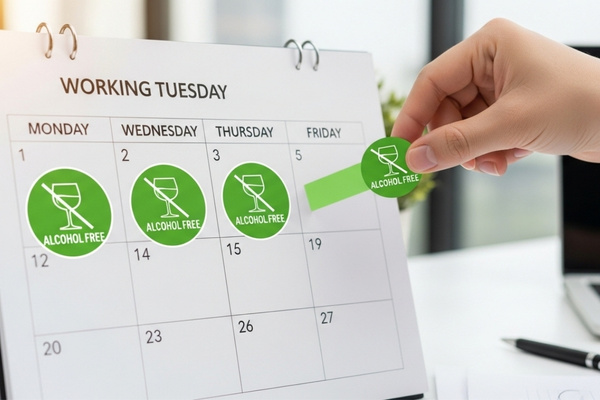
Breast Cancer: If you want to start letting go of alcohol, bring a few more alcohol-free days into your working week.
I remember it was about a year before I actually got sober. I remember my wife at the time brought me to go to what I thought was marriage counseling, and we go in and she starts asking me about my alcohol about my drinking, and I’m like, “Why are we talking about my drinking?” she said, “Why don’t you take a break for 90 days?” I was like, “Sure, no problem.”
I took a break for 90 days, but I’ll tell you what, day 91, I was at the bar. It was only 90 days, and I remember her saying, “You might find that you just like not drinking.” I was thinking I was like, “There’s no way I’m going to like not drinking.” I wasn’t at a place where I was ready to get sober yet. I do like that, “Why don’t you stop for a little bit? Why don’t you stop for 90 days? Why don’t you stop for 30 days and see how you feel?” You really might realize how dependent upon alcohol you really are and how much your life actually revolves around alcohol.
I think so, and I think the other thing that people find it hard to get their head around sometimes, they’re in this mindset of, “I have to quit drinking forever,” and this idea of forever, it’s not helpful. One day at a time. I still don’t have forever. Forever feels like a concept that you actually can’t get. Whereas for me, it just becomes grounded in what I’m presently doing now. It’s so much more helpful and beneficial.
The version of me that is now alcohol-free now is different to the one that was 3 months alcohol-free, that was 2 years alcohol-free. I’ve even found with my clients. They come in and sometimes they’re really nervous, “I don’t know if I can do this forever,” and I’m like, “Let go of that. You don’t have to do it forever.” Just do it today. One day at a time. All we have in life is one day at a time. Just be present today.
Exploring SipSmart’s Corporate Wellbeing Programs
Can you tell us about the SipSmart corporate wellbeing programs and what you’re seeing shift when companies start having these conversations?
SipSmart is really my corporate brand that I work here in Australia with health and wellbeing teams in corporates to bring up this conversation around alcohol and its impact on overall health. It’s really about accessible conversations that meet people where they’re at and getting people to think about the role that alcohol plays. What I love is that big corporate companies here in Australia are starting to open up these conversations and starting to support their employees to have these conversations in what I think is a really gentle, inclusive way.
It’s not about telling people to quit drinking, it’s not about making people feel uncomfortable that they have a problem. It’s about looking at the impact that alcohol has on our overall health and wellbeing. It’s giving them information so they can make different choices, it’s giving them maybe some mindful tools and techniques that they can use if they want to drink less. It’s really powerful.
I’m just working on a program for a company here at the moment who want to empower their leadership team as well to start to look at the role that drinking plays even in their culture of celebrating business wins, Christmas parties, identifying if an employee does have an issue with alcohol and how they can support employees as well rather than shaming them or making it their own personal issue.
I think the other thing is that what they’re really looking at now is that if they can help employees choose to drink less, it’s going to help with their overall productivity. A lot of absenteeism in the workplace occurs because of hangovers or even people coming to work with hangovers and they’re just not working at their optimal level. I think all of these aspects we’re beginning to open up these conversations, which I think is really important and I think will really have a ripple effect.

Breast Cancer: If leaders can help their team to drink less, it will help with their overall productivity.
Definitely. Headed in the right direction.
I think so, for sure.
Awareness And Curiosity: The First Steps Towards Sobriety
For someone reading who’s sober curious, questioning their drinking or simply wanting to protect their health, what do you want them to know as we wrap up?
If you’re starting to question and get curious, I just think that’s fantastic. This awareness and curiosity is the start of it. Just be gentle with yourself, there are lots of books and podcasts. Start to listen to things, start to do some reading, start to take some action in your life. You’ll find people around you are open to conversations as well around the role that alcohol may be playing in their life.
Reach out. There’s so many people on social media as well who are really have got some fabulous information out there. I know there’s a really great app called Reframe and they often have really wonderful information around alcohol and its impact on the brain and body. This aspect of just getting curious, I think, is really powerful and important. If you take some action, maybe just start to think about what it may be like to take a couple of weeks away from drinking and what you may notice in that couple of weeks can really have a huge impact on choices moving forward.
A couple of weeks away from drinking can have a huge impact on your choices moving forward. Share on XI think that getting curious and starting to do research and starting to pay attention, I realized there were a lot of people that didn’t drink, there were a lot of other things to do besides drink, and there was a lot of support out there. It made it much easier. Even now, I feel way more grounded and connected knowing that there’s so many other people out there that don’t drink. It makes me feel I’ve got that community. I’m part of the 12-step community here in Arizona. I swear I can’t go anywhere without seeing people that are in recovery, and it’s very comforting.
It’s so true. I know that when I started this journey years ago, the community wasn’t nearly as big as it is now. I have so much support and so many friends who are either alcohol-free or drink very minimally. I think this is the thing. When you make a lifestyle choice like this, as we talked about, your identity changes and shifts.
You start to bring in people and activities into your life where people are generally focused on their health. A lot more people are now looking at the role that alcohol plays, and they’re letting it go because they know that the benefits once you take it out, you’re like, “Why would I ever go back?” I have to have a pretty incredible reason to go back and choose to drink alcohol. You actually can’t find one.
Discussion Wrap-up And Closing Words
Is there is there anything I missed? Any other questions I should have asked you?
I think you’ve covered all the questions I put forward, almost all of them anyway. I think we’ve covered my story, the binge drinking, the corporate stuff.
How can people find you? Where can they connect on social media, your website? Promote your program. Tell me about you and how people can learn more about you and more about your program.
People can learn more about me from my website. My business website is TheAlcoholmindsetCoach.com. I also have an Instagram page, @TheAlcoholMindsetCoach. You can also find me on LinkedIn. I’m quite active on LinkedIn, and there is information about my SipSmart offerings on my website as well.
Kathryn, I appreciate you, and our audience appreciates you. Thank you for your time, and everyone out there, I’ll see you on the next episode.
Thanks, Tim. Thanks so much for having me, I’ve really enjoyed our conversation.
Likewise.
Important Links
- The Alcohol Mindset Coach
- Drink Less For Your Breasts
- SipSmart
- Kathryn Elliott on Instagram
- Kathryn Elliott on LinkedIn
About Kathryn Elliott
 Kathryn Elliott is an alcohol mindset coach, keynote speaker, and the founder of The Alcohol Mindset Coach, based in Melbourne, Australia. She helps professionals, leaders, and organisations rethink their relationship with alcohol using a neuroscience-informed, compassionate approach — without shame, labels, or deprivation.
After more than 20 years of binge drinking in high-pressure corporate and social environments, Kathryn chose to stop drinking by shifting her mindset rather than relying on willpower alone. Early in her alcohol-free journey, she was diagnosed with breast cancer — a life-changing experience that led her to explore the evidence-based link between alcohol consumption and increased breast cancer risk, particularly for women.
Today, Kathryn is a leading voice in alcohol awareness, women’s health, and modern sobriety, regularly featured in the media to educate audiences on alcohol’s impact on hormones, inflammation, sleep, mental wellbeing, and long-term health. She is also the creator of the SipSmart corporate wellbeing programs, helping organisations challenge outdated drinking cultures and support healthier, higher-performing teams.
Through one-on-one coaching, group programs, and corporate workshops, Kathryn empowers clients to cut back, take a break, or quit drinking altogether — while building confidence, clarity, and a genuinely enjoyable alcohol-free life.