Addiction may bring you to your rock bottom, but it does not mean jumping back is impossible. Learn how to find your path to recovery and love yourself all over again with bestselling author and podcaster Arlina Allen. She joins Tim Westbrook to share how she helps redefine the recovery process through her Sober Life School, her book The 12 Step Guide for Skeptics, and The One Day at a Time Recovery Podcast. Learn how to embrace solutions-based approaches that go beyond traditional recovery techniques to deliberately create a better future for yourself. Arlina also explains how to live above the line and get rid of your limiting beliefs to start transforming your life and embrace an authentic, sober identity.
—
Watch the episode here
Listen to the podcast here
How To Love Yourself Again After Addiction
I’m honored to welcome someone who’s devoted decades of her life to helping others rewrite their stories around addiction and recovery. Arlina Allen is a certified life and recovery coach, sobriety coach, and hypnotist, Founder of Sober Life School, host of the award-winning The One Day at a Time Recovery Podcast, and author of The 12-Step Guide for Skeptics. With more than 30 years of sobriety, she has guided hundreds of busy professional women away from drinking, even those who thought traditional recovery wasn’t for them, helping them build a life they truly love.
‐‐‐
Arlina, welcome to the show. I’m excited to have you. I’m excited to dig into your journey, the work that you do, and how to make recovery feel real and doable for skeptics.
I’m so happy to be here. This will be fun.
This should be fun. I was referred to you by Mary Tilson from Sun and Moon. She says great things about you, so I’m excited to get to know you a little bit more.
I love Mary. The fun thing about doing shows is you get to meet all these cool people doing cool things. She and I have stayed friends over the years since we met. She’s got a great podcast.
Overcoming Rock Bottom And Embracing Sobriety
You’ve been sober since 1994. Can you tell us what your rock bottom looked like?
We’re going to go right for the jugular. It’s hard because I skipped along the bottom for a minute. Do you know what I mean? I had a bad night, and that involved blacking out, embarrassing myself in public, some physical violence towards my sister, and the police. That was like, “Maybe I have a problem.” That was the beginning of thinking, “Am I an alcoholic? What makes somebody an alcoholic?” That’s when I started asking the questions, and it seemed like the questions led to more questions.
I tried to moderate for two years, and I finally came to the conclusion. I was exhausted, burned out, sad, and depressed. I had that moment where you stand at the abyss, and you look into the darkness. You’re either going to jump, or you’re going to do something different. Right around that time, I met these two guys who were sober and in 12-Step recovery. They’ve been sprinkling in a little wisdom over the course of our relationship. I was in an outside sales position, and they were two of my clients. We’d go to lunch and stuff. They wouldn’t drink, but I did. I started asking them questions, so they started sprinkling in all this little wisdom. We became friends.
When I was finally ready, these two guys, Mitch and Randy, who were fine, outstanding members of the 12-Step program, ushered me in and quickly handed me over to the women, which was nice. They were giving me these ideas that were revolutionary to me, like, “If you keep doing the same thing over and over again and expecting a different result, that’s insanity. Keep doing what you’re getting.” I was like, “You’re right.”
That was smart.
They had little bits of wisdom that were blowing my mind. Rock bottom to entry was how it went down for me.
Is that your sobriety date?
April 23rd of ‘94. It took me 60 days to get 30. About 30 days in, I think I smoked a little weed. Here’s the funny thing. On my 25th birthday, I had my last drink. I woke up the next morning so hungover. I was in a relationship with this guy that I thought was my ideal, and I knew I was losing that relationship due to my drinking. I remember waking up the next morning, looking at him, and being, like, “I’m never going to drink again,” and then I took a big bong hit. By the time I showed up at the rooms of the 12-Step, I hadn’t had anything to drink for five months. It was messy, but I find that most people’s bottoms are a little messy.
It’s interesting how, before we get sober, we don’t realize how many people are sober. I didn’t know anybody who was sober. As soon as I get sober, it’s like my whole world, everywhere I go, and everything I do, I see people in recovery. You attract what you are. It doesn’t matter where I go. I can go to coffee. I can go to eat. I can go to a game. I can go to a concert. I see sober people everywhere I go.
Seek, and you shall find.
I used to attract all the drunks. I used to attract all the people who did cocaine. I remember I was at a show in San Francisco. Paul Mooney is a comedian. He was at the Fillmore in San Francisco. I remember going into the restroom. There was one person. He was like, “Do you want some blow?” That doesn’t happen to me now.
It hasn’t happened to me once since. 31 years, that has never happened to me.
I remember that kind of stuff. It speaks to you attract what you are. It’s that energy you put out there.
The law of attraction is a thing, for sure.
Twenty-five years old is when you got sober. That’s your sobriety date.
I quit drinking in November and then didn’t get sober until April of the next year. I was 5 or 6 months without alcohol before I quit everything. Back in the day, they called it the marijuana maintenance program.
I think they still call it that. Marijuana these days is so potent. Back then, marijuana was 7% or 8% THC or something like that. Now, it’s 80% or something. They can make it so strong. It’s not even the same thing.
It’s triggering a lot of psychosis because it’s so intense. It’s something I don’t have to worry about. What’s interesting is this idea of harm reduction. There are some people who are on heroin. Maybe smoking a little bit of weed helps them not do heroin. I’m like, “Do that.” I’m not about living there. Let’s continue to grow grass, but who am I to judge? Do what you have to do. For me, I didn’t count my sobriety until I quit drugs and alcohol.
You bring up a good point, which is that everybody’s journey looks different. When I got sober, I was sober from all substances, although I was still taking Vyvanse or Adderall as prescribed. I got off of that a month after I got sober. I own a sober living. We used to not let people come in who were not on methadone.
Suboxin?
Yeah. Things have changed. There are things like harm reduction. Everybody’s journey looks a little different. My journey not looking that way doesn’t mean that it’s not a journey that can work for somebody else.
Sobriety is so crazy because everybody has a different set of variables, a different set of traumas, and a different set of family situations. There are so many variables contributing to where somebody is starting and what they’re using. I agree with you. There are no two sobriety stories or journeys that are identical.
Everybody has a different set of variables, traumas, families, and situations. No two sobriety stories are identical. Share on XThere’s a guy named Brandon Lee. He says, “I have been in recovery since.” He doesn’t talk about his sobriety date because at eleven years sober, he had a slip. He was going to meetings. He was doing the deal, and he had a slip. It was a 6-hour or 8-hour slip. He’s like, “You’re telling me that I got to start over?” He says, “I’ve been in recovery since,” whatever the date is
He doesn’t count. He doesn’t say, “My sobriety date is.” He says, “I’ve been in recovery since,” which I think is good. A person who’s been in recovery for 11 years is different from a person who’s been in recovery for 90 days, in my opinion. They’re on their journey. They’ve been on their journey. You can’t tell me that they haven’t learned anything that has helped them get closer to the life that they want to live.
At the end of the day, that’s what we’re talking about. It is getting closer to the life that you want to live.
How did going from a life of drugs, alcohol, and sex to long-term sobriety shape who you are?
I thought labeling myself as an alcoholic or an addict was the worst thing ever, but it turns out that’s my superpower. Being able to say, “I’ve recovered from addiction. I’ve recovered from alcoholism,” I love sharing how I did that. That has defined who I am in a lot of ways, but in a more empowering type of way, like, “I had the resiliency.” Sometimes, I don’t know what it is. I don’t know why some people stay sober, and some people don’t. I’ve seen examples of people who try hard but don’t get sober and examples of people who do things that are very morally questionable, and they stay sober. I’m like, “I don’t get it.”
You don’t know who’s going to stay sober. It’s crazy.
It’s baffling to me. It shaped my identity in so many ways. It put me on this path. It gave me purpose, and it gave my life meaning. I found that I have this desire to try to figure out how people tick. Working with other people is something that lights me up. When I’m in the present moment with someone else, you see the lights come on. You’re able to share compassion with somebody, watch people get better, and change their lives. I don’t know anything else that is better. That’s my favorite high, to be honest. That and Netflix.
What’s your favorite show on Netflix?
I don’t know about Netflix, but I’m excited that Mad Men is back on HBO. We’re Game of Thrones fans. We always watch Game of Thrones at night as our bedtime story, but we’re going to dive into Mad Men.
They don’t have a new season, do they?
No. That whole series was completed. I’m such a TV junkie. It’s not even funny.
Are you watching the Diddy documentary?
I can’t do stuff like that. It grosses me out.
I’ve watched a couple of episodes. There’s some stuff I didn’t know. I was like, “Wow.”
I’ve come to accept that there are certain things I don’t need to know. I don’t watch the news. There’s nothing I can do about it. If it’s important enough, I end up hearing about it. I do need to protect my psyche in certain ways, like what goes in also comes out. There are certain things that drain my energy.
It’s stuff that’s energy draining. It’s speaking to your subconscious mind. What do we have? 50,000 thoughts a day, and 90% of them are subconscious. Whatever you put into your mind, your subconscious mind is reciting those thoughts. What do we have? 90% of the thoughts I had today are the same thoughts I had yesterday. What we put into our minds is so important.
We’re living Groundhog Day.
Navigating The Biggest Challenges Of Early Sobriety
We don’t think we are, but we are. Let’s talk about early sobriety. It can be brutal. What are some of the hardest internal challenges you faced when you first got sober? How did you navigate them?
I had so much fear. Everything was different when I first got sober. I had burned through all my friends and relationships. Your mom, dad, and sister have to be there for you. When I got sober, I went back to living with my mom and my sister. I lived with her. I had a pretty good relationship with my parents.
I had to start from scratch. Things like emotion management. When I first got sober, the one thing that worked to help me manage my feelings was gone. I had been smoking a lot of weed, so I was comfortably numb, as Pink Floyd would say. Having to feel all my feelings was challenging. The one saving grace I had was my self-centeredness. I like talking about myself.
I can relate.
As a host. I was going to these meetings. They were like, “Get a bunch of phone numbers and start calling people.” I was like, “I don’t want to bother anybody.” They were like, “You don’t understand. When you call somebody, it gives them an opportunity to be of service. Service is one of the things that helps people stay sober. If you call somebody and ask for help, you’re helping them because they get to be of service to you.” I was like, “Sign me up.”
I got a bunch of numbers. I get stressed out, and I call people. These ladies would pick up the phone, and we’d talk. I would get to talk about what was going on for me. I had some cool women in my life who would do things like when I called, they’d say, “Did you want to vent? Do you need feedback? What are you looking for?” I was like, “I didn’t know I had a choice. I didn’t know that was a thing.”
You were like, “This is not like the conversations I used to have with my other friends.”
Communication skills were something important for me to learn. I was beginning to learn emotion management and communication skills. Talking about what was going on with me helped me to process out loud, and then I would get new information, context, and perspective. People would talk you off the ledge, kind of a thing. The problem was I didn’t know what to do with my feelings, but I did have the solution, where I was able to call people and talk to people. They helped me to learn how to manage my emotions. That was big in the beginning.
Origin Story Of The Sober Life School
Let’s talk about Sober Life School and who she helps.
I’ve been sober for 31 years. I was an account executive in the tech world. I was in sales for a long time. I always had this feeling like, “God did not put me on this planet to sell software.” The money was good, but it was breaking my soul. The things that filled my cup and gave me a lot of energy were working with others. Manifestation is a thing. I got a coaching certification, and that year, I was tight. My laptop password was NewJob2020. COVID hits, and I make more money than I’ve ever made in my entire sales career.
I was selling VPN, which means Virtual Private Networks. Virtually every customer I had had to make a purchase, so I made a ton of money. Then, that company was acquired, and everybody got laid off. I had this huge severance package. I was like, “This is the time when I’m going to be able to start this purpose-driven business of Sober Life School.”
I had been doing the podcast for a long time. I started that in 2016. That’s a crazy story. I had the podcast, and I knew I wanted to focus on this area of helping people. There are certain people who will not go to meetings. They’re not going to go to AA. They don’t have time to go to rehab. I wanted to serve this demographic of people. I realized I used to say I helped women, but now, half of my clients are men. I don’t know what that’s about. Half of them are not interested in quitting drinking. They’re sober, or they’re struggling with life balance or life issues after sobriety.
Sober Life School came from this place where I needed to be authentic in how I spent my time. I felt like I was living a double life working in tech, but I had a passion for helping other people. It took a while to let go of that identity of an account executive and Silicon Valley salesperson. I had to let go of all that and step into this newer, more authentic version of myself. It was scary. It has been five years since I did that, and I don’t regret it for one second.
Hosting The One Day At A Time Recovery Podcast
You started your podcast in 2016. Tell me about that. Those were the early days of podcasting.
It was a while ago. I had been a huge Tim Ferriss fan. He was an Angel investor. I was in the startup world. I was working at a company that was funded by Sequoia, which is a big venture capitalist firm. I was listening to Tim Ferriss. He’s all into the Silicon Valley venture capital world. I was like, “Let me do a podcast on sales from a woman’s perspective,” because there wasn’t a single one of those. I did that. It was on my heart to do one around sobriety.
Back then, there were 2 or 3 other podcasts that I could point to that were talking about that. I was deathly afraid that my 12-Step community would shun me or criticize me. If you’re 12-Step-oriented, Tradition 11 is that you maintain personal anonymity at the level of press, radio, and film. I was confusing talking with sobriety and breaking my anonymity with the 12-Step.
I’ve never come right out and said, “I’m a member of Alcoholics Anonymous.” It’s a thin veil. We all get it. Nobody’s confused. Do you know what I mean? I thought it was going to be shunned by my community, but then something happened. I was going to a 6:00 AM meeting. It was a pretty big meeting. I’m going there at least five days a week. That’s how I would start my day. People are very serious about their sobriety if you’re showing up at 6:00 AM. I loved this group.
There was a gal there that I had known for years. Her name was Gina. Gina was maybe six months older than me. She looked like me. I’m half Hispanic. She’s Hispanic and dark-haired. We looked similar. I had watched her go from this angry woman to this beautiful woman. She graduated from college. She had worked on a lot of her stuff. She’s so much softer, loving, and in a good place, but I didn’t realize that she had been suffering with chronic headaches and things. She wasn’t sleeping. She was sleep-deprived.
I wasn’t at the meeting that morning. I was working at that startup job that I was telling you about, far away. I was at work at 5:30. I’m an early riser. I didn’t go to the meeting that morning. About halfway through the morning, I get this panicked phone call. It’s this gal that I sponsored. She’s like, “Gina was in an accident. She died.” I was like, “That can’t be right. She was at the meeting.” She had been in a single-car accident, a fatality, and I broke. I saw myself in her. She had graduated from this program, and it was like her whole life was ahead of her. I couldn’t help but wonder what dreams died in her heart. She didn’t get to live out her dreams.
I had this dream in my heart to do the sober podcast. Death has a way of clarifying the BS. I was like, “Who’s permission am I waiting for?” It felt like inspiration, like God put this desire on my heart. Who was I to say no? There was something about that that I was like, “In memory of Gina, I’m going to take the leap and do this thing.” She died in September, and I started it in June of 2016. I’m not 100% sure when she passed, but it was right after that.
Are you still rocking it?
I’m still rocking it. I have been so consistent over the last couple of years. I’m publishing weekly. We’re up to 408 episodes or something like that.
Good work.
It’s been amazing. It’s been so good.
It’s so cool. I love it as well. I love getting to talk to people and learning more about them, more about their story, and so forth. I want to learn a little bit more. Is your podcast all about sobriety? Tell me about your podcast.
I’m a recovery agnostic kind of gal. For me personally, it is 12 steps and. I like to try all the things. I’m recovery promiscuous. I’ll try all the healing modalities.
I’m with you. I’m the same. Recovery promiscuous.
I love it. That was funny. Maybe at 57, it doesn’t have the same impact. I thought it was funny to say that. I do like to try all the modalities. There are so many ways of helping to unlearn or heal negative patterns, releasing negative beliefs, and adopting new ones. You always need a sufficient substitute. Everything is a trade-off. You let go of these limiting beliefs or identity labels that don’t fit for you anymore to step into new ones.

Love Yourself: There are so many ways to unlearn and heal negative patterns and beliefs so that you can adopt new ones.
I’ve talked about all kinds of different things, but mostly around psychology, healing, and mental health. The first half of the podcast is usually somebody’s recovery story. The second half is on the solutions. I have interviewed many experts, like New York Times bestsellers and highly credentialed doctors, who share a specific modality.
I interviewed Dr. David Spiegel, who is the foremost expert on hypnosis. He spent 40 years at Stanford. He was the Chair of the Psychiatry Department for 40 years or something like that. He didn’t have issues, but it was so interesting to dive into that topic. I have been branching out a little bit. After 400 episodes, I was like, “I can’t do another tragedy to triumph title.” Do you know what I mean?
I do.
I have been branching out a little bit. I interviewed this guy. He wrote a book called Uncomfortable Either Way, which fits in with recovery. If you’re going to be in pain because you’re using or in pain because you’re trying to get sober, if you’re going to be uncomfortable either way, you might as well choose the path that’s going to have a reward at the end of regret.
You’re Sober Life School. Mine is I Love Being Sober. It’s not just people who are in recovery. It’s living my sober life. It’s all the things. I have meditation, breathwork, and naturopaths. I talk about peptides. There are so many different things. What do I do? My sober lifestyle. Anything that fits my sober lifestyle, that guest, I would think, is going to be a good guess. They don’t necessarily have to be in recovery. When I first started, it was more of people who were in recovery. Now, it’s my sober lifestyle, what the things a person in recovery can do, what’s going to be helpful, and what things I do in my life that are sober.
I appreciate that you are solution-focused. What I have noticed, and I’m sure you’ve noticed this in the sober podcast universe, is that the podcasts that have high ratings, big download numbers, and all that stuff are all focusing on the salacious problems. It’s interesting. The sober accounts on TikTok, Instagram, or whatever are people who are brand new. They are crying. They’re vulnerable. They’re sharing the gritty aspects. Dopey is a popular podcast that focuses on drug addicts. People come on there and tell the most horrific stories. It’s like a train ride. You can’t look away.
There’s a guy named Roy Williams, a famous copywriter. I went to one of his events. He says, “People are attracted to drama, conflict, and comedy.”
There it is.
Talking about the solution is not as entertaining. It makes sense.
It’s true, but I can’t live there. I can’t live in the problem.
I don’t want to live there. I do love talking about the solution. You said something. One of the things that I started saying when I got sober is, “I don’t drink.” It’s not, “I’m trying to quit drinking.” It’s not, “I got to make it through one day at a time. I got to make it through today. I got to make it to 30 days.” You can only do that for so long, in my opinion.
You’ve got to evolve.
It’s, “I don’t drink.” Saying, “I don’t drink,” makes it much easier. It’s the energy that you put out there.
It doesn’t even come up where I have to say, “I don’t drink.” I just talk about what I do. I’m a creative person. I’m a connector. I’m a seeker. I started a third podcast called The Self-Help Junkie. I like talking about the solutions, but what I realized was missing was the actions and the outcomes. That podcast is focused on, “What is the problem? What are the solutions? What are the practical action steps? Let’s run the experiment, come back on the next episode, and talk about our experiences taking action or running the experiment.” I’m, by nature, a skeptic, so I need to run the experiment myself and have my own experiences. That was a fun project. I like solutions.
Valuable Lessons Learned From Dr. Joe Dispenza
Are you a Joe Dispenza fan?
Huge.
I went to his ten-day.
I’m so jealous. Where’d you go?
It was in Cancun. It was out of this world. Pretty much every morning started at 6:00 AM with a walking meditation when it was dark until the sun came up. It was so good. Have you ever been to one of his retreats?
I have not. Joe Dispenza has a great rap. I love what he’s doing. I have a friend who’s a neuroscientist. I was like, “Can you check out this guy and validate his stuff?” He’s always talking about doing brain scans, studies, and this and that. I asked her to check them out. She’s like, “It’s so weird. I can’t find any peer-reviewed journal papers on his work.” That burst the bubble for me a little bit.
What he’s saying, I get it. In 12-Step, I learned to take what you like and leave the rest. When you asked me if I’m a fan, I’m a huge fan. I love his work, but I feel like I have a little bit of context. I used to listen to some of his guided meditations. There was something about how he speaks when he leads meditations that doesn’t work for me.
Understood.
I know this one guy who has been to six of his events.
There were 2,100 people there. It was an advanced retreat, so you have to have already been an advanced student. Most people there have been to several of his events. They’re fans. It was powerful. He’s a great teacher, a great facilitator, and a great entertainer. He is so knowledgeable. He leads the whole thing. He does such an amazing job.
I was introduced to Joe Dispenza several years ago. I was super into his stuff. I’m a learner. My poor husband has to listen to everything. Bless his heart. I was like, “All this stuff.” He largely was like, “Whatever.” He had this guy that he was sponsoring. My husband has been sober for over 37 years, a long time. He had been working with this guy. He must have been in his early twenties when they started working together, so he has known him his whole adult life.
He will never read this. He was such a knucklehead for the longest time. That was my husband’s words, not mine. We love him, but he creates a lot of drama. He goes to this Joe Dispenza retreat, comes back, and is crushing it in his sales job. He meets this gal, and he settles down. He comes to me and goes, “Have you heard of this Joe Dispenza guy?” I was like, “Yeah, I’ve been talking to you about him and telling you how amazing he is.” He saw the change in this man that he had known for probably 20 or 30 years. It was such a dramatic change. He lost a bunch of weight. He has been doing great for years.
There are so many things that Dr. Joe says that are so good, with the way that he speaks and the way that he delivers. Your personality creates your personal reality.
That’s all identity stuff.
If you’re the person you are today and the decisions you made, your choices, your actions, and all the things you do, how can you expect that person to have a different future?
He was the one who introduced me to the idea that we are living in the residual of all of yesterday’s decisions. Everything from my hair to the shirt I’m wearing to the desk I’m sitting at was all decisions I made a long time ago. I’m living in the residuals of yesterday’s decisions. If I want to have a different outcome, I need to make different decisions. A lot of it is based on identity. I saw myself as this party girl. I was like, “Who am I if I’m not this fun, crazy, and wild girl, right? Who am I going to be then?” Recovery for me was a process of allowing my true self to emerge without people-pleasing. I didn’t even know what I liked. I was so outwardly focused.
Do not dwell on the residue of yesterday’s actions. To achieve a different outcome, you need to make different decisions today. Share on XYou’re so into drugs and alcohol. Everything has to change to discover who you are.
Instead of trying to figure things out on the outside, it was the difference between an external locus of control and an internal locus of control. It started with being able to follow my heart and pay attention to my body signals. When somebody presents you with a choice or a decision, your body knows whether it’s a hell yeah or a no.
We don’t always listen to our bodies. I tend to rationalize and justify with my mind. If I’m coming from a place of fear, I’m like, “Maybe I’m not going to get what I want. I’m going to lose what I have if I don’t do this thing.” My mind will talk me out of the decision that my body already knows. When I make those decisions out of fear, I tend to have an experience that is not in alignment with who I am or what I want.
Opening Your Mind And Soul Through Meditation Sessions
The last thing I’ll say about Joe Dispenza is that there were two big takeaways from this last ten-day Retreat. The first is when I got sober, I learned how to meditate. You’ve got prayer, talking to God. They’re the Foxhole prayers. You’ve got meditation, which is listening. There’s a step that’s missing. The step that’s missing is getting to a place of blank space, no thoughts. He’s brilliant at getting your brain to a different state. You got the alpha, beta, gamma, delta, and theta, but in that order. He is getting you to the right brain state so that you can get to a place of no thoughts before you start listening. That is one of the things that I got out of the retreat.
How long are those meditation sessions for? I heard they’re ten hours. Is it long?
Most of them are a couple of hours.
Not bad.
I went to the seven-day event in Dallas. There was one meditation that was 4 and a half hours or so, and it started at 4:00 AM. It’s crazy that he’s able to keep you in there. You can do it. It seems like there’s no time. To be able to do these meditations that are 1 hour and a half or 2 and a half hours is nuts.
At the end of that, when he brings you back to the present moment, does it feel like minutes or did it feel like it was two hours?
It doesn’t feel like two hours. There’s sitting, standing, walking, and lying down. He does these pineal gland meditations where you’re doing breathwork. Getting your default mode network to quiet down is what happens, which is what happens with psychedelics. You’re getting your default mode network to quiet down. He does that through his different meditations and so forth.
The other thing that I took away from this last retreat was abundance. I journal every morning. When I think of abundance, I think of abundance in terms of material things. I used to. Typically, money. It’s always related to finances and money. Why do I want freedom of finance? Why do I want money? It’s because I want to be happy. I want freedom.
He taught me that what I want is an abundance of immaterial things. I want an abundance of time, an abundance of freedom, an abundance of experiences, an abundance of intimate relationships, and an abundance of laughter. These are the things that I want. It’s like, “Oh.” When I say I want abundance in my life, those are the things that I want.
Money is just a vehicle for something else. It’s virtually a barrier. If it’s the, “What do you want it for?” Sometimes, things boil down to, “I want to have peace. I want to have joy.” It’s like, “Have those things. You don’t need to put all these obstacles between you and the experience.”
Money’s the obstacle.
It could be a facilitator.
Helping High Achievers Get Over The Striver’s Dilemma
I’d still want an abundance of money. It’s going to give me more options. I’m going to be able to do more things. The reason why I wanted it is that I think it’s going to get me to the other things that I want. Your site says you specialize in smart, busy, professional women. We talked about this.
Does my site still say that? I need to update that.
AI found this, so I’m not sure. Let’s talk about that. My question is, what unique pressures or challenges do people in that demographic face when trying to quit drinking? These are smart, busy, professional women, but your audience is much larger than that.
I don’t know what happened, but I have this influx of male clients. I have always connected well with high achievers, people who are hyper-responsible. They tend to subjugate and delay their own gratification. They work hard. I’ve been talking a lot about this thing called the Striver’s Dilemma. That term is popularized by a Harvard Professor, Arthur Brooks. Did you have a question?
The Striver’s Dilemma?
People who are constantly striving.
I’ve never heard of the Striver’s Dilemma.
Arthur Brooks popularized this idea about the Striver’s Dilemma. People who are seeking, ambitious, and creative have a tendency to fall into workaholism, burnout, never good enough, and things like that. The way he presented it was that there are people who work their whole lives and achieve, and then they get to retirement, and they’re like, “Who am I?” They’ve put off delayed gratification to the end.
I’m a self-help junkie. I’m a striver. I’m an achiever. I’m all those things. I have found that I go into this workaholism burnout cycle. I’m like, “What is going on?” I’ve realized with all the work that I do that there are a lot of us who have lots of projects and lots of ideas. We’re always creating and developing. We want to help.
They call it the respectable addiction.
Workaholism. I did an episode. I recorded that with Dr. Don Nickel. She’s the Founder of She Recovers. We were talking about this respectable addiction. Everybody praises you for your hustle and what you can achieve. I find that people who are in recovery who fall into this demographic are often struggling with the same things. We know what to do, but we can’t get ourselves to do it. It’s coming from this place of not good enough.
People use achievement to fill a hole or a void. We use our achievements to point to our worthiness, whether it’s money, achievement, or whatever, but it’s a trap. There’s nothing that’s going to fill the void. For most of us, when we achieve something, how long do we celebrate it? We go, “Don’t rest on your laurels. Onto the next thing.” We have difficulty receiving.
The dilemma is that we want to figure it out, which is an intellectual, psychological perspective. It’s based on fear of, “There’s something wrong with me.” It’s based on a belief of, “I’m broken. Something’s wrong with me.” It’s like living below the line, so to speak. Living above the line means that we’re using a cleaner fuel source, which is along the lines of love, creativity, inspiration, joy, and engagement.
When I’m doing activities in that realm, it’s energizing. I don’t burn out over that stuff. I’ve noticed that a lot because I’m working on this for myself. I seem to attract people who are like me, who also want to find the balance between being creative, striving, and accomplishing, but doing it from a place of love and inspiration as opposed to doing it from fear and not good enough. Does that make sense?
It does. I went to a trauma intensive with a woman named Terra Holbrook in Idaho. She’s brilliant. Her program is amazing.
I was going to say her name sounds so familiar.
I’ll remember the name of her program, but she’s outside of Boise. Her program is amazing. She’s an amazing facilitator. She’s very well known. One of the things that I already knew but learned was that I have so many achievements in my life, and those achievements come from anger. Something happens, and it doesn’t come out as anger. It comes out as drive and motivation. That’s how I am able to achieve these massive things. I realized that drive and motivation are not healthy. What I learned from her is that I don’t need to be angry. I can live my life and achieve things not because of anger.
That’s the dirty fuel source.
That was what I thought of when you said that.
It’s so interesting because there is a natural tendency to want to figure things out. I had noticed a pattern in myself that I would feel some sort of fear or anxiety, which would be the trigger. There’s a trigger behavior and an outcome. My trigger is if I am in fear, in my brain, the solution is always money. It’s like, “I need to make more money.”
People who say money can’t buy happiness haven’t given enough of it away.
I like that. That’s good.
To your point, I agree. Money gives you options. You have more options with money.
It gives you options, but it’s all relative. I was having a discussion with my husband. I had this friend whose business was generating a couple of million dollars a year. He was stressed out about money. My husband’s like, “I want to make sure that we’re able to retire.” I was like, “We have no debt. We have lots of money. We’re good. Calm down.”
My friend was stressed out because his friends are making $100 million a year. Comparison is the thief of joy. He was feeling like he didn’t have enough security. That’s all future tripping. Fear is often future-based. If we think about what’s going on right here, everything’s fine. Everything’s beautiful, in fact, for a lot of us.
Things are going to be okay.
Even if things are not great, there are always things that we can be grateful for. That’s living above the line. If you’re a striver, you know, if you can come from this place of creativity, it’s about trust in a higher power or trust in the universe and creating from that place. What brings you joy? If you’re following your inner compass, which is true for you, what does the full body feel like, sound like, and look like?
If we’re creating from that place, and that’s energizing, that’s living in alignment with your true purpose, with who you are, and that’s an entirely different place to live on, then thinking, “I need money so that I can be happy,” or, “I’m not good enough until I make a lot of money,” or, “I must not be worthy because what I’m creating is in generating money,” that’s all below of a line and fear-based.
When we’re afraid, we can’t access your creative mind because you’re inferior and in survival mode. A lot of my work is helping people live above the line and use logic to quiet the fears. A lot of the fears are not logical. They’re exaggerated. As we sometimes say, “Can I curse on the fuck everything and run?” That’s the other one. That’s the work I have been focusing on. I’m good with getting sober. It’s about systems. 12-Step is a system. If you follow the system, the system works.
When we are afraid, we cannot access our creative mind. We remain stuck in our inferior survival mode. Share on XIf you follow the program, it works.
For people who can’t, you know, my question is always, “Why? What’s going on there?” That’s why I wrote the book, The 12 Sep Guide for Skeptics, because it’s about offering. I’m not interested in arguing with anybody. There are lots of people who want to argue whether it is a cult or not, or whether it is religious or not. I’m not interested in having those discussions. It’s like, “If you’re curious about it and you’re open-minded to seeing things in a different way.”
Meetings and programs are two separate things. The program is the steps. There’s a path around every obstacle. If you work the system the way it was designed, and you have a guide who can help you navigate challenges, then what you get on the other side of that is the spiritual experience. You get this transformative experience. I used to say that it was like trying to explain an orgasm to somebody who’s never had one. It’s like, “It’s something that you have to experience. It’s not something that can be described to you. You need to do it yourself.”
It’s like trying to describe the way that chocolate tastes.
There you go. That’s a little more G-rated. Mine goes straight for the gutter. Sorry.
Breaking Down The 12-Step Guide For Skeptics
Tell me about The 12 Step Guide for Skeptics.
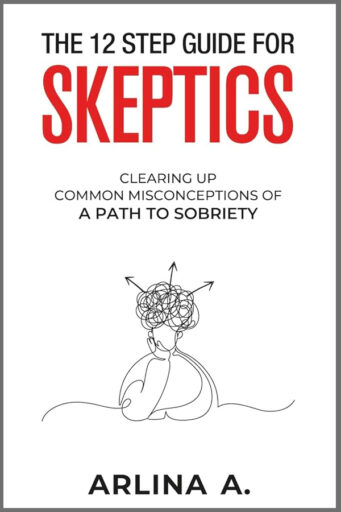
The 12 Step Guide For Skeptics: Clearing Up Common Misconceptions Of A Path To Sobriety
This was my offering to be like, “If you’re a skeptic, but you’re curious about why this program has worked for millions of people for the last 90 years, if you need a program that’s free, or if you need a community, here’s how to navigate it.” There are some definite pitfalls to look at. I’m not saying it’s perfect by any stretch. It’s got some problems.
I’m going to give you an example of a problem. People go to a meeting, and there’s somebody there who’s like, “You’ve got to do 90 meetings in 90 days. You have to get a sponsor.” They rattle off about 50 things that you have to do. People walk away from that. They’re all vulnerable. I’ve even heard that some people go to meetings and they’re like, “You have to accept Jesus Christ as your Lord and Savior.” People are like, “Ahh,” and they flee. They hear things like alcoholic or powerless, and they’re like, “Absolutely not right.” That happens.
It’s not the hotbed of mental health, but I heard this analogy. A gemologist will take two rough amethysts and put them in a tumbler together. As they tumble, they knock off the rough edges, and they come out smooth. That’s like how the fellowship is sometimes. You go into these rooms and mix it up with these people with their rough edges. You got your own rough edges.
We all have rough edges.
We all have rough edges, especially in the beginning. If you look for people who have long-term sobriety, they’re smooth. They’re peaceful. They are grounded. You cannot rock them. They don’t get triggered. I like to say that under every trigger is a treasure. The first step is great because it helps you to break it all down. What is happening here? What are you specifically resentful of? What is being affected in you? What is your part?
That’s where the light bulb typically comes on. You’re like, “I thought they were jerks. It turns out I provoked them, and they were having an appropriate response to me being an idiot.” When you’re angry, you can’t see it. It helps you to smooth out. If you have the courage to lean into the things that you want to run from, what are we avoiding? What feeling are you avoiding? If you can lean into that and deconstruct it, then it no longer has power over you. That trigger has been deactivated.
Being a sober person, we get to experience all the feelings, not just the good ones.
You get to feel better. You feel anger better. You get to feel sad better. You get to feel joy better. You get to feel love better. You get to feel peace better.
Everything feels better. I had Jason Campbell on my show. He is a meditation expert, teacher, or whatever. That’s one of the things he does. He talks about how you have to have negative emotions. You have your baseline. You’ve got your happiness, joy, laughter, and love, and then you’ve got anger, sadness, and pain. If you don’t have anger, sadness, pain, and loneliness, then that’s what makes happiness, joy, and laughter feel so much better. It’s like the Yin and the Yang. You have to have all of them.
We’re human. Good luck not having those other things.
Under every trigger is a treasure. Share on XIf you are out, then that’s how you get around having those feelings.
As we know, you can only numb out for so long.
That’s true.
I can drink and still be sad, as it turns out. I had these two alter egos when I was drinking. It was either Wimpy Wendy or Badass Bessy because I was either crying or fighting.
That sounds about right.
You can be loaded and still be miserable.
Changing Limiting Beliefs Beyond Traditional Recovery Methods
You can be, 100%. Let’s talk about recovery coaching, hypnosis, self-esteem, and transformative work. You’re a certified hypnotist and recovery coach. How do those skills complement traditional recovery methods?
You were mentioning the different brainwave states before. In normal cognitive, we’re alpha brainwaves. We’re both awake. We’re talking and having a conversation. Then, there is the theta brainwave state. That’s the brainwave state that you get into when you’re relaxed, but awake. That’s the meditative state. What’s interesting about the theta brainwave state is that you cross something called the critical factor. The critical factor lies between these two brainwave states. The critical factor is the filter. It filters out what you believe is important.
They say that at any given time, we have six million bits of information coming at us at all times. If I asked you, you’re probably not thinking about the pressure under your feet until you put your attention on it. Your subconscious mind is deciding what you focus on and what you’re paying attention to. If you have this belief system that you’re not good enough, all men are evil, all women are evil, and you have this limiting belief, then your lens or subconscious mind is filtering out all the evidence. It reconfirms your belief. It’s confirmation bias. You have a belief, and then your brain looks for evidence to support that.
In sobriety, there are no solutions. There are trade-offs. We have a drinking solution. You get sober, and you have to have a sober solution, like 12 Steps or something like that. What we’re talking about is changing these limiting beliefs and getting to the subconscious mind to reprogram those limiting beliefs. It’s helpful to know what they are. I love that you do the Joe Dispenza five-hour meditations and things like that.
Hypnosis is interesting because in therapy, it takes about twenty sessions to get to the rapport and to create the safety required to start changing some of those subconscious belief systems. That’s a long time. That’s a lot of investment. In practices like hypnosis, you get an awakened, relaxed state where you can start to replace these negative, limiting beliefs with positive, constructive ones.
I have found that work to be hugely helpful because it’s an inside-out solution as opposed to an outside-in. Figuring it out is a top-down, outside-in solution where things like meditation and hypnosis are inside the root cause. We’re trying to address the root cause. A lot of trauma therapy is about addressing the root cause. Where did these beliefs come from? A negative experience is a childhood. They say that all your beliefs about the world and who you are are established between the ages of 6 and 8. If you think about it, that’s like allowing an eight-year-old to make decisions for you, which sounds crazy. That’s not logical.
It’s important to make the space and time, and have a facilitator help you to access those and start trading those out. They will help you in swapping those negative belief systems for positive ones. It helps to have a facilitator, because as they say, you can’t read the label from inside the jar. When you’re in it, you’re blind to the mechanisms and subconscious beliefs that are driving your life.
Importance Of Rebuilding Self-Esteem And Inner Worth
In your experience, how central is rebuilding self-esteem and inner worth to long-term sobriety, especially for people coming from trauma or deep shame?
Brain science is called the default mode network, which is very tied to your identity. You can think of it as your brain’s operating system. How is your brain operating? When people think, “I’m a procrastinator. I’m a drug addict. I’m a bad person. I’m not good enough,” these are all identities, and they’re not necessarily based in truth or reality. The truth of the matter is that we can change. We can grow, develop, change, and evolve.
The steps are great for that. I’m a Steps and girl. I think there are ways to accelerate who it is that you want to be. What brings you joy? What inspires you? It’s that process of emerging and being honest with yourself. Who you like, what you like to do, and what brings you joy is a process. That’s about reinventing your identity, but rebuilding self-esteem.
I came to the conclusion that we only allow into our lives what we believe we deserve on a subconscious level. When someone comes to me complaining about a relationship, I never talk about the other person. I talk about what it is about you that you believe that you deserve to be treated that way. It has nothing to do with them. It’s all about us.
I think 90% of the transformation is awareness.
Tell me if you have seen this, too. A lot of times, the awareness comes once we feel safe enough to face the truth. That often comes in the presence of someone who is loving and supportive. It’s easier to face the truth about yourself when you look into the eyes of compassion.
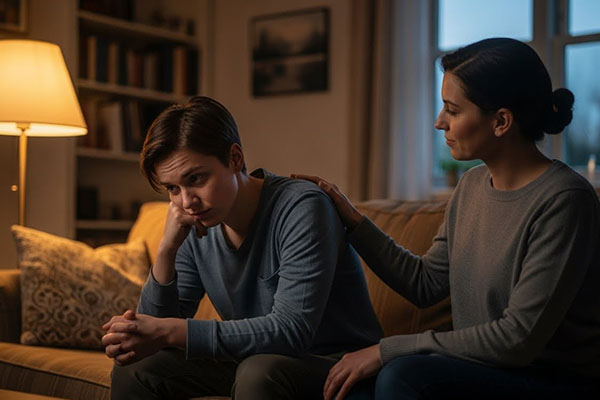
Love Yourself: Awareness comes once we feel safe enough to face the truth. That often comes in the presence of someone loving and supportive.
I can get on board with that because there are people that I can think of who are oblivious, or they don’t have any awareness. I could see that being true, that if they felt safe, they would be more open and willing to pay attention to what’s going on.
It helps to have somebody who’s loving and supportive, who won’t let you spin out too far to the negative. I had sponsors, and I realized what a jerk I had been. She’s like, “Don’t take it too far. It was a mistake, but keep in mind that you had this trauma that you were carrying. Out of fear, you behave badly. It wasn’t because you’re a bad person. You were afraid. You have been traumatized.” That helped me feel safe and not take it too far the other way, too.
I remember when I celebrated five years of sobriety. Everybody said to me, “Congratulations. You’re no longer a newcomer.” I was like, “What are you talking about? I’m an old-timer.” I thought I was an old-timer. When you think about that, it takes time to become a different person. To your point earlier, it’s a process and a journey. My whole life had to change.
The thing about spending my time with people that I want to be like is that when I first get sober, the people that I want to be like probably wouldn’t want to spend time with me. It’s a process. I continue leveling up to people that I spend more time with, or they continue leveling up as well, if we’re all in recovery and working a program.
The nice thing about the 12-Step Recovery program’s service is that carrying the message is a big part of that. They’re obligated to hang out with you and help you.
Working in the businesses, it’s always, “That used to be,” or, “That could be me.” It’s, “It used to be me,” or, “It could be me,” or, “I’m glad that’s not me.”
Somebody was there for me when I was like that. There is this big responsibility of passing it along, which is step twelve.
Reframing Labels In An Authentic And Non-Shameful Way
Many people deeply resist labels like alcoholic or the spiritual framing of these twelve steps. How do you help people reframe those in a way that feels authentic and non-shameful?
In 1994, there wasn’t anything else. I didn’t have money for therapy, so I needed this place. I didn’t even know about rehab back in the day. I know that there was, but I didn’t know about it. I go to these meetings, and people are talking about God. I was so crestfallen. I was like, “If this is what it is, I’m not going to be able to do it.” This gal was like, “Don’t worry about it. There’s a way around that. It’s not a thing. Don’t worry about it.”
She handed me a piece of paper and was like, “For funsies, if there is a God or was a God, write down all the attributes that you want God to have.” I was like, “Okay.” I wrote all-powerful, all-loving, and I’m the favorite. I wrote all kinds of things. She’s like, “On the other side, write what you wouldn’t want Him to be.” I wrote judgmental, condemning, and all the stuff. When I was done, she was like, “Are you done?” I handed her my piece of paper, and she tore it in half. She gave me that positive side and was like, “We’re going to start with this.” I was like, “That’s it?” She’s like, “That’s it.”
That’s brilliant.
The God problem was solved. That was all I needed to make a little more progress. I’ve come to understand that words are symbols, and we get to define what they mean. I’ve heard that if you have a problem with God, you probably have a problem with someone else’s God. That was my case. I had a problem with my childhood God. I didn’t even know that you could redefine it. That was news to me.
Words are just symbols. We get to define what they actually mean. Share on XI grew up in a Christian household. My uncles were ministers. Lots of Christianity in my family. I went to school, and I went to UC Davis. There were all of these people and all of these different religions. Everybody thought that everybody else was going to hell. For me, that was my way of saying, “That doesn’t make sense. I’m not going to believe in anything.” I have become an atheist. That was for a period of time until I got sober, and then I realized, to your point, my God can be spiritual, can be God, can be a chair, or can be the universe. It can be anything, but there’s something that’s more powerful than Tim.
Even two of us together are more powerful than me by myself. There’s a way around all these obstacles. Another big obstacle is that people see the word perilous, and they freak out. I have this one gal tell me, “I couldn’t go to 12-Steps because I read the steps, and I saw powerless. I felt like I had a little bit of power, so it didn’t feel authentic or honest if I went there.”
I go, “You do realize it’s over alcohol. It’s powerless over alcohol, not everything. You threw out the entire program because you misunderstood powerless? That makes me so sad.” She missed out on community. The fourth step is about breaking your limiting thinking. It’s a very pragmatic, practical process. A misunderstanding of a single word kept her out. It made me sad.
We all have a journey. She figured it out when she was supposed to figure it out.
True.
Understanding The Law Of 51%
For readers who tried everything before, such as therapy, willpower, and cutting down, what’s the biggest misconception keeping them stuck, according to your coaching experience?
First of all, if someone feels like they’ve tried everything, I have a lot of compassion for somebody like that. It is so frustrating to feel like you have tried everything and nothing is working. I would consider that to be a perilous, unmanageable place to be. I have this analogy. Have you ever heard of the law of 51%?
Maybe.
I’ll describe it in case you haven’t. Think about a weight scale. Every time you make an attempt or learn something new, or even have a painful experience that you can get a positive lesson from, that’s tipping the scale on the positive side. What’s interesting is that you only need 51% to tip the scale. I want to point out that if you’ve been trying, you’re way closer to tipping the scales than you realize.
Keep going. Keep trying. Hope is hearing other people’s experiences. There are other people who struggle with what you’re struggling with and who have found the solution. Sometimes, hearing the solution over and over again and hearing how people struggle and how they overcame can be enough to help you tip the scales for yourself.
A reset. I love that.
Help is available.
What’s Next For The Sober Life School
What’s next for Sober Life School or the work that you’re doing? Is there a new program, new approaches, or new audiences?
In 2026, I am pivoting more towards the people in corporate, people like the high achievers. It has been a long time since I struggled with day one. I had the systems, and I do help people with that phase. In 2026, if I’m going to be honest, the kind of clients that light me up and energize me are the people who are trying to solve the Striver’s Dilemma. These are people who still want to achieve and be creative, but want to do it from a place of love and joy.
It’s this feeling of being a procrastinator, workaholic, burnout, and being overwhelmed. You know what it is. It’s feeling like there’s a missing piece that’s keeping you from a breakthrough. Those are the people that I like to work with. We’re not broken. There’s nothing wrong with us. We probably have the wrong systems, and we need to operate from a place of love. That’s what helps people achieve those goals that have been alluding them sometimes for decades.

Love Yourself: You are not broken. There is nothing wrong with you. You probably just have the wrong systems and must learn how to operate from a place of love.
It’s like operating from fear, guilt, and shame. It doesn’t feel good. There’s so much more possible if you’re operating above the line.
That’s it.
There Is A Solution To Every Problem
If you could send a message to someone tuning in who feels hopeless and stuck, what would you say to them to anchor hope and possibility?
I would say to see things as they are. What that means is not catastrophizing, but looking for the truth. There is a solution to every problem. There is somebody out there who has overcome the very specific, unique circumstances that you’re in. We are not terminally unique. We are all suffering from the same human condition. At the end of the day, it all boils down to the same thing. Seek, and you shall find, so keep seeking. The answer is out there.
Is there anything that I missed?
I don’t think so. You did a great job.
Get In Touch With Arlina
Where can people find more about you? How can they connect with you?
The easiest place to find me is SoberLifeSchool.com. People can also connect with me on Instagram @ArlinaAllen. Those are probably the two easiest places. If you go to Sober Life School and you have questions for me, you can put time on my calendar. I’m happy to talk to anybody, even if it’s coming up with a strategy or a system that you might be able to implement. The truth of the matter is, there’s nothing broken. We have the wrong systems. Sometimes, we need to figure out what the right system is.
It has been a pleasure having you here. Thank you so much for your time.
This was so fun. You’re a great interviewer.
This is great. To everyone, thanks for tuning in. I’ll see you in the next episode.
Important Links
- Sober Life School
- The One Day at a Time Recovery Podcast
- @ArlinaAllen on Instagram
- The 12-Step Guide for Skeptics
- Uncomfortable Either Way
About Arlina Allen
 Arlina Allen helps high-performing entrepreneurs and professionals overcome addictive behaviors, master stress, rebuild balance, and break through the resistance that keeps them stuck. After over 30 years of sobriety and personal transformation, she’s become a trusted voice in the fields of addiction recovery, emotional resilience and self-leadership.
As the bestselling author of The 12-Step Guide for Skeptics and host of The One Day At A Time Recovery Podcast—ranked in the top 1% of self-help shows—Arlina has interviewed hundreds of experts, from neuroscientists to therapists, on what it truly takes to create sustainable change.
Through her coaching programs and workshops, Arlina blends neuroscience, mindfulness, and practical self-regulation tools to help driven professionals manage pressure, reduce burnout, and find peace without losing ambition.