
Addiction is typically addressed in a harsh and imposing manner, and compassion is often thrown out of the window. Heather Ross, a family recovery coach and podcaster, joins Tim Westbrook, MS to discuss how parents should support children struggling with substance use without confrontation or shame. Delving deep into family recovery, they break down how children struggling with addiction positively respond to connection, communication, and emotional regulation. Heather also explains that tough love often backfires, how nervous system regulation impacts the entire family, and how parents can set boundaries that build connection instead of distance.
—
Watch the episode here
Listen to the podcast here
Heal Addiction Through Connection And Communication
I’m joined by Heather Ross, a Family Recovery Coach and Host of the Living While Loving Your Child Through Addiction podcast. Heather works with parents, especially mothers, who are walking the incredibly painful, confusing, and often isolating road of loving a child with substance use challenges. She helps families unlearn stigma, move away from shame-based and confrontation-driven approaches, and replace them with compassion, clarity, and science-based tools that actually create change.
Heather blends CRAFT, which is Community Reinforcement and Family Training, nervous system regulation, and the hard-earned wisdom from her own lived experience. Work focuses on something many parents are never told, that recovery in a family often begins not by controlling outcomes, but by strengthening connection, regulating ourselves, and showing up differently. This conversation is for any parent who feels exhausted, scared, or stuck, and for anyone who wants to better understand how healing can begin in families, even when the person struggling isn’t ready for help yet. Heather, welcome to the show.
Thanks for having me.
We were connected by Mary Tilson, and I connected with her, I think it’s been a couple years, how time flies. She said that you’d be a good guest, so I’m excited to dig into this conversation.
Yeah, thanks for having me. I just love talking to Mary and seeing all the amazing things she’s doing all the time.
Parenting A Daughter Struggling With Substance Use
Tell me a little bit about you and what brought you to this work.
I am a mom and I had a daughter who struggled with substance use. Before that, I was a corporate controller. I loved the work I was doing, I never thought I would do anything else. When my daughter started struggling with substance use in her early teens, we couldn’t find any help that made things better.
My daughter’s mental health kept getting worse. She was struggling not only with substance use, but an eating disorder, self-harm, suicidal ideation. All of these things showed up at once, when before that, my daughter was a straight-A student, really seemed to be happy, competitive cheerleader, and it seemed like overnight, all of these things were happening in our life.
I was completely overwhelmed. It seemed like everybody that we turned to for help just offered things that were very blaming of her, which I already had that stigmatized idea about things from just things I’d heard throughout life from movies and things like that. Things just kept getting worse. It was having a huge impact on me because I didn’t know how to help her. I didn’t like how I was showing up because I was taking action from fear constantly, and I was taking tough love advice because I didn’t know what else to do. I was taking that from a place of fear.
I was really all over the board. One minute, I would be trying to be nice, but then when things didn’t get better, I would get really overwhelmed and then I would get angry. My daughter really never knew what to expect from me. I was putting all of the pressure on her to change. It was having a huge impact on me emotionally. I started struggling with depression and my own physical health. I was so stressed my hair was falling out, and I just didn’t know what else to do.
Finally, I was in this Facebook group that wasn’t very helpful, but somebody recommended this book in there called Beyond Addiction: How Science and Kindness Help People Change. That was where I found CRAFT, and found this approach we’ll talk about more soon, and that really started to change things. Now by then, my daughter had moved out of the house. She was eighteen, struggling to even find stable housing. She was using meth and heroin. Things had gotten incredibly bad, and she hated me because of the way I described that I had been acting.
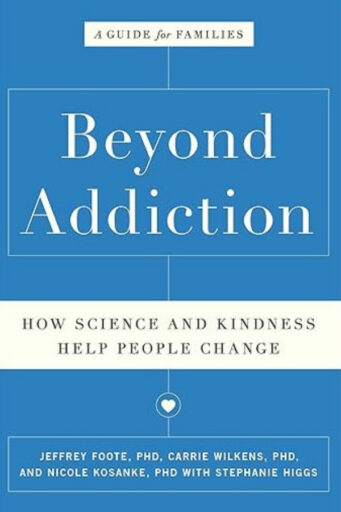
Beyond Addiction: How Science and Kindness Help People Change
I was able to repair our relationship, rebuild that connection and trust. I needed to earn her trust again because I, too, had been so unpredictable and behaved so differently than I had before she started struggling with substance use. After I rebuilt that trust and connection, she started opening up and then eventually came to me when she was ready to get help. My daughter went to treatment. She ended up going twice, doing a little bit better the second time than she did the first time, but it was a huge change.
She had about eighteen months of recovery when she had a reoccurrence of use that led to a fatal overdose. Yeah, that’s not the ending that I was expecting. I finally had my relationship back with my daughter, things were going incredibly well, like I had all of this hope for our future for the first time, and in an instant, it was over.
What’s really important is that we got to heal. That healing started before my daughter ever got into recovery. I feel proud of how I showed up because I did the work to learn this new way and so I have that peace of mind of knowing that we repaired our relationship. My daughter felt loved and supported. The very last time I talked to her, that I had no idea was going to be the last time I talked to her, I was very supportive of her and what she was going through.
I think that that’s what’s most important, like we cannot control our kids’ outcomes no matter what we do, but we can control ourselves and how we show up. I think what we really have to focus on is what we’re doing, how we’re showing up, and then loosely holding that hope that it does have that positive impact.
How many kids do you have?
She was my only one.
I’m so sorry about that. When did that happen? When was the end?
It was in 2021.
That is what essentially led you to the work that you’re doing now?
After I found the book Beyond Addiction, I started working with a coach, and then eventually, I decided that I wanted to offer this work to other parents. I wanted to get this out into the world. I couldn’t understand why because CRAFT has been around since the ’80s. I couldn’t understand why something that’s been around since the ’80s was so hard for me to find, because I was spending all of my time Googling, looking for answers and it never came up in any of my searches. Before she passed away, I had decided I want to get this information out into the world. I want to help other families. I don’t want them to have to go five years like we did without help and everything in our life being completely destroyed before we can start healing and rebuilding again.
Discard Tough Love In Favor Of The CRAFT Approach
For readers who may be new to this, what is CRAFT, and what makes it different from the tough love or confrontational approach many families are told to use?
CRAFT stands for Community Reinforcement and Family Training. I think it’s a very human approach, really thinking about the reality of the situation and what it takes for a person to change. Instead of the tough love approach where you’re pushing the person away, CRAFT teaches you how to connect with that person, because when you have connection, you have the possibility of influence. Also, how to take care of yourself in this really difficult situation. That was one of the skills that I lacked. I was outwardly focused on my daughter, trying to get her to change so that I could feel better.
Tough love pushes people away. But when you have a connection, you have the possibility of influencing them to take care of themselves better in their most difficult situations. Share on XThat is really unfair when you think about it because she’s already struggling. She’s not able to handle her own emotions, and now I’m putting my own health and wellness on her as well. CRAFT teaches us how to live a good, healthy, happy life even if our child is still struggling. It gives us tools to create the best possible conditions for somebody to want to change, to hopefully reduce substance use and open the door for them to engage in some treatment. It’s a very active, involved approach, but in a way that is collaborative, rather than that controlling or confrontational that we tend to go toward when we really don’t know what else to do or don’t have any other way to engage.
“Why don’t you just stop?” It’s not that easy. There’s a lot more to it. You often talk about something called the Connection Bank Account. What is it, and how can it actually influence positive change in a child who struggles with addiction?
The Connection Bank Account is very similar to your checking account, but it’s the checking account for your relationship and the connection within it. In the beginning, if your relationship is strained, the deposits in that account are really small. You might be working really hard and doing big things, but in the beginning, the deposit you’re making is really small. If you want to talk to them about their substance use or what I call the business, any of their legal problems, their health, any of those things, it’s going to be a huge withdrawal.
It gives something to visualize to think about have I been making enough deposits in the Connection Bank Account for the withdrawal about that I’m about to make? Is the conversation actually worth the withdrawal that I’m going to make? Eventually, once you’ve made enough deposits and you’ve built back trust and more connection, you might be able to have one of those conversations and it’s not a withdrawal at all. It could be net neutral.
Eventually, it might even turn into a deposit because in that conversation, your son or daughter felt loved and supported. You were curious and really trying to understand them instead of being judgmental. Over time, things change and those deposits start compounding and the withdrawals get smaller.
What I think of is just you’re, you’re building a stronger connection, an intimate connection, and when you have a strong intimate connection as opposed to pushing them away, they’re more likely to be receptive.
Yeah, absolutely because when a parent is full of fear, they’re so focused on everything that is wrong and how quickly can we get this fixed. That creates a lot of tension in the relationship. It’s actually very repelling. Our kids don’t want to talk to us or be around us because they know we’re going to ask all the hard questions and maybe judge and blame, and there might be arguing. When we step back and focus on, “How can I connect today, how can I help my son or daughter to feel seen and supported and maybe put these things aside for now while I earn the ability to ask these questions,” it completely changes the way that you’re engaging and interacting.
Why Parents Should Learn To Regulate Their Emotions
Why is it so important for parents to learn how to regulate their own emotions, especially when everything in their body is screaming fear, urgency, or panic?
For a lot of the things that I just mentioned that when we’re so full of fear, we’re very reactive instead of responding intentionally. Myself, I have so many regrets about the things that I did before I learned to really regulate myself or even to stop and think about what was happening with me. People would ask me how I was doing and I would tell them what was going on with my daughter. I didn’t even answer how I was.
That idea of focusing on yourself and creating that self-awareness, what’s happening within you, and then learning to regulate how you’re feeling in this very difficult situation, it’s this skill that then makes it easier for your child to be around you. I hear all the time kids don’t want to be around their parents because they actually, whether they’re acting like it or not, feel guilty and they’re feeling a lot of shame.

Addiction: Children do not want to be around their parents if they sense their mother and father’s fear and sense of urgency.
They’re feeling their parents’ fear and their sense of urgency. When they sense that we’re actually okay, that we’re going to be okay, it creates that space for them to come around us, it creates space for them to start to look at themselves a little bit more. When we’re regulated and we’re not constantly being confrontational, again, that creates space for them to think about what’s going on with themselves instead of having that constant, “I’m mad at you.”
The kid’s mad at the parent, so they’re thinking about how mad they are at the parent all of the time instead of making that cause-and-effect connection about what’s happening in their life. The parent’s intent is to get them to see, but it’s actually in the way of them seeing when they’re doing that. It’s really hard to be patient in this because it is it is life or death, in a lot of cases, and that’s terrifying. It really takes building these skills that don’t necessarily come naturally because this is so ongoing.
People go through hard things in life all of the time, like maybe the loss of a job, but that ends. You have some sense of control over that because you’re the one looking for the job and maybe changing your skills, doing everything that you can to change that situation. This demands a different set of skills of really learning about yourself in a way that you might never have had to before and also gives you the opportunity to lead by example.
I wanted my daughter to make all of these changes and do all these things and I had a full plan for her, but I wasn’t looking at myself at all. It felt really good to step up and see how hard what I wanted her to do was and to really to lead by example instead of me being over here in chaos accusing her of all the chaos.
It’s like showing up with that positive energy and being an example so that you are somebody that she not only wants to talk to but somebody that she wants to be like.
Yeah, absolutely. There’s just so much chaos when there’s all the confrontation and everybody is in fear all of the time. When you regulate your own nervous system and that chaos calms down, then that also creates more space for healing. It’s like you can think about focusing on problem solving rather than just only focusing on the problems all the time and ruminating about those.
Ruminating on the problem never makes it better. It’s like, “Let’s focus on the solution.”
It just magnifies it.
It’s the energy. How does a parent’s nervous system impact the dynamic in the home even when nothing is being said out loud on that note?
I used to think that my daughter wasn’t ever really paying attention to me. What I came to realize was that she knew me better than anybody and could read my body language, my tone of voice, my energy. You just mentioned that. All of those things matter because it doesn’t matter if you’re saying the perfect words. Maybe you have this great script and you’re trying to say all of the right things, but inside, you’re full of anger and angst and you don’t understand and, “Can’t they just stop?”
They can feel all of that. It’s the energy in the whole household. You can’t expect healing to happen in that environment. As parents, we are like the thermostat for the house. If we’re all a nervous mess, then that’s the energy of the household. When we’re calm, we can bring that to a difficult situation, then we become like the anchor in the storm. We’re setting the tone for the whole house.
Stability, safety. Whether it’s your a parent being the leader of the household or whether it’s in business, as the leader, you have to show up stable, grounded, secure. What happens when you’re feeling twisted up? You know you’re twisted up, you know you need to have a conversation with your child, what do you do at that point?
If you know how to regulate, then you take the time to regulate ahead of time. This is where it helps to have skills like positive communication skills. Thinking, planning ahead of time how you’re going to go into this conversation. What do you want the overall feeling of the conversation to be? Pick a thought that you’re going to return to that’s going to be helpful to this conversation if you start to struggle.
Plan that if anybody participating in the conversation is getting dysregulated to take a little break for time for everybody to regulate and then come back to the conversation. Use active listening skills. Thinking about, “I want to listen to you to understand you, not so that I’m listening so that I can make my plan to change your mind and get you to agree with me.”
Yeah, like you’re waiting to say what you need to say.
Exactly. You’re not even present, you’re not even listening to what they’re saying.
I just think of pause when agitated or doubtful. One of the things I learned in the 12-step program is pause when agitated or doubtful. If I do that and I come back to the conversation once I’m regulated and in a better place, it’s going to go much better.
These were all things that I had to learn because I had never dealt with situations like this before in my life or a situation that I couldn’t outwork. I had to learn actual communication skills for what puts somebody at ease when you’re having a conversation. It’s okay to validate somebody else’s experience even if you don’t agree with it. That was something I had a really hard time with with my daughter, validating her experience. I was constantly trying to convince her of my version of her experience.
Also, afraid if I validated her experience that it would somehow make it worse. The very thing that she needed from me most was for me to instead of just constantly trying to fix her to say like, “Yeah, that sounds really hard. I’m so sorry you’re going through that.” Affirm that you’re talking about all of the things that you’re trying, it sounds like you’re trying really hard and that must be frustrating. Even if I don’t think she’s trying hard enough, I’m just trying to be with her in her experience to set her at ease, to make it more easier for her to open up because that’s the whole goal here.
The reason we’re putting all of this time, energy and effort into these conversations is because once everybody opens up and feels safe and you start to understand, you can open up conversation for even think them thinking about like why they’re using substances, what they’re getting out of it. Behaviors make sense. If it was like putting their hand on a hot stove, they would stop, but it’s not. Even though all we can see are the consequences and to us it looks like they’re standing there with their hand on the stove, there’s something coming out of it for them. Being just able to talk about these things openly and not feel like it’s enabling or they’re going to think that you’re telling them that it’s okay if you’re talking about it. It makes all the difference.
The Biggest Myth About Family Recovery
What’s one myth about addiction or family recovery that you wish we could retire forever?
It’s hard to pick one. The biggest one is the idea that there’s nothing that families can do to help. It’s true that we can’t control the things that somebody else can do, but I think it’s so painful for a parent to hear that. It just creates more fear. When we tell people the things that they can do, like learning to regulate their nervous system and how big of a deal that is in showing them how much that matters and all of the positive things that can come out of that and that you can learn positive communication, that you can learn things like self-compassion. There are things that you can actively do that even if your child continues using substances, you’re going to have a higher quality relationship with them.
You’re going to feel good about yourself in the way that you showed up, and you’re going to know that you created the best possible conditions for them to want to change. It makes it so much easier for you to live a better life. However, when parents are told that there’s just nothing that they can do to just sit back and wait, it is absolutely terrifying and it leads to a lot of behaviors that just make everything worse.
Creating Boundaries And Focusing On What You Can Control
You talk about boundaries that build connection, not walls. How can parents set boundaries that are healthy without pushing their child further away?
I think boundaries are so often misunderstood. A lot of times, you hear them used in a really negative way or you hear somebody say like, “I’m setting a boundary with you.” That immediately creates this feeling of fear and like, “I’m losing something.” One thing is, you never say, “I’m setting a boundary with you,” because that’s going to immediately cause fear in the other person and anxiety that just makes everything harder. What I have parents focus on is what they can control.
When you think about setting a boundary like, say your son or daughter just constantly calls you during the work day. You ask them not to call. Somebody will say to me like “I tried setting a boundary. I asked them not to call, and they keep calling.” You can’t control somebody else’s behavior. The second part of that is what can you control? I can control what I do with my phone. I can turn off the ringer, I can turn it face down so that I can’t see it. I can turn off the notifications from them.
That’s an actual boundary then because you’re focusing on the thing that you can control. You’re not sitting there getting angry at them for continuing to call because you’ve taken care of what you can in that situation. Whereas, if you continue to answer the phone and say, “I told you not to call me,” then you’re just creating so much more anger and resentment and then that’s living in your relationship. Thinking about boundaries in a way that you don’t need the other person to change. Focusing on what you can control so that you can keep your own peace and remain in relationship with somebody when it’s really difficult.
Focus on the things you can control so you can keep your own peace. Share on XIt’s like the Serenity Prayer. “God, grant me the serenity to accept the things I cannot change, the courage to change the things that I can, and the wisdom to know the difference.”
That’s a great example of it.
It’s like you say a boundary yet you don’t hold the boundary by answering the phone. It leads to anger, resentment, and nothing good, as opposed to just following through.
It’s important to talk through why are you holding that boundary, why is it important to you? It is hard to hold that boundary. There’s a lot of fear. “I’m afraid if I don’t answer the phone, what are they going to do? They might do something desperate. They’re weighing out their options of seeing really that it truly is a choice. “I’m choosing to answer the phone out of fear and I’m going to be okay with that for now and I’m not going to blame them for that,” or, “I’m choosing not to answer the phone for my own peace,” but taking the time to really understand why you’re doing what you’re doing not because somebody said you need a boundary or you have to because that never feels good.
Why does confrontation so often backfire? What can parents do instead when they’re desperate to be heard?
You hear that all the time. “You just need to confront them.” When you think about even that word, confrontation, it feels like I’m going into a battle and if I’m going into a battle then I need to win. If I need to win, then that means my child has to lose. It’s just a really poor setup to do anything productive. If I go into it thinking, “I want to collaborate, I want to go into this curious, I want to try to understand, then it’s going to create a completely different experience for everybody.”
It’s not this power struggle or this win-lose scenario. It’s really about creating more connection and opening space for trust and communication. Going in thinking about confrontation, it backfires because it doesn’t feel good. “I don’t know why I didn’t think about this sooner with my daughter but I thought I would not respond well to the way that I’m acting.”
Play it forward. Put myself in their shoes.
Just even ask yourself this question, “What am I about to do and would I respond well to it,” before you do it. That can help.
I think of it’s like trying to make them do something and if I’m trying to make them do something, then it’s an uphill battle. It never works. In order to feel good, I just need to show up, be an example and meet them where they are really is what I’m hearing. Meet them where they are.
Meeting somebody where they are is important and hard at the same time, especially when they are in a scary and painful situation. Share on XMeeting somebody where they are is so important and hard at the same time because where they are can be really scary and painful to see where they are. It takes a lot of work to be able to do that. I think that the other hard part of this that people don’t really talk about is the amount of emotional skills and processing that it takes to be able to meet somebody where they’re at and to deal with the difficult feelings of seeing somebody really struggle.
It was hard to see my daughter dirty and in clothes she would never wear otherwise. I had to have the skills to be able to see that and show up with love for her and meet her where she was at and be able to manage my emotions and then process that when I got home so that I didn’t want to avoid her the next time I had an opportunity to see her.
You emphasize the power of owning your choices even when it feels like you don’t have any. Can you talk about what that means for parents who feel completely powerless?
A lot of times, when you don’t like your options, it feels like you don’t have a choice. If both of my options feel bad, then I hear parents say all the time “I don’t have a choice.” You think about giving money or not giving money. Neither one feels good. It doesn’t give money because you know it probably doesn’t feel very helpful.
You know the money might probably isn’t going to go to something that’s going to be supporting their health and wellness. That doesn’t feel good. Not giving them money also doesn’t feel good because it’s hard to say no and there’s part of your brain that’s wondering maybe they really do need food right now. It feels like I don’t have a choice because I don’t like either of my options.
When parents find themselves in that situation, I challenge them to think about, “I want to like my reasons for this horrible-feeling option that I’m choosing. If I’m not going to give money then I’m not going to say no to money because somebody told me I should. I’m going to say no to money because I can’t live with the possibility that my daughter could overdose on the money that I gave her.” That’s a reason that I like for saying no. That’s very empowering.
Three Important Elements Of Self-Compassion
What role does self-compassion play in family recovery and why is it so hard for parents to give themselves any grace?
We just hold ourselves so responsible for our kids and it’s so hard not to go back and think of every single thing you ever did and blame yourself for everything. Blame creates a little bit of comfort because it’s hard to live with so much uncertainty. It’s hard to live in a world where all these bad things could happen and there’s really no clear reason why. Blame creates some certainty and it’s easy to blame ourselves.
Blames create a little bit of comfort because it is hard to live with so much uncertainty. Share on XThat’s one of the reasons that we do that and it’s also why self-compassion is so important. There’s three elements of self-compassion. One of them being having that kind inner voice, so catching yourself with the blame and judgment and honoring that this is really hard, having that voice that maybe you would have had for your son or daughter when they were younger.
The second element of self-compassion is common humanity that being human is hard and that anybody else in this situation would be struggling. You’re not alone in this. There’s not something wrong with you because this is so hard. The third element of self-compassion is just that being present with your pain without having to change it, without having to make it better or without having to add to it and creating more pain with all of the negative self-talk.
It’s that mindset. We hear a lot about self-care which is actions like taking a walk, but if you’re trying to do self-care and go on a walk but you’re beating yourself up the whole time, it’s not helpful. For me, building that self-compassion helped me to then also extend more compassion to my daughter. I was practicing it with myself first. There are so many things outside of our control, but we can control our how we experience things and self-compassion has a huge impact on this whole experience.
What To Do When Everything Seems Wrong
What would you say to a parent that’s reading right now who feels like, “I’ve tried everything and nothing is working?”
That’s such a common thought because we’re constantly thinking about them and all the things that we can do and trying anything that we can come up with to try. I would say that there might be another way to even try the things that you’ve already done. I felt like I had tried everything when I found CRAFT, but there were some pieces that were missing. I was missing the regulation of my nervous system when I would try to have the conversations. Maybe you’ve tried to be understanding but your energy was not aligned with that at all.
It’s more about having somebody that you can talk to, to help you walk through things and say, “Let’s just try and change this one little part.” You could be really close to having a better outcome the next time you do them and you might just need to change one little thing. I find that parents are actually often a lot closer than they realize, but because their brain’s constantly saying nothing is working and everything is wrong, they’re not seeing anything that is going well.
It really helps to have that somebody helping you walk through those things and go through a situation that happened, talk through how you handled it, say, “this part didn’t work we’re going to throw that out but we’re just going to make a change here go try that.” It’s like a science experiment. You just keep trying until you get it.
It’s testing. What’s one thing that a parent can do now that has a child that’s struggling? First step.
I would say the first step would be to focus on what is happening inside of you. You think about, “If I understand myself and what’s happening inside of me and I’m curious about that, then I can practice that on my son or daughter.” Anything that we do with ourselves first and learn that skill, plus it’s going to be a great example, is going to make a big difference because you’re getting that practice before you’re ever even taking it to them.

Addiction: Anything parents do with themselves will be a great example for their children. They must practice something first before ever taking it to their kids.
Is there is there anything I missed or anything else you want to talk about?
I think we covered a lot. There’s always more but I don’t want it to be like an overwhelming episode so I think we covered some really good stuff, though.
Starting The Day With Top Three Goals
Tell me about your morning routine.
My morning routine starts with some journaling. I usually write, I call it my 333. I write three things that I’m grateful for my top three goals. There’s always something that I’m working on about myself. I write three things to help me work on that. I have a couple of different things, like I’m doing a 21-day challenge with a friend right now. That’s part of my morning routine and then I usually go walk. A lot of my morning is dedicated to getting myself right for the day.
How important is it to get yourself right for the day?
It’s critical because once I get out of that bubble of my morning routine, the rest of my day is taken up by the dog and the business and helping my clients and all of those other things. It might not be until the evening again then I’m completely exhausted that I have time to really turn to myself again. That morning time is really sacred to me. It is my best time of the day, when my brain is the freshest. I feel the most alert and creative at that time of the day. I love giving that time to myself because that fills me up so that I can turn around and give back to everybody else all day.
Get In Touch With Heather
How can people learn more about you? Where can they connect with you? Tell me about your services that you offer.
I work with parents one-on-one and I also have a group called The Peaceful Mom Group and listening to the podcast Living Your Child Through Addiction. Listening to that, I think, is a great way to find out more about craft and what that’s like and then there’s also my website HeatherRossCoaching.com
Where else can people connect with you on socials?
At Heather Ross Coaching on Facebook and Instagram and I also have a free guide called A New Perspective About Enabling that’s on my website. Enabling is such a huge fear for parents. It’s also a roadblock because anytime a parent says, “Am I enabling,” they can’t move past that. It just gives them other ways to think about what’s actually a really helpful way to help? What’s going to add to my son, or daughter’s health and wellness? How can I do a little bit less so that maybe that they can do a little bit more? Other ways to think about that. You don’t get stuck in that, “Am I enabling,” roadblock.
I think that’s it for my time with Heather Ross. Heather, thank you so much for being here and to our audience, thanks for reading and I will see you on the next episode.
Important Links
- Heather Ross
- Living While Loving Your Child Through Addiction
- Beyond Addiction: How Science and Kindness Help People Change
- Heather Ross on Facebook
- Heather Ross on Instagram
- A New Perspective About Enabling
About Heather Ross
 Heather Ross is a Family Recovery Coach and the host of Living While Loving Your Child Through Addiction Podcast. She helps mothers unlearn stigma and redefine what it means to support their children with compassion and science-backed tools that create real change.
Heather blends CRAFT (Community Reinforcement and Family Training), nervous system regulation, and the hard-earned wisdom of her own experience to help mothers feel confident, clear, and connected again.
She’s known for helping families rewrite the story of recovery in their homes by focusing on what parents can influence most: their presence and the quality of their relationship with their child.